How to Paint a Shed or Summerhouse
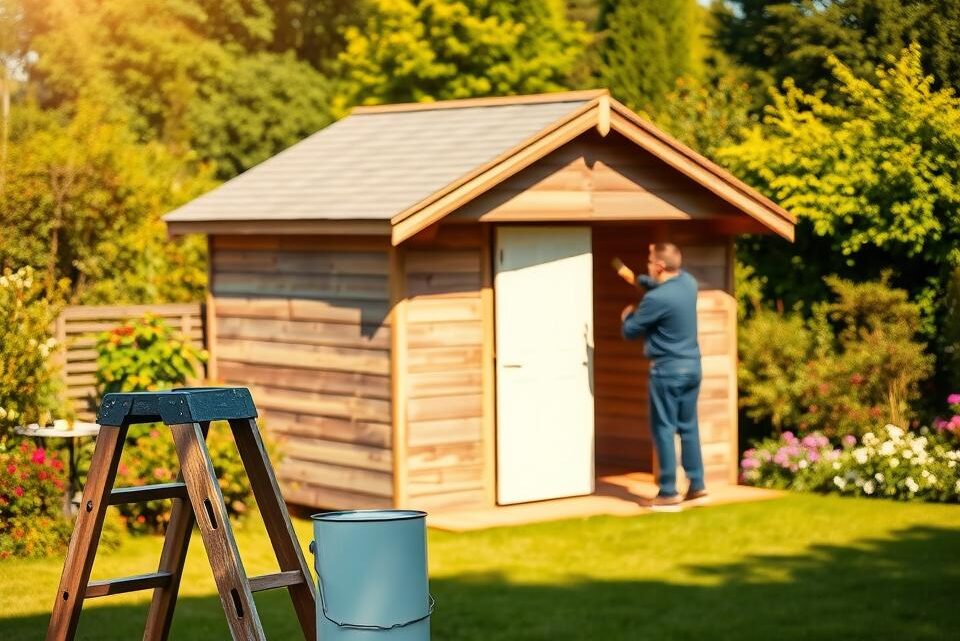
Transforming your garden structure through shed painting or summerhouse painting can breathe new life into your outdoor space. Garden structure renovation is not just about aesthetics but protecting your valuable wooden investment from weather damage and decay.
A fresh coat of paint does more than enhance visual appeal. It creates a protective barrier against moisture, UV rays, and environmental challenges that can deteriorate wooden structures. DIY shed painting offers an affordable way to maintain and upgrade your garden buildings while giving you a sense of personal achievement.
Whether you’re a seasoned DIY enthusiast or a first-time painter, this comprehensive guide will walk you through every step of the summerhouse painting process. From selecting the right materials to applying the perfect finish, you’ll learn professional techniques to revitalise your garden structure.
Inhaltsverzeichnis
Key Takeaways
- Painting protects wooden garden structures from environmental damage
- DIY shed painting can save significant renovation costs
- Proper preparation is crucial for a long-lasting paint finish
- Choose weather-appropriate painting conditions
- Regular maintenance extends your shed’s lifespan
Essential Tools and Materials for Shed Painting
Preparing for a shed painting project requires careful selection of the right shed painting tools and safety equipment. Choosing quality materials will ensure a professional finish and protect your exterior paint investment.
Before starting your painting project, gather these essential items to make the process smooth and efficient:
- Paint brushes of various sizes
- Rollers with different nap lengths
- Paint trays
- Painter’s tape
- Drop cloths
- Sandpaper
Types of Paint Brushes and Rollers
Select brushes based on your shed’s surface texture and paint type. Synthetic bristle brushes work best with water-based exterior paint, while natural bristle brushes suit oil-based paints.
| Brush Type | Best Use | Recommended Size |
|---|---|---|
| Angled Brush | Trim and Edges | 2-3 inches |
| Flat Brush | Large Flat Surfaces | 4-6 inches |
| Foam Roller | Smooth Surfaces | 9 inches |
Recommended Paint Types and Finishes
For exterior paint, choose weather-resistant options that protect your shed from UV rays and moisture. Latex and acrylic paints offer durability and easy application.
Safety Equipment and Supplies
Protect yourself during the painting process with proper safety equipment:
- Safety goggles
- Respiratory mask
- Disposable gloves
- Protective clothing
Investing in quality shed painting tools and safety equipment will help you achieve a professional, long-lasting finish while keeping yourself protected.
Preparing Your Shed for Painting
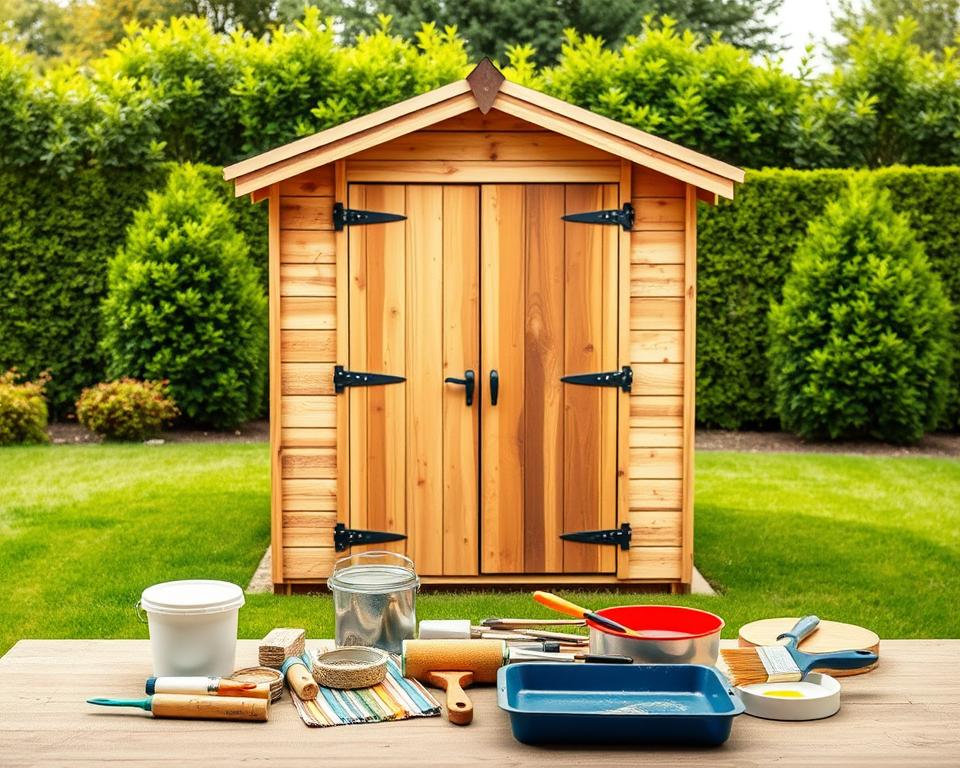
Successful shed painting begins with meticulous preparation. Proper shed preparation is the foundation of a professional-looking finish that will protect your outdoor structure for years to come. Before you pick up a paintbrush, you’ll need to invest time in surface cleaning and comprehensive inspection.
Start by thoroughly examining your shed’s exterior. Look for signs of wear, damage, or potential issues that could compromise your painting preparation:
- Check for rotting wood or structural damage
- Identify areas with peeling or flaking paint
- Inspect for moisture damage or mildew growth
- Look for gaps, cracks, or loose boards
Surface cleaning is crucial for achieving a smooth, long-lasting paint job. Remove dirt, dust, and debris using the following steps:
- Use a stiff-bristled brush to sweep away loose particles
- Wash the shed with a mild detergent solution
- Rinse thoroughly with clean water
- Allow the surface to dry completely
“Preparation is the key to a professional paint finish. Take your time and don’t rush the process.” – Professional Painter’s Advice
Protect surrounding areas before beginning your painting project. Cover nearby plants, furniture, and ground surfaces with drop cloths or plastic sheeting. Proper preparation will save you time and prevent unwanted paint splatters.
Weather Conditions and Timing for Optimal Results
Choosing the right exterior painting weather can make or break your shed painting project. The success of your painting schedule depends on understanding the optimal painting conditions in the UK’s unpredictable climate.
Timing is crucial when planning an exterior painting project. The ideal painting conditions in the UK typically occur during specific seasons, offering the best environment for a long-lasting finish.
Best Seasons for Exterior Painting
The prime painting months in the UK are usually:
- Late spring (May)
- Early summer (June)
- Early autumn (September)
Temperature and Humidity Considerations
Paint performance critically depends on temperature and humidity levels. Ideal painting conditions include:
- Temperature range: 10-25°C
- Relative humidity: 40-70%
- Minimal wind
- No predicted rainfall
Planning Your Painting Schedule
Crafting a flexible painting schedule requires careful weather monitoring. Check local forecasts meticulously and plan for at least two consecutive dry days to ensure proper paint application and drying.
Pro tip: Always have a backup plan and be prepared to adjust your painting timeline based on weather conditions.
When scheduling your exterior painting, remember that patience pays off. Rushing the process during unsuitable weather can compromise your shed’s finish and longevity.
How to Paint a Shed or Summerhouse
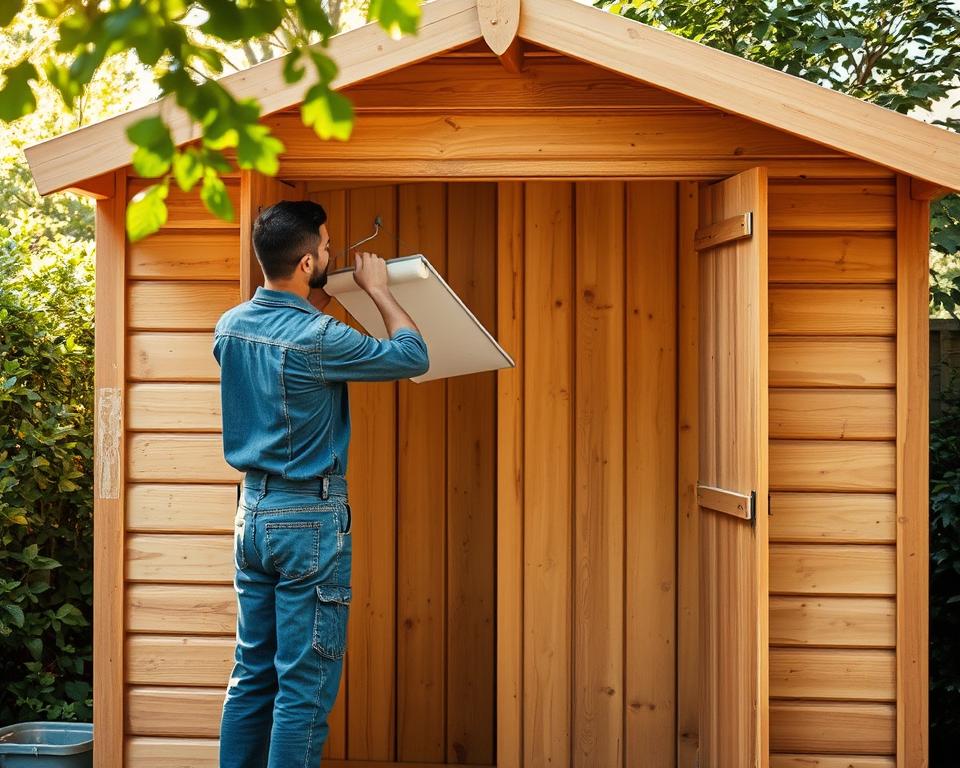
Painting a shed or summerhouse requires careful planning and precise execution. Professional shed painting techniques can transform an ordinary outdoor structure into a stunning feature of your garden. The key is to approach the task methodically and with patience.
Begin your summerhouse painting steps by working from the top down. This strategy prevents drips and ensures a clean, professional finish. Start with the roof and eaves, then move to the walls, and finish with the lower sections.
- Use long, smooth brush strokes for even coverage
- Maintain a consistent direction when painting
- Keep a wet edge to prevent visible lap marks
- Work in manageable sections to maintain quality
Exterior painting tips suggest using high-quality brushes and rollers for the best results. Select tools appropriate for your surface type – wooden sheds require different techniques compared to metal or concrete structures.
“Preparation and technique are more important than speed when painting exterior structures.” – Professional Painter
Pay special attention to windows, doors, and trim. Use painter’s tape to create crisp, clean lines and protect hardware. Careful masking prevents messy paint splatters and ensures a polished appearance.
Remember to work systematically and take your time. Good shed painting techniques are about precision and patience, not rushing through the job.
Surface Cleaning and Repair Techniques
Preparing your shed for painting requires careful surface cleaning and repair. Proper shed cleaning is crucial to ensure a smooth, long-lasting paint finish. A well-maintained surface will help your paint adhere better and look more professional.
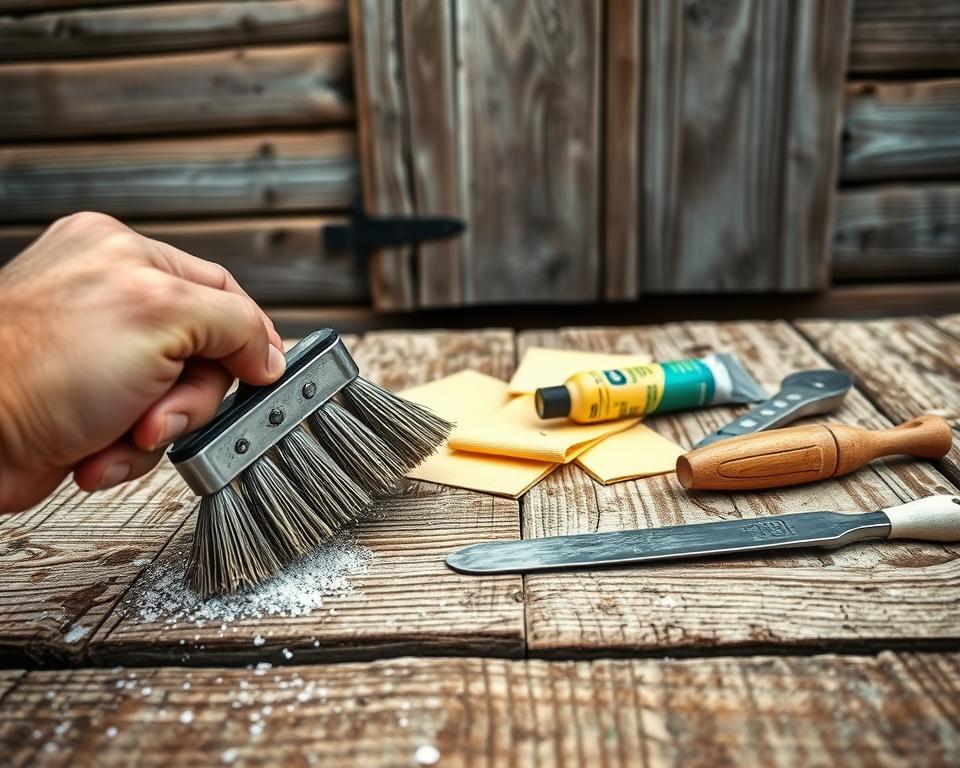
Before painting, you’ll need to address several key areas to create the perfect canvas for your new coat of paint:
Removing Dirt and Debris
Effective shed cleaning starts with thorough preparation. Follow these steps to remove surface contaminants:
- Use a stiff-bristled brush to sweep away loose dirt and cobwebs
- Wash the surface with a mild detergent solution
- Rinse thoroughly with clean water
- Consider using a pressure washer for stubborn dirt (use carefully to avoid surface damage)
Treating Mould and Mildew
Mould treatment is critical for maintaining your shed’s integrity. Identify and eliminate mould before painting:
- Mix a solution of 1 part bleach to 3 parts water
- Apply the solution using a spray bottle or brush
- Let the solution sit for 15 minutes
- Scrub the affected areas
- Rinse thoroughly and allow to dry completely
Fixing Holes and Cracks
Surface repair is essential for a professional-looking paint job. Address any structural issues before painting:
- Inspect the entire surface for damage
- Use wood filler for small holes and cracks
- Sand repaired areas smooth once dry
- For larger damages, consider professional repair or replacement
Pro tip: Always wear protective gloves and eyewear during shed cleaning and repair processes.
Priming Your Shed’s Surface
Shed priming is a critical step in achieving a professional-looking paint finish. An exterior primer acts as a crucial foundation for your painting project, ensuring better paint adhesion and protecting the wooden surface from environmental damage.
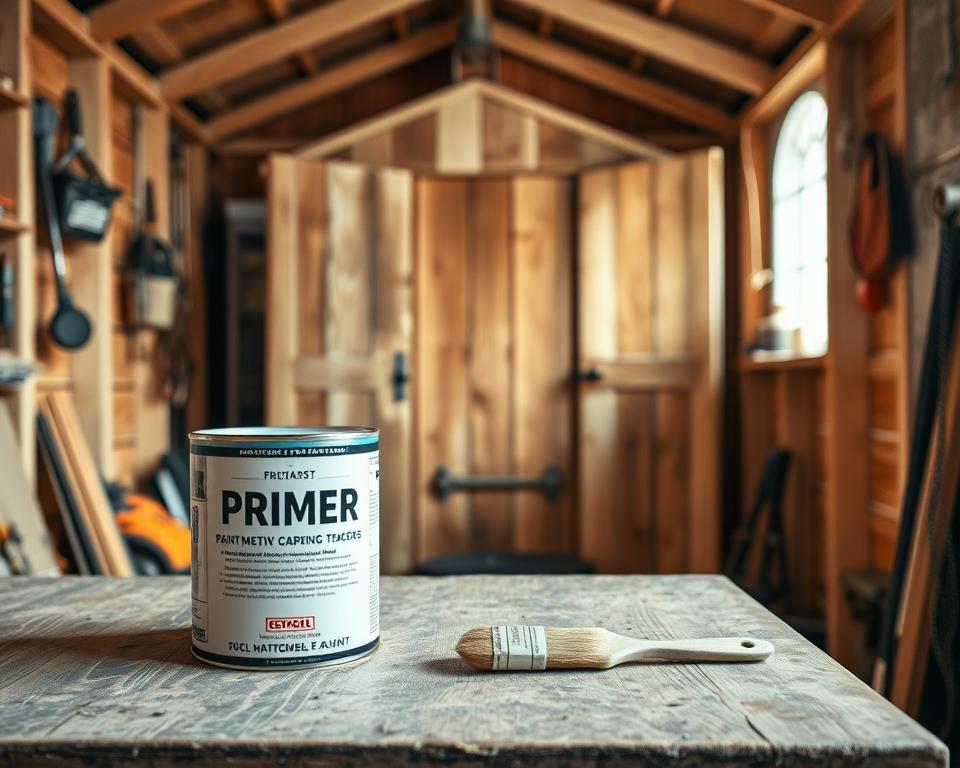
Selecting the right exterior primer depends on your shed’s specific characteristics. Different materials require different approaches to achieve optimal paint adhesion. Consider these key factors when choosing your primer:
- Wood surface condition
- Previous paint layers
- Exterior exposure levels
- Climate and weather conditions
When applying primer, follow these essential techniques:
- Clean the surface thoroughly
- Use a high-quality brush or roller
- Apply even, consistent strokes
- Allow sufficient drying time between coats
Pro tip: Always choose a primer compatible with your planned paint type to guarantee the best long-term protection for your shed.
Water-based and oil-based primers each offer unique benefits. Water-based primers dry quickly and clean up easily, while oil-based options provide superior stain blocking and durability. Your choice should align with your specific shed’s needs and local weather conditions.
Applying the First Coat of Paint
Painting a shed requires careful attention to first coat painting techniques. The initial layer sets the foundation for a professional-looking finish and determines the overall quality of your project.
Successful paint application techniques involve several critical steps to achieve even coverage across your shed’s surface.
Proper Painting Techniques
When beginning your first coat, follow these essential guidelines:
- Start with a clean, primed surface
- Use high-quality brushes or rollers
- Load your painting tool with an appropriate amount of paint
- Apply paint in smooth, consistent strokes
Coverage and Application Tips
Achieving uniform coverage requires strategic approach:
- Work in small, manageable sections
- Maintain a wet edge to prevent visible paint lines
- Pay extra attention to corners and edges
- Use vertical and horizontal strokes for comprehensive coverage
Common First Coat Mistakes to Avoid
Prevent typical painting errors by understanding potential pitfalls:
| Mistake | Solution |
|---|---|
| Applying paint too thickly | Use thin, even layers |
| Painting in direct sunlight | Choose overcast days or shaded areas |
| Insufficient drying time | Allow recommended drying periods between coats |
Remember, the first coat doesn’t need to be perfect. Subsequent layers will help refine the finish and create a professional appearance.
Adding the Final Coat and Details
The final coat painting stage is crucial for achieving a professional and polished look for your shed or summerhouse. This critical phase transforms your hard work into a stunning exterior that will protect and beautify your outdoor structure.
Preparing for paint finishing touches requires careful attention to detail. Follow these essential steps to ensure a flawless result:
- Inspect the first coat for any imperfections
- Lightly sand any uneven areas
- Clean the surface thoroughly before applying the final coat
- Use high-quality paint brushes for precision
When executing detail work, focus on creating clean, crisp lines and uniform coverage. Professional painters recommend these techniques:
- Use painter’s tape for sharp edges
- Work in small, manageable sections
- Apply paint with long, smooth strokes
- Maintain a consistent direction of application
| Technique | Purpose | Recommended Tool |
|---|---|---|
| Cutting in | Precise edges around windows and trim | Angled paintbrush |
| Rolling | Large surface coverage | Foam roller |
| Feathering | Blend paint edges smoothly | Soft-bristled brush |
Pro tip: Allow sufficient drying time between coats and ensure optimal weather conditions for the best finish.
Maintaining Your Newly Painted Shed
A freshly painted shed requires ongoing care to preserve its appearance and protect your investment. Proper shed maintenance ensures your structure remains beautiful and resilient against various environmental challenges.
Regular upkeep involves several key strategies to maintain the paint’s quality and the shed’s structural integrity. Implementing a consistent maintenance routine will significantly extend the lifespan of your paintwork and protect your outdoor structure.
Regular Cleaning Methods
Effective shed maintenance starts with gentle cleaning techniques. Use these approaches to keep your painted surface pristine:
- Soft-bristled brush for removing loose dirt
- Mild detergent solution for thorough washing
- Rinse with clean water after cleaning
- Avoid high-pressure washing that might damage paint
Paint Touch-ups
Paint touch-ups are crucial for addressing minor damage and maintaining a professional appearance. Follow these steps for seamless repairs:
- Clean the damaged area thoroughly
- Sand lightly to create smooth surface
- Match paint colour precisely
- Apply thin, even coats
- Allow proper drying between applications
Weather Protection Strategies
Protecting your shed from weather damage requires proactive measures. Consider these recommendations for weather protection:
- Apply water-resistant sealants annually
- Check for early signs of paint deterioration
- Trim nearby vegetation to reduce moisture exposure
- Inspect paintwork after severe weather conditions
Remember, consistent care prevents costly repairs and maintains your shed’s aesthetic appeal.
Conclusion
Painting a shed or summerhouse is more than just a home improvement task – it’s an opportunity to unleash your creativity and boost your garden’s overall aesthetic. The shed painting benefits extend far beyond a simple colour refresh, protecting your outdoor structure from weather damage while adding significant visual appeal to your garden space.
DIY satisfaction runs deep when you complete a project like this. Each brush stroke represents personal effort and skill, transforming an ordinary garden structure into something truly special. The process of preparing, priming, and painting requires patience and technique, but the results are immensely rewarding.
Garden improvement isn’t just about appearance; it’s about creating a space that reflects your personal style and care. A freshly painted shed becomes more than just storage – it becomes a focal point that enhances your entire outdoor environment. With the right approach and attention to detail, anyone can achieve professional-looking results that will make your garden feel more inviting and well-maintained.
Embrace the challenge of shed painting as an opportunity to develop new skills and take pride in your outdoor space. Your newly painted shed will stand as a testament to your hard work, creativity, and commitment to maintaining a beautiful garden that brings joy and satisfaction for years to come.
FAQ
What type of paint is best for a garden shed?
For garden sheds, we recommend using exterior wood paint specifically designed to withstand British weather conditions. Look for paints that offer UV protection, water resistance, and durability. Brands like Cuprinol Garden Shades or Dulux Weathershield are excellent choices for protecting wooden structures from moisture, sun damage, and general wear and tear.
How often should I repaint my garden shed?
Typically, you should repaint your garden shed every 3-5 years, depending on the paint quality and exposure to weather conditions. Signs that your shed needs repainting include fading colour, peeling paint, or visible wood damage. Regular maintenance can extend the time between full repaints.
Do I need to prime the shed before painting?
Priming is crucial for achieving a long-lasting paint finish. Use a wood primer that helps seal the surface, improves paint adhesion, and provides additional protection against moisture. This is especially important if you’re changing paint colours or painting bare wood for the first time.
What safety equipment do I need for painting a shed?
Essential safety equipment includes protective goggles, dust masks, paint-resistant gloves, and comfortable clothing that you don’t mind getting paint on. If using a ladder, ensure it’s stable and consider using non-slip shoes for added safety.
What’s the best time of year to paint a garden shed in the UK?
The ideal painting season is late spring or early autumn when temperatures are mild (between 10-20°C) and rainfall is minimal. Avoid painting during extremely hot, cold, or wet conditions, as these can affect paint application and drying.
How do I prepare the shed surface before painting?
Surface preparation is key to a great paint job. Start by cleaning the shed thoroughly, removing dirt and loose paint. Sand down rough areas, fill any holes or cracks, and ensure the surface is completely dry. Use a pressure washer for deep cleaning, but allow sufficient time for the wood to dry completely.
Can I paint over old paint or should I strip it completely?
If the existing paint is in good condition, you can often paint directly over it after thorough cleaning and light sanding. However, if the paint is severely peeling or damaged, it’s best to strip the surface completely for the best results.
How many coats of paint will I need?
Most sheds require two coats of paint for complete coverage and protection. Always allow the first coat to dry completely before applying the second coat. The exact number of coats may vary depending on the paint type and the colour you’re using.
What tools do I need for painting a shed?
Essential painting tools include paint brushes, rollers, paint trays, painter’s tape, drop cloths, sandpaper, and a ladder. Invest in good-quality brushes and rollers for a smoother finish, particularly for larger surfaces.
How can I protect my newly painted shed?
Regular maintenance is key to protecting your newly painted shed. Clean it periodically, touch up any chips or scratches promptly, and consider applying a clear wood sealant for extra protection against moisture and UV damage.