
Hedgehog in the Shed or Garage – How to Keep them Safe

Garden sheds and garages offer quiet, sheltered spaces that are highly attractive to wildlife. During autumn and winter, small mammals often seek out these structures for nesting and hibernation. Their quiet, protected nature makes them ideal temporary homes.
Populations of these spiny creatures have seen a significant decline across the United Kingdom. Recent figures show a worrying drop of up to 30% in urban areas and 50% in rural locations. This alarming trend highlights the critical need for human intervention.
Whether you welcome these visitors or find their presence challenging, responsible management is essential. This guide provides professional, evidence-based advice. It will help you recognise signs of activity and understand their behaviour patterns.
Our comprehensive guide outlines practical steps to ensure their safety. You will learn to manage potential hazards and create a secure environment. The goal is peaceful coexistence with these protected garden visitors throughout the year.
Inhaltsverzeichnis
Key Takeaways
- Garden buildings are common shelters for wildlife, especially during colder seasons.
- UK populations of these animals have declined sharply, making human help vital.
- Understanding their behaviour is the first step towards effective management.
- Simple adjustments can make sheds and garages safer for these creatures.
- Coexistence is achievable with the right knowledge and precautions.
Understanding Hedgehog Behaviour in Sheds and Garages
When colder weather arrives, creatures seek out protected environments that provide insulation from the elements. These structures become particularly attractive during autumn and winter months.
Hibernation Patterns and Nesting Needs
From November through April, these animals enter a state of deep sleep. Hibernation is a critical survival strategy during the coldest months.
Once settled, disturbing a hibernating creature can have severe consequences. It depletes their limited energy reserves needed to survive until spring.
They prefer dark, secluded areas for their nests. Common locations include corners behind stored items or beneath shelving units.
“A hibernating hedgehog’s survival depends on uninterrupted rest and proper insulation.”
Signs and Indicators in Your Property
Recognising evidence of visitors helps ensure their safety. Key indicators include distinctive tracks and droppings.
Tracks show five toes, though often only four appear clearly. Front footprints resemble tiny handprints, while rear ones are longer.
Droppings are typically cylindrical, about 5cm long, and dark in colour. They often contain fragments of insects and worms.
| Normal Signs | Abnormal Signs | Action Required |
|---|---|---|
| Dark, firm droppings | Green, slimy droppings | Monitor closely |
| Activity during night hours | Daytime activity in winter | Contact wildlife rescue |
| Well-formed tracks | Mucus-covered evidence | Seek professional help |
These nocturnal animals may travel up to 3km each night. Spotting them during evening hours is normal behaviour.
Hedgehog in the Shed or Garage – How to Keep them Safe
Establishing reliable pathways is fundamental for safeguarding visiting wildlife. Consistent management of access points prevents accidental confinement. This section details practical measures for creating secure transit and feeding areas.

Creating Safe Access and Exit Routes
Door management requires strict consistency. Property owners must choose one strategy and maintain it daily.
Inconsistent habits can trap animals inside. They may perish from dehydration within days.
During spring, opening doors at dusk provides a clear exit for awakening creatures. This allows natural return to the garden without handling.
Creating “highways” between properties supports natural roaming. Cut 13cm x 13cm holes at fence bases or remove bricks from walls.
| Strategy | Benefit | Consideration |
|---|---|---|
| Always leave door open | Free animal movement | Potential security risk |
| Always close before dark | Prevents entry | Requires daily vigilance |
| Create fence holes | Enables natural roaming | Neighbour consultation needed |
Providing Fresh Water and Appropriate Food
Place shallow bowls near the building entrance. Use tinned meaty cat or dog food and crushed biscuits.
Never offer milk or bread. These cause digestive issues and provide no nutrition.
Fresh water is essential daily. Check and refresh bowls each day to prevent dehydration.
Clean dishes outside with hot, soapy water. This reduces disease transmission between different visitors.
Position stations near hedges or shrubs. Shaded locations make animals feel secure while feeding.
Practical Steps to Protect Hedgehogs and Your Property
Property safety for visiting wildlife involves careful management of both chemical and physical hazards. Simple adjustments can significantly reduce risks to these protected animals.

Managing Chemicals and Hazardous Materials
All toxic substances require secure storage away from floor areas. Pesticides, paints, and fuels should be placed on high shelves or in sealed cabinets.
Common garden chemicals present serious dangers. Slug pellets and rat poison can directly kill hedgehogs. Insecticides destroy their natural food supply.
Even lawn treatments may cause chemical burns to their feet. Proper storage prevents accidental contact with these hazardous materials.
| Hazard Type | Specific Risk | Prevention Method |
|---|---|---|
| Chemical substances | Direct poisoning | High shelf storage |
| Garden tools | Severe injuries | Pre-use inspection |
| Bonfire piles | Fatal burns | Same-day burning only |
Maintaining a Stable Environment in Winter and Summer
During hibernation periods, minimise disturbances in storage areas. Loud noises and vibrations can disrupt their crucial rest.
Garden tool safety requires particular attention. Always check thoroughly before using strimmers or mowers in overgrown spots.
In warmer months, consistent access management remains important. Ensure water availability while maintaining chemical safety protocols.
Regular inspections of potential nesting sites prevent accidents. Check compost heaps and brush piles before disturbance.
Expert Advice for Managing Hedgehog Encounters
Encountering wildlife in domestic settings requires informed decision-making and professional guidance. Property owners should understand when to intervene and when to seek expert help.
When to Contact Wildlife Rescue Organisations
Never attempt to care for these animals yourself, especially when babies are present. Mother hedgehogs with hoglets need specialist care. Human interference may cause abandonment.
Contact rescue services immediately for injured or sick animals. Look for visible wounds, limping, or abnormal droppings. Animals in immediate danger also require professional assistance.
| Situation Type | Indicators | Required Action |
|---|---|---|
| Injury or Illness | Wounds, limping, green droppings | Immediate wildlife rescue contact |
| Immediate Danger | Trapped in netting or drains | Professional intervention needed |
| Multiple Animals | Overwhelming numbers causing concern | Seek advice from experts |
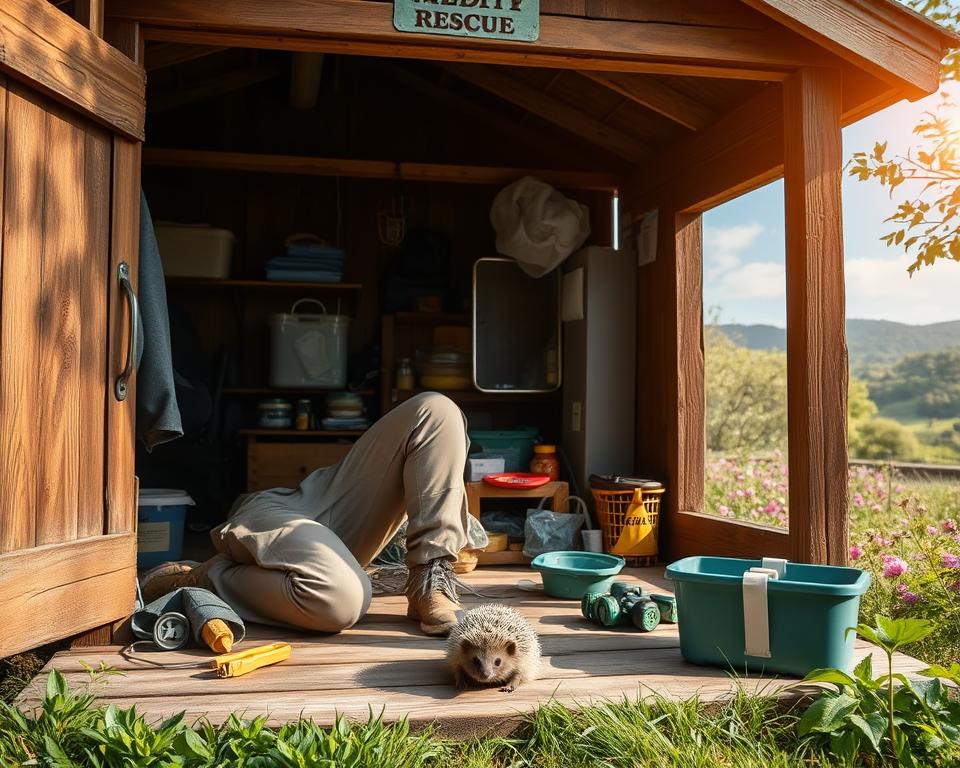
Tips for Coexisting with Pets and Preventing Accidents
Dogs pose significant risks to hedgehogs. They can kill vulnerable animals with a single shake. Supervision is essential during night hours.
Keep dogs away from areas where wildlife is present. Use leads or muzzles after dark. Turn on exterior lights before releasing pets.
Cats generally pose minimal threat to these spiny visitors. The main issue involves cats consuming food intended for hedgehogs.
Create feeding stations with tunnel entrances too small for cats. This protects food supplies while allowing hedgehog access. Remember that hedgehog fleas cannot transfer to pets.
Conclusion
When winter’s chill recedes and nocturnal visitors return to their natural habitats, thoughtful property management can make a lasting difference. The principles outlined in this guide provide a solid foundation for supporting these important garden residents.
Consistent door management remains the most critical step for safety. Providing appropriate food and fresh water daily encourages animals to utilise garden spaces rather than seeking shelter inside structures. Proper chemical storage and careful garden maintenance prevent accidental harm.
Remember that professional wildlife organisations offer essential support for injured or young animals. Simple actions like creating boundary access points and maintaining natural shelter areas can transform any garden into a vital sanctuary.
Every small effort contributes to conservation. These creatures play a valuable role in ecosystem health through natural pest control. Supporting their wellbeing helps preserve biodiversity for future generations.
FAQ
What are the signs a hedgehog might be nesting in my shed or garage?
Look for droppings, which are dark, pellet-shaped and often contain insect wing cases. You might also notice a path through dust or cobwebs, or hear snuffling sounds at night.
How can I provide a safe exit route for a hedgehog?
Ensure there is a small gap, approximately 13cm x 13cm, in a wall or fence. This allows the creature to come and go freely to forage, preventing it from becoming trapped.
What should I feed a hedgehog if I find one?
Offer a shallow bowl of fresh water and either meat-based cat or dog food. Never give them milk, as it causes severe digestive issues.
When is it necessary to contact a wildlife rescue organisation?
Contact a rescue centre immediately if the animal is injured, lethargic, out during daylight hours in winter, or appears tangled or unwell.
How can I make my garage or shed safer for these animals?
Securely store all chemicals, paints, and tools. Check for and block any hazardous holes, and always look carefully before moving objects or starting machinery.
Can hedgehogs coexist with my pets?
Generally, yes, but supervision is crucial. Keep cat and dog food indoors to avoid attracting the creature unnecessarily, and ensure your pets cannot access the hedgehog’s nesting area.
What temperature is too cold for a hedgehog in my garage?
These creatures hibernate when temperatures drop significantly. A well-insulated garage is often suitable, but if it becomes freezing, providing extra bedding like shredded paper can help.

