Shed Maintenance: Treatments and Refurbishing
Looking after a garden building is essential for preserving its structure and appearance. Regular care protects these valuable outdoor spaces from the UK’s varied climate throughout the year.
This guide offers a systematic approach to caring for a wooden structure. It covers everything from spotting early signs of wear to applying protective coatings. The end of summer is often the ideal time for significant work, allowing finishes to dry fully before autumn.
Following a proper care schedule prevents minor issues from becoming major, costly problems. It ensures your garden building remains a safe, functional, and attractive asset for many years, ultimately extending its life significantly.
Inhaltsverzeichnis
Key Takeaways
- Proactive care is crucial for protecting garden buildings from weather damage.
- Wooden structures require specific attention to maintain their integrity.
- This guide provides a comprehensive plan for assessment and preservation.
- Proper upkeep safeguards your investment and prevents expensive future repairs.
- Timing maintenance tasks correctly, like late summer, maximises the effectiveness of protective treatments.
- A well-maintained shed remains safe, functional, and enhances garden aesthetics.
Understanding Common Shed Issues
A proactive inspection is the first line of defence against the deterioration of a garden building. Knowing what to look for empowers owners to address problems before they escalate.
Identifying Weather and Rot Damage
Persistent moisture is the primary enemy of wood. It leads to rot, which weakens the structure. Look for soft, spongy areas when pressing on boards.
Discolouration, crumbling timber, and a musty smell are clear indicators. Check the roof for cracked or missing tiles and damaged felt, as these allow water ingress.
Spotting Loose Boards and Structural Flaws
Over time, exposure to the elements can cause boards to warp or become loose. Inspect walls for gaps between panels and check for wobbly door hinges.
Corroded fixings and floor damage can compromise safety. A systematic check of all joints and foundations is essential for assessing overall soundness.
| Issue Type | Primary Cause | Key Signs to Look For |
|---|---|---|
| Rot and Decay | Moisture Penetration | Soft wood, dark discolouration, crumbling timber |
| Weather Damage | Sun, Rain, Wind | Faded stain, warped boards, cracked roof felt |
| Structural Flaws | Age, Physical Impact | Loose panels, gaps, corroded fixtures, unstable doors |
Planning Your Shed Maintenance Strategy
Before picking up a single tool, careful preparation ensures that the entire renovation process is efficient and yields long-lasting results. This guide offers practical advice for this critical phase.
A logical sequence of work prevents wasted effort. Structural repairs always come first, followed by weatherproofing, and finally aesthetic touches like a new coat of paint.

Creating a Comprehensive Refurbishment Checklist
A detailed checklist is invaluable. It should be tailored to the building’s condition, ranging from a quick tidy-up to a major project.
Document all issues found during inspection. Estimate the time needed for each step and plan the order of work to avoid backtracking.
Be realistic about your skills. Decide which tasks are suitable for DIY and which might need a professional’s touch. This helps create a feasible plan.
Gathering the Essential Tools and Materials
Having everything to hand before starting saves a lot of frustration. Delays are minimised when you are fully prepared.
This foresight helps ensure the garden shed restoration process flows smoothly from start to finish.
| Task Type | Essential Tools | Key Materials |
|---|---|---|
| Structural Repairs | Hammer, saw, screwdrivers, drill | Replacement timber, nails, screws, wood filler |
| Weatherproofing | Caulking gun, paintbrushes, sander | Sealant, roofing felt, wood preservative |
| Aesthetic Finishing | Paint rollers, sanding block, scraper | Exterior paint or stain, primer, cleaning solution |
Shed Maintenance: Treatments and Refurbishing
Bringing life back to a weathered garden building involves two critical phases: structural repairs and protective finishing. Both elements work together to ensure long-term durability against the UK’s challenging weather patterns.
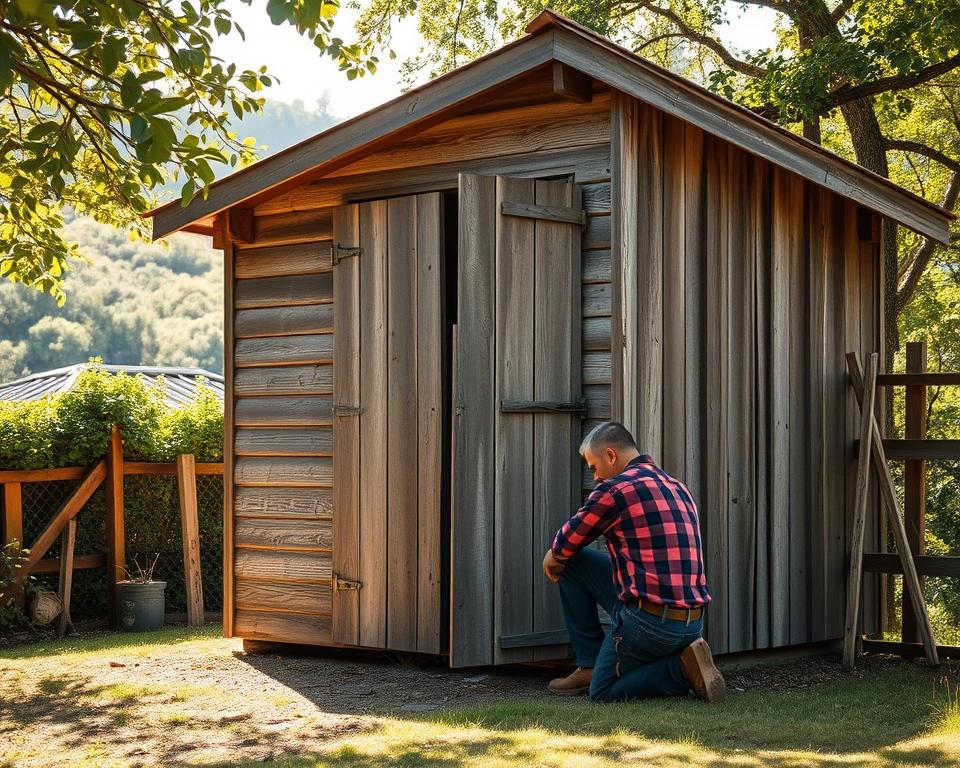
Repair Techniques for Worn Wood and Aged Elements
Damaged sections require immediate attention to prevent further deterioration. For rotten areas, carefully cut out the affected wood and fit replacement timber that matches the existing structure. Use galvanised fixings instead of corroded nails for better longevity.
Loose boards should be secured firmly. Small gaps can be filled with quality wood filler, while larger structural issues may need additional bracing. Always address underlying problems before applying any surface treatments.
Choosing the Right Protective Coatings and Paints
Selecting appropriate exterior products is crucial for effective protection. Traditional options include exterior wood paint for solid colour coverage or wood stain to enhance natural grain. Both provide essential barriers against moisture and UV damage.
Advanced products like WoodCream offer innovative features. This treatment allows the wood to breathe while repelling water effectively. It preserves the natural look and feel without creating a sealing layer.
| Product Type | Key Features | Best For |
|---|---|---|
| Exterior Wood Paint | Solid colour coverage, durable finish | Complete colour change, maximum protection |
| Wood Stain | Enhances grain, breathable | Natural appearance, moderate protection |
| Advanced Treatments | Water-repellent, self-cleaning | Long-term preservation, eco-friendly options |
The right choice depends on the building’s condition and desired aesthetic. Quality products provide strong protection against the elements while enhancing the overall appearance.
Step-by-Step Guide to Restoring Your Shed
The quality of the final finish depends entirely on the thoroughness of the initial preparation work. This process ensures that protective coatings adhere properly and repairs are long-lasting. Following a clear sequence is the most effective way to ensure a successful outcome for your garden buildings.
Cleaning and Preparing Your Shed Surface
Begin by removing all debris, cobwebs, and dirt. A stiff brush and a mild detergent solution work well for this initial clean. If mould or mildew is present, an exterior wood cleaner should be used to treat the area.
It is critical to allow the structure to dry completely before moving forward. Trapped moisture beneath new treatments can cause significant problems later. This step cannot be rushed.
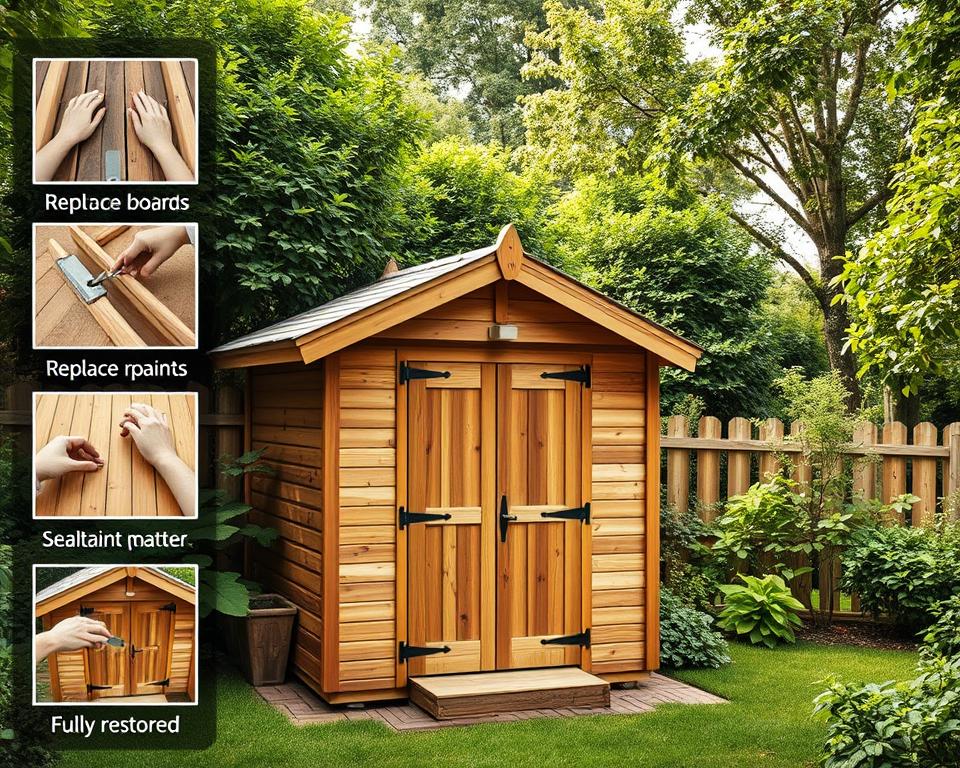
Methodical Execution of Repairs
Once clean and dry, a detailed inspection reveals issues. Rotten or damaged slats need careful removal and replacement with new, treated wood. Sanding the surface creates a smooth base for paints or stains.
Attention then turns to weatherproofing. Check the roof for damaged felt or missing shingles. Examine windows and the door frame for cracks or missing sealant. Gaps in joint panels are common entry points for water.
| Problem Area | Identification | Recommended Action |
|---|---|---|
| Wall Boards | Soft, rotten, or warped timber | Cut out and replace with treated wood |
| Roof Structure | Cracked felt, loose shingles | Replace damaged sections, secure loose items |
| Openings (Door/Windows) | Gaps in frames, worn sealant | Apply fresh caulking to seal gaps |
Enhancing Your Shed’s Appeal and Functionality
Strategic upgrades enhance both the function and beauty of garden buildings. Once structural repairs are complete, attention turns to cosmetic and practical improvements that transform the space.
These enhancements create a more inviting atmosphere while increasing usability. They turn a basic storage area into a valuable extension of living space.
Refurbishing the Interior and Exterior Features
A fresh coat of paint offers the quickest transformation for any garden structure. Selecting the right colour can give an old building a completely new look.
Choose shades that complement your house or create a bold focal point. This simple change protects the wood while refreshing the entire garden aesthetic.
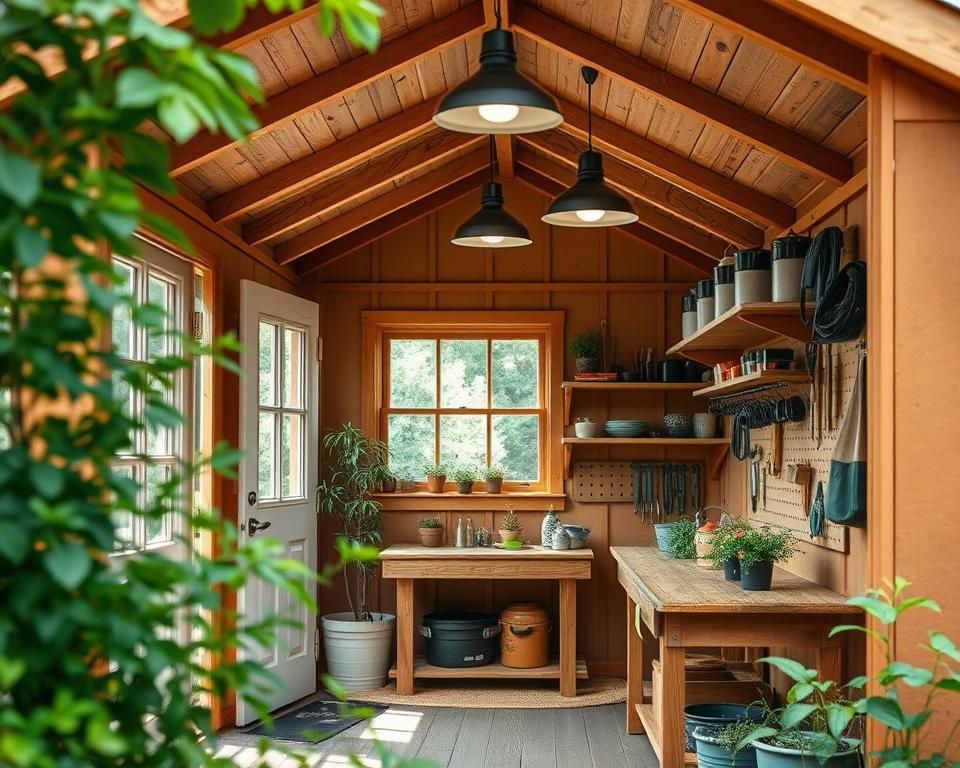
Inside, begin with a thorough clear-out. Remove unused items and clean surfaces thoroughly. This creates a blank canvas for reimagining the interior space.
Consider the building’s primary purpose when planning improvements. Storage needs differ greatly from workspace or leisure area requirements.
| Intended Use | Key Improvements | Benefit |
|---|---|---|
| Tool Storage | Shelving systems, tool organisers | Maximises space efficiency |
| Workspace | Workbench, task lighting | Enhances productivity |
| Leisure Area | Insulation, comfortable seating | Creates year-round usability |
Window treatments like curtains or blinds improve temperature control. They add privacy and contribute to a homely feel.
Electrical installation extends usage into evenings and winter months. Lighting and heating transform seasonal storage into year-round functional space.
Conclusion
The work doesn’t end once the final coat dries on a garden building project. Consistent attention throughout the year preserves both the appearance and structural integrity of the investment.
Regular roof inspections catch minor issues early. A touch-up coat of paint or stain annually provides essential protection against the elements. Simple habits like oiling hinges and ensuring proper ventilation make a significant difference over time.
This advice serves as a starting point for developing a personalised care routine. Small, regular efforts extend the life of any garden structure far more effectively than waiting for major problems to develop.
FAQ
How often should a wooden garden building be treated?
For optimal protection, a wooden structure should receive a fresh coat of preservative or paint approximately every one to three years. The exact frequency depends on the local weather conditions and the level of exposure to the elements. Regular inspection helps determine the best time for reapplication.
What is the most effective way to prevent rot in a garden shed?
The most effective strategy involves ensuring the structure remains dry. This includes maintaining a sound roof, clearing debris from the exterior, and guaranteeing good airflow around the building. Applying a high-quality wood preservative that repels moisture is also a critical step in the process.
Can I paint over old paint on my shed, and what preparation is needed?
Yes, it is possible to paint over old paint, but proper preparation is essential for a lasting finish. The surface must be clean, dry, and free from any loose or flaking material. Lightly sanding the existing coat provides a better key for the new paint, ensuring it adheres properly and looks its best.
What are the key steps for repairing a damaged shed door or window frame?
The process begins by assessing the extent of the damage. For minor rot, a two-part wood filler can be used after removing the softened timber. For more significant structural issues, replacing the entire board or frame may be necessary. After any repairs, sealing the wood with a primer and protective coating is vital.
Does the colour of the exterior paint affect the shed’s longevity?
While the colour itself does not directly prevent damage, darker shades can absorb more heat from the sun, which may cause the wood to expand and contract more. Lighter colours tend to reflect heat and can contribute to a more stable temperature, potentially extending the life of the paint and the wood beneath.