Which type of wood should you use for your deck/terrace?

Selecting the perfect decking timber for your outdoor space can be a complex decision. Your choice of timber decking options will significantly impact the aesthetics, durability, and long-term performance of your deck or terrace.
When exploring outdoor decking materials, you’ll encounter a wide range of wood types, each with unique characteristics. The right selection depends on several critical factors, including your local climate, budget, maintenance capabilities, and aesthetic preferences.
Your deck is more than just a surface – it’s an extension of your living space. Understanding the nuanced differences between various timber decking options will help you make an informed decision that meets both your practical and design requirements.
Inhaltsverzeichnis
Key Takeaways
- Wood selection significantly impacts deck performance and longevity
- Consider climate and environmental conditions when choosing timber
- Budget plays a crucial role in decking material selection
- Maintenance requirements vary between different wood types
- Aesthetic appeal should complement your outdoor design vision
Understanding the Importance of Choosing the Right Decking Timber
Selecting the right timber for your garden decking is a critical decision that impacts everything from durability to aesthetic appeal. Your deck construction requires careful consideration of multiple factors that extend far beyond simple appearance.
The quality of decking materials determines the longevity and performance of your outdoor space. Different wood types respond uniquely to the UK’s challenging weather conditions, with some naturally resisting moisture and temperature fluctuations better than others.
Choosing the right timber isn’t just about looks—it’s about creating a lasting outdoor living environment.
- Structural integrity depends on timber selection
- Climate resistance varies between wood species
- Long-term maintenance costs differ significantly
When evaluating decking materials, consider these key aspects:
- Durability against UK weather patterns
- Natural resistance to rot and insect damage
- Aesthetic ageing characteristics
- Safety features like splinter resistance
Your wood choice will influence not just the initial appearance of your garden decking, but its performance and value for years to come. Investing time in understanding timber properties will save you considerable expense and frustration in the long run.
Hardwood vs Softwood: Key Differences for Outdoor Decking
Choosing the right wood for your decking project requires understanding the fundamental differences between hardwood and softwood options. While their names might suggest a simple hardness distinction, the reality is far more nuanced. Your decking material selection impacts durability, maintenance, and overall performance.

Wood selection for outdoor spaces involves careful consideration of several critical factors. Hardwood decking and softwood decking each bring unique characteristics to your exterior design, making the decision more complex than a simple material choice.
Durability and Longevity Considerations
Durability varies significantly between wood types. Weather-resistant wood options provide different levels of protection against environmental challenges:
- Hardwoods typically offer superior natural resistance to decay
- Softwoods require more protective treatments
- Tropical hardwoods demonstrate exceptional longevity
Cost Implications of Different Wood Types
Your budget plays a crucial role in wood selection. Softwood decking generally presents a more affordable initial investment, while hardwood options might require higher upfront costs but potentially offer longer-term value.
Maintenance Requirements for Hardwood and Softwood
Maintenance needs differ substantially between hardwood and softwood decking. Hardwood decking often requires less frequent treatments, whereas softwood varieties need more regular care to maintain their appearance and structural integrity.
- Hardwoods: Less frequent maintenance
- Softwoods: Regular sealing and protective treatments
- Climate impacts maintenance frequency
Popular Hardwood Options for Decking Projects
When selecting timber for your outdoor decking, hardwood options offer exceptional durability and aesthetic appeal. Oak decking remains a quintessential choice for British homeowners, providing a classic and robust solution for external spaces.
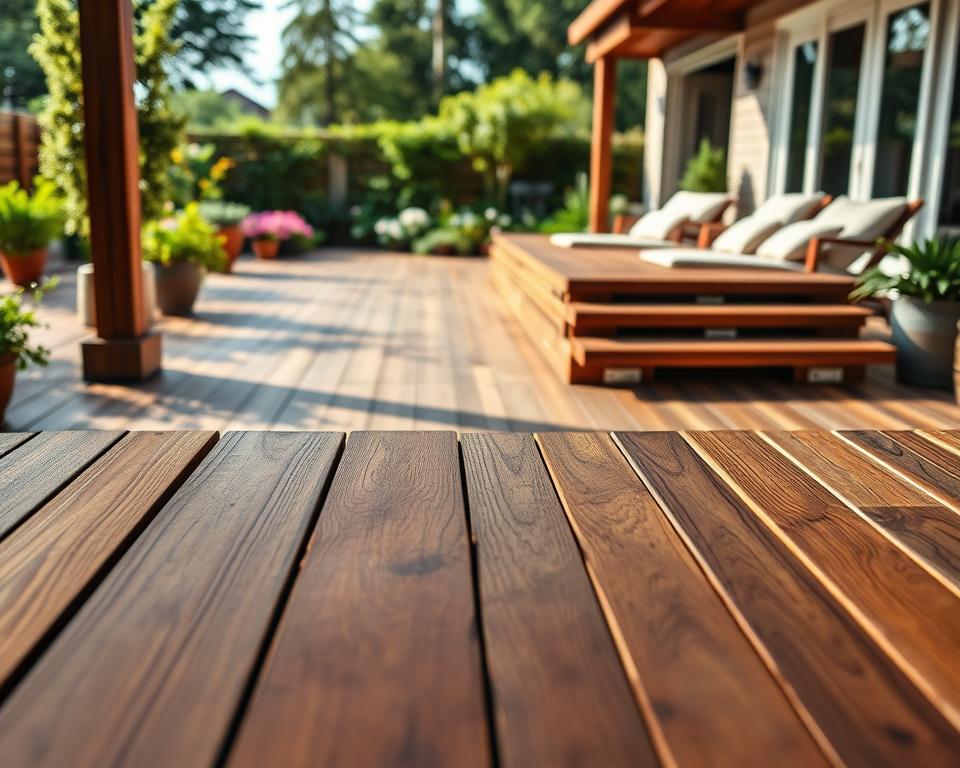
Tropical hardwood species present remarkable alternatives for discerning deck builders. Ipe decking stands out as an extraordinarily dense and resilient option, renowned for its remarkable resistance to wear, moisture, and insect damage.
- European Oak: Traditional British favourite with natural rot resistance
- Teak Decking: Premium tropical hardwood with exceptional longevity
- Ipe: Extremely dense wood with superior durability
Teak decking represents the pinnacle of tropical hardwood selections. Its natural oils provide excellent weather protection, ensuring your deck maintains its integrity through challenging British climate conditions.
| Hardwood Type | Durability Rating | Average Lifespan |
|---|---|---|
| European Oak | High | 25-30 years |
| Teak | Excellent | 40-50 years |
| Ipe | Superior | 50+ years |
Selecting the right hardwood can transform your outdoor space into a lasting, beautiful environment.
Consider your specific requirements, budget, and aesthetic preferences when choosing between these exceptional hardwood decking materials. Each option brings unique characteristics to enhance your outdoor living experience.
Softwood Decking Choices: Affordable and Versatile Solutions
When planning your decking project, softwood emerges as a budget-friendly and practical option for homeowners seeking a cost-effective solution. These timber varieties, primarily derived from fast-growing coniferous trees, offer excellent performance when properly treated and maintained.

Softwood decking provides several compelling advantages for UK residential spaces. Pressure-treated decking ensures enhanced durability, making it a smart choice for outdoor environments that demand resilience against weather and wear.
Advantages of Pressure-Treated Softwood
- Lower initial investment compared to hardwood options
- Effective preservative treatment extends wood lifespan
- Versatile application across various outdoor spaces
- Rapid treatment process reduces manufacturing costs
Natural Resistance Properties
Certain softwood species like cedar and redwood offer inherent resistance to decay and insect damage. These natural properties make treated pine an attractive decking material for homeowners seeking long-lasting outdoor solutions.
| Softwood Type | Natural Resistance | Cost Efficiency |
|---|---|---|
| Treated Pine | Moderate | High |
| Cedar | Excellent | Medium |
| Redwood | Very Good | Medium-High |
When selecting softwood for your decking project, consider the preservative treatment quality and the specific environmental conditions of your outdoor space. Proper maintenance will significantly extend the lifespan of your pressure-treated decking investment.
Which Type of Wood Should You Use for Your Deck/Terrace?

Selecting the right timber for your deck is a crucial decision that impacts both aesthetics and functionality. When choosing decking timber, you’ll need to consider several key factors that will guide your deck timber selection process.
Your deck’s success depends on carefully matching wood characteristics to your specific requirements. The best wood for decking isn’t universal – it’s the one that perfectly suits your unique situation.
- Budget Considerations: Determine your initial investment and long-term maintenance costs
- Durability Expectations: Assess how long you want your deck to last
- Aesthetic Preferences: Choose timber that complements your home’s design
- Climate Resilience: Select wood that withstands local weather conditions
Different wood types offer unique advantages. Hardwoods like teak provide exceptional durability but come at a higher price point. Softwoods such as pine offer affordability and versatility, making them popular for deck timber selection.
Consider these critical evaluation criteria when making your decision:
- Initial wood cost
- Maintenance requirements
- Expected lifespan
- Aesthetic appeal
- Environmental resistance
By carefully weighing these factors, you’ll find the perfect timber that transforms your outdoor space into a beautiful, long-lasting deck that meets your specific needs.
Climate and Weather Considerations for Wood Selection

Selecting the right timber for your deck requires careful consideration of the UK’s unique climate challenges. British weather presents specific obstacles for outdoor decking, with frequent rainfall, high humidity, and temperature fluctuations that can significantly impact wood performance.
Understanding the environmental factors that affect your deck is crucial for maintaining its longevity and appearance. The UK’s damp conditions create an ideal environment for moisture damage and potential decay, making rot-resistant timber an essential choice for outdoor spaces.
Moisture Resistance Strategies
Protecting your deck from moisture damage involves several key approaches:
- Choose naturally rot-resistant timber species
- Apply high-quality waterproof sealants
- Implement proper drainage design
- Regular maintenance and inspection
Protecting Against UV Exposure
Decay prevention goes beyond moisture control. UV rays can cause significant colour fading and structural degradation. Consider these protective measures:
- Select timber with natural UV resistance
- Use protective wood stains
- Install partial shade structures
By carefully selecting rot-resistant timber and implementing strategic protection methods, you can ensure your deck withstands the challenging British climate for years to come.
Sustainability and Environmental Impact of Decking Materials

When planning your outdoor decking project, understanding the environmental impact of your chosen materials is crucial. Sustainable decking goes beyond aesthetics and durability—it’s about making responsible choices that protect our planet’s precious ecosystems.
FSC certified timber represents a gold standard in responsible forestry. By choosing wood with this certification, you ensure that your decking materials come from forests managed with strict environmental and social standards. These forests are carefully monitored to maintain biodiversity, protect wildlife habitats, and support local communities.
- Eco-friendly materials reduce carbon footprint
- Responsible forestry preserves forest ecosystems
- Sustainable timber supports global conservation efforts
“Every board in your deck can tell a story of environmental stewardship or environmental destruction.” – Forestry Conservation Expert
The timber industry’s environmental impact varies dramatically. Irresponsible logging can lead to deforestation, habitat destruction, and significant carbon emissions. Conversely, well-managed forests provide renewable resources that actually help combat climate change by absorbing carbon dioxide during tree growth.
When selecting decking materials, consider these key sustainability factors:
- Source of timber
- Forest management practices
- Transportation and processing emissions
- Long-term environmental impact
By prioritising FSC certified timber and sustainable decking options, you’re not just building a beautiful outdoor space—you’re contributing to global environmental conservation efforts.
Budget Planning and Long-Term Value Assessment

Planning your decking project requires a strategic approach to budget management. Understanding the true financial implications goes far beyond the initial purchase price of timber. Decking costs involve multiple layers of investment that smart homeowners must carefully evaluate.
Your budget planning should encompass several critical financial considerations:
- Initial material purchase costs
- Installation expenses
- Long-term maintenance requirements
- Potential repair and replacement investments
Initial Investment vs Lifecycle Costs
While cheaper timber might seem attractive initially, the lifetime value of your decking depends on its durability and maintenance needs. Cost comparison should focus on the total ownership experience rather than just upfront expenses.
“Invest wisely in your decking, and it will serve you for decades.”
Return on Investment for Different Wood Types
Different wood species offer varying financial propositions. Hardwoods like oak might have higher initial costs but can provide superior longevity. Softwoods present more budget-friendly options but may require more frequent treatments and replacements.
Calculating the true financial impact involves assessing:
- Annual maintenance expenses
- Replacement frequency
- Aesthetic value retention
- Property value enhancement
By carefully analysing these factors, you can make an informed decision that balances immediate budget constraints with long-term value considerations.
Installation and Treatment Requirements for Various Wood Species
Successful deck installation depends on understanding the unique characteristics of different wood species. Your choice of timber will significantly impact the fixing requirements and overall project complexity. Specialist tools become essential when working with harder wood varieties, particularly when pre-drilling is necessary to prevent splitting or cracking during the installation process.
Softwood decking materials like pine typically demand precise installation techniques to maximise durability. You’ll need to consider specific spacing, fastening methods, and protective treatments that differ from hardwood species. Pressure treatment or specialised sealants can help enhance the wood’s resistance to moisture and environmental challenges.
Professional deck builders recommend selecting appropriate fixing hardware matched to your chosen wood type. Stainless steel or coated screws work best for preventing corrosion and ensuring long-term structural integrity. Your installation approach should account for natural wood movement, expansion gaps, and potential seasonal variations that might affect the decking’s performance.
When preparing for your deck installation, invest time in understanding the specific requirements of your selected timber. Consulting with timber specialists or experienced deck builders can provide invaluable insights into the best installation techniques for your particular wood species, ensuring a robust and long-lasting outdoor living space.
FAQ
What is the most durable wood for decking in the UK climate?
Hardwoods like European Oak and Iroko offer exceptional durability in the UK’s challenging weather conditions. These timbers naturally resist moisture, rot, and insect damage, making them ideal for outdoor decking. Alternatively, Cedar and Pressure-treated Softwood provide robust performance at a more affordable price point.
How often should I maintain my wooden deck?
Maintenance frequency depends on the wood type. Hardwoods like Oak typically require treatment every 2-3 years, while Softwoods may need annual maintenance. Regular cleaning, sealing, and inspection are crucial to prevent water damage, prevent wood rot, and extend your deck’s lifespan.
Is sustainable decking timber available in the UK?
Yes, look for FSC-certified timber from responsibly managed forests. European Oak and Cedar from sustainable sources offer environmentally friendly options. Many UK suppliers now provide decking materials that minimize environmental impact while ensuring high-quality performance.
How does wood type affect decking costs?
Softwoods are typically the most cost-effective, with prices ranging from £20-£50 per square metre. Hardwoods like Oak can cost £70-£120 per square metre. While initial costs vary, consider long-term maintenance and durability when budgeting for your decking project.
What wood is best for areas with high moisture?
Iroko, Teak, and Pressure-treated Softwood excel in high-moisture environments. These woods have natural water-resistant properties or undergo treatments that prevent rot, making them ideal for damp UK conditions. Consider Cedar as another moisture-resistant option with natural protective oils.
Can I install a deck myself?
DIY deck installation is possible with proper preparation and skills. Softwoods and Pressure-treated timber are typically easier to work with for beginners. However, complex designs or hardwood installations might require professional expertise. Ensure you have appropriate tools, understand local building regulations, and have basic carpentry skills.
How long will different wood types last?
Hardwood decks can last 25-50 years with proper maintenance. Pressure-treated Softwoods typically last 15-20 years, while untreated softwoods may only survive 5-10 years. Factors like climate, maintenance, and installation quality significantly impact your deck’s longevity.
What are the best woods for preventing splinters?
Hardwoods like European Oak and Teak typically produce smoother surfaces with fewer splinters. Cedar is another excellent option, known for its smooth grain and splinter resistance. Always choose high-quality, well-finished timber and consider regular sanding to minimize splinter risks.
How does wood colour change over time?
Most woods naturally weather to a silvery-grey if left untreated. Oak transforms from a warm honey-brown to silvery-grey, Cedar turns a soft grey-brown, and Teak develops a distinguished silver patina. Regular oiling or sealing can help maintain the original colour if desired.
Are there fire-resistant wood options for decking?
While no wood is completely fireproof, some options offer better fire resistance. Pressure-treated timber and Hardwoods like Iroko have enhanced fire-resistant properties. Consider additional fire-retardant treatments and check local building regulations for specific fire safety requirements.