
Build your own pergola
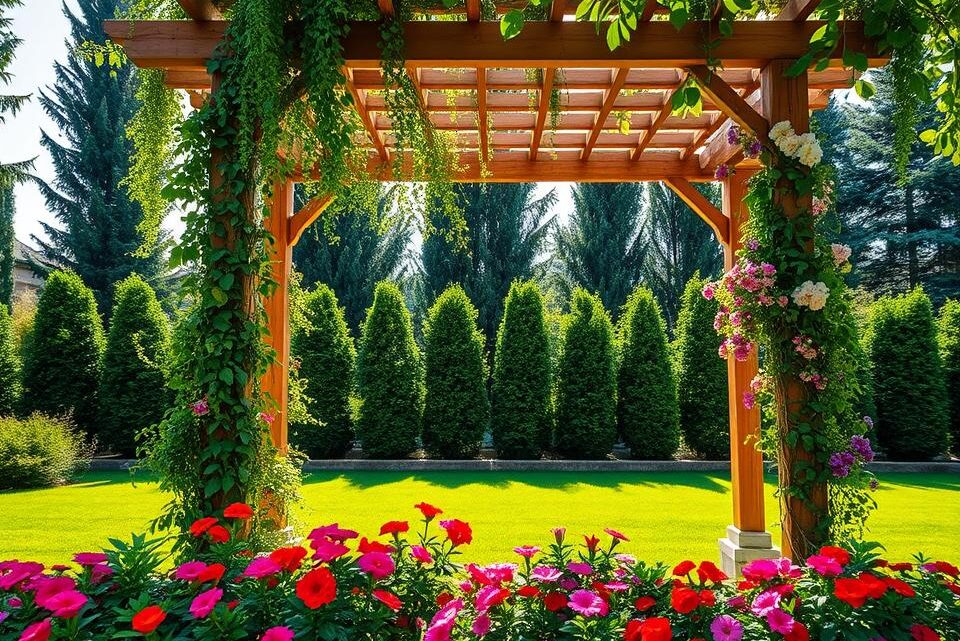
Creating a beautiful outdoor space is a great way to enhance your home’s appeal. A pergola can be a stunning addition to any garden, providing shade, supporting climbing plants, and framing your outdoor area.
By following a comprehensive guide, you can build a pergola that suits your needs and enhances your outdoor living space. This project requires moderate DIY skills and some specialized tools, but the result is well worth the effort.
A well-designed pergola can transform your garden into an elegant outdoor living area, perfect for entertaining or relaxing.
Inhaltsverzeichnis
Key Takeaways
- Building a pergola can be a cost-effective way to enhance your garden.
- A pergola provides an ideal spot for outdoor entertaining and relaxation.
- You can customize the structure to suit your specifications.
- Moderate DIY skills and specialized tools are required for the project.
- A well-built pergola can last for years to come.
Planning Your Perfect Pergola
Creating your dream pergola starts with meticulous planning to ensure it complements your outdoor space. To achieve this, you need to consider several factors, including the size and style that suits your garden.
Designing Your Pergola

When designing your pergola, consider the style that will complement your home’s architecture and garden design. You can opt for a classic wooden structure, a modern minimalist design, or something more ornate. Use software like Google Sketchup or simply pen and paper to visualise your design.
Essential Tools and Materials
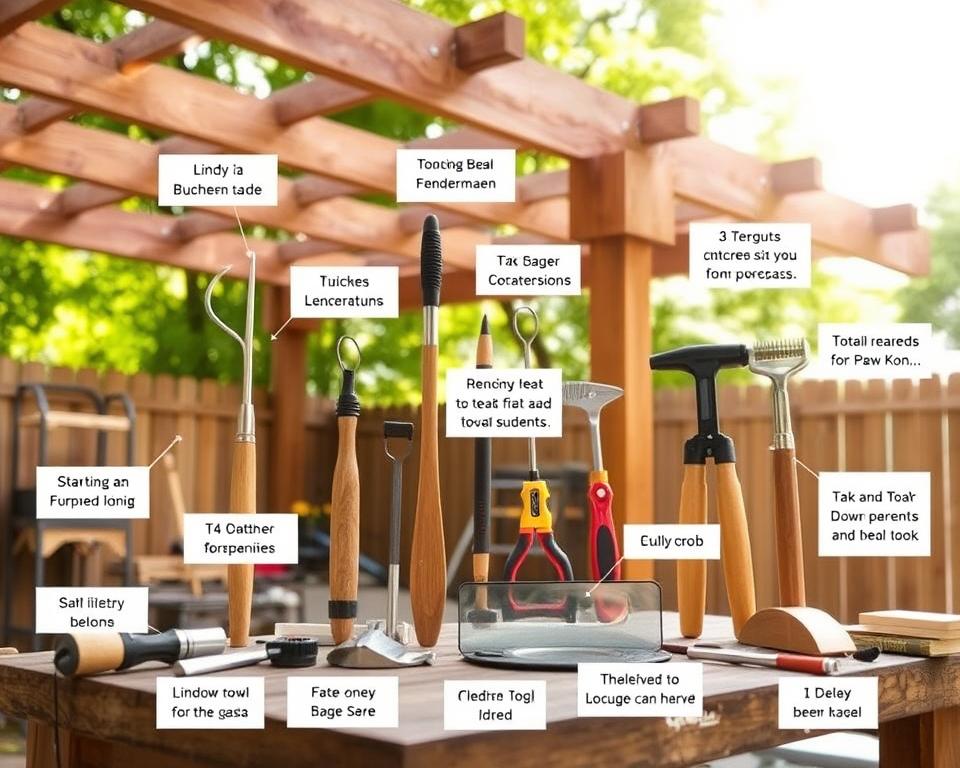
To build your pergola, you’ll need a comprehensive list of tools, including a measuring tape, spirit level, post hole digger, drill, saw, and wrench set. For materials, decide between pressure-treated lumber, cedar, or redwood, and don’t forget galvanised bolts, screws, and concrete.
Measuring and Marking Your Space
Accurate measurements are crucial. Measure your space carefully, considering sun patterns and potential obstacles like underground utilities. This step ensures your pergola fits proportionally and serves its intended purpose.
Building the Foundation
Creating a solid base for your pergola is vital for its longevity and aesthetic appeal. The foundation is the most critical part of your pergola build, as properly installed posts will ensure your structure remains stable and level for years to come.
Digging Post Holes
To start, you’ll need to dig holes for your posts. Using a narrow shovel, dig a 0.5m deep hole for your posts. To make the job easier, you can use a post hole digger. If you’re building your pergola on a concrete surface, you could use post supports instead of digging post holes.
Proper Hole Dimensions
When digging post holes, make sure to achieve the proper depth (typically 0.5m or deeper depending on your local climate) and width (approximately 24″ wide) to provide adequate support for your structure.
Working with Different Ground Types
Different ground types require different approaches – rocky soil may need specialized digging tools, while sandy soil might require wider holes and more concrete for stability.
Setting and Securing Posts
Once you’ve dug all 4 post holes to the correct depth, you can concrete them in. To give your posts a strong base, we recommend using post supports alongside concrete. Fit your post support to your post and place it in the hole. Use a spirit level to check it’s level.
| Step | Description |
|---|---|
| 1 | Backfill the hole with stones to give the post some extra stability. |
| 2 | Partially fill the hole with clean water, then add enough Postcrete to cover the water. |
| 3 | Use a piece of wood to remove any air pockets and level the Postcrete. |
Using Concrete for Stability
Make sure to use high-quality concrete specifically designed for post setting, such as Postcrete, which sets quickly and provides excellent stability for your pergola’s base.
Ensuring Posts Are Level
The process of ensuring posts are level is crucial – use a long spirit level to check each post from multiple angles, and take your time with this step as it affects the entire structure.
As a professional builder notes, “A well-built foundation is the key to a successful pergola installation.” By following these steps, you can ensure that your pergola remains stable and secure for years to come.
How to Build Your Own Pergola Structure
Now that your posts are firmly in place, it’s time to focus on attaching the support beams to form the pergola’s framework. This step is crucial as the support beams will hold the rafters, creating the distinctive pergola pattern that provides partial shade and visual interest.
Attaching Support Beams
Attaching the support beams is a critical step in building your pergola. These beams are positioned at either end of your pergola and serve as the base for the rafters. To start, you need to cut these beams to the correct length, ensuring they overhang your posts equally on both sides.
Measuring and Cutting Beams
Measure and cut your support beams to the desired length. It’s essential that they are of equal length and overhang the posts by the same amount on both sides for a balanced appearance.
Securing Beams to Posts
To secure the beams to the posts, first hammer a nail into the post at the height where the beam will sit. Place the beam on the nail and clamp it in place. Then, drill pilot holes into the beam at the centre of the post and secure using coach bolts. Ensure the beam is level and the overhang is equal on both sides.
Installing Rafters
Rafters are the beams that run perpendicular to your support beams. They should also overhang the support beams by an equal amount on both sides. Lay out your rafters, ensuring they are all the same length and cut any that are too long.
Spacing Rafters Correctly
To achieve a uniform look, use a wooden spacer to maintain consistent spacing between the rafters along the length of your pergola.
Attaching Rafters to Support Beams
Attach the rafters to the support beams, ensuring they are perpendicular and their ends align perfectly on both sides. Use appropriate fasteners to secure them in place.
Some key points to remember when building your pergola structure:
- Ensure support beams are level and securely attached to posts.
- Maintain consistent spacing between rafters.
- Use substantial galvanized bolts for a strong connection.
- Consider adding diagonal braces for additional stability.

Finishing Touches and Maintenance
Now that your pergola is built, consider how to enhance its appearance and longevity. To protect your pergola structure from the elements, apply a quality wood preservative, followed by stain or paint that complements your garden aesthetic.
Regular maintenance is crucial; check for loose bolts, signs of wood rot, or damage, especially after extreme weather. You can also enhance your pergola with outdoor lighting, hanging plants, or climbing vines to create a stunning garden feature.
To help your pergola last, follow the product instructions for drying time between coats, and consider winterizing it if you live in an area with harsh winters. By taking these steps, you’ll be able to enjoy your new outdoor living space for years to come.
FAQ
What is the ideal size for a pergola?
The ideal size for a pergola depends on the space available and the intended use. Typically, a pergola can range from 2.4 to 4.8 metres in length and 1.8 to 3.6 metres in width. Consider the size of your garden and the area where you plan to install the pergola.
What type of materials are best for a pergola?
The best materials for a pergola are durable and weather-resistant. Popular options include pressure-treated timber, cedar, and recycled plastic. The choice of material will depend on your budget, desired appearance, and level of maintenance you are willing to perform.
How deep should I dig the post holes for my pergola?
The depth of the post holes will depend on the height of your pergola and the type of soil. As a general rule, the holes should be one-third to one-half the height of the posts. For example, if you’re using 2.4-metre posts, the holes should be around 0.8 to 1.2 metres deep.
What is the purpose of using concrete for the post bases?
Using concrete for the post bases provides a stable and level foundation for your pergola. It helps to prevent the posts from shifting or settling over time, ensuring the structure remains secure and level.
How do I ensure my pergola is level?
To ensure your pergola is level, use a spirit level to check the posts and beams during construction. You can also use adjustable post bases to make fine adjustments to the level of the posts.
What is the recommended spacing for the rafters?
The recommended spacing for the rafters will depend on the design and size of your pergola. Typically, rafters are spaced between 400 to 600 mm apart. Check the manufacturer’s instructions or consult with a professional if you’re unsure.
How do I maintain my pergola?
Regular maintenance is essential to extend the life of your pergola. Inspect the structure regularly, clean it as needed, and apply a protective finish to the timber to prevent rot and insect damage.

