
Can You Use a Summerhouse as a Garden Office? Explained

The rise of remote and hybrid working arrangements across the United Kingdom has prompted many homeowners to seek alternative workspace solutions. Traditional home office setups often blur the boundaries between professional and personal life. This has led to increased interest in creating dedicated work areas within garden structures.
Converting an existing summerhouse into a functional workspace presents an appealing option for those seeking separation between work and home life. The potential benefits include a distinct physical boundary and a tranquil environment away from household distractions. However, this transformation requires careful consideration of several important factors.
Standard summerhouses are primarily designed for leisure and relaxation during warmer months. Their construction often prioritises aesthetic appeal over year-round professional use. While the conversion is certainly possible, certain modifications and upgrades are essential to create a comfortable, productive workspace suitable for all seasons.
This comprehensive guide explores both the opportunities and limitations of such a project. It covers essential upgrades, legal considerations, design improvements, and comparisons with alternative garden buildings. Readers will gain a realistic understanding of what’s involved in creating an effective garden office from an existing summerhouse structure.
Inhaltsverzeichnis
Key Takeaways
- The growing trend of remote work in the UK drives interest in garden office solutions
- Summerhouses offer potential for creating a separate workspace away from the main home
- Standard summerhouse designs prioritise leisure over professional workspace requirements
- Successful conversion requires specific modifications for year-round comfort
- Essential considerations include insulation, heating, lighting, and power supply
- Legal and planning permission aspects must be carefully reviewed
- Professional assessment determines if conversion is feasible for individual structures
Exploring the Concept of a Garden Office
A garden office represents a dedicated workspace that combines professional functionality with natural surroundings. This arrangement has become increasingly popular among remote workers and business owners seeking separation from their main residence.
Benefits of a Dedicated Outdoor Work Space
The elimination of daily commuting presents significant advantages. Research shows the average UK worker spends 1.15 hours travelling each way. Over a career, this accumulates to 10,600 hours of travel time.
Property experts indicate garden rooms can add 1.5 times their cost in property value. This makes them a sound investment compared to traditional home extensions.
Having a separate structure reduces household distractions. It creates clear boundaries that help individuals transition between professional and personal life more effectively.
Work-life Balance and Increased Productivity
Working from home in a dedicated space enhances focus and creativity. Garden offices typically feature large windows providing calming garden views throughout the day.
This connection with nature improves mindfulness and mental wellbeing. The physical separation allows family members to respect work boundaries more easily.
Research demonstrates that proper workspace design boosts productivity. Natural light exposure and tranquil surroundings contribute to better performance during working hours.
Planning and Legal Considerations
Establishing a professional workspace in a garden structure introduces specific regulatory requirements. Homeowners must understand these obligations before beginning their conversion project.

Several factors determine whether planning permission becomes necessary. The key distinction lies between occasional remote work and running a registered business. Full-time commercial operations typically require formal approval.
Understanding Planning Permission and Business Rates
Local councils assess whether the structure’s use constitutes a material change. Regular client visits or increased delivery traffic often trigger planning permission requirements. Administrative work for an employer usually falls under permitted development rights.
Exclusive commercial use may subject the building to business rates. However, small business relief frequently reduces or eliminates this liability. Dual-purpose spaces combining home and office functions often avoid these charges.
Compliance with UK Building Regulations
Electrical installations must meet Part P safety standards. Structural modifications require adherence to building control requirements. Proper insulation and ventilation systems ensure year-round comfort.
Homeowners should consult their local planning authority for specific guidance. Mortgage agreements and insurance policies may restrict commercial activities. Maintaining good neighbour relations prevents complaints about noise or increased traffic.
Design and Functional Upgrades
The transition from leisure space to professional environment necessitates strategic design improvements. Creating an efficient workspace requires balancing aesthetic appeal with practical functionality.
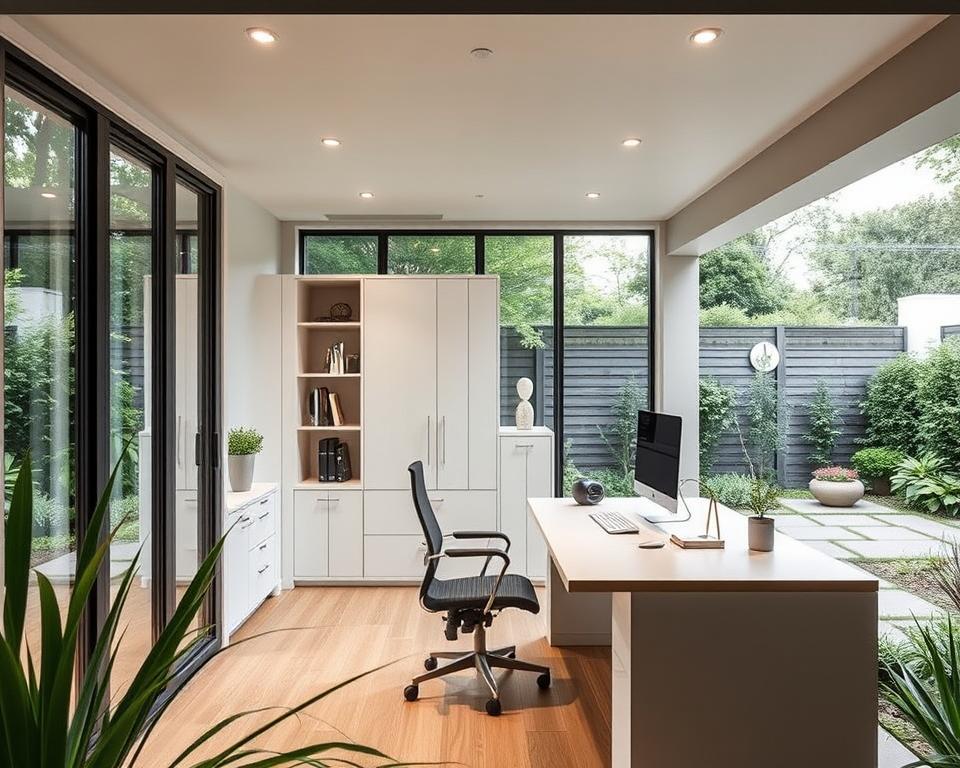
Thoughtful planning ensures the structure serves as a productive office throughout the year. Proper upgrades transform the basic summerhouse into a comfortable working environment.
Customising the Space for Comfort and Efficiency
Furniture selection forms the foundation of an effective workspace. A sturdy desk and ergonomic chair support productivity during long sessions. Adequate storage solutions keep the room organised and clutter-free.
Strategic placement of electrical outlets accommodates technology needs. Personal touches like plants create an inviting atmosphere. These elements combine to make the space both functional and comfortable.
Incorporating Modern Office Fixtures and Optimising Lighting
Lighting design significantly impacts work quality. Large windows provide natural illumination during daylight hours. Supplementary LED lighting ensures consistent brightness for evening tasks.
Combining ambient and task lighting reduces eye strain. Warm light sources create a pleasant atmosphere after sunset. Proper illumination transforms the garden structure into a professional workspace.
Comparing Garden Buildings: Shed, Summerhouse, and Garden Room
The choice between various garden structures depends heavily on intended use and budget constraints. Each option serves distinct purposes with varying levels of comfort and functionality.

A basic garden shed provides economical storage for tools and equipment. These simple buildings feature thin walls without insulation. They work well for seasonal storage but offer limited comfort.
Key Differences, Uses and Flexibility
Traditional timber buildings like summerhouses serve as charming retreats. Their lightweight construction suits warm-weather relaxation. However, they lack the insulation needed for year-round office use without significant upgrades.
Purpose-built garden rooms represent the premium choice. These structures feature proper insulation and durable materials. They function as comfortable extension spaces for various activities.
| Feature | Garden Shed | Summerhouse | Garden Room |
|---|---|---|---|
| Primary Use | Storage & workshops | Seasonal leisure | Year-round functionality |
| Insulation | Minimal to none | Limited | Fully insulated |
| Cost | Most affordable | Mid-range | Premium investment |
| Maintenance | Low | Regular upkeep needed | Minimal |
While sheds are less expensive, their functionality remains basic. Summerhouses offer aesthetic appeal but require modifications for daily use. Garden rooms provide immediate comfort and durability.
The selection process involves balancing budget against long-term needs. Each building type serves its purpose within the garden environment. Consider future requirements when making this important decision.
Conclusion
Creating an effective outdoor workspace involves balancing practical upgrades with regulatory compliance. The transformation from summerhouse garden retreat to functional garden office requires careful planning and appropriate modifications.
Investing in proper insulation, heating, and electrical systems ensures year-round comfort. These upgrades transform seasonal structures into productive home office environments. The resulting dedicated work space offers significant benefits including improved productivity and better work-life balance.
Before beginning any conversion project, homeowners should assess their specific needs and budget. Consulting local authorities about planning permission prevents potential legal issues. With proper preparation, a summerhouse garden can become an excellent garden office solution that adds value to both property and professional life.
FAQ
What are the main benefits of using a garden office?
A garden office provides a clear physical separation between work and home life, which can significantly improve work-life balance. This dedicated space often leads to increased productivity due to fewer household distractions. It also offers a pleasant view and a connection to the outdoors without the commute.
Is planning permission required for a summerhouse used as an office?
In many cases, a garden building used as an office falls under permitted development rights, meaning planning permission is not needed. However, this depends on factors like the building’s size, height, and location on the property. It is always advisable to check with the local planning authority before proceeding.
What essential upgrades are needed to make a summerhouse suitable for year-round use?
To ensure comfort throughout the seasons, key upgrades include proper insulation for the walls, floor, and roof. An efficient heating solution, such as an electric radiator or underfloor heating, is crucial for winter. Safe and sufficient electrical installation for lighting, power, and internet connectivity is also vital.
How does a summerhouse compare to a garden room for office use?
A summerhouse is often a more cost-effective option but may require significant upgrades like insulation. A purpose-built garden room is typically designed for year-round occupancy from the start, featuring integrated insulation, heating, and power. Garden rooms generally offer a more immediate, high-specification solution.
Are there any legal implications, such as business rates, for a home office in the garden?
Using a garden building exclusively for a home-based business *could* potentially make it liable for business rates. However, if the space is used for work that is incidental to the main use of the house (e.g., remote working for an employer), it is unlikely to attract additional charges. Professional advice should be sought for specific circumstances.
What are the key design considerations for a functional garden office?
Effective design focuses on comfort and efficiency. This includes optimising natural light with well-positioned windows, choosing ergonomic furniture, and ensuring adequate artificial lighting. The layout should facilitate workflow, with dedicated areas for different tasks, while personal touches can make the space inspiring.

