
Choosing the Right Shed Doors: Factors to Consider

The entrance to your garden building serves as its most crucial design element. This is the component you engage with frequently, providing access to the structure’s interior. Before making a selection, numerous aspects demand careful thought.
Modern garden buildings have evolved significantly beyond simple storage spaces. Many homeowners now utilise these structures as workshops, home offices, gymnasiums, and relaxation areas. This expanded functionality makes the selection process more critical than ever.
Functionality remains paramount for any garden building entrance. The opening must allow easy entry while accommodating your specific usage requirements. A well-chosen option enhances both usability and visual appeal.
This comprehensive guide explores the essential considerations for UK homeowners. It examines how to balance practical needs with design preferences, security features, and budget constraints. Making an informed decision ensures long-term satisfaction with your garden investment.
Inhaltsverzeichnis
Key Takeaways
- The entrance is the most interacted-with part of any garden structure
- Modern sheds serve diverse purposes beyond basic storage
- Functionality and ease of access are primary concerns
- Selection requires balancing practical needs with aesthetic preferences
- Security features and budget considerations influence the final choice
- Professional evaluation prevents costly mistakes and functionality issues
- The right selection enhances both usability and visual appeal
Introduction: The Role of Shed Doors in Garden Functionality
Functionality begins at the threshold, where the opening mechanism sets the tone for the entire garden building experience. This critical component serves as the gateway between your outdoor area and the interior space.
Modern garden structures have evolved beyond simple storage solutions. Many now serve as workshops, home offices, or relaxation spaces. This expanded purpose makes the entrance more important than ever.
The right selection balances security with easy access. It must accommodate regular use while protecting your belongings. Weather resistance and visual appeal also play crucial roles in the decision.
| Functionality Aspect | Practical Consideration | Long-Term Benefit |
|---|---|---|
| Daily Access | Ease of opening and closing | Convenient regular use |
| Weather Protection | Resistance to elements | Reduced maintenance needs |
| Security Features | Locking mechanisms | Peace of mind |
| Aesthetic Harmony | Design compatibility | Enhanced property value |
Investing time in understanding these factors prevents future frustration. Proper selection ensures your garden building serves its purpose effectively throughout its lifespan. The entrance should align with your specific household needs and garden design goals.
Understanding Your Shed’s Purpose
The function of your garden building is the single most important factor in selecting an entrance. Different uses demand different configurations. A clear plan for the shed’s role guides every subsequent decision.
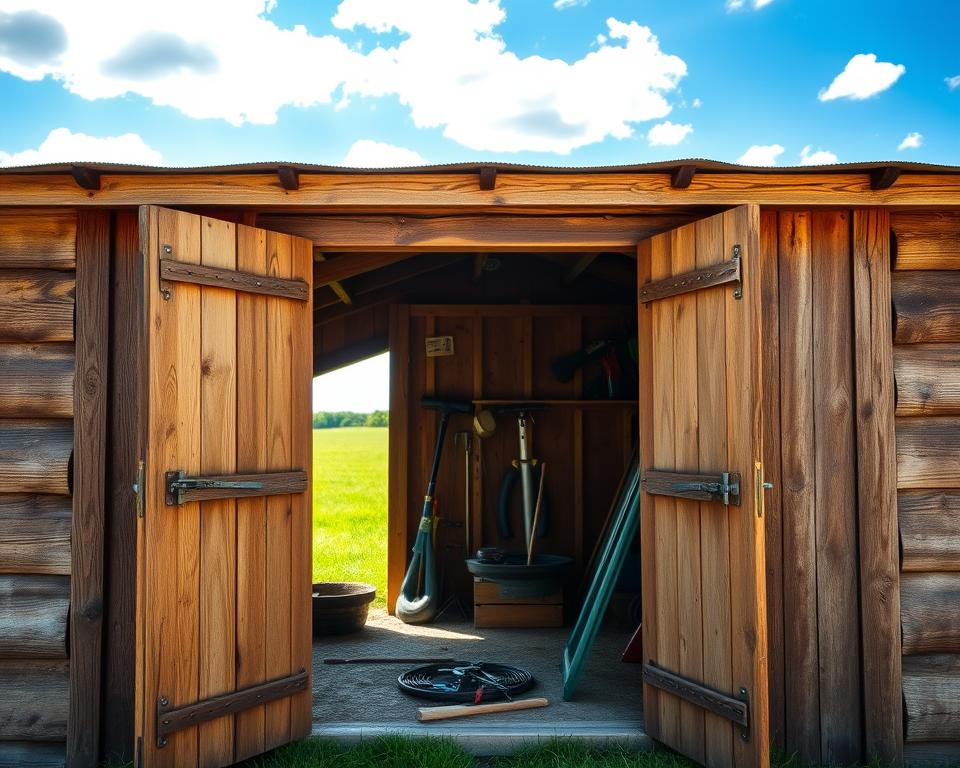
This initial step prevents future inconvenience. It ensures the opening matches the intended activities inside the structure.
For Storage and Equipment
When the primary use is storage, the size and type of items matter. Small garden tools and seasonal decorations often fit well with a single door. This option provides adequate access for everyday use.
For larger equipment like lawnmowers or bicycles, a double door is often better. It allows for easy movement of bulky objects. This setup prevents frustration when accessing your stored items.
Security is also crucial for valuable equipment. The door choice must support strong locks to keep your possessions safe.
Converting to a Garden Room or Workshop
Transforming a shed into a living or working space changes the requirements. A garden room or workshop benefits from a more open feel. Double doors are often preferable here.
They make it easier to move furniture, workbenches, or large projects in and out. This configuration creates a welcoming entrance for a hobby space.
It provides plenty of space for materials and tools. This flexibility supports creative and practical activities.
| Intended Use | Recommended Door Type | Key Benefit |
|---|---|---|
| Small Item Storage | Single Door | Efficient access for regular use |
| Large Equipment Storage | Double Door | Easy movement of bulky items |
| Garden Room | Double Door | Spacious feel and easy furniture access |
| Workshop | Double Door | Ample space for materials and projects |
Exploring Different Shed Door Types and Designs
The market offers a diverse range of shed door configurations, each suited to different needs and garden aesthetics. Understanding the primary options helps homeowners make an informed selection that complements their building’s function.
From classic single units to more specialised designs, the choice significantly impacts both access and visual appeal.

Single, Double and Stable Door Options
A single door is the most common type. It provides a straightforward, durable opening for standard-sized sheds. This classic choice is easy to install but requires clearance space for the door to open fully.
Double doors create a much wider entrance. Each panel swings away from the other, transforming the space. This design is ideal for summer houses or workshops where moving large items is frequent.
Stable doors offer unique functionality. Split horizontally, the top half can open independently for ventilation. This style is popular for potting sheds, allowing light and air in while keeping contents secure.
Traditional Versus Modern Styles
Traditional styles often feature ledged and braced timber panels. This construction offers a rustic, timeless look that suits classic garden designs.
Modern designs favour cleaner lines and minimalist profiles. They align with contemporary architectural trends for a sleek appearance.
Glazing is another key consideration. Options range from small panes to full-length glass. This dramatically affects natural light, making a space feel larger and more connected to the garden.
For those with specific requirements, custom shed doors are also an option. This ensures a perfect fit and a unique aesthetic vision for any garden building.
Shed Door Materials and Their Performance
The material composition of a garden building’s entrance fundamentally dictates its performance and lifespan. Homeowners face a choice between traditional and modern options, each with distinct advantages. Understanding these differences ensures a selection that withstands the test of time.
Comparing Wood, Plastic and Metal Options
Wooden doors represent the classic choice, valued for decades. They offer excellent versatility, allowing customisation through painting, varnishing, or staining. This makes it easy to match any garden aesthetic perfectly.

Solid-core wood construction provides improved strength and stability. Despite exposure to moisture, these doors maintain their shape over a long lifespan. Pine, redwood, and softwood are popular choices.
Plastic presents a modern alternative with significant maintenance benefits. A simple wipe is often all that’s needed for cleaning. Their lightweight nature makes daily operation effortless.
Metal options, including aluminium and galvanised steel, deliver superior durability. They offer increased security, making them ideal for valuable possessions. Their corrosion resistance suits challenging UK coastal areas.
Maintenance and Longevity Considerations
Each material demands different care routines. Wood may require periodic treatment to maintain its condition. Plastic needs minimal upkeep beyond occasional cleaning.
Metal materials typically offer the lowest maintenance requirements. Their inherent strength resists damage from weather and wear. This translates to long-term reliability with little effort.
| Material | Maintenance Needs | Expected Lifespan | Best For Climate |
|---|---|---|---|
| Wood | Regular sealing/varnishing | 10-20 years | Sheltered gardens |
| Plastic | Occasional wiping | 15-25 years | All UK regions |
| Metal | Minimal; check for corrosion | 20-30 years | Coastal/high rainfall |
The right choice balances aesthetic preferences with practical demands. Consider local weather patterns and how much time you can dedicate to upkeep. This ensures your selection provides lasting satisfaction.
Shed Door Sizes: Measurements and Fitting Options
Accurate sizing forms the foundation of any successful shed door installation, directly impacting both functionality and accessibility. Getting the measurements correct from the start prevents fitting issues and ensures smooth operation.

Standard Dimensions Versus Made-to-Measure Solutions
Standard shed door sizes offer convenience for new installations. A typical single door measures approximately 6ft (1981mm) in height and 3ft (915mm) in width. This standard shed configuration suits most basic storage needs.
For replacement projects, made-to-measure solutions become essential. The existing frame dimensions dictate the required door size. Always measure the opening precisely before ordering.
Height variations exist across different shed types. While 6ft is common, options range from compact 3ft (915mm) designs to generous 7.6ft (2032mm) heights. The height should accommodate users comfortably without stooping.
Width considerations extend beyond single door measurements. Double configurations provide wider access but require adequate clearance space. Professionals recommend minimum heights of 5ft 6in (168cm) for practical use.
Always make sure to clarify whether measurements represent internal or external dimensions. External measurements can be misleading, with actual usable space being 3-4 inches shorter due to frame thickness.
Security and Durability Features for Shed Doors
The structural integrity of a shed’s entrance determines its long-term performance and security. Quality construction prevents common issues like sagging and sticking that plague inferior products. Investing in robust features ensures reliable operation for years.

Robust Hinges, Bracing and Diagonals
Ledged and braced construction provides essential strength for any shed door. This traditional method uses horizontal ledges and diagonal braces to create a rigid frame. The double “Z” configuration offers superior stability.
Diagonal bracing is absolutely vital for preventing sagging. Experts recommend minimum two braces positioned between horizontal ledges. This supports the door during movement and weight-bearing.
Many budget sheds omit proper bracing entirely. They rely solely on nails through thin timber, which inevitably fails. Proper construction requires three heavy-duty hinges per door for even weight distribution.
Locking Mechanisms for Enhanced Safety
Security features protect valuable contents stored within garden buildings. Homeowners should make sure their shed doors include at least a padbolt for padlock attachment. This deters opportunistic theft effectively.
Enhanced options include rim locks with key operation and handles. These provide improved convenience for regular access. The highest security level comes from mortice locks fitted into the door frame itself.
Proper construction ensures smooth opening and closing throughout the product’s lifespan. Quality doors with adequate bracing prove more cost-effective than replacing failed budget alternatives.
Aesthetic Enhancements and Custom Design Tips
The visual appeal of a garden building’s entrance can transform it from a simple utility into a standout feature. Thoughtful aesthetic choices turn a functional component into a focal point that enhances the entire garden.
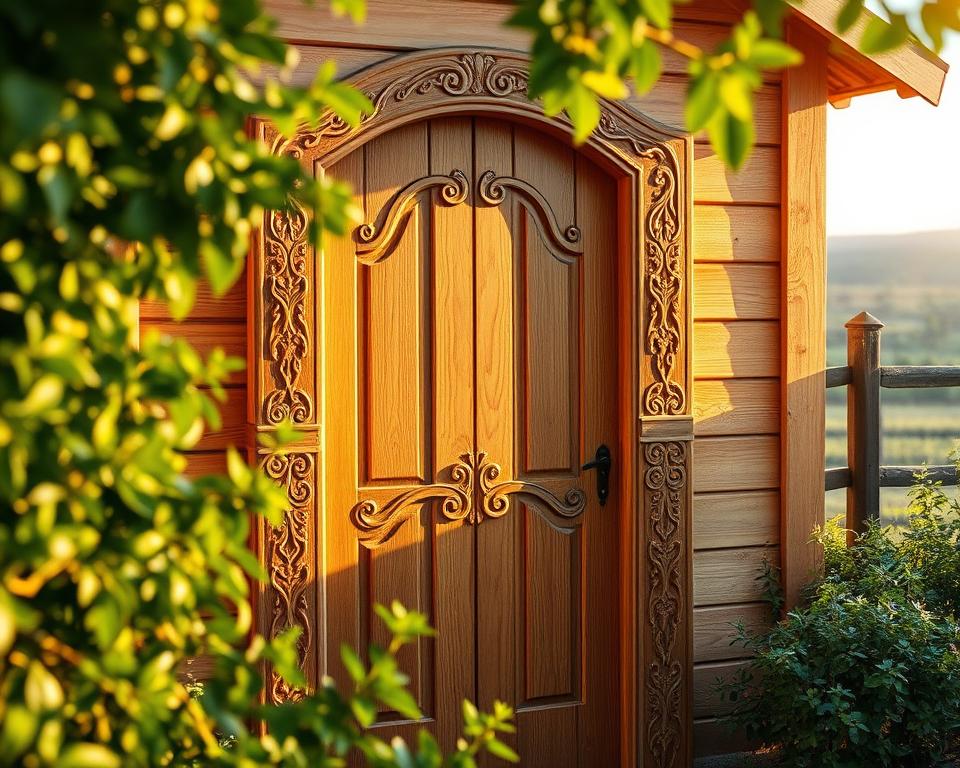
A fresh coat of paint offers a simple yet dramatic way to revitalise any garden shed door. Homeowners can select a shade that either complements or cleverly contrasts with existing features. This approach delivers instant visual impact with minimal effort.
For unique character, reclaimed wood provides an eclectic, vintage charm. This material choice brings warmth and authenticity to outdoor spaces. It supports sustainable designs while creating a distinctive look.
Wooden doors offer exceptional versatility for customisation. They can be painted, varnished, or stained to match any garden aesthetic perfectly. This flexibility allows for periodic updates to reflect evolving styles.
Decorative Finishes and Style Inspirations
Decorative accessories provide another effective way to enhance appearance. Period-appropriate hardware, decorative hinges, or window boxes add personality. These details transform a standard door into a reflection of personal taste.
Such enhancements offer clear benefits beyond mere looks. They can increase property value and personal enjoyment of the outdoor space. A well-designed shed becomes an asset rather than an afterthought.
Professional advice can guide selections that complement a property’s architectural period. Whether aiming for a cottage feel or a contemporary look, the right finish ensures the shed door integrates beautifully with its surroundings.
Expert Advice on Choosing the Right Shed Doors
Quality advice for shed door installations centres on three critical dimensions: performance, durability, and spatial efficiency. Professionals recommend a systematic approach that considers both immediate requirements and long-term satisfaction.
Performance and Longevity Factors
Evaluating shed door performance involves assessing how well the selected type aligns with intended usage patterns. The frequency of access and nature of stored items significantly influence this decision.
Longevity extends beyond initial construction quality. Maintenance requirements and material durability under UK weather conditions are crucial considerations. Experts emphasise selecting doors that maintain functionality through years of regular use.

Optimising Space and Access
Space optimisation requires careful consideration of door swing clearance. Standard swinging shed doors need adequate room to open fully without impacting pathways or garden features.
Matching door configuration to shed size is imperative. Smaller sheds often cannot accommodate double doors, while larger structures may require them for practical functionality. Always make sure the frame structure supports your chosen door type.
Professional guidance helps homeowners evaluate trade-offs between different shed door types. This ensures optimal performance for specific circumstances rather than defaulting to standard options.
Conclusion
Selecting an appropriate door is the final, crucial step in creating a shed that truly works for you. This decision blends practical needs with personal style, ensuring the garden building is both useful and attractive.
Begin by defining the shed’s purpose. Will it store garden tools or serve as a workshop? This determines the ideal door size, height, and configuration. Single, double, or stable types each offer distinct advantages.
Material choice is equally important. Wood, plastic, and metal options present different benefits for maintenance and durability. Consider local weather conditions and how much upkeep you can manage.
Security features are vital for protecting your belongings. Robust hinges and reliable locks provide peace of mind. Accurate measurements are also essential to ensure a proper fit and comfortable access.
Ultimately, the right choice balances all these factors. A well-chosen door enhances functionality, safeguards your items, and adds value to your garden for many years.
FAQ
What is the most important factor when selecting a shed door?
The primary consideration is the intended use. For storing bulky equipment, a wide double door offers better access. For a garden room conversion, a stable door or a design with windows might be preferable for light and ventilation.
Are wooden shed doors a good choice?
Wooden shed doors provide a traditional aesthetic and can be very robust, especially ledged and braced types. However, they require regular maintenance, such as painting or treating, to protect against weathering and ensure longevity.
What is the benefit of double shed doors?
Double doors create a wider opening, making it significantly easier to move large items like lawnmowers or bicycles in and out. They are an excellent solution for maximising access without needing a single, very wide door that could be prone to warping.
How can I improve the security of my shed door?
Enhance security by fitting sturdy hinges with coach bolts and adding a robust locking mechanism, such as a sturdy padbolt or a mortice lock. Ensuring the door frame is firmly anchored to the shed structure also increases overall strength.
What does ‘ledged and braced’ mean for a shed door?
This refers to a construction method where horizontal ledges and diagonal braces are fitted to the back of the door. This design adds significant strength and rigidity, helping to prevent the door from sagging or warping over time.
Can I fit a standard-sized door to my shed?
Many sheds are designed to accommodate standard door sizes, which can make replacement straightforward. However, it is crucial to measure the existing opening carefully, as dimensions can vary. Made-to-measure doors are an option for non-standard openings.
What are stable doors and where are they suitable?
Stable doors are split horizontally, allowing the top half to open independently from the bottom. This design is ideal for garden workshops or studios, providing ventilation and light while keeping the interior secure and contained.

