Create an English Garden: A Step-by-Step Guide

Transforming your outdoor space into a beautiful English garden is a rewarding experience. You can achieve a stunning landscape by following a few simple steps. A well-designed garden not only enhances the aesthetic appeal of your home but also provides a serene atmosphere for relaxation.
To start, you will need to consider the fundamental principles of garden design and landscape gardening. This involves selecting the right plants, planning the layout, and ensuring proper maintenance. By the end of this guide, you will be equipped with the knowledge to design your ideal English garden.
Inhaltsverzeichnis
Key Takeaways
- Understand the basic principles of garden design.
- Learn how to select the right plants for your English garden.
- Discover the importance of proper garden maintenance.
- Plan your garden layout effectively.
- Create a serene atmosphere in your outdoor space.
The Essence of English Gardens
The quintessential English garden is a product of historical influences, cultural shifts, and horticultural innovation. As you embark on creating your own English garden, understanding its essence is crucial.
Historical Evolution from Medieval to Modern
English gardens have undergone significant transformations since medieval times. Initially, gardens were utilitarian, providing herbs, vegetables, and fruits. The medieval garden was often enclosed and featured simple layouts. As history progressed, so did garden design. The Tudor period introduced more intricate designs and the use of topiary. The 18th century saw the rise of the Landscape Movement, which emphasized naturalistic and picturesque gardens.
| Period | Garden Characteristics |
|---|---|
| Medieval | Utilitarian, enclosed, simple layouts |
| Tudor | Intricate designs, topiary |
| 18th Century | Naturalistic, picturesque, Landscape Movement |
Defining Characteristics and Principles
So, what defines an English garden? Key characteristics include a mix of formal and informal elements, a variety of plants, and an emphasis on seasonal interest. English gardens often feature perennials, herbaceous borders, and a blend of native and exotic plants. The principle of layered planting is also prevalent, creating depth and visual interest throughout the garden.
As you design your garden, consider these elements to capture the essence of an English garden. By understanding the historical context and defining characteristics, you can create a garden that is both beautiful and authentic.
Types of English Gardens to Consider
From the structured elegance of formal gardens to the rustic charm of cottage gardens, English gardens offer a range of styles. You can choose a design that suits your taste and the characteristics of your outdoor space.
Formal Gardens: Structure and Symmetry
Formal Gardens: Structure and Symmetry
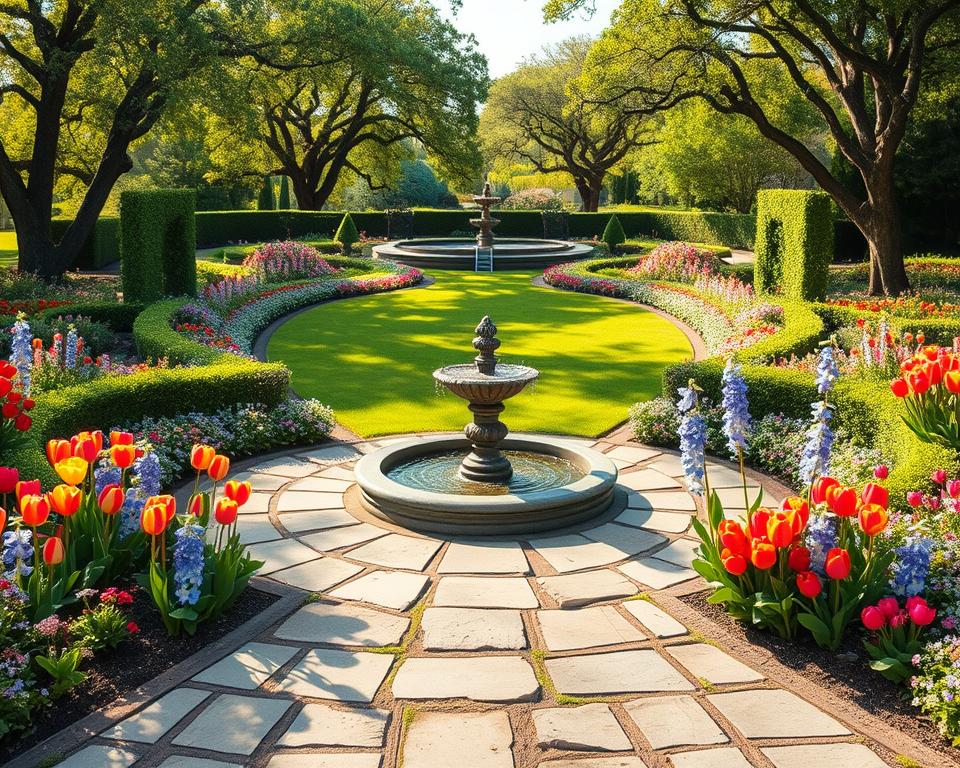
Formal gardens are characterized by their symmetry and structured design. They often feature geometric patterns, neatly trimmed hedges, and a central focal point such as a fountain or statue. These gardens create a sense of order and elegance, making them ideal for larger estates or for those who appreciate precision in their garden design.
Cottage Gardens: Informal Charm
Cottage Gardens: Informal Charm
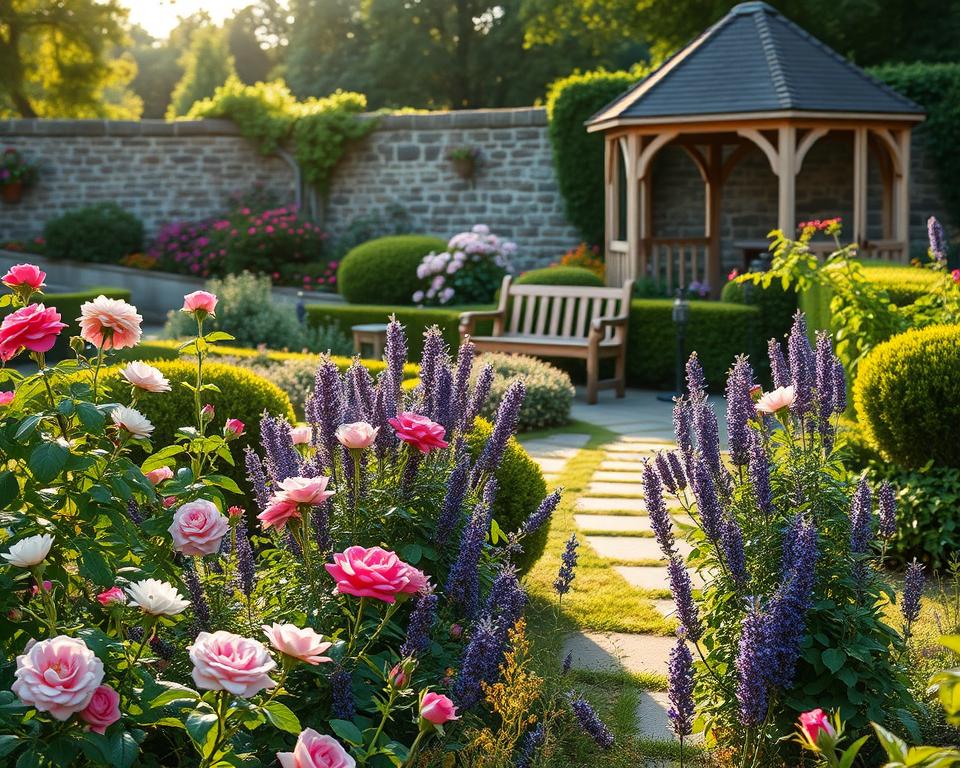
Cottage gardens, on the other hand, embody a more relaxed and informal charm. They are typically filled with a variety of flowers, herbs, and shrubs, planted in a seemingly random manner. This style creates a cozy and inviting atmosphere, perfect for smaller gardens or for those who prefer a more natural, unstructured look.
Woodland Gardens: Natural Beauty
Woodland gardens take advantage of natural woodland areas, incorporating native plants and trees to create a serene and shaded environment. These gardens are ideal for areas with existing woodland or for those who wish to create a natural, low-maintenance garden.
Kitchen Gardens: Practical Elegance
Kitchen gardens, also known as potager gardens, combine functionality with beauty. They are designed to grow a variety of fruits, vegetables, and herbs, often arranged in an attractive and decorative manner. This type of garden is perfect for those who enjoy growing their own produce and want to incorporate edible plants into their garden design.
| Garden Type | Characteristics | Ideal For |
|---|---|---|
| Formal Gardens | Symmetry, structured design, geometric patterns | Larger estates, those who appreciate precision |
| Cottage Gardens | Informal, variety of flowers and herbs, natural look | Smaller gardens, those who prefer a natural look |
| Woodland Gardens | Natural woodland areas, native plants, shaded | Areas with existing woodland, low-maintenance |
| Kitchen Gardens | Fruits, vegetables, herbs, decorative arrangement | Those who enjoy growing their own produce |
Planning Your English Garden
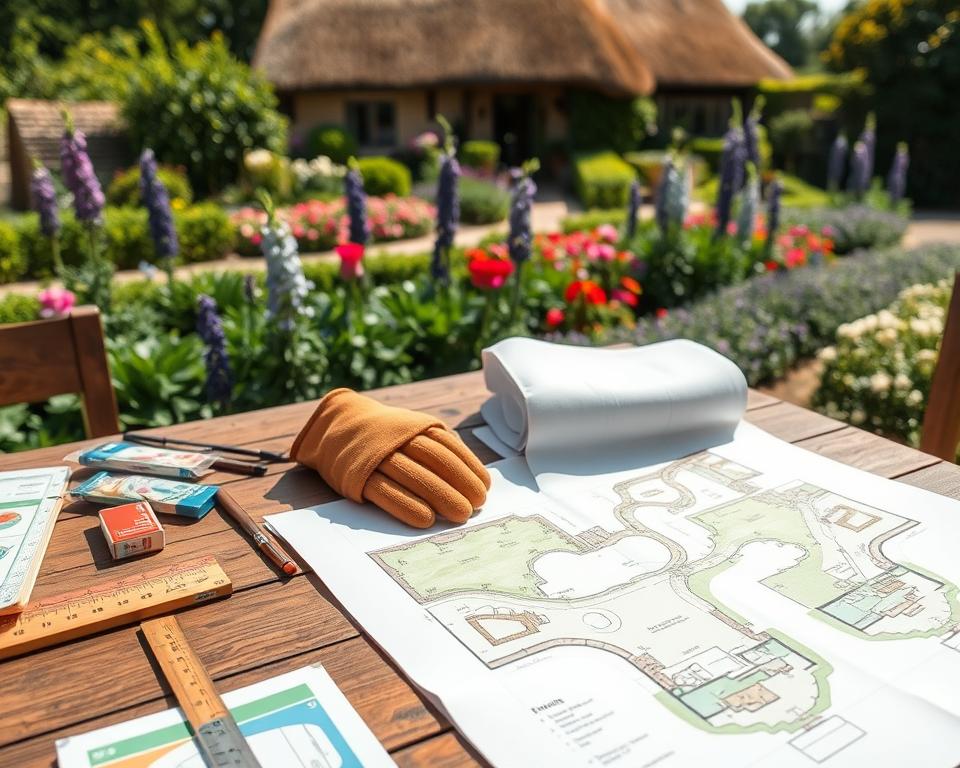
The key to a stunning English garden lies in meticulous planning and preparation. Before you begin planting, it’s crucial to assess your garden space, set realistic goals, and create a budget that works for you.
Assessing Your Space and Microclimate
Understanding your garden’s microclimate is vital for selecting the right plants. Observe the sunlight, soil type, and wind patterns in your garden. This will help you choose plants that thrive in your specific conditions. For instance, if your garden is shaded, you may want to consider plants like Hydrangea or Ferns that flourish in low-light conditions.
Setting Realistic Goals and Budgets
Setting a realistic budget is essential for successful garden planning. Determine how much you are willing to spend on plants, hardscaping, and other garden features. Consider your long-term goals for the garden and prioritize your spending accordingly. A well-planned budget will help you achieve your garden aspirations without financial strain.
Creating a Seasonal Planting Calendar
A seasonal planting calendar is a valuable tool for maintaining a vibrant English garden throughout the year. Plan your planting schedule according to the seasons, taking into account the best times to plant different types of flowers, shrubs, and trees. For example, spring is an ideal time to plant bulbs like daffodils and tulips, while autumn is perfect for planting perennials like Aster and Chrysanthemum.
By following a planting calendar, you can ensure that your garden remains colorful and interesting throughout the year, with a succession of blooms and foliage.
Essential Elements to Create an English Garden
To craft an authentic English garden, you need to incorporate a mix of hardscaping, plant selection, and thoughtful design. The essence of an English garden lies in its ability to blend natural beauty with structural features that enhance its aesthetic appeal throughout the year.
Structural Features and Hardscaping
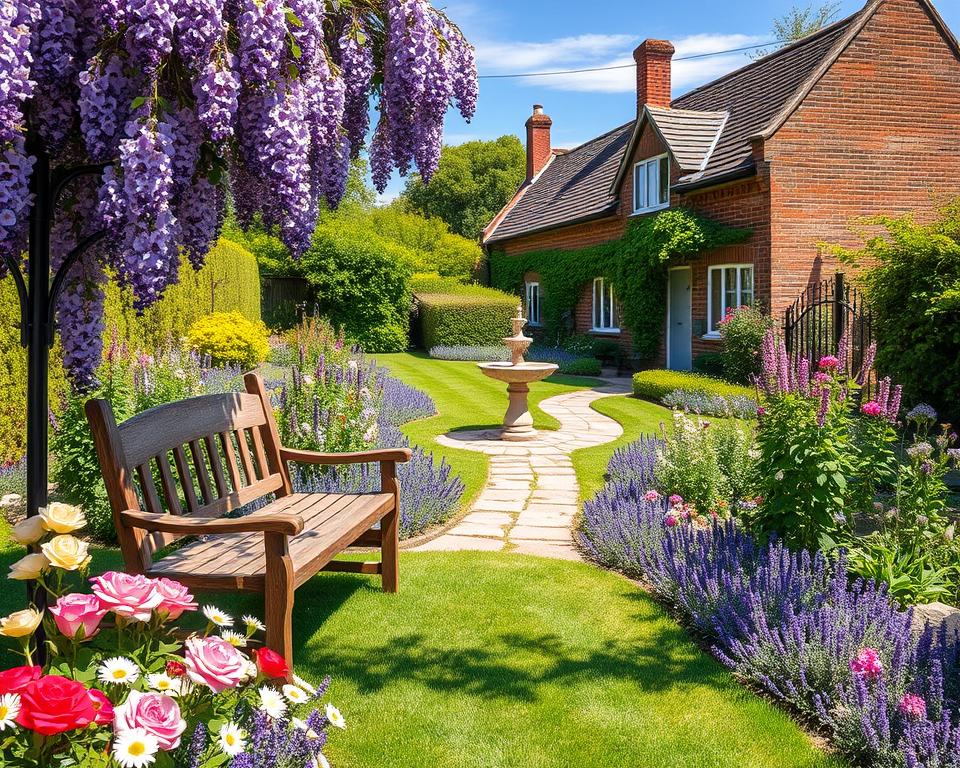
The structural elements of your garden provide the framework around which your English garden is developed. These features not only add visual interest but also help to create functional spaces within the garden.
Walls, Fences, and Boundaries
Walls, fences, and boundaries serve multiple purposes in an English garden. They provide privacy, delineate different areas within the garden, and can be used to support climbing plants. When choosing materials, consider durability, maintenance, and how they complement the overall design.
Arbours, Pergolas, and Focal Points
Arbours and pergolas are charming features that can add depth and character to your garden. They provide support for climbing plants and can create shaded areas or pathways. Focal points, such as statues or ornamental urns, draw the eye and create visual interest.
Plant Selection Philosophy
Selecting the right plants is crucial to creating an English garden that is both beautiful and sustainable. Consider plants that are native or well-suited to the British climate, and think about how they will perform throughout the seasons.
A well-planned English garden includes a mix of perennials, shrubs, and trees that provide year-round interest. Consider the colour palette, texture, and height of plants to create a visually appealing landscape.
Designing Your Garden Layout
Crafting a garden layout that reflects the essence of an English garden requires careful planning. You need to consider how different elements will work together to create a harmonious and visually appealing space. A well-designed garden layout not only enhances the beauty of your garden but also creates functional areas for relaxation and entertainment.
Creating Garden Rooms and Vistas
One effective way to design your garden layout is by creating ‘garden rooms’ and vistas. Garden rooms are areas defined by natural or man-made boundaries, such as hedges or trellises, which create intimate spaces within the larger garden. Vistas, on the other hand, are carefully planned views that draw the eye to a particular feature or focal point, such as a statue or a beautiful tree.
To create these features, you can use a combination of planting, hard landscaping, and decorative elements. For example, a meandering path can lead visitors through different garden rooms, while a strategically placed bench can create a pleasant vista.
Balancing Formal Structure with Natural Growth
A key challenge in designing a garden layout is balancing formal structure with natural growth. Formal elements, such as symmetrical planting and neatly clipped hedges, provide order and discipline. In contrast, natural growth, including flowering perennials and sprawling climbers, adds character and spontaneity.
To achieve a balance, you can combine formal and informal elements. For instance, a formal hedge can frame a more informal area of wildflowers or a cottage garden. This blend of styles creates a dynamic and engaging garden layout.
By carefully considering your garden layout and incorporating elements such as garden rooms, vistas, and a balance of formal and natural features, you can create a beautiful and inviting English garden.
Soil Preparation and Improvement
To cultivate a stunning English garden, understanding and improving your soil is essential. The quality of your soil directly impacts the health and vitality of your plants, making soil preparation a critical step in your gardening journey.
Testing and Understanding British Soil Types
British soils can vary significantly, ranging from clay and silt to sand and loam. Testing your soil type is the first step in understanding its characteristics and needs. You can use a simple DIY soil testing kit or send a sample to a laboratory for a more detailed analysis. Understanding your soil’s pH level and nutrient content will help you make informed decisions about amendments and fertilizers.
For instance, clay soils tend to be nutrient-rich but may require better drainage, while sandy soils drain well but might need more organic matter to retain moisture. Identifying your soil type allows you to tailor your gardening practices to its specific needs.

Organic Amendments and Sustainable Practices
Once you understand your soil type, you can begin improving it with organic amendments. Adding compost, manure, or green manure can significantly enhance soil structure, fertility, and overall health. These organic materials provide essential nutrients, improve soil texture, and support beneficial microbial activity.
Sustainable gardening practices, such as mulching, cover cropping, and crop rotation, also play a crucial role in maintaining soil health. Mulching, for example, helps retain moisture, suppress weeds, and regulate soil temperature. By adopting these practices, you can create a thriving ecosystem in your garden.
- Compost: Rich in nutrients and improves soil structure
- Manure: Provides essential nutrients and enhances soil fertility
- Green manure: Adds organic matter and supports beneficial microbes
The Perfect English Lawn
A lush, vibrant English lawn is the crowning glory of any garden, providing a serene backdrop for outdoor activities. To achieve this, you need to understand the principles of lawn care and maintenance.
Establishing and Renovating Lawn Areas
When establishing or renovating a lawn, it’s crucial to prepare the soil properly. This involves removing debris, levelling the ground, and incorporating organic matter to improve soil structure. For new lawns, choose a grass species that suits your climate and intended use. For renovation, assess the lawn’s condition to determine the best course of action, whether it’s overseeding, aerating, or completely re-laying the turf.
Key Steps for Lawn Establishment:
- Prepare the soil by removing debris and levelling the ground.
- Choose the right grass species for your climate.
- Incorporate organic matter to enhance soil fertility.
Maintenance Throughout the Seasons
Effective lawn maintenance is seasonal. In spring, apply a balanced fertilizer to promote healthy growth. Summer care involves regular mowing, adequate watering, and controlling weeds. Autumn is the time for aerating and applying a high-phosphorus fertilizer to encourage root growth. In winter, minimize foot traffic on the lawn to prevent damage.
| Season | Lawn Care Tasks |
|---|---|
| Spring | Apply balanced fertilizer, control weeds |
| Summer | Mow regularly, water adequately |
| Autumn | Aerate, apply high-phosphorus fertilizer |
| Winter | Minimize foot traffic |
By following these guidelines and adapting your lawn care routine to the changing seasons, you can enjoy a lush, healthy English lawn throughout the year.

Creating Structure with Hedges and Topiaries
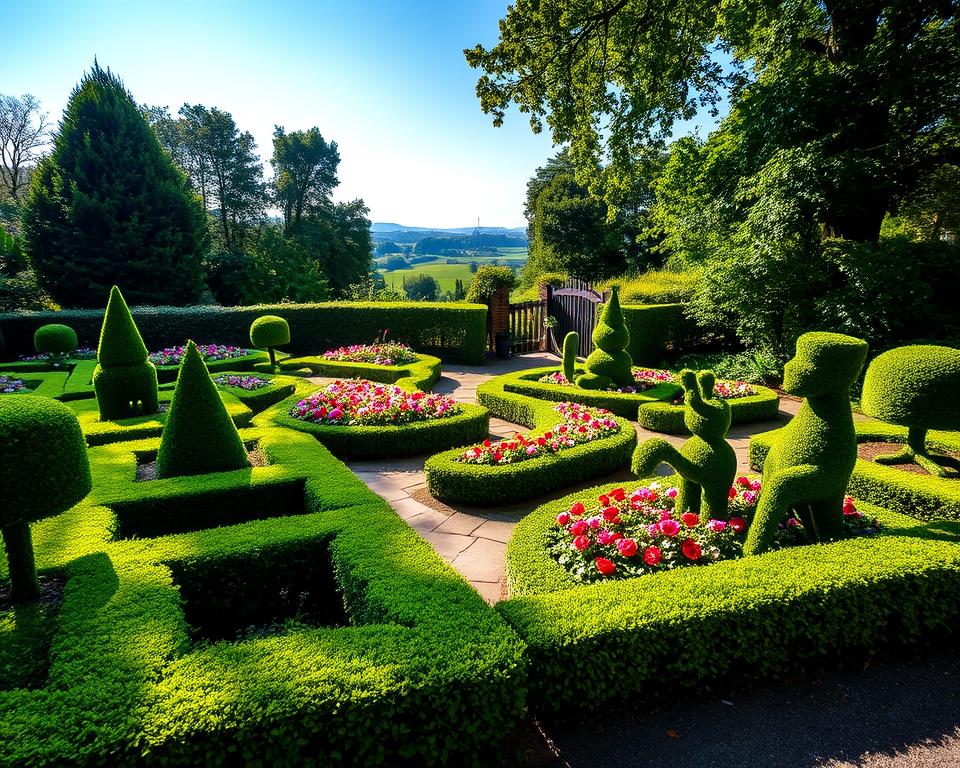
The use of hedges and topiaries can transform your garden into a beautifully structured outdoor space. These elements not only provide a sense of order and definition but also add aesthetic appeal and can be used to create secluded areas or frame views.
Traditional Hedging Plants for British Gardens
When it comes to selecting hedging plants for your English garden, there are several traditional options to consider. Yew (Taxus baccata) is a popular choice due to its dense, dark green foliage and ability to be shaped into intricate designs. Box (Buxus sempervirens) is another classic hedging plant, known for its compact growth and suitability for topiary. Other options include Privet (Ligustrum) and Hawthorn (Crataegus), both of which are easy to maintain and provide a natural, rustic look.
| Hedging Plant | Characteristics | Maintenance Level |
|---|---|---|
| Yew (Taxus baccata) | Dense, dark green foliage; can be shaped | Medium |
| Box (Buxus sempervirens) | Compact growth; suitable for topiary | High |
| Privet (Ligustrum) | Easy to maintain; natural, rustic look | Low |
Planting, Training, and Maintenance Techniques
To ensure your hedges and topiaries thrive, proper planting, training, and maintenance are crucial. When planting, choose a location with suitable sunlight and soil conditions for your chosen hedging plants. Regular watering and fertilization can help establish a healthy hedge. For topiaries, regular pruning is essential to maintain their shape and promote dense growth.
- Plant hedging plants at the correct spacing to allow for growth.
- Water newly planted hedges regularly until established.
- Prune topiaries at least twice a year to maintain shape.
- Use appropriate tools, such as hedge trimmers or secateurs, for pruning.
By incorporating hedges and topiaries into your garden design and following proper maintenance techniques, you can create a structured and beautiful English garden that will be the envy of your neighbors.
Incorporating Roses: The Crown Jewels
Roses are a quintessential element of English gardens, offering a timeless appeal. They add a touch of elegance, fragrance, and beauty, making them a must-have for any garden enthusiast. With numerous varieties to choose from, you can select roses that suit your garden’s style and climate.
Selecting Rose Varieties for Different Garden Areas
Choosing the right rose variety is crucial for a thriving English garden. For a formal garden, consider Hybrid Tea or Floribunda roses, known for their striking blooms and structured growth. In contrast, English Roses or Climbing Roses are perfect for cottage-style gardens or for adding a romantic touch to arbors and trellises.

Planting and Pruning Guidelines
Proper planting and pruning are essential for the health and beauty of your roses. When planting, ensure the root flare is level with the soil surface and water thoroughly. Pruning should be done annually to promote healthy growth and blooming. Remove dead, diseased, or damaged branches, and shape the plant to maintain its desired form.
Pest and Disease Management
Roses can be susceptible to pests and diseases, but with proper care, these issues can be managed. Regularly inspect your roses for signs of aphids, black spot, or powdery mildew. Use organic or integrated pest management techniques to address any problems, ensuring your roses remain healthy and vibrant.
By incorporating roses into your English garden and following these guidelines, you can enjoy a beautiful, fragrant, and thriving garden that is the envy of any garden enthusiast.
Designing Spectacular Perennial Borders
A well-designed perennial border can transform your garden, providing a vibrant tapestry of colours and textures. To achieve this, you need to consider several key elements, including colour schemes, plant height, and seasonal interest.
Colour Schemes and Plant Combinations
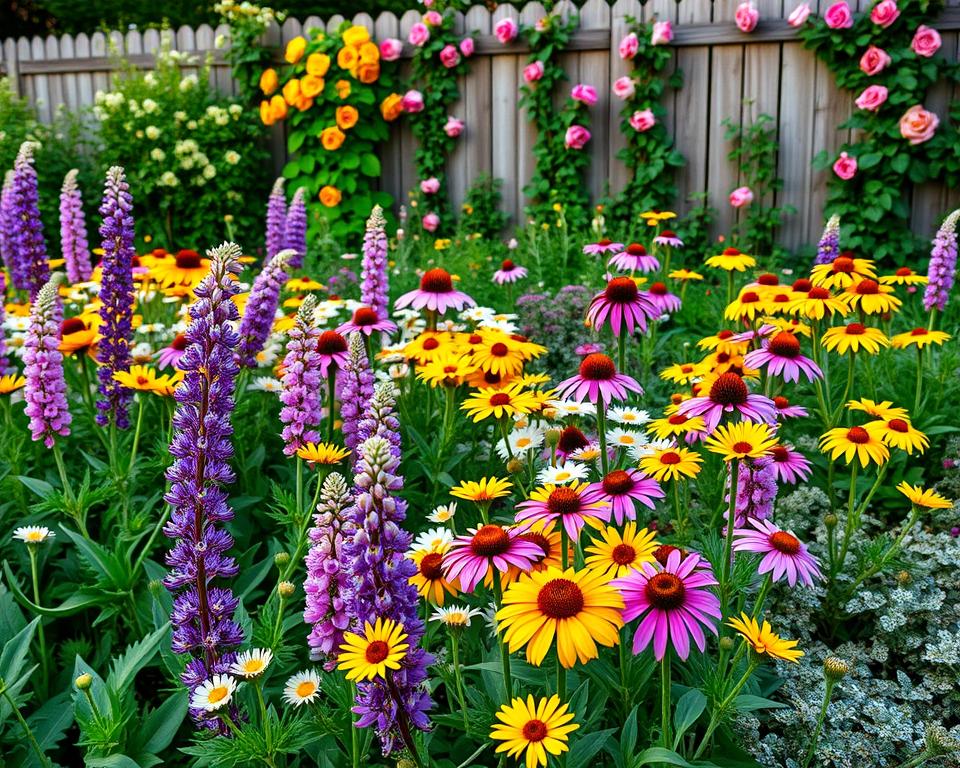
When selecting plants for your perennial border, choosing a harmonious colour scheme is crucial. You can opt for a monochromatic scheme, using different shades of a single colour, or a complementary scheme, which combines colours that are opposite each other on the colour wheel. For example, pairing blue delphiniums with orange geums creates a striking contrast.
Effective plant combinations also depend on considering the mature size of each plant, their growth habits, and foliage texture. Combining plants with varying heights and textures adds depth and visual interest to the border.
Height, Texture, and Seasonal Interest
A dynamic perennial border should have a mix of plants with different heights, textures, and flowering times. Tall plants like delphiniums and foxgloves provide a dramatic backdrop, while mid-height plants such as daylilies and salvias fill in the middle layer. Low-growing plants like creeping thyme and sedum are perfect for the front of the border.
Incorporating plants with varying foliage textures, such as the soft leaves of Stachys byzantina or the spiky foliage of Yucca, adds another layer of interest. Ensuring that there is something in flower at all times during the growing season extends the border’s appeal.
| Plant | Height | Flowering Time | Foliage Texture |
|---|---|---|---|
| Delphinium | Tall | Summer | Soft |
| Sedum | Low | Late Summer | Fleshy |
| Salvia | Mid-height | Summer | Upright |
Staking, Dividing, and Rejuvenating Perennials
To keep your perennial border looking its best, regular maintenance is necessary. Staking tall plants like delphiniums and peonies prevents them from flopping over. Dividing perennials every few years rejuvenates the plants and prevents overcrowding. This should be done in the spring or autumn when the plants are dormant.
By following these guidelines, you can create a perennial border that is not only beautiful but also sustainable and easy to maintain.
Water Features and Garden Ornaments
To create a captivating English garden, consider integrating water features and ornaments that reflect your personal style. Water features, such as ponds and fountains, not only add visual appeal but also create a soothing atmosphere.
Ponds, Fountains, and Rills
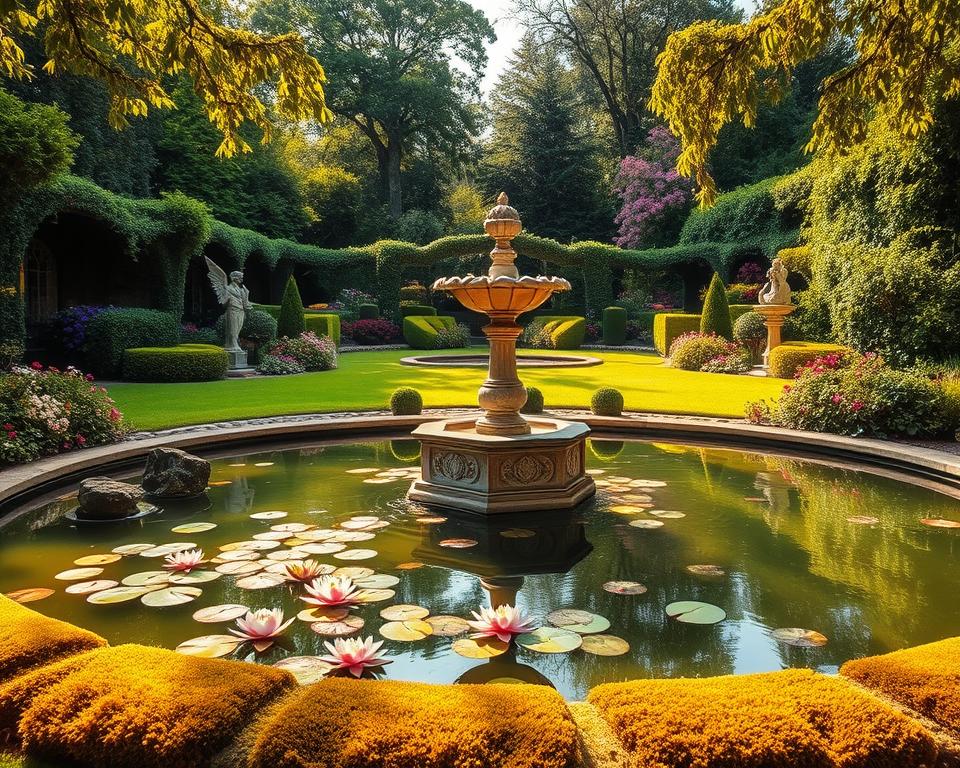
Ponds are a classic feature in English gardens, providing a habitat for wildlife and a focal point for the garden’s design. Fountains add movement and sound, creating a sense of tranquility. Rills, or small streams, can be used to connect different areas of the garden, enhancing its overall aesthetic.
Statuary, Benches, and Decorative Elements
Garden ornaments, such as statuary and benches, can be used to add character and personality to your garden. Statuary can be used to create a sense of history or to reflect the garden’s theme. Benches provide a place for rest and contemplation, while decorative elements, such as sundials or garden urns, can add visual interest.
When selecting water features and garden ornaments, consider the overall style and theme of your garden. Choose elements that complement the existing design and enhance the garden’s natural beauty.
Creating Garden Pathways and Seating Areas
To enhance your garden’s aesthetic appeal, consider the importance of well-designed pathways and seating areas. These elements not only guide visitors through your garden but also create inviting spaces to relax and enjoy the surroundings.
Material Selection and Design Considerations
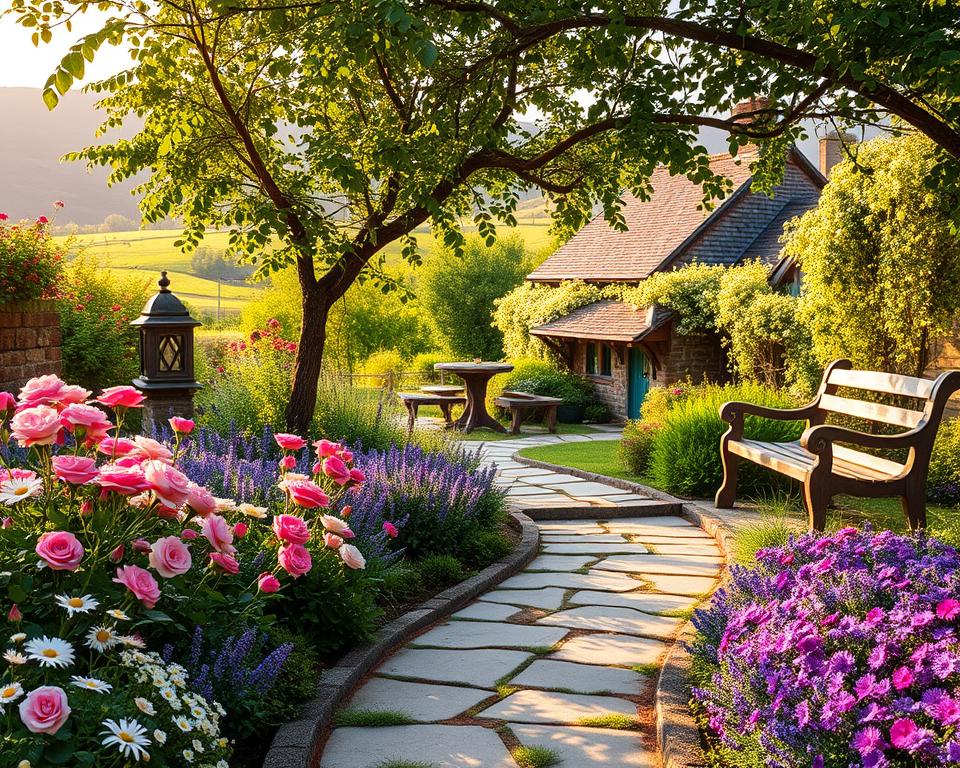
When selecting materials for your garden pathways, consider durability, maintenance, and aesthetics. Popular options include natural stone, gravel, and brick pavers. Each material offers a unique look and feel, allowing you to tailor your pathways to your garden’s style.
The design of your pathways should complement the overall garden layout. Meandering paths can create a sense of discovery, while straight paths can lead visitors directly to focal points. Consider the width and surface texture to ensure they are comfortable and safe to walk on.
Installation and Maintenance
Proper installation is crucial for the longevity of your garden pathways. Ensure a stable base by laying a compacted layer of hardcore or sand before adding your chosen surface material. For seating areas, choose materials that are weather-resistant and require minimal maintenance.
Regular maintenance involves weeding, cleaning, and occasionally replenishing materials like gravel. By keeping your pathways and seating areas well-maintained, you can enjoy your garden to its full potential.
Wildlife-Friendly Gardening Practices
As you tend to your garden, you can also nurture the local wildlife by adopting wildlife-friendly practices. Creating a haven for birds, beneficial insects, and other creatures not only supports biodiversity but also enhances the beauty and ecological balance of your garden.

Creating Habitats for Birds and Beneficial Insects
To attract birds and beneficial insects, consider incorporating native plants, shrubs, and trees into your garden design. These plants provide food and shelter, making your garden an attractive habitat. For example, planting native wildflowers can attract pollinators like bees and butterflies, while shrubs like Pyracantha offer berries for birds.
Additionally, creating diverse habitats within your garden can support a wider range of wildlife. This can be achieved by including features such as log piles for insects, birdhouses for nesting sites, and ponds for aquatic life.
Plant Selection for Pollinators
Selecting the right plants is crucial for supporting pollinators. Pollinator-friendly plants are those that provide nectar and pollen, essential resources for bees, butterflies, and other pollinators. Incorporate a variety of plants that flower at different times to provide a constant source of food throughout the growing season.
Some excellent choices for pollinator plants include Lavandula (Lavender), Buddleja (Butterfly Bush), and native wildflowers. By choosing a mix of plants that bloom in spring, summer, and autumn, you can create a pollinator-friendly garden that thrives and supports local biodiversity.
Conclusion
As you embark on designing your English garden, remember that it’s a journey that requires patience, creativity, and a deep understanding of the natural world. By following the steps outlined in this guide, you’ll be well on your way to creating a beautiful and thriving outdoor space that reflects the classic charm of an English garden.
Effective garden design is about more than just aesthetics; it’s about crafting a space that invites relaxation, entertainment, and connection with nature. Incorporating valuable gardening tips, such as understanding your soil type and selecting the right plants for your microclimate, will help ensure the long-term success of your garden.
Whether you’re drawn to the formal structure of a traditional English garden or the informal charm of a cottage garden, the key is to create a space that feels authentic and inviting. With careful planning, attention to detail, and a willingness to learn and adapt, you can create an English garden that brings joy and serenity to your life.
FAQ
What is the ideal soil type for an English garden?
The ideal soil type for an English garden is typically a well-draining, fertile loam with a slightly acidic to neutral pH, which supports a wide range of plants, including roses and perennials.
How often should I water my English garden?
You should water your English garden regularly, but avoid overwatering, which can lead to root rot and other problems. The frequency of watering will depend on weather conditions, soil type, and the specific needs of your plants.
What are the most suitable plants for a cottage-style English garden?
Cottage-style English gardens often feature a mix of flowering plants, such as roses, peonies, and delphiniums, along with herbs and shrubs, like lavender and boxwood, which provide a charming, informal atmosphere.
How can I create a wildlife-friendly English garden?
To create a wildlife-friendly English garden, you can incorporate plants that support pollinators, such as bees and butterflies, and provide habitats for birds and other beneficial insects, like ladybugs and lacewings.
What is the best way to maintain a healthy English lawn?
To maintain a healthy English lawn, you should mow it regularly, using a lawn mower with a sharp blade, and water it during dry spells. You should also fertilise your lawn in the spring and autumn, using a balanced fertiliser, and control weeds, like dandelions and plantains.
Can I use non-native plants in my English garden?
While it’s possible to use non-native plants in your English garden, it’s generally recommended to choose plants that are native to the UK or have a long history of cultivation in British gardens, as these will be more resilient and require less maintenance.
How can I create a beautiful English garden on a budget?
To create a beautiful English garden on a budget, you can start by selecting plants that are affordable and easy to propagate, like perennials and shrubs, and repurpose materials, like old bricks and stones, for hardscaping and other features.