Designing a Ruin Wall in the Garden: Tips and Inspiration for You
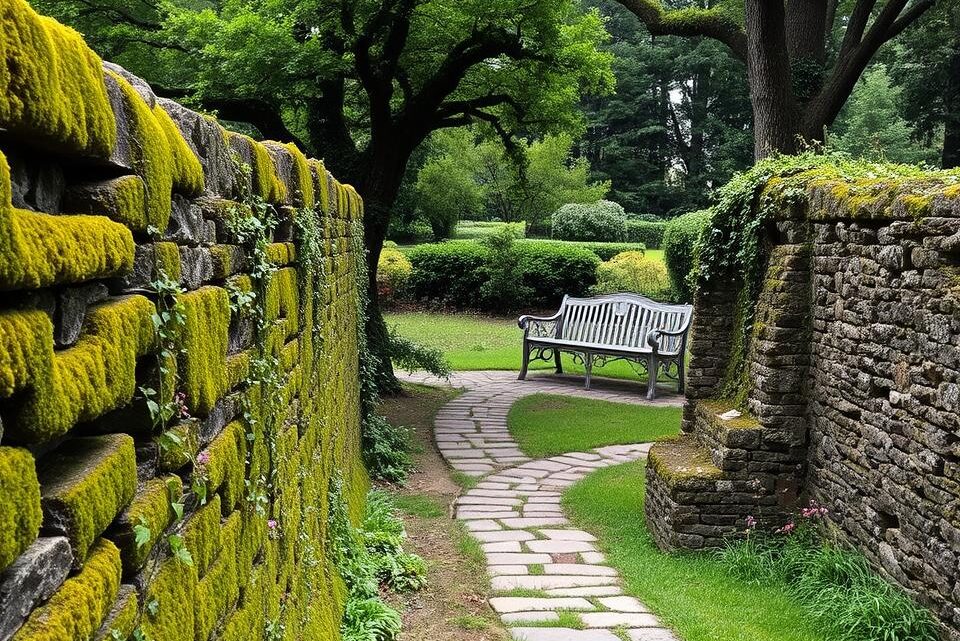
Garden ruins and follies are often described as ‘costly ornamental buildings with no practical purpose.’ However, for gardeners, these structures offer much more than just aesthetic appeal. A ruin wall can be a beautiful addition to your outdoor space, creating a romantic or historic ambiance that fits perfectly with today’s ‘castlecore’ or Medieval-style garden trends.
Rin walls are becoming increasingly popular in British gardens, offering both visual appeal and practical functionality. They can help create distinct zones within your garden, provide height variation, and even establish micro-climates for different planting schemes. Whether you’re planning a DIY project or considering professional installation, a well-designed ruin wall can be a characterful and enduring feature.
Inhaltsverzeichnis
Key Takeaways
- Understand the historical context and aesthetic appeal of ruin walls in garden design.
- Explore various materials options for building a ruin wall, including natural stone, brick, concrete, and wood.
- Learn how ruin walls can transform your outdoor space by creating distinct zones and focal points.
- Discover practical tips for designing and maintaining a ruin wall that complements your garden.
- Consider the benefits of ruin walls in creating micro-climates for diverse planting schemes.
What Are Garden Ruin Walls?
Ruin walls are decorative structures designed to mimic ancient architectural elements, bringing a sense of history to your garden. These walls have a rich history, dating back to 18th-century English and French garden design, where they were used to create romantic, contemplative spaces.
The History and Appeal of Garden Ruins
Garden ruins and follies have long been part of the design language of historic gardens, creating a romantic or historic aesthetic. This style fits into today’s interest in ‘castlecore’ gardens or Medieval-style landscapes. The appeal lies in their ability to add character and a sense of timelessness to your garden.
Practical Uses Beyond Aesthetics
Beyond their aesthetic appeal, ruin walls serve multiple practical functions. They can divide garden spaces, create windbreaks, support climbing plants, and establish micro-climates for diverse planting schemes. Modern garden design has embraced ruin walls as versatile elements that add structure, texture, and narrative interest to outdoor spaces.
- Garden ruin walls create the illusion of historic remains within your garden landscape.
- They have a rich history in 18th-century English and French garden design.
- Ruin walls serve multiple practical functions beyond their aesthetic appeal.
Benefits of Adding a Ruin Wall to Your Garden
Ruin walls have become increasingly popular in garden design due to their numerous benefits. According to William Dyson, curator of Great Comp Garden in Kent, they can create a ‘micro-climate’ for growing different plants.

These structures not only add aesthetic value but also serve multiple practical purposes in your garden.
Creating Focal Points and Visual Interest
A ruin wall serves as an excellent focal point in your garden, drawing the eye and creating a natural centrepiece around which to organise your planting schemes. The textural contrast between weathered wall materials and soft plantings adds considerable visual interest and depth to your garden’s overall composition.
Dividing Garden Spaces Effectively
By strategically positioning a ruin wall, you can effectively divide your garden into distinct ‘rooms’ or zones with different purposes and atmospheres. This division of space can make your garden feel larger and more manageable.
Adding Height and Dimension to Flat Gardens
For flat gardens lacking topographical interest, ruin walls add much-needed height and vertical dimension, creating a more dynamic and visually engaging area. You can grow climbers up them or use them to display plants, further enhancing their visual appeal.
Planning Your Garden Ruin Wall
Planning a garden ruin wall involves assessing your garden’s unique characteristics and needs. It’s about creating a structure that not only enhances the aesthetic appeal of your outdoor space but also potentially serves functional purposes.
Assessing Your Garden Space and Needs
Before beginning construction, carefully assess your garden to determine the optimal position, size, and orientation for your ruin wall. Consider existing features and usage patterns to ensure your wall complements the overall design of your garden.
Considering the Architectural Style of Your Home
Think about how your ruin wall will complement the architectural style of your home or house. For instance, Gothic-inspired ruins might suit Victorian properties, while cleaner lines might better complement contemporary houses, enhancing your garden’s exterior appeal.
Budget Considerations for Different Materials
Budget planning is crucial as materials costs can vary significantly. Options range from expensive natural stone to more affordable reclaimed brick or concrete with stone veneers. Consider the long-term maintenance requirements of different materials and designs when making your decision.
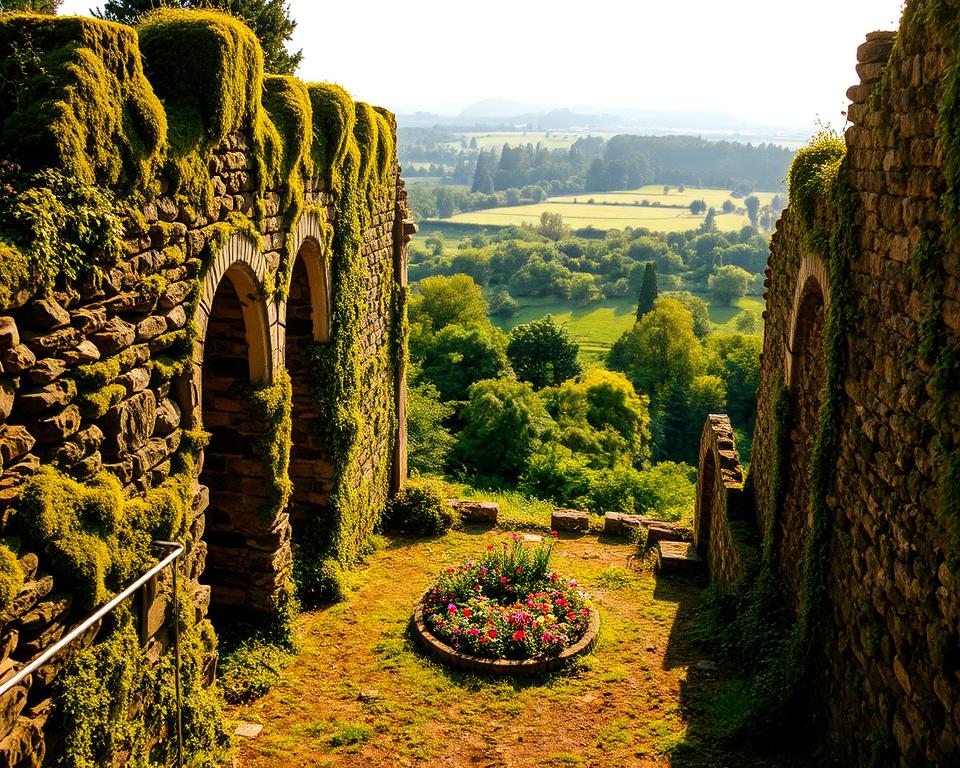
By thoughtfully planning your garden ruin wall, you can create a beautiful and functional feature that enhances your garden’s overall appeal, bringing your design idea to life.
Natural Stone Ruin Walls
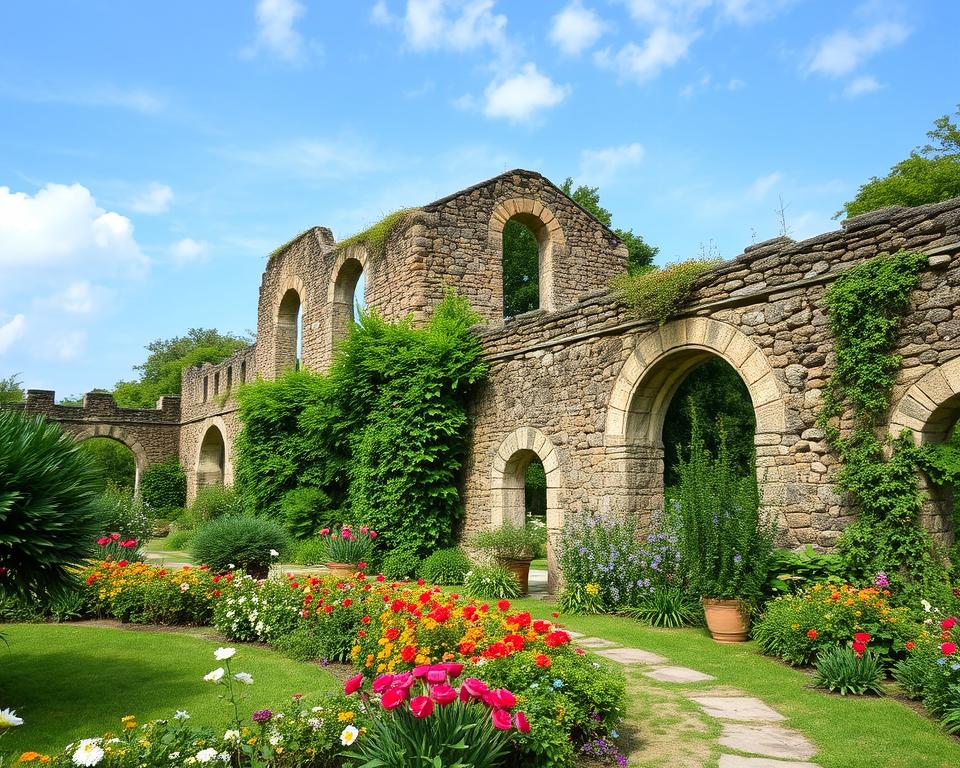
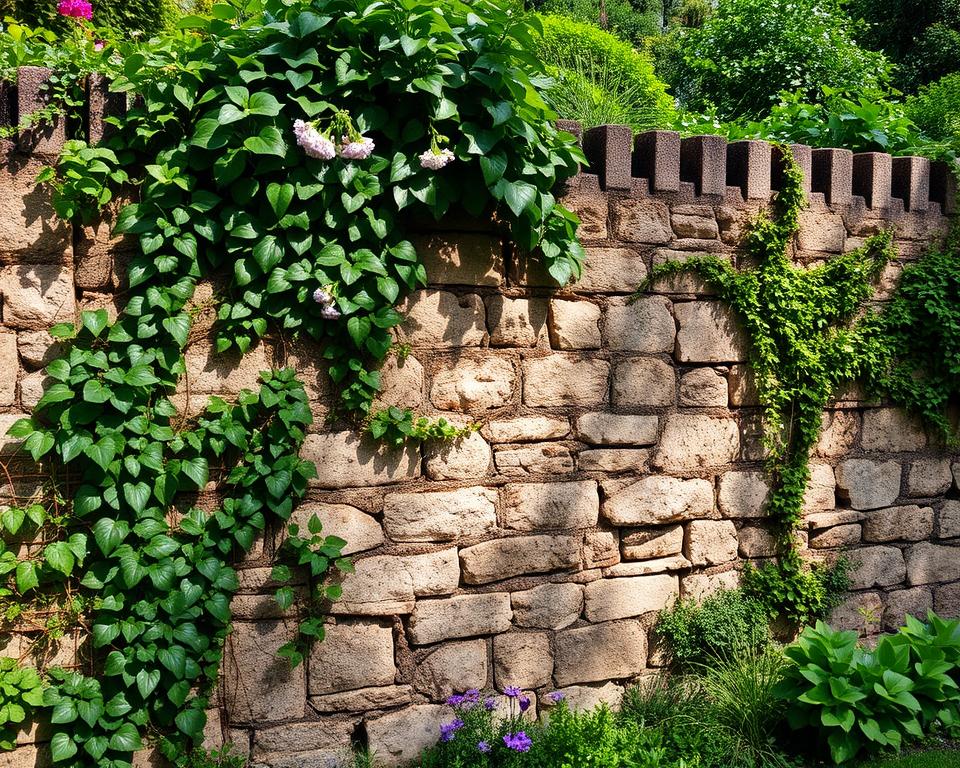
For an authentic and captivating garden ruin wall, consider using natural stone, which offers a timeless appeal. Natural stone provides the most authentic appearance for your garden wall, with limestone, sandstone, and granite being particularly suitable due to their natural weathering properties.
Types of Stone Suitable for Garden Ruins
Local stone varieties often provide the most convincing results, as they match the geological character of your region and create a sense that your ruin wall has always been part of the landscape. You can also consider reclaimed stone from demolished buildings or architectural salvage yards to provide instant character and authentic weathering.
Creating an Authentic Weathered Look
To achieve an authentic weathered look, careful selection and placement of stones with existing moss, lichen, or natural erosion patterns are crucial. Incorporating architectural elements like arches, lintels, or window frames into your stone wall design can enhance the impression of a once-complete structure. The irregular texture and varied colouration of natural stone creates captivating shadow play throughout the day, adding visual interest that changes with the sun’s position.
For budget-conscious gardeners, consider mixing genuine stone facing with less expensive core materials, focusing the authentic stone on the most visible sections of your wall. This approach allows you to achieve the desired look without compromising on the overall aesthetic of your garden ruin wall.
Brick and Concrete Options for Ruin Walls
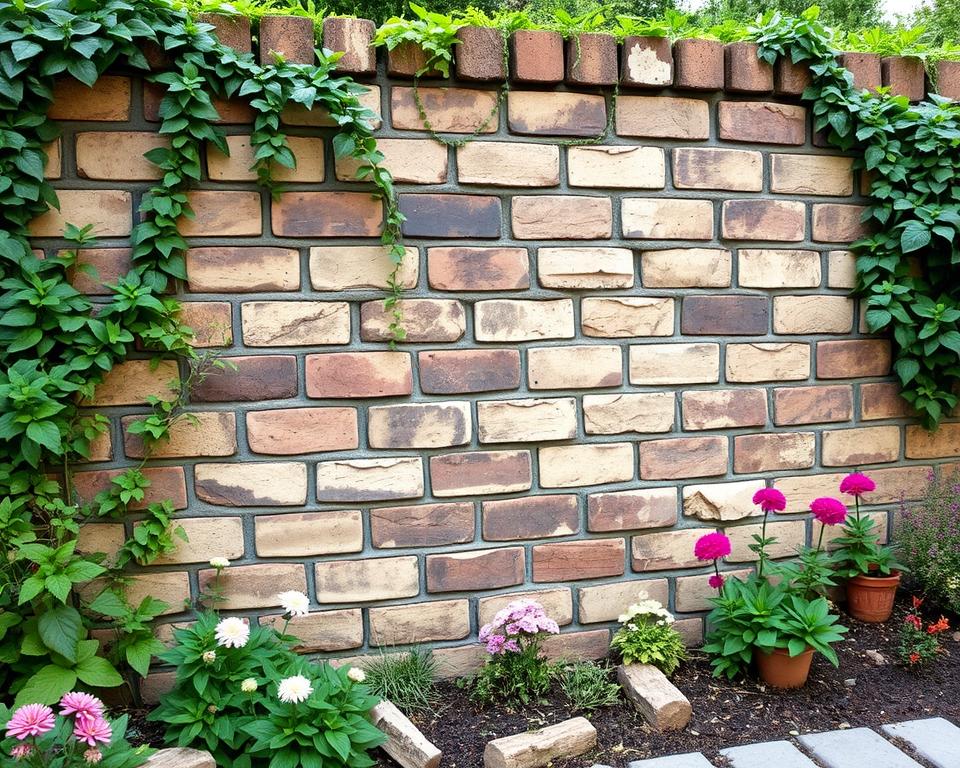
To achieve an authentic ruin look in your garden, you can opt for brick and concrete, materials that offer a blend of functionality and visual appeal. These materials can be used to create a wall that not only adds character to your garden but also serves as a structural element.
Using Reclaimed Bricks for Character
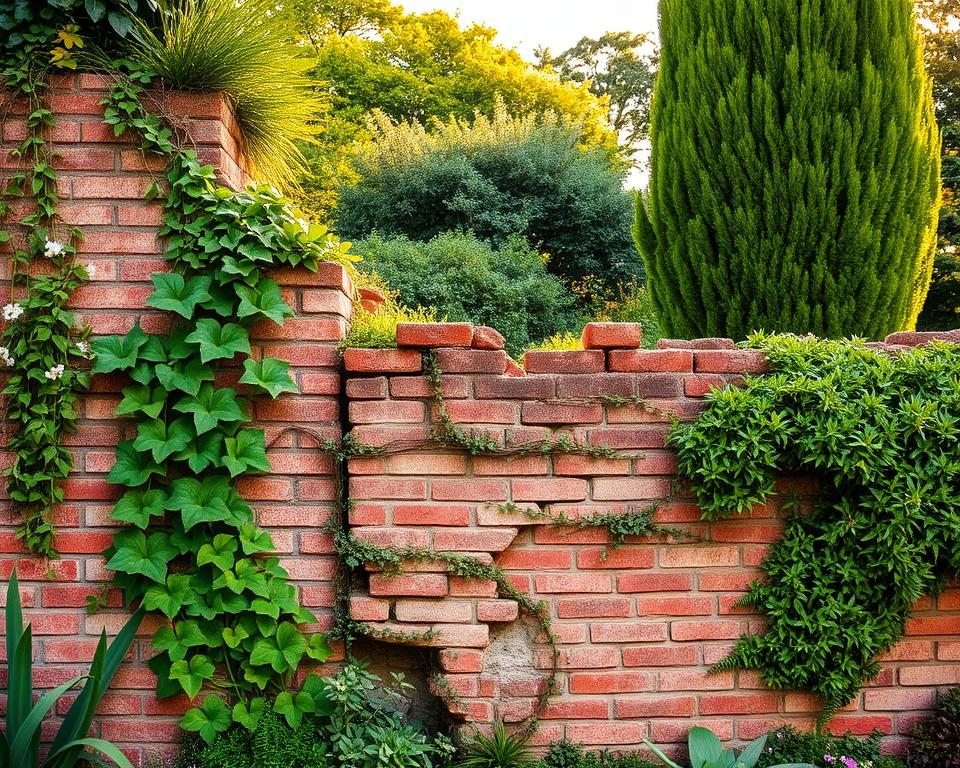
Reclaimed bricks offer an excellent alternative to natural stone, providing authentic weathering and character at a potentially lower cost than newly quarried stone. The varied colours, textures, and slight imperfections of old bricks create visual interest and an authentic aged appearance that new materials cannot match. For instance, Eric Cameron sourced a ‘job lot’ of bricks from a builder, which added to the authenticity of his ruin wall.
Concrete Blocks with Stone Veneer Techniques
Concrete blocks provide a cost-effective structural base for ruin walls, which can then be enhanced with stone veneers or cladding to achieve the desired aesthetic. Modern concrete formulations can be tinted or textured to mimic natural stone, offering budget-friendly alternatives that still create convincing ruin effects. Combining different materials—such as a concrete core with brick facing or stone detailing—can create visually interesting walls while managing costs effectively.
Wooden Elements in Ruin Wall Design
Using wood in your ruin wall design can introduce an organic texture that complements the garden surroundings. Wooden elements can add warmth and character to your garden wall, creating interesting contrasts when combined with stone or brick materials.
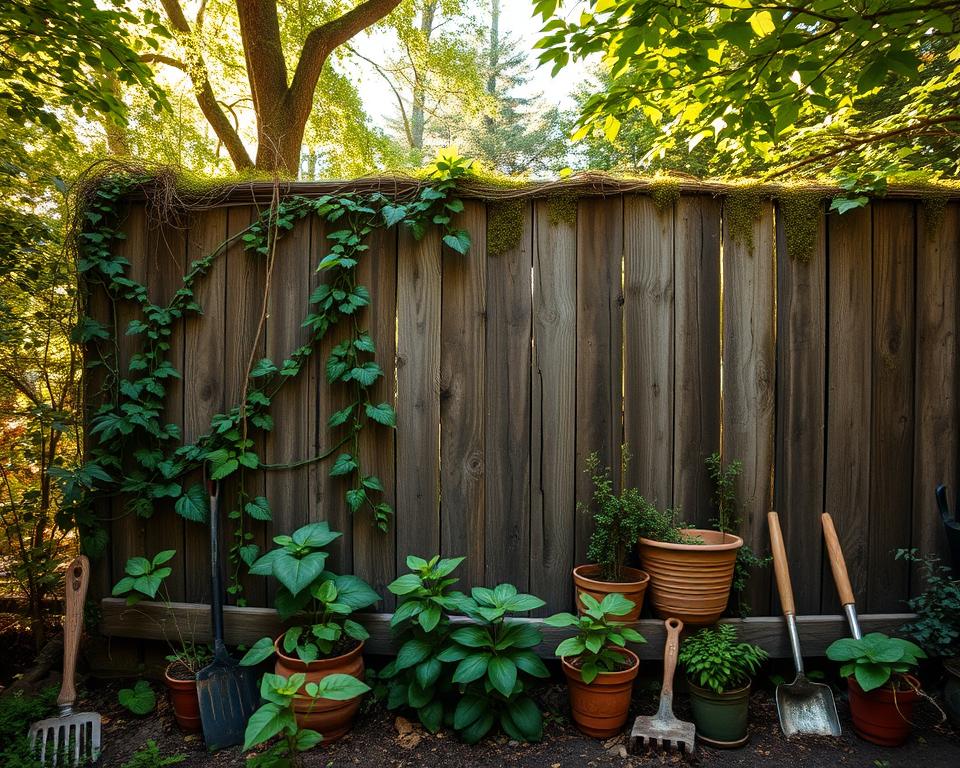
Incorporating Timber and Sleepers
Railway sleepers and reclaimed timber beams are excellent choices for adding structural components to your ruin wall. They provide both strength and rustic character, enhancing the overall aesthetic of your garden design. Consider incorporating wooden lintels, posts, or decorative elements to suggest the remains of timber-framed structures within your stone or brick ruin wall.
Treating Wood for Longevity
Proper treatment of wooden elements is essential for longevity in garden settings. Pressure-treated timber is the minimum requirement for ground contact. Techniques like charring (Shou Sugi Ban) can add distinctive texture while improving weather resistance. When designing with wood, plan for eventual replacement or maintenance, as even treated timber will eventually succumb to the elements.
The natural ageing process of wood complements the weathered appearance of stone and brick, creating a harmonious overall effect as your garden matures.
Creating Micro-Climates with Ruin Walls
Ruin walls offer more than just aesthetic appeal; they can create distinct micro-climates within your garden space. By positioning a ruin wall from east to west, you can create two contrasting environments on either side of the wall.
On the south-facing side, the wall absorbs heat during the day and radiates it back at night, creating a warmer micro-climate. This is ideal for plants that thrive in sunny conditions, such as Mediterranean species.
Benefits for Sun-Loving Plants
The south-facing side of the ruin wall is perfect for sun-loving plants. These plants benefit from the warmth and shelter provided by the wall, allowing you to grow a wider range of species.
Shade for Woodland Plants
In contrast, the north-facing side of the wall provides a cool, shaded environment, ideal for woodland plants like ferns and hostas. This diversity in micro-climates enables you to cultivate a broader range of plants within a small area.
| Aspect | Plant Type | Conditions |
|---|---|---|
| South-Facing | Mediterranean, sun-loving | Warm, sunny |
| North-Facing | Woodland, shade-loving | Cool, shaded |
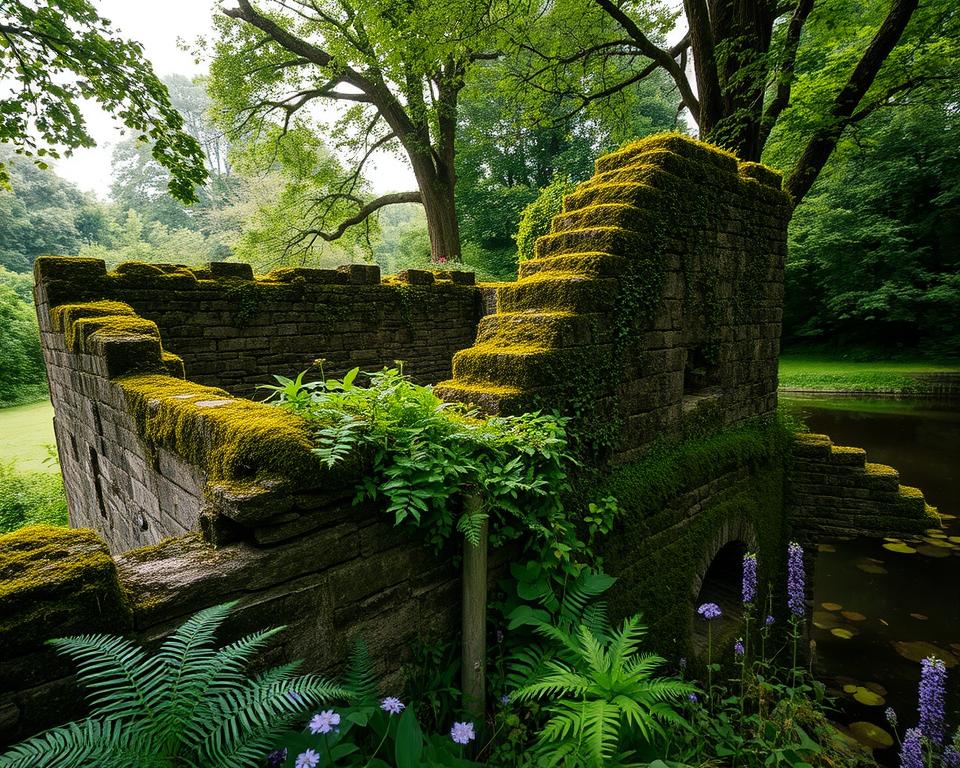
By understanding and leveraging these micro-climates, you can significantly enhance the biodiversity of your garden, creating a more dynamic and interesting outdoor space.
Designing a Ruin Wall in the Garden: Tips and Inspiration for You
When designing a ruin wall in your garden, it’s essential to strike a balance between structural integrity and the appearance of natural decay. A well-crafted ruin wall can become a unique feature in your garden, adding character and visual interest.
Balancing Structure with Natural Decay
To achieve an authentic look, your ruin wall should appear to be naturally weathered. This can be accomplished by varying the height of the wall and incorporating gaps, cracks, and irregular edges into the design. Using a mix of materials and textures can also enhance the weathered appearance.
Incorporating Arches and Windows
Incorporating architectural elements like arches, windows, or doorways can add narrative interest to your garden design. Consider using salvaged materials, such as old window frames or decorative stonework, to create a sense of history and authenticity. These elements can also provide opportunities for planting and adding greenery to your ruin wall.
| Design Element | Purpose | Tips for Implementation |
|---|---|---|
| Varying Heights | Create a natural, weathered appearance | Use a mix of stone sizes and shapes to achieve varying heights |
| Gaps and Cracks | Add character and authenticity | Deliberately leave spaces between stones for plants to grow |
| Arches and Windows | Suggest the remains of a once-complete structure | Use salvaged materials or create replicas using natural materials |

By incorporating these design elements and tips, you can create a ruin wall that not only adds visual interest to your garden but also tells a story. Consider the sightlines throughout your garden when positioning your ruin wall, using it to frame views or create intriguing glimpses that encourage exploration.
Sourcing Materials for Your Ruin Wall
To achieve an authentic look, you’ll need to carefully select materials for your ruin wall. The right materials will not only enhance the aesthetic appeal of your garden but also ensure the structural integrity of the wall.
Architectural Salvage Yards and Resources
Architectural salvage yards are treasure troves for authentic materials that can give your ruin wall immediate character and historical resonance. You can also consider reclaimed materials from demolition sites, which often offer period-appropriate bricks, stone, and architectural elements at competitive prices.
Online marketplaces and local exchange networks, such as Facebook Marketplace or Freegle, can be excellent sources for free or low-cost building materials that would otherwise go to waste. For instance, Eric Cameron was offered a cheap ‘job lot’ of bricks which he used to create The Italian Garden in the early 1990s.
Finding Budget-Friendly Alternatives
For budget-friendly alternatives, consider using concrete blocks or breeze blocks as a structural core, with a facing of more expensive stone or brick on visible surfaces. Garden centres and landscape suppliers often stock stone veneer products that can give the appearance of solid stone at a fraction of the weight and cost.
| Material | Cost | Aesthetic Appeal |
|---|---|---|
| Reclaimed Brick | High | High |
| Concrete Blocks with Stone Veneer | Medium | High |
| Stone | High | High |

By exploring these options, you can create a beautiful and authentic ruin wall in your garden without breaking the bank.
DIY Approaches to Building a Ruin Wall

DIY gardeners can create a beautiful ruin wall with the right techniques and materials. Building a ruin wall yourself can be a rewarding project, but it requires careful planning and an understanding of basic masonry principles.
Basic Construction Techniques
For smaller, non-structural ruin walls, dry stone walling techniques can be employed without the need for mortar, creating authentic-looking structures with natural drainage. When using mortar, consider lime-based options rather than modern cement for a more period-appropriate appearance and better compatibility with old bricks and stone.
Safety Considerations and Structural Integrity
Safety must be paramount—ensure walls have proper foundations appropriate to their height and the soil conditions in your garden. Walls over one metre in height generally require engineering consideration and may need planning permission, particularly if they serve as retaining walls.
Key considerations include building your wall in stages, allowing mortar to cure properly between sessions, and ensuring structural stability as you progress. Incorporate deliberate irregularities and weathering effects as you build, rather than trying to add them later, for a more authentic appearance.
Professional Installation vs. DIY
Building a ruin wall in your garden can be a rewarding project, but it’s crucial to weigh the benefits of professional installation against DIY. When planning your garden design, consider the complexity of your ruin wall project and whether it requires professional expertise.
When to Call in the Experts
While DIY construction can be cost-effective for simple ruin walls, complex designs or structural walls often benefit from professional landscaping expertise. Professional landscapers bring valuable experience in material selection, structural engineering, and aesthetic considerations that can elevate your ruin wall project. For instance, if your garden has significant level changes or drainage issues, professional input is essential to ensure your ruin wall enhances rather than exacerbates these challenges.
| Considerations | DIY | Professional Installation |
|---|---|---|
| Cost | Potentially lower upfront costs | Higher initial cost, but potentially lower long-term maintenance |
| Expertise | Requires personal research and skill | Brings professional knowledge and experience |
| Time | Time-consuming for the homeowner | Saves time for the homeowner |
Working Collaboratively with Landscape Designers
Landscape designers can help integrate your ruin wall seamlessly into your overall garden design, ensuring it complements rather than dominates the space. Working collaboratively with professionals allows you to benefit from their expertise while still maintaining creative input and potentially reducing costs. A professional can also help navigate planning permissions and building regulations, which may be required for larger structures or in conservation areas.
By considering your options carefully and potentially combining DIY efforts with professional input, you can create a beautiful and functional ruin wall that enhances your garden space.
Planting Around Your Ruin Wall
The right planting strategy can turn your ruin wall into a stunning garden feature that attracts attention. You can grow climbers up them or use them to display plants, and they can help protect tender plants from the prevailing wind.
One of the benefits of a ruin wall is that it provides different microclimates. One side is sheltered, dry, and sunny, while the other side is shady, giving you more planting options. Carefully selected plants can enhance your ruin wall, softening harsh edges and creating the impression that the structure has been in place for generations.
Choosing the Right Plants
Climbing plants like ivy, climbing hydrangea, and clematis add vertical interest and help integrate the wall into the surrounding garden landscape. For south-facing aspects, drought-tolerant Mediterranean plants like lavender, rosemary, and thyme thrive in the warm, free-draining conditions created by stone walls.
| Plant Type | Aspect | Benefits |
|---|---|---|
| Climbing Plants (e.g., Ivy, Clematis) | South/North | Adds vertical interest, integrates wall into landscape |
| Drought-Tolerant Plants (e.g., Lavender, Thyme) | South | Thrives in warm, free-draining conditions |
| Shade-Loving Plants (e.g., Hostas, Epimediums) | North | Flourishes in cooler, damper conditions |
Creating a Natural Look
Strategic planting of self-seeding species like verbascum, valerian, and centranthus creates the impression that plants have naturally colonised the structure over time. Consider the seasonal interest of your planting scheme, incorporating spring bulbs, summer-flowering perennials, and plants with autumn colour for year-round appeal.
Enhancing Your Ruin Wall with Lighting

The right lighting can turn your ruin wall into a stunning feature that enhances your garden‘s overall aesthetic. Thoughtfully designed lighting can transform your ruin wall after dark, creating dramatic effects and extending the usability of your garden into the evening.
Eco-Friendly Illumination Options
Solar-powered lighting offers an eco-friendly and installation-friendly option, with no need for complex wiring or ongoing electricity costs. This approach not only reduces your carbon footprint but also provides a cost-effective solution for illuminating your ruin wall.
Creating Dramatic Shadows and Highlights
Consider uplighting to emphasise the texture of your wall, casting dramatic shadows that highlight the irregularities and architectural features of your structure. Integrated lighting within niches or recesses can create the impression of inhabited spaces within your ruin, adding mystery and narrative to your garden after dark.
Maintaining Your Garden Ruin Wall
Regular upkeep of your garden ruin wall is vital to prevent deterioration and maintain its character. While designed to look weathered, maintaining structural integrity is crucial for both safety and aesthetic appeal.
Seasonal Care Requirements
To keep your garden ruin wall in good condition, seasonal inspections are necessary. Check for loose mortar, unstable sections, or excessive plant growth that might compromise the wall’s stability. Winter maintenance is particularly important due to freeze-thaw cycles that can damage mortar and create structural issues if water penetrates cracks.
- Monitor plant growth carefully, removing any woody plants whose roots might damage the wall structure.
- Address minor repairs promptly to prevent major structural issues.
Addressing Structural Issues Over Time
Over time, your garden ruin wall may require repairs to maintain its integrity. Regularly inspect mortar joints and capping stones, and consider applying treatments to wooden elements every few years to extend their lifespan.
| Maintenance Task | Frequency | Importance |
|---|---|---|
| Inspect for loose mortar and unstable sections | Seasonally | High |
| Monitor and control plant growth | Ongoing | High |
| Apply treatments to wooden elements | Every few years | Medium |
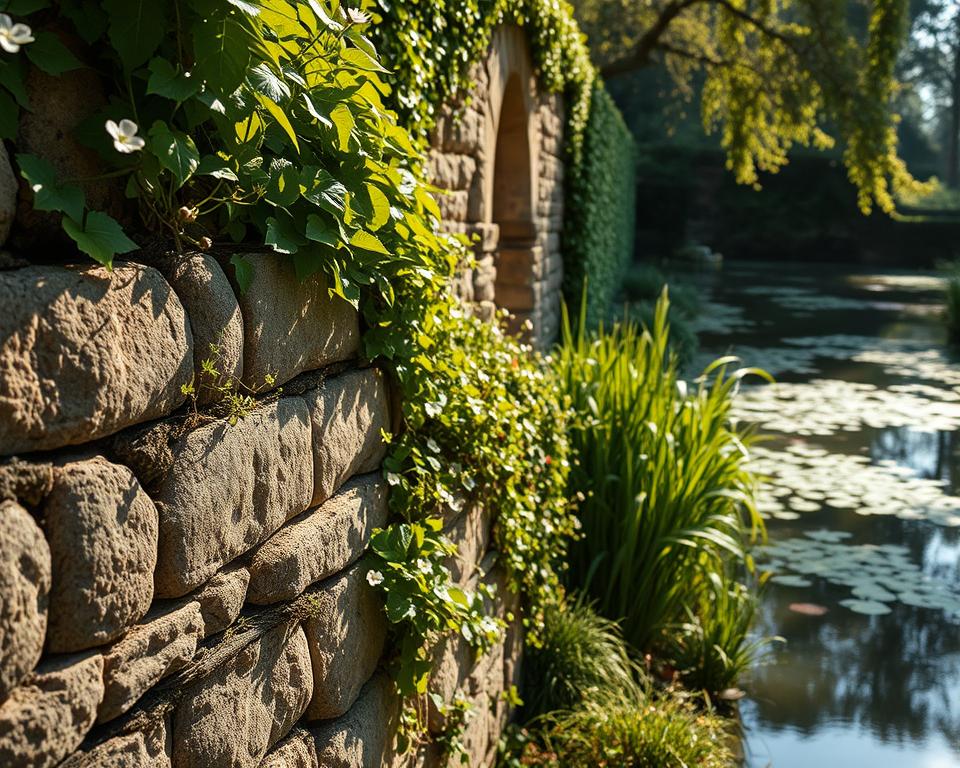
Maintaining a photographic record of your wall over time can help identify gradual changes that might indicate developing structural issues. Focus on preserving structural integrity rather than achieving cosmetic perfection, as some weathering enhances the authentic appearance of your ruin wall.
Planning Permission and Legal Considerations
Understanding the legal considerations for garden structures is crucial before embarking on your ruin wall project. The regulations surrounding garden features can vary significantly depending on your location and the type of structure you’re planning to build.
UK Regulations for Garden Structures
In the UK, the rules regarding garden structures like ruin walls are generally governed by local planning regulations. For most locations, you won’t need planning permission if your garden ruin is no higher than a typical garden shed. However, areas with specific designations, such as conservation areas or Areas of Outstanding Natural Beauty, may have stricter controls.
| Location Type | Height Limit | Planning Permission Required |
|---|---|---|
| Standard UK Location | Under 2 metres | No |
| Adjacent to Public Highway | Over 1 metre | Yes |
| Conservation Areas | Varies | Often |
Height Restrictions and Boundary Considerations
Height restrictions are a critical factor when building a garden ruin wall. Generally, garden walls under 2 metres in height do not require planning permission in most UK locations. However, this limit drops to 1 metre if the wall is adjacent to a public highway. Additionally, boundary walls shared with neighbours require careful consideration of both legal ownership and potential impact on neighbouring properties.
Key Considerations:
- Check local regulations regarding height and boundary walls.
- Consider consulting your local planning department for pre-application advice.
- Keep detailed records of any planning permissions or building regulations approvals.

Conclusion
A ruin wall can redefine your garden’s aesthetic and functionality. By incorporating a ruin wall, you can add character and history to your outdoor space. Whether you choose natural stone, reclaimed brick, or a combination of materials, your ruin wall will become a defining feature of your garden design.
To create a successful ruin wall, consider placement, materials, planting, and lighting. This will enhance your garden throughout the seasons. For more gardening tips and ideas, join our free weekly email newsletter. By doing so, you’ll be able to transform your outdoor space with this timeless garden feature.
FAQ
What materials are best suited for building a ruin wall?
Natural stone, brick, and concrete are popular choices for building ruin walls, as they can be used to create a weathered, aged appearance. Reclaimed materials can add character to your wall.
How do I choose the right plants to complement my ruin wall?
Select plants that thrive in the conditions surrounding your ruin wall, such as climbing plants for vertical interest or perennials that complement stone and brick. Consider plants that create the illusion of age, like ivy or moss.
Do I need planning permission to build a ruin wall in my garden?
In the UK, garden structures like ruin walls are generally exempt from planning permission, but it’s essential to check local regulations and height restrictions. Consult with your local authority to ensure compliance.
How do I maintain my ruin wall to prevent damage?
Regularly inspect your ruin wall for signs of damage or wear. Perform seasonal maintenance tasks, such as cleaning and repairing mortar, to ensure the structure remains stable and secure.
Can I build a ruin wall on a sloping site?
Yes, you can build a ruin wall on a sloping site, but it may require additional planning and construction techniques to ensure stability. Consider consulting a professional for complex projects.
How can I enhance my ruin wall with lighting?
Solar-powered lighting can be an eco-friendly option for illuminating your ruin wall. Strategically placed lights can create dramatic shadows and highlights, accentuating the texture and character of your wall.