DIY Guide: Concrete Foundation for Shed Construction

Every garden needs a shed to store gardening equipment, furniture, and outdoor toys. A well-built shed not only provides a dry storage solution but also enhances your outdoor space. To ensure your new outbuilding remains sturdy and functional, a firm and level base is crucial.
A concrete base is considered the superior choice for shed foundations due to its durability and ability to prevent moisture damage. By investing time in creating a proper base, you’ll ensure the longevity and stability of your garden structure.
Our comprehensive guide will walk you through the process of building a concrete foundation, from planning to completion, using a DIY-friendly approach.
Inhaltsverzeichnis
Key Takeaways
- A solid base is essential for the longevity and stability of your shed.
- A concrete base provides durability and prevents moisture damage.
- Building a concrete foundation requires careful planning and execution.
- A well-built shed base ensures the structural stability of your outbuilding.
- Investing time in creating a proper base pays off in the long run.
Why a Concrete Foundation is Essential for Your Shed
For a shed to stand the test of time, a well-laid foundation is indispensable. Your shed’s foundation is more than just a base; it’s the cornerstone that ensures the entire structure remains firm and level. A concrete foundation offers numerous benefits that make it an ideal choice for shed construction.
Benefits of Choosing Concrete Over Other Materials
Concrete stands out as a superior material for shed foundations due to its inherent strength, durability, and resistance to environmental factors. Unlike timber, which is susceptible to rot and pest damage, concrete remains unaffected by moisture and pests. This results in a foundation that requires less maintenance over its lifetime.
Long-Term Value and Durability
Investing in a concrete foundation may seem costly upfront, but it pays dividends in the long run. Concrete foundations are known to last for decades, with some lasting over 50 years without significant deterioration. In contrast, alternative materials like timber may need replacement every 10-15 years. The table below highlights the comparative durability and cost-effectiveness of different foundation materials.
| Foundation Material | Average Lifespan | Maintenance Cost |
|---|---|---|
| Concrete | 50+ years | Low |
| Timber | 10-15 years | High |
| Paving Slabs | 20-30 years | Medium |
A concrete foundation not only enhances the building‘s stability but also protects it from common issues like warping and moisture damage. By choosing concrete, you ensure your shed remains in excellent condition for years to come.
Planning Your Concrete Shed Foundation
Planning a concrete shed foundation requires careful consideration of several key factors. A well-planned foundation is crucial for the durability and stability of your shed.
Selecting the Ideal Location
When selecting a location for your shed, consider factors such as drainage, accessibility, and local building regulations. Ensure the area is level and clear of debris.
Determining the Correct Size and Depth
To determine the correct size for your concrete foundation, measure your shed’s dimensions and add a margin for the formwork. Typically, you’ll need to dig to a depth of 150mm to allow for both the concrete and sub-base.
Essential Tools and Materials Checklist
Here’s a checklist of essential tools and materials you’ll need:
– Measuring equipment
– Digging tools
– Concrete working implements
– Safety gear
– Concrete components
– Sub-base materials
– Formwork timber
– Damp-proofing membranes
Site Preparation: The Foundation of Success
To ensure a stable base for your shed, meticulous site preparation is essential. This process involves several critical steps that lay the groundwork for a successful construction project.
Marking Out Your Shed Base Area
Begin by marking out the area where you’ll build your shed base. Drive a wooden peg into the ground at each corner and run a taut length of string between them. Ensure the corners are square by measuring both diagonals and adjusting as necessary.
Excavation Techniques and Depth Guidelines
You’ll need to dig a level-bottomed pit to a depth of 100mm to accommodate the sub-base and damp-proof membrane. Remove all vegetation, stones, and debris from the ground, then compact the earth to create a solid foundation.
Creating a Level Surface
Use a spirit level to check for and establish a level surface throughout the excavation process. This ensures that your shed base is even and stable.
| Task | Description | Tools Required |
|---|---|---|
| Marking Out | Define the shed base area | Wooden pegs, string, measuring tape |
| Excavation | Dig a level-bottomed pit | Shovel, spirit level |
| Levelling | Ensure a level surface | Spirit level, tamping tool |

By following these steps and using the right tools, you’ll be able to prepare the site effectively for your shed construction project.
Building the Sub-Base and Formwork
Before pouring concrete, it’s essential to establish a sturdy sub-base and formwork that will support the weight and ensure a level surface. The sub-base provides a solid foundation, while the formwork contains the concrete until it sets.
Laying and Compacting the Sub-Base
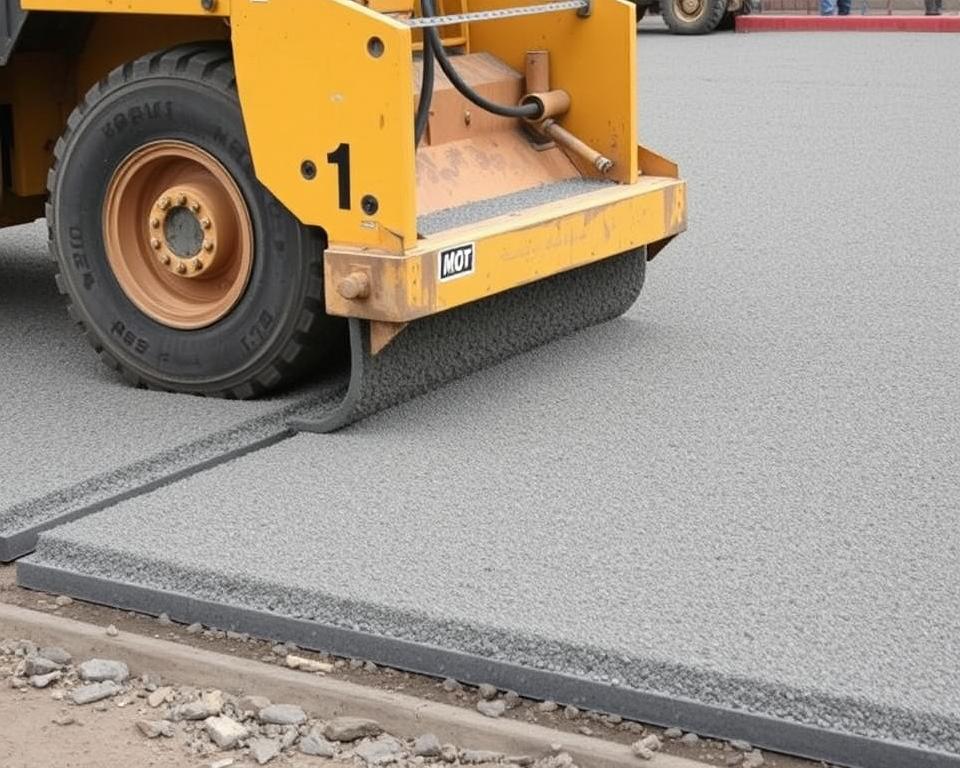
To create a stable sub-base, you should lay 75mm of MOT Type 1 hardcore across the excavated area. Use wood stakes to mark the correct height and ensure the base is level. Check the levelness between stakes using a spirit level. Once the sub-base material is laid, compact it using a wacker plate or hand tamper to prevent settling or shifting.
Constructing Sturdy Formwork
Your formwork should be constructed from 25mm thick timber that is as wide as the depth of your concrete base. Ensure the formwork is perfectly level and square by using a spirit level and appropriate measuring techniques. Reinforce the formwork to prevent bowing or movement during concrete pouring.
Installing the Damp-Proof Membrane
Before pouring concrete, add a damp-proof membrane above the sub-base. This membrane helps prevent condensation issues inside your shed and stops the concrete from drying too quickly. Ensure the membrane is properly overlapped and secured at the edges.
By following these steps, you can create a robust foundation for your shed that will last for years to come.
DIY Guide: Concrete Foundation for Shed Construction
Having completed the site preparation, you’re ready to start building the concrete foundation that will support your shed. This involves several critical steps, from calculating the correct amount of concrete to ensuring safety while working with hazardous materials.
Calculating the Correct Amount of Concrete
To determine the amount of concrete needed, you must calculate the volume of your shed base. The formula is simple: Length (m) × Width (m) × Depth (m) = cubic metres needed. For example, for a shed base that is 3m × 2m × 0.1m, you would need 0.6 cubic metres of concrete. It’s advisable to order 10-15% extra to account for spillage and variations.
| Dimension | Calculation | Volume (cubic metres) |
|---|---|---|
| 3m × 2m × 0.1m | 3 × 2 × 0.1 | 0.6 |
| 4m × 3m × 0.1m | 4 × 3 × 0.1 | 1.2 |
Mixing Concrete to the Perfect Consistency
A 1:2:3 concrete mix ratio is typically recommended for a shed base, consisting of 1 part cement, 2 parts sand, and 3 parts aggregates. You can mix concrete either by hand or using a mixer. For larger shed bases, a mixer is recommended for efficiency.
Safety Precautions When Working with Concrete
When handling cement and concrete, safety is paramount. Cement is caustic and can cause severe damage to your skin and eyes. Wear protective gear, including long sleeves, trousers, a hat, gloves, rubber boots, and safety goggles, at all times when working with these materials.
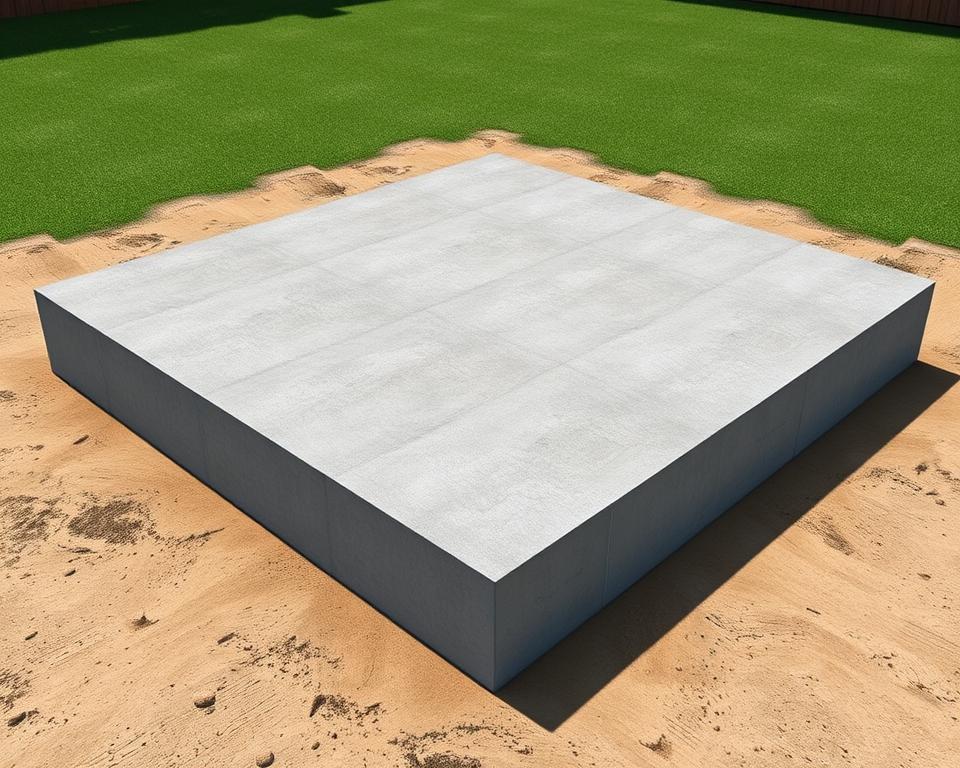
Pouring and Finishing Your Concrete Base
With your formwork in place, the next step is to pour the concrete and level it to create a stable base. This process requires careful attention to detail to ensure a smooth and even surface.
Efficient Pouring Techniques
Start by pouring the concrete into a corner of the formwork using a wheelbarrow. Then, spread it with a rake or shovel, leaving it about 18mm higher than the top of the formwork. Work in sections of about 1 to 1.5 metres square to maintain control. Use the blade of your shovel to remove air pockets by pushing it up and down in the wet concrete.
Levelling and Tamping Methods
Once the concrete is poured, use a straight piece of timber that’s longer than the width of your shed base to compact it. With a helper, start at one end and use steady blows across the base to tamp down the concrete. Move the plank slowly from one end to the other to ensure even compaction. Check the level of the surface using a spirit level to ensure it’s perfectly level.
Creating a Smooth, Professional Finish
After tamping, use appropriate finishing tools to create a smooth finish on the surface. You have about two hours after mixing the concrete before it begins to set, so work efficiently within this time frame.
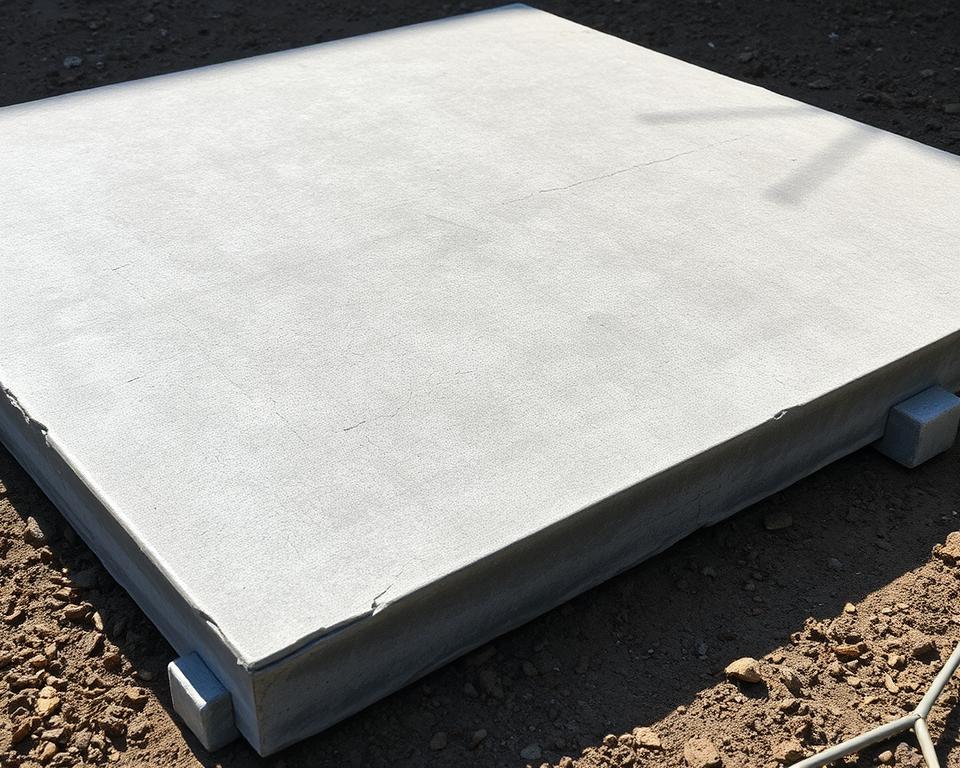
- Pour concrete into corners and work methodically across the formwork area.
- Use rakes and shovels to spread and initially level the concrete.
- Tamp the concrete using a straight timber board to remove air pockets.
Curing and Protecting Your New Foundation
Once you’ve poured your concrete, proper curing and protection are essential for a long-lasting foundation. This critical phase ensures that your concrete achieves its maximum strength and durability.
The Importance of Proper Curing Time
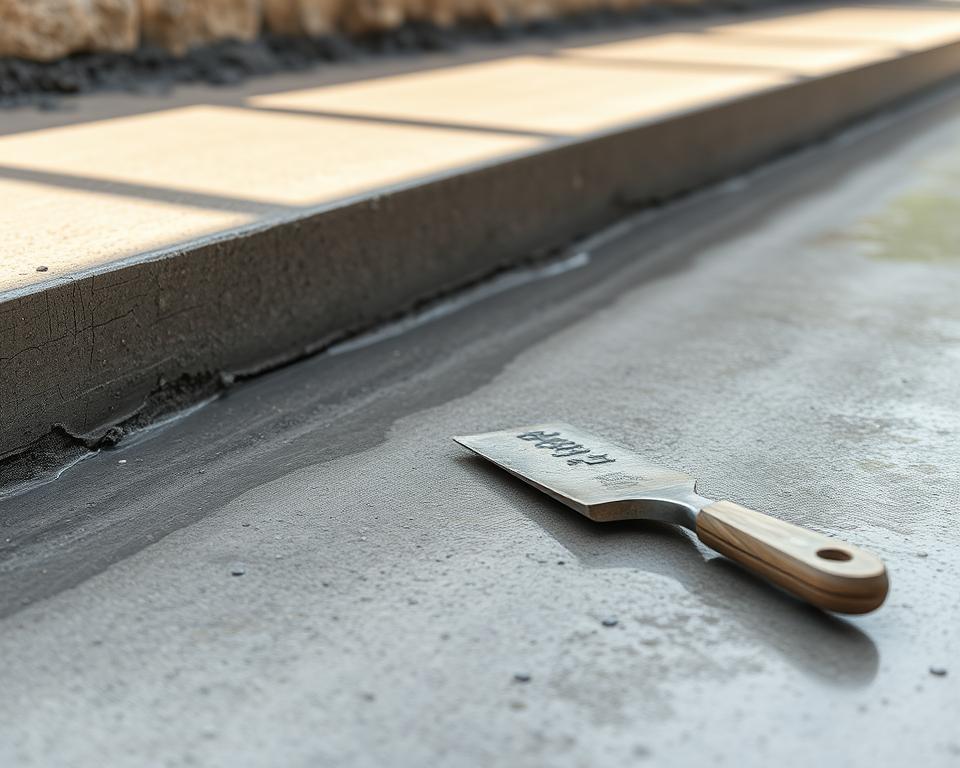
Proper curing time is crucial for the strength and durability of your concrete foundation. You should cover your concrete base with a plastic sheet, ensuring it doesn’t touch the concrete, to prevent it from drying too quickly. It’s recommended to wait at least 24 to 48 hours before removing the formwork and walking on your new shed base. However, it can take up to 28 days for the concrete to reach its full strength.
Weather Considerations and Protection Methods
Weather conditions play a significant role in the curing process. While light rain during preparation is acceptable, it’s advisable not to pour concrete in heavy rain. If rain is forecasted after pouring, cover the fresh concrete with raised plastic to protect it. Monitoring the weather and taking appropriate measures will help maintain optimal curing conditions.
| Curing Stage | Timeframe | Action Required |
|---|---|---|
| Initial Set | 24-48 hours | Keep covered with plastic sheeting |
| Partial Strength | 3-7 days | Monitor for cracking and maintain moisture |
| Full Strength | Up to 28 days | Avoid heavy loads and construction |
Conclusion
The journey to a solid shed foundation is complete, and the benefits are clear. By following this guide, you’ve learned how to build a concrete base that will outlast your building by decades. A perfectly level, bone-dry building that stays solid for generations is the payoff for your hard work.
To achieve this, you’ve taken the time to carefully plan and execute each step, from preparing the site to curing the concrete. The result is a firm and stable base for your shed. With your new foundation in place, you can confidently proceed with the construction of your shed, knowing it will stand the test of time.
FAQ
What type of concrete is best suited for a shed base?
A ST4 or C25/30 grade concrete is generally recommended for a shed base, as it provides the necessary strength and durability. You can also consider using a ready-mix concrete from a reputable supplier.
How long does it take for the concrete to set and cure?
The initial set typically occurs within 2-4 hours, depending on the weather conditions. However, it’s essential to allow the concrete to cure for at least 3-7 days before removing the formwork or applying any loads.
What is the ideal depth for a shed base?
The depth will depend on the size of your shed and the local ground conditions. As a general rule, a depth of 100-150 mm is recommended, but you may need to adjust this based on your specific situation.
Can I lay a concrete base on uneven ground?
It’s crucial to create a level surface before laying the concrete. You may need to excavate or fill in areas to achieve this. Using a spirit level and a string line can help ensure the ground is level and even.
How do I prevent moisture issues with my shed base?
Installing a damp-proof membrane beneath the concrete slab can help prevent moisture from rising into the shed. Additionally, ensuring the surrounding ground is properly graded can help direct water away from the foundation.
What are the benefits of using a sand sub-base under my concrete slab?
A sand sub-base helps to provide a stable and level surface, improves drainage, and can reduce the risk of settlement or cracking. It’s essential to compact the sand thoroughly before laying the concrete.
Can I build a shed on a sloping site?
Yes, but it may require additional preparation, such as creating a level platform or using adjustable floor joists. It’s essential to assess the site conditions and consider consulting a professional if you’re unsure.