Fire Safety Measures for a Wooden Garden Shed
As a shed owner, you understand the importance of maintaining your outdoor structure. However, fire risks associated with wooden sheds are often overlooked. Timber, being a key feature of many garden areas, can easily be at risk of ignition from a loose spark or faulty cable.
This comprehensive guide will help you understand the potential fire hazards and implement preventative safety measures to create a safer garden environment. You will learn about regulatory requirements and practical steps to protect your shed and neighbouring properties from the risk of fire.
Inhaltsverzeichnis
Key Takeaways
- Understanding the risks associated with wooden garden sheds and fire hazards.
- Implementing preventative measures to mitigate fire risks.
- Regulatory requirements for fire safety in garden sheds.
- Practical safety measures for shed owners.
- Creating a safer garden environment through fire safety awareness.
Understanding Fire Risks in Wooden Garden Sheds
Understanding the fire risks associated with wooden garden sheds is essential for maintaining a safe garden environment. You need to be aware of the potential hazards to protect your property and neighbours.
Common Causes of Shed Fires
Shed fires can be caused by various factors, including electrical faults, storage of flammable materials, heating devices, and DIY activities that produce sparks or heat. Seasonal factors, particularly hot and dry summer months, can increase fire risk as timber becomes more susceptible to ignition.
UK Building Regulations for Garden Structures
The UK Building Regulations apply to larger wooden sheds and log cabins, especially those over 15 square metres in size and within 1 metre of a property boundary. These regulations aim to prevent fire spread between properties, ensuring safety for homeowners and neighbours by requiring appropriate fire safety measures.
Essential Fire Safety Measures for a Wooden Garden Shed
To safeguard your wooden garden shed from fire dangers, it’s vital to implement effective fire safety measures. Fire safety is a critical concern for wooden sheds due to their combustible materials and often isolated locations. Understanding the basics of fire safety can help keep your shed and its contents safe from the dangers of fire.
Assessing Your Shed’s Vulnerability
Assessing your shed’s vulnerability to fire is a crucial step in enhancing its fire safety. You should evaluate your shed’s specific fire risk factors, including its age, construction materials, contents, and location. Check for gaps, cracks, and exposed timber, as these can be potential weak points that increase the risk of fire spreading.
A thorough vulnerability assessment will help you identify areas that require improvement. As “A stitch in time saves nine,” taking proactive measures can significantly reduce the risk of fire.
Prioritising Safety Measures Based on Usage
Different shed uses create different risk profiles, requiring tailored safety approaches. For instance, if you use your shed as a workshop, you’ll need to focus on safety measures related to electrical equipment and flammable materials. If it’s used for storing gardening equipment, you should prioritize measures to prevent accidental ignition sources.
By understanding how you use your shed and the types of items stored inside, you can create a prioritized list of safety measures. Regular reassessment is also essential as shed contents and usage patterns change over time. As the
“Prevention is better than cure.”
Regular checks will ensure your shed remains fire-safe.
Fire-Retardant Treatments and Paints
Fire-retardant paints and treatments offer a proactive solution to minimising fire risks in wooden garden sheds. These innovative products are designed to reduce the flammability of wood, providing an additional layer of fire safety.
How Fire-Resistant Coatings Work
Fire-resistant coatings, including intumescent paints, work by chemically interacting with the wood to reduce its flammability. When exposed to heat, these coatings swell into foam-like layers, forming an insulator that protects the wood from heat. This process slows down the spread of fire, giving you more time to respond to a fire emergency.
Applying Fire-Retardant Treatments
To apply fire-retardant treatments effectively, start by preparing the surface of your shed. Ensure that the wood is clean and dry. Then, follow the manufacturer’s instructions for application, using either a brush, roller, or sprayer as recommended. It’s crucial to cover all surfaces evenly to maintain consistent fire safety.
Maintenance and Reapplication Schedule
The longevity of fire-retardant treatments depends on exposure to the elements. Regularly inspect the treated surfaces for signs of wear, especially after extreme weather conditions. As a general rule, reapply fire-retardant treatments every 5-7 years or as specified by the manufacturer to maintain their effectiveness. Proper maintenance ensures that your shed remains protected against fires.
Creating a Fireproof Work Environment
Ensuring your garden shed is equipped to handle hot work safely is vital for preventing fires. A well-designed workspace can significantly reduce the risk of fire spreading and causing damage.
Setting Up a Designated “Hot Zone”
Designating a specific area for activities involving heat, sparks, or open flames is crucial. This “hot zone” should be set up with fire-resistant materials to contain any potential fires. For instance, you can use steel or cement board behind your workbench to create a barrier against sparks and heat.
Fire-Resistant Materials for Work Surfaces
Choosing the right materials for your work surfaces is essential for fire safety. Metal sheets, cement boards, and specialized heat-resistant mats are excellent options. A sheet of metal on the floor can catch sparks and prevent them from igniting other materials. Alternatively, a heat-resistant mat under your main work area can provide an additional layer of protection.
| Material | Fire Resistance | Durability |
|---|---|---|
| Metal Sheets | High | High |
| Cement Boards | High | Medium |
| Heat-Resistant Mats | Medium | Low |
By implementing these measures, you can significantly enhance fire safety in your shed, protecting both your property and your well-being.
Upgrading Shed Construction for Fire Safety
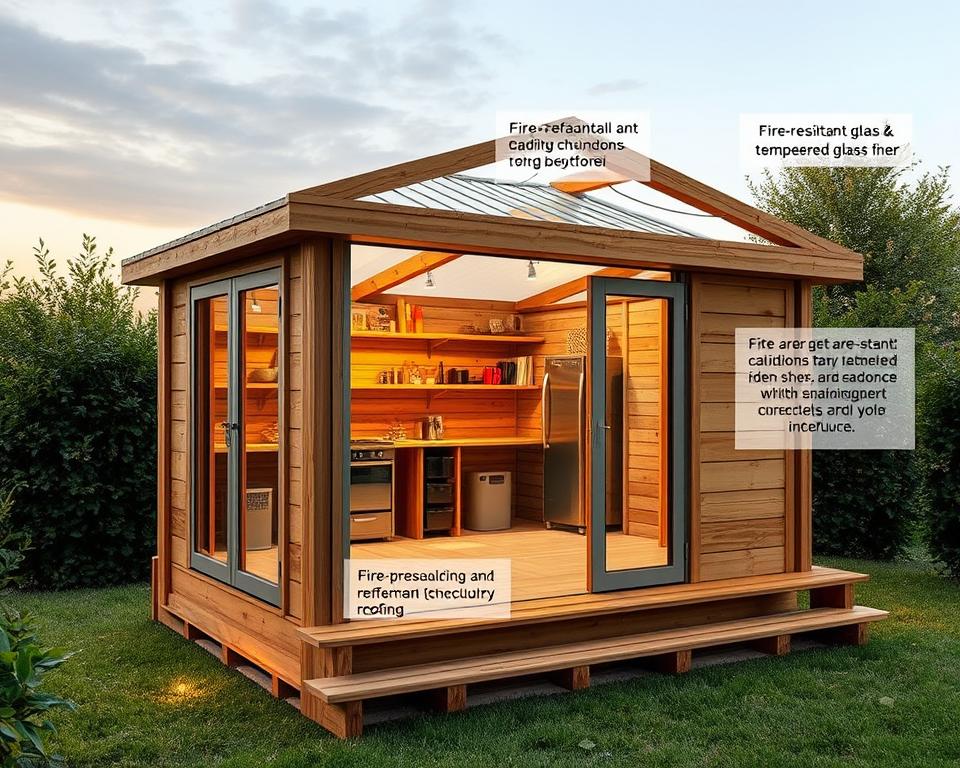
To minimize fire risks, consider upgrading your shed’s construction with fire-resistant materials. This not only enhances the safety of your garden shed but also protects your valuable tools and equipment.
Fire-Resistant Insulation Options
One effective way to upgrade your shed’s fire safety is by incorporating fire-resistant insulation. Materials such as fibreglass, mineral wool, and sheep’s wool are excellent choices. These materials are not only effective at regulating temperature but also possess fire-resistant properties. For instance, fibreglass melts at high temperatures, while sheep’s wool requires more oxygen than is typically present to ignite, thereby reducing the risk of fire spreading.
When retrofitting existing sheds, it’s crucial to ensure that the structural integrity is not compromised. This can be achieved by carefully selecting insulation materials that are suitable for your shed’s design and construction.
Improving Wall and Roof Fire Resistance
Enhancing the fire resistance of your shed’s walls and roof is another critical aspect. Using fire-rated plasterboard or cement boards can significantly improve the shed’s ability to withstand fires. These materials provide a tougher skin that can help contain fires, giving you more time to respond.
For the roof, consider using fire-resistant underlayment and covering materials. These can help prevent fires from spreading quickly across the roof, reducing the risk of the shed becoming a fire hazard.
By implementing these upgrades, you can significantly enhance your shed’s fire safety, creating a safer environment for your tools and equipment. Cost-effective approaches can be adopted based on your budget and skill level, ensuring that fire safety is achievable for all shed owners.
Installing Fire Detection and Suppression Systems
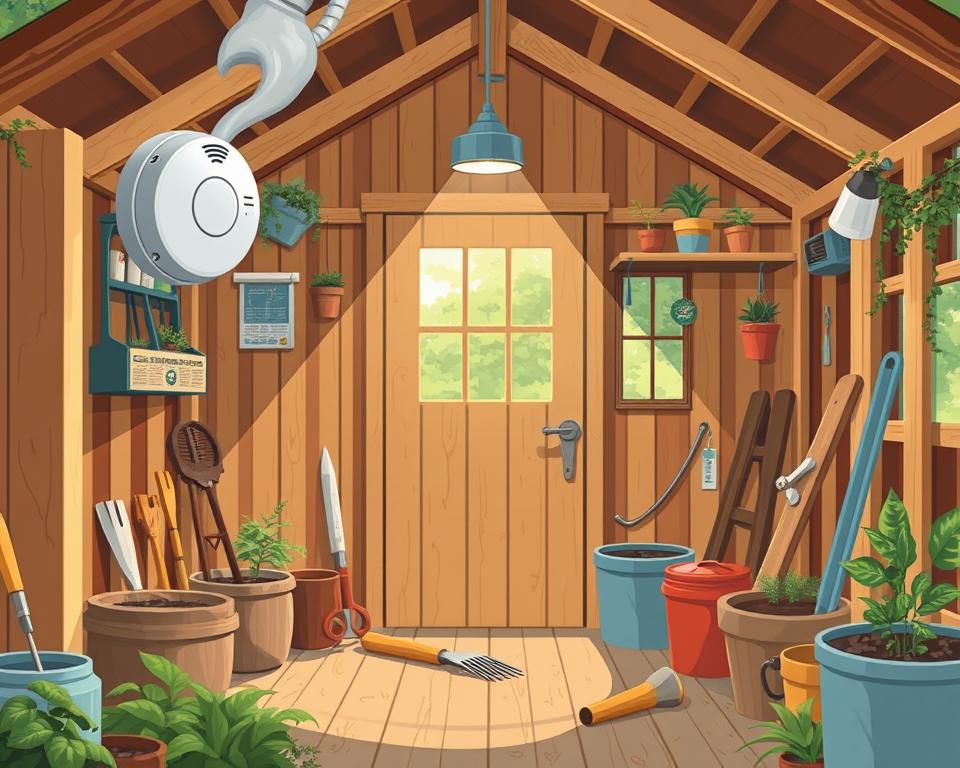
Enhancing fire safety in your garden shed involves the installation of effective detection and suppression systems. A shed fire can spread rapidly, making early detection crucial for preventing significant damage.
Choosing the Right Smoke Alarms for Outdoor Structures
When selecting smoke alarms for your garden shed, it’s essential to choose models that are designed for outdoor use and can withstand varying temperatures and humidity levels. Opt for alarms with a long battery life or those that are hardwired into your shed’s electrical system.
Selecting Appropriate Fire Extinguishers
For garden sheds, a dry powder fire extinguisher is often recommended due to its effectiveness against various types of fires, including those involving flammable liquids, electrical equipment, and combustible materials. Ensure the extinguisher is easily accessible and inspected regularly.
Electrical Safety in Garden Sheds
Garden sheds require special attention to electrical safety to mitigate the risk of electrical fires and ensure a safe space for work and storage. Ensuring that your shed’s electrical setup is safe not only protects your property but also prevents potential hazards.
Safe Wiring Practices
When it comes to electrical installations in garden sheds, using the right materials and methods is crucial. You should use outdoor-rated electrical components and ensure that all shed circuits have RCD protection. Proper cable routing and protection methods are also vital to prevent damage and overheating. Always check the manufacturer’s guidelines for specific requirements.
- Use appropriate cable types that are resistant to weather conditions.
- Ensure proper routing to avoid damage from tools or other items.
- Protect cables and wiring from moisture and extreme temperatures.
Regular Electrical Inspections
Regular inspections are key to maintaining electrical safety in your shed. Take a few minutes to inspect plugs, sockets, and cords regularly. Look out for signs of wear such as scorch marks, loose fittings, or warm outlets, as these can indicate potential problems. Make sure to address any issues promptly, considering upgrades like surge-protected sockets or fitting an RCD breaker if necessary.

By prioritizing electrical safety, you can significantly reduce the risk of fires and create a safer environment for your garden shed. Regular checks and safe wiring practices are fundamental to achieving this.
Conclusion
A few simple habits can make a significant difference in preventing fires in your wooden garden shed. By treating the walls and doors with the right coating, building a safe work zone, and using fire-rated lining, you can significantly enhance fire safety. Regular maintenance of alarms, extinguishers, and wiring is also crucial. Implementing these measures will allow you to enjoy your garden shed with peace of mind, knowing you’ve taken steps to protect your home and property from potential fire hazards.
FAQ
What are the most common causes of fires in wooden garden sheds?
Fires in wooden garden sheds are often caused by electrical faults, overheating equipment, or arson. Ensuring your shed is well-maintained and keeping it tidy can help mitigate these risks.
How can I make my wooden garden shed more resistant to fires?
You can enhance your shed’s fire resistance by applying fire-retardant treatments to the wood, using fire-resistant materials for the roof and walls, and installing smoke alarms and fire extinguishers.
Are there specific UK building regulations I need to follow for my garden shed?
Yes, the UK has building regulations that cover aspects such as insulation, materials, and construction methods. Familiarising yourself with these regulations can help ensure your shed is built or upgraded with fire safety in mind.
What type of fire extinguisher is suitable for a garden shed?
For a garden shed, a Class A or Class B fire extinguisher is typically recommended, as these can effectively tackle fires involving ordinary combustibles or flammable liquids.
How often should I inspect my garden shed’s electrical wiring?
Regular electrical inspections are crucial. You should inspect your shed’s wiring at least annually, or whenever you notice any signs of damage or wear, to prevent electrical faults that could lead to a fire risk.
Can I use any type of paint on my wooden garden shed to enhance fire resistance?
No, not all paints are created equal when it comes to fire resistance. Look for intumescent coatings or fire-retardant paints specifically designed to enhance fire resistance.
What are some best practices for storing items in my garden shed to reduce fire risk?
To minimise fire risk, store items in an organised manner, keep flammable materials away from heat sources, and avoid overloading your shed. Regularly cleaning up debris and disposing of unnecessary items can also help.