Garden Arch Ideas for an Enchanting Entrance
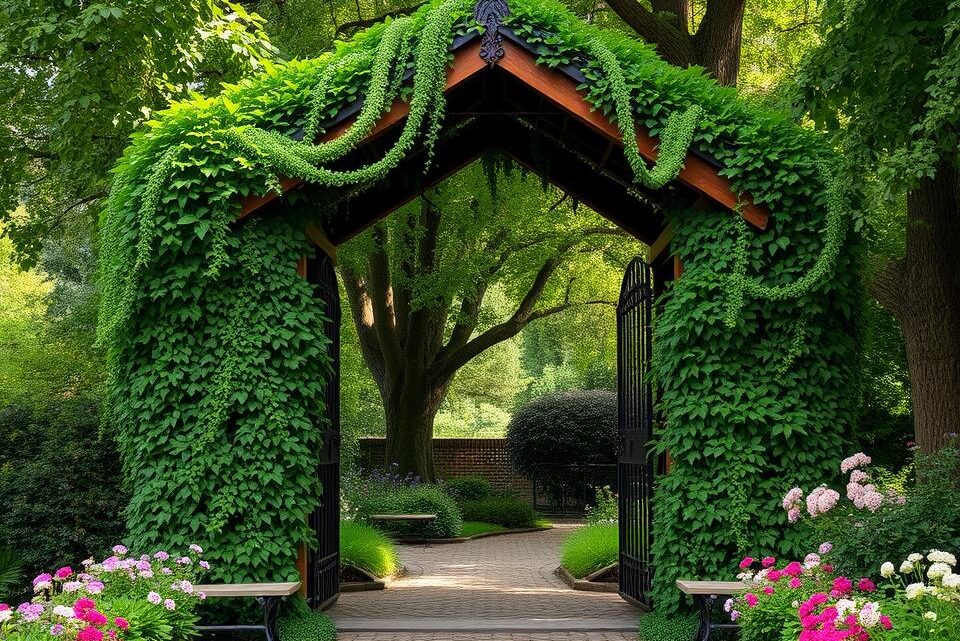
Outdoor spaces gain new life with the addition of structural elements. An arbour, often called a garden arch, serves as a beautiful focal point. These features can enhance pathways, seating areas, and entryways significantly.
These versatile constructions combine pillars with cross beams. They create interesting architectural details for any landscape. Beyond decoration, they function as supports for climbing plants. They also act as privacy screens and spatial organisers.
A well-designed structure establishes a welcoming tone. It provides a crucial first impression for visitors. This guide explores various design approaches and material choices. It helps homeowners select the perfect configuration for their specific requirements.
Inhaltsverzeichnis
Key Takeaways
- Arbours transform ordinary outdoor areas into enchanting destinations.
- These structures serve multiple purposes beyond mere decoration.
- A well-placed feature creates a strong initial impression.
- They add vertical interest and dimensional depth to a landscape.
- Various styles suit different architectural aesthetics.
- Understanding their potential maximises functional and visual impact.
The Allure of Garden Arches
Beyond their decorative appeal, these architectural features serve as powerful tools for shaping spatial perception and emotional response. They transform simple transitions into memorable experiences that engage visitors on multiple levels.
Architectural & Emotional Impact
The presence of a garden arch creates an immediate sense of arrival. It marks a threshold that signals movement from one zone to another within the outdoor area.
These structures provide vertical visual interest that draws the eye upward. This dimensional layering prevents monotonous horizontal sightlines throughout the landscape design.
Passing through an archway creates a psychological experience of transition. It enhances the sense of exploration and discovery within the garden space.
Enhancing Outdoor Spaces
Garden arches break up narrow spaces effectively when offset with lower planting beds. Their strategic placement establishes rhythm and repetition across different areas.
When adorned with lush greenery, these features soften hard architectural lines. They integrate built structures seamlessly with natural garden elements.
Beyond aesthetic appeal, arches add structural definition to open spaces. They provide reference points that help visitors navigate and understand the garden’s organisation.
Historical Inspirations and Traditional Design
Traditional design principles offer enduring appeal for creating structured outdoor spaces. These approaches draw from centuries of architectural evolution across different cultures. They provide a sense of continuity and heritage.
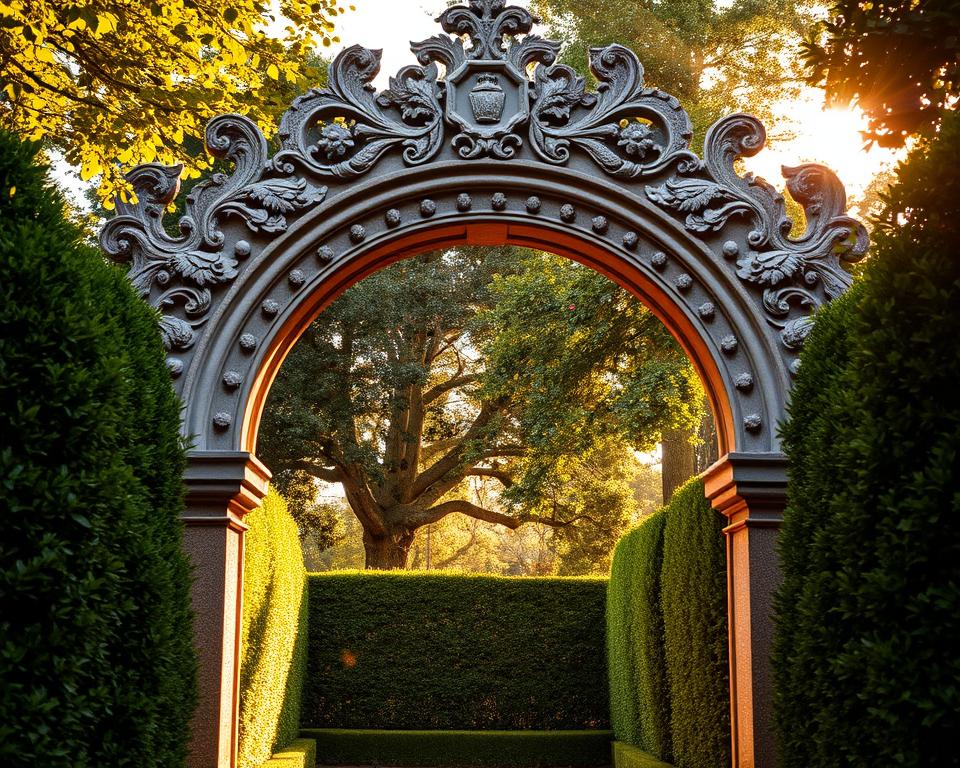
Classical Roman architecture has influenced landscape features for many years. The Romans perfected the use of arches as both structural and decorative elements. Their engineering achievements continue to inspire modern interpretations.
Heritage Materials and Classic Forms
Gothic Revival styles bring dramatic character to contemporary settings. Pointed arches and weathered stonework create atmospheric entrances. These features evoke the romance of historical estates and ancient ruins.
Mediterranean influences favour wide, substantial archways. They often incorporate natural materials like rammed earth and local stone. This style frames distant vistas while providing welcome shade.
Traditional pergola designs showcase elegant dual-column structures. They feature flat cross-beams that reflect Grecian inspiration. This classic form has remained popular through generations.
Heritage materials like aged timber and wrought iron connect modern spaces to historical precedents. They lend authenticity and timeless appeal to any landscape. The right choice depends on the overall style and desired atmosphere.
Classical arch forms demonstrate remarkable versatility across different settings. They work in both formal estate grounds and intimate cottage spaces. Their enduring popularity proves their lasting value over time.
Rustic Elegance with Wooden and Stone Arches
The warmth of organic materials transforms functional structures into welcoming features that age gracefully over time. Natural elements like timber and masonry create spaces that feel genuinely connected to their surroundings.

Wooden Arches for a Cottage Feel
Wooden constructions offer exceptional durability while maintaining a natural aesthetic. Species like Fir provide robust quality that withstands outdoor conditions beautifully.
The inherent warmth of timber creates an inviting atmosphere that synthetic alternatives cannot replicate. Natural grain patterns and organic textures add visual interest to any entrance.
Cottage-inspired spaces benefit particularly from wooden designs adorned with climbing roses. These flowering vines create romantic, overflowing blooms that enhance the rustic charm.
Stone and Timber Accents
Stone archways offer unparalleled permanence and weather resistance. They develop attractive patina over time, enhancing their character within the landscape.
Combining stone pillars with wooden cross-beams creates hybrid structures. This approach balances masonry’s durability with timber’s warmth for lasting appeal.
Rustic branch constructions provide budget-conscious alternatives showcasing natural materials. Found wood requires minimal processing while delivering authentic woodland character.
Natural weathering processes enhance both materials over time. Silvered timber and moss-covered stone develop distinctive looks thanks to environmental exposure.
Modern Materials for a Contemporary Look
Contemporary landscapes embrace innovative materials that redefine structural possibilities. Homeowners seeking a sleek appearance now have excellent alternatives to traditional options.
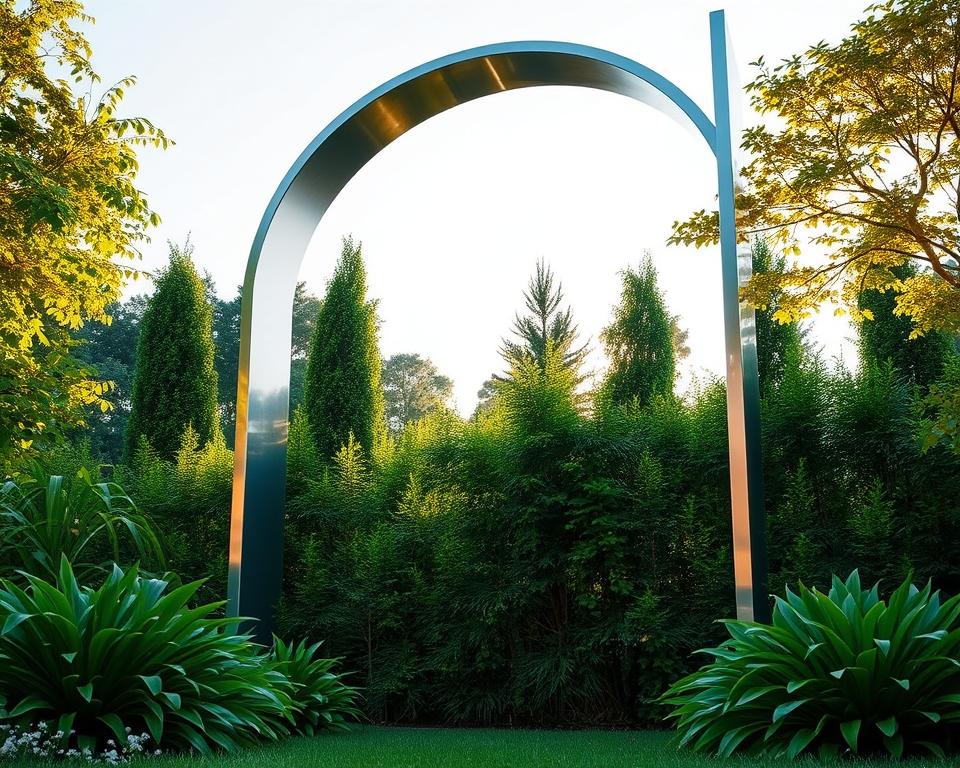
These modern solutions combine aesthetic appeal with practical benefits. They withstand challenging weather conditions while maintaining their appearance.
Metal Arches and Their Durability
Metal constructions offer exceptional strength and longevity. Steel and aluminium variants provide robust frameworks that last for decades.
Powder-coated finishes protect against rust and corrosion. This treatment ensures the structure remains attractive through seasonal changes.
The inherent strength of steel allows for slender, elegant designs. These airy frameworks support climbing plants without overwhelming the space.
“Modern metal arches represent the perfect blend of form and function, offering timeless appeal with minimal upkeep.”
Low Maintenance Vinyl Options
Vinyl presents an excellent choice for those prioritising ease of care. This synthetic material resists rot, insects, and weather damage.
White vinyl arches maintain their clean look with simple washing. They won’t fade or deteriorate like some traditional materials.
These options work well in any garden or yard setting. They provide a permanent solution that enhances the outdoor space.
| Feature | Metal Arches | Vinyl Arches |
|---|---|---|
| Durability | Extremely high – decades of use | Excellent – weather resistant |
| Maintenance | Low – occasional cleaning | Very low – virtually maintenance-free |
| Aesthetic | Sleek, modern appearance | Clean, crisp white finish |
| Plant Support | Strong framework for heavy growth | Good for moderate climbing plants |
Both materials offer distinct advantages for creating beautiful outdoor features. The choice depends on personal preference and specific requirements.
Garden Arch Ideas for an Enchanting Entrance
The UK’s diverse gardening traditions inspire unique interpretations of classic architectural elements. British designers blend historical references with contemporary sensibilities to create structures that feel both timeless and current.
Innovative Designs from Across the United Kingdom
Landscape designer Christian Douglas demonstrates how a series of metal arches can transform a simple walkway. His creation evokes feelings of a secret, winding space with lush climbing vegetables on either side.

This approach maximises vertical growing space while creating an immersive pathway. The repeating structures establish rhythm and draw visitors deeper into the outdoor area.
Regional variations across Britain reflect local architectural traditions and available materials. Designs range from formal structures in southern estates to rugged constructions in northern landscapes.
Contemporary British design often integrates architectural elements with functional growing systems. Arches serve as both aesthetic features and productive infrastructure supporting edible plants.
“Serial arch installations create tunnel-like passages that transform ordinary pathways into completely immersive experiences.”
The integration of lush greenery transforms structural frameworks into living architecture. This creates a beautiful ambiguity between built and natural elements in the garden space.
Creative Focal Points and Integrated Features
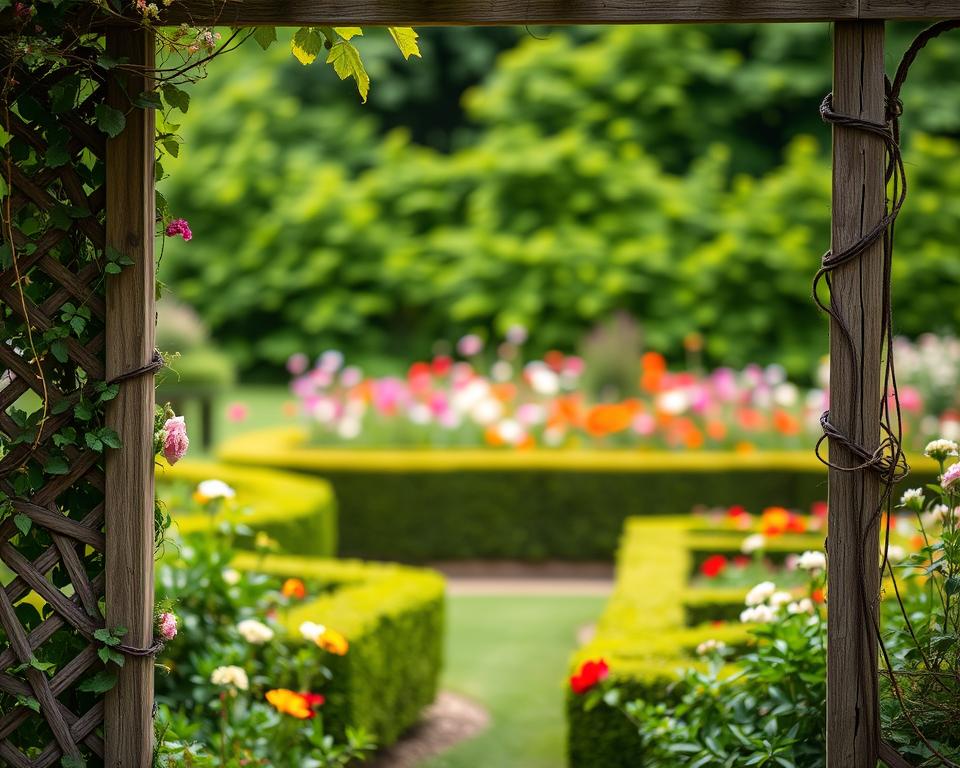
Integrating trellis and lattice work transforms simple archways into living architectural features. These additions create multifunctional structures that serve both aesthetic and practical purposes in outdoor spaces.
Trellis and Lattice Integrations
Attached trellis panels significantly enhance basic arch designs. They provide excellent support for climbing plants while offering adjustable privacy screening.
Different lattice configurations create varying visual effects. Tight diamond patterns establish substantial barriers, while open squares maintain sightlines for lighter growth.
The combination of structural frameworks with lattice infill enables layered planting schemes. Different climbing species can occupy various levels of the structure.
Climbing roses trained over arches create spectacular seasonal displays. Thornless varieties with repeat flowering offer both visual and sensory appeal throughout the season.
Flowering vines like clematis provide beautiful alternatives to roses. Their blue-flowering cultivars create stunning visual impact when displayed on winding archways.
Strategic placement of trellis panels on either side extends growing surface area. This approach frames pathways with vertical greenery that softens hard structural elements.
Properly installed systems support heavy flowering plants and productive species like grape vines. This prevents damage to the primary framework while enabling lush growth.
Seasonal interest varies significantly based on plant selection. Evergreen climbers maintain year-round presence, while deciduous flowering vines offer dramatic seasonal transformations.
Framing Pathways and Creating Inviting Entryways
Strategic placement of architectural arches can dramatically redefine how one experiences and navigates an outdoor environment. They act as powerful tools for organising space, guiding movement, and establishing a welcoming atmosphere.
Enhancing Garden Pathways
A simple pathway lined with arbours becomes an inviting entrance. Weathered grey finishes allow surrounding blooms to take centre stage, creating a beautiful approach.
Serial placement of these features along an extended pathway establishes rhythm. It transforms a functional route into an experiential sequence, marking progression toward a destination.

Each passage through an arch creates anticipation. This technique is excellent for drawing visitors deeper into the landscape.
Seating Area Accents
Seating areas gain immense definition and intimacy when framed. A steel structure can transform a simple bench into a significant focal point.
Climbers trained over seating arches provide natural shade and cooling. They filter harsh sunlight, creating dappled light patterns that enhance comfort.
This combination creates a self-contained retreat within a larger space. It offers privacy for contemplation while maintaining a visual connection to the surroundings.
When positioning these features on decks or patios, style consistency with existing materials is crucial. This ensures new structures complement the established hardscape beautifully.
Zen and Asian-Inspired Arbours
Eastern garden philosophy brings a unique perspective to landscape architecture through distinctive arbour designs. These structures blend spiritual principles with practical form, creating spaces that encourage contemplation and harmony.
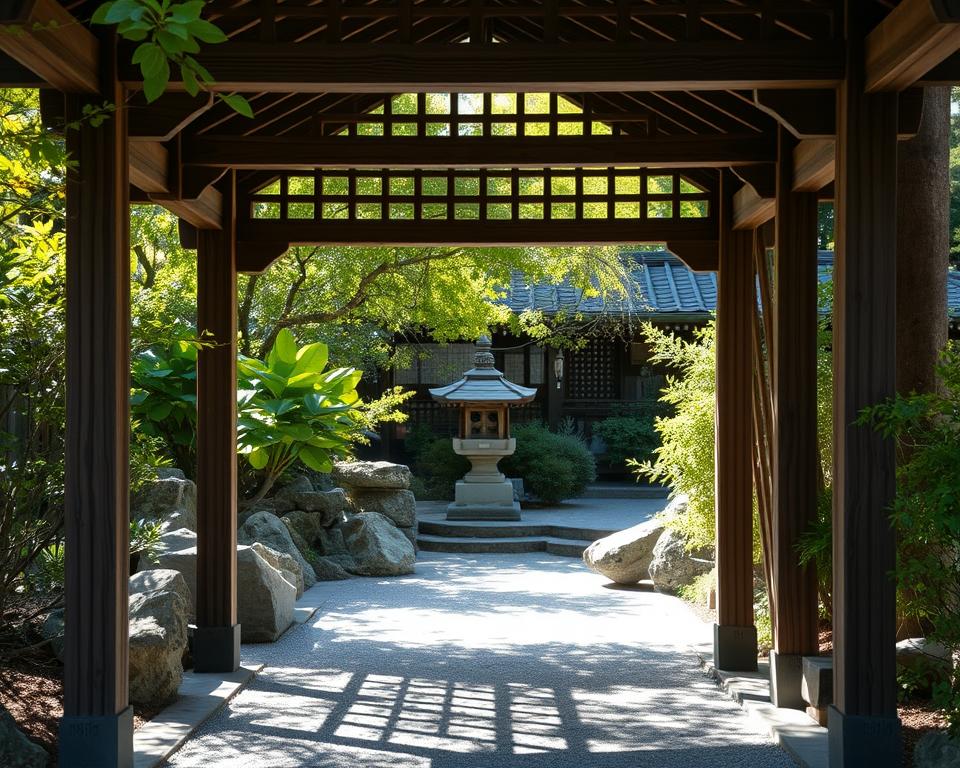
The elegant arc of a moon gate creates tranquillity and a hint of mystery in outdoor spaces. This circular archway often appears in Chinese-inspired settings, creating an enticing feature that frames the view beyond.
Moon-shaped Portals and Tranquil Vistas
Moon gate designs represent traditional Chinese philosophy, where circular portals symbolise completeness. Their perfect geometry contrasts beautifully with organic garden forms, creating dynamic visual tension.
Japanese-inspired arbours emphasise natural materials and refined joinery. This style reflects principles of simplicity and harmony with nature. The design showcases authentic craftsmanship through exposed structural elements.
Asian garden traditions integrate architectural features seamlessly with natural surroundings. Structures appear as inevitable components rather than imposed additions. This creates a cohesive aesthetic that enhances the peaceful feel.
The tranquil atmosphere benefits from carefully positioned archways that control views. They create anticipation and establish contemplative spaces. Complementary elements like stone pathways and pruned plants reinforce the cultural charm.
Traditional timber construction celebrates material properties rather than concealing them. When combined with climbing flowers, these structures transform into living architecture. They frame specific vistas using the principle of “borrowed scenery.”
Incorporating Water Features and Ambient Lighting
Moving beyond traditional structures, innovative designs now incorporate flowing water and strategic illumination to create captivating outdoor environments. These elements transform static features into dynamic experiences that engage multiple senses simultaneously.

Arch-Style Water Elements
Water features designed to mimic arch forms create unexpected focal points. They combine the symbolic gateway concept with the sensory appeal of moving water.
Fountain designs projecting water in arcing patterns establish temporary, ephemeral structures. These change with water pressure and wind conditions, offering dynamic architectural elements.
Classical archways can frame seating areas and ponds whilst subtly dividing spaces. This approach blends industrial and romantic tones beautifully.
Soft Lighting Techniques
Integrated lighting systems transform garden features from daytime elements into evening focal points. Uplighting and downlighting create dramatic after-dark effects.
Soft ambient lighting enhances safety along pathways whilst creating romantic atmosphere. Warm-toned fixtures illuminate structures without harsh glare.
The combination of climbing plants and subtle lighting creates layered visual effects. Illumination filters through foliage to produce dappled patterns.
| Feature Type | Water Elements | Lighting Options |
|---|---|---|
| Sensory Impact | Visual sparkle, sound, cooling effect | Visual depth, shadow play, atmosphere |
| Maintenance Level | Moderate – pump cleaning, water treatment | Low – bulb replacement, occasional cleaning |
| Installation Complexity | High – plumbing, electrical connections | Low to moderate – wiring or solar options |
| Seasonal Performance | May require winterisation in cold climates | Year-round with proper weatherproofing |
Solar-powered options offer sustainable illumination without electrical infrastructure. Improved battery technology enables reliable evening performance throughout the year.
Gated Arbours and Bespoke Garden Entrances
The addition of a gate transforms a simple archway into a secure and enchanting portal, enhancing both privacy and visual appeal. This combination creates a definitive entrance that feels both grand and welcoming.

Designing with Mixed Materials
Combining materials like stone pillars with a white wooden arch creates a striking contrast. This approach is perfect for a cottage aesthetic. The gate itself can feature steel framework for durability.
This mix allows each material to shine. Stone provides a solid foundation. Timber adds warmth, and metal offers strength for climbing plants like roses.
Custom Elements and Swing Benches
For a truly personalised home yard, consider a bespoke design. A custom archway can accommodate unique spaces. Integrating a swing bench creates a charming relaxation spot.
The bench suspended within the structure adds a kinetic element. It turns the entrance into a destination for quiet moments. This feature balances privacy with open enjoyment of the surroundings.
Practical Considerations for Placement and Maintenance
Careful planning during installation ensures that outdoor structures remain beautiful and functional for many seasons. The right approach to placement and upkeep makes a significant difference to long-term performance.
Durability and Seasonal Care
Material selection directly impacts maintenance requirements over time. Metal options offer excellent durability with minimal care needed. Vinyl constructions withstand extreme weather conditions virtually maintenance-free.
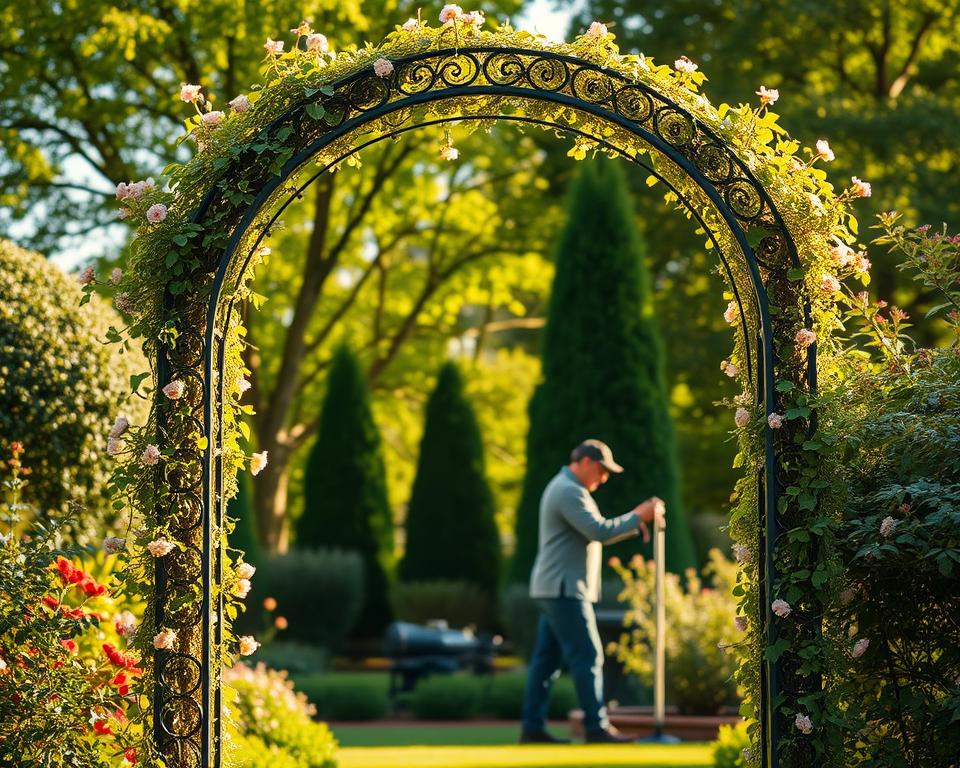
Proper installation begins with site preparation. Ensuring adequate foundation depth prevents settling issues. Good drainage considerations protect the structure from water damage.
When incorporating gates, mount them a few inches from the ground. This prevents rubbing against grass or snagging on obstructions. Manufacturers typically recommend 5-8cm clearance beneath gate bottoms.
Wooden arbours represent a worthwhile investment despite higher initial costs. Their robust quality ensures they serve a home for many years. Regular treatments protect against rot and insect damage.
Seasonal maintenance addresses specific vulnerabilities throughout the year. Winter moisture exposure requires attention. Summer heat stress and spring plant growth management are also important considerations.
The aesthetic evolution of these features over time should be anticipated. Weathering and patina development often enhance rather than diminish visual appeal. This natural ageing process adds character to the outdoor space.
Balancing Privacy and Openness in Garden Layout
Creating a harmonious outdoor space involves a delicate equilibrium between seclusion and connection. A well-designed perimeter offers a sense of security without creating a fortress-like feel.

Integrating structures like arches with fencing systems achieves this balance beautifully. They provide vertical interest and frame views, making the boundary an attractive feature.
Fencing, Trellises and Lattice Designs
Lattice and trellis panels are excellent for adjustable privacy. They allow for dense planting that screens an area while letting light and air filter through.
This approach is ideal for a side yard, transforming a narrow passage into a pleasant, intentional route. The look is sophisticated and integrated.
A sturdy gate within an arched entrance signals a clear transition from public to private space. It provides security while maintaining a welcoming atmosphere for the home.
Matching these elements to the existing landscape ensures a cohesive design. The result is a yard that feels both private and connected to its surroundings.
Strategic placement of these features along a boundary prevents a monotonous look. It adds architectural punctuation and visual interest to the entire side area.
The psychological effect is significant. Partial enclosure defines a territory without the isolation of solid walls. This careful design creates a wonderful feel of sanctuary.
Ultimately, the right combination of a gate, screening, and structural elements achieves the perfect level of privacy. It enhances the enjoyment of any outdoor living space.
Conclusion
A well-positioned garden arch transforms functional pathways into memorable journeys through the landscape. These structures serve vital roles in spatial organisation and plant support, going far beyond mere decoration.
Selecting the right design requires careful consideration of site conditions, maintenance needs, and long-term goals. The best installations balance structural presence with seamless integration into their surroundings.
The transformative power of these features lies in their ability to create distinctive entrance points and define circulation patterns. They establish focal points that organise and enhance any outdoor space.
Investment in quality construction ensures lasting value, with well-chosen structures becoming integral to the garden‘s character over time. Their enduring popularity across design movements demonstrates remarkable adaptability.
Thoughtful integration of arch features creates outdoor environments with enhanced depth and experiential richness. Whether traditional or contemporary, they offer opportunities for personal expression within the broader landscape language.
FAQ
What is the best material for a garden arch in the UK climate?
For longevity, treated hardwood or powder-coated steel are excellent choices. They resist rot and rust, offering great durability against British weather. Vinyl is another superb, low-maintenance option that withstands the elements without needing regular painting or treatment.
How can I make a metal arch feel less stark and more integrated into the garden?
The key is to encourage climbing plants. Species like clematis, jasmine, or climbing roses will soften the structure’s appearance. Adding a trellis or lattice panel to the sides can also provide more surface area for greenery to create a lush, natural feel.
Can a garden arch be used to create a sense of privacy?
Absolutely. By positioning an arch at a strategic point, such as an entryway to a secluded seating area, and training dense climbers like ivy or honeysuckle over it, you can establish a visual barrier. Pairing it with fencing or lattice designs enhances this effect, balancing openness with seclusion.
Where is the ideal placement for a garden archway?
A> An arch is most effective when it defines a transition. Placing it over a pathway to mark the entrance to a different part of the landscape is a classic use. It can also frame a beautiful vista or be positioned adjacent to a bench to create a charming, shaded nook.
What are some creative ways to incorporate lighting with a garden arch?
Soft, ambient lighting adds enchantment. Consider weaving solar-powered fairy lights through the structure’s branches or vines. For a more permanent solution, discreetly mounted LED spotlights at the base can uplight the arch, creating a dramatic silhouette against the evening sky.