
Garden Building Insulation Benefits

Outdoor structures can become comfortable, year-round havens with the right approach. Many homeowners seek to maximise their investment in these additional spaces. Proper treatment transforms them from seasonal shelters into functional extensions of the home.
Natural materials like wood offer some inherent thermal qualities. The thickness of the logs contributes to warmth retention. However, this natural protection often proves insufficient against the UK’s variable climate, especially during colder months.
Effective climate management goes beyond simple temperature control. It regulates heat flow and reduces noise penetration. This creates a peaceful retreat that remains pleasant in all seasons.
The advantages extend to protecting interior fixtures and personal belongings. By preventing condensation, the system safeguards against moisture damage. This ensures the space remains durable and welcoming for years to come.
Inhaltsverzeichnis
Key Takeaways
- Proper treatment transforms outdoor structures into comfortable, year-round spaces
- Natural materials alone are often inadequate for the UK climate
- Effective climate management regulates temperature and reduces noise
- Moisture control protects interior fixtures and belongings
- Insulated garden rooms offer superior versatility and comfort
- The right approach maximises the investment in additional living space
- Creating a peaceful retreat requires attention to thermal and acoustic performance
Introduction to Energy-Efficient Garden Buildings
Transforming a garden structure into a genuine, all-season retreat hinges on its energy performance. Modern designs prioritise efficiency, moving beyond basic shelter to create spaces that are truly integrated with daily life.
Overview of Insulated Garden Rooms
Contemporary garden rooms are engineered for consistent comfort. Sophisticated systems are integrated into the walls, floor, and roof.
This approach maintains a stable internal temperature. It effectively manages heat flow, keeping the space warm in winter and pleasantly cool during summer.
Why Insulation is Vital in the UK Climate
The British weather is famously variable. It presents a unique challenge for any outdoor room.
Robust solutions are essential to combat damp, chilly winters and increasingly warm summers. A well-insulated room reduces the need for additional heating and cooling, leading to significant energy savings.
As one expert notes, “A thermally efficient garden room isn’t a luxury; in our climate, it’s a necessity for year-round usability.”
Why Insulate Your Garden Building?
The decision to properly outfit a garden room with thermal control is fundamental to its long-term performance and usability. It moves the space beyond basic shelter, delivering tangible advantages that affect daily use.
Enhanced Comfort and Thermal Regulation
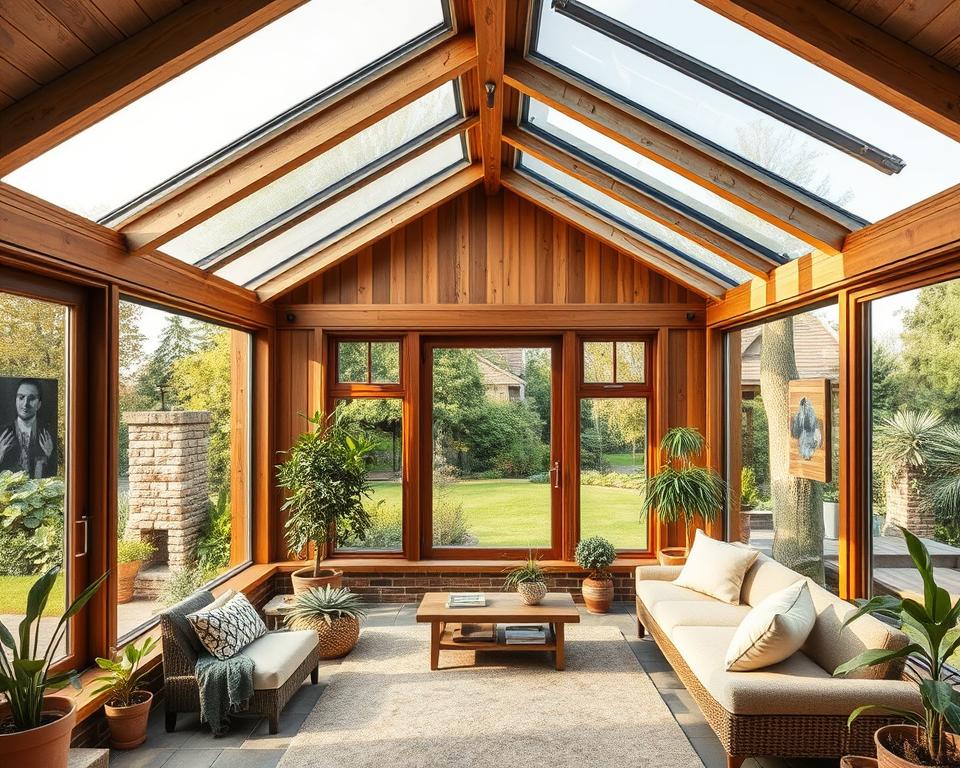
A primary advantage is the creation of a stable internal environment. Effective materials manage heat flow, preventing loss in winter and blocking excess heat in summer.
This thermal regulation maintains a consistent, pleasant temperature. It ensures the room remains comfortable for work or relaxation, regardless of the weather outside.
| Feature | Uninsulated Room | Insulated Room |
|---|---|---|
| Winter Temperature Stability | Poor, requires constant heating | Excellent, retains warmth |
| Summer Heat Resistance | Low, becomes uncomfortably warm | High, stays cooler for longer |
| Energy Consumption | High for heating/cooling | Significantly reduced |
Reducing Condensation and Moisture Issues
Moisture control is another critical benefit. In untreated spaces, temperature differences cause condensation on cold surfaces.
This dampness encourages mould and mildew growth. Proper treatment acts as a vapour barrier, maintaining consistent surface temperatures to prevent moisture accumulation.
It protects the structure from rot and creates a healthier environment. Belongings like electronics are also shielded from humidity damage.
Understanding the Science of Insulation in Garden Rooms
Understanding the physics behind temperature control reveals why certain materials outperform others in maintaining comfort. The scientific principles governing heat movement explain how effective thermal management creates consistent environments.
How Insulation Controls Heat Flow
Thermal materials work by slowing the transfer of warmth through three main pathways. Conduction occurs when heat travels through solid materials, while convection involves movement through air or liquids.
Radiant heat moves through empty space as infrared energy. Quality insulation addresses all three methods, creating an effective thermal barrier. Materials with trapped air pockets excel at reducing convective flow.
The density and thickness of these materials directly impact their thermal properties. Strategic placement in walls, floors, and especially roofs maximises heat control effectiveness where warmth naturally rises.
Acoustic and Safety Benefits
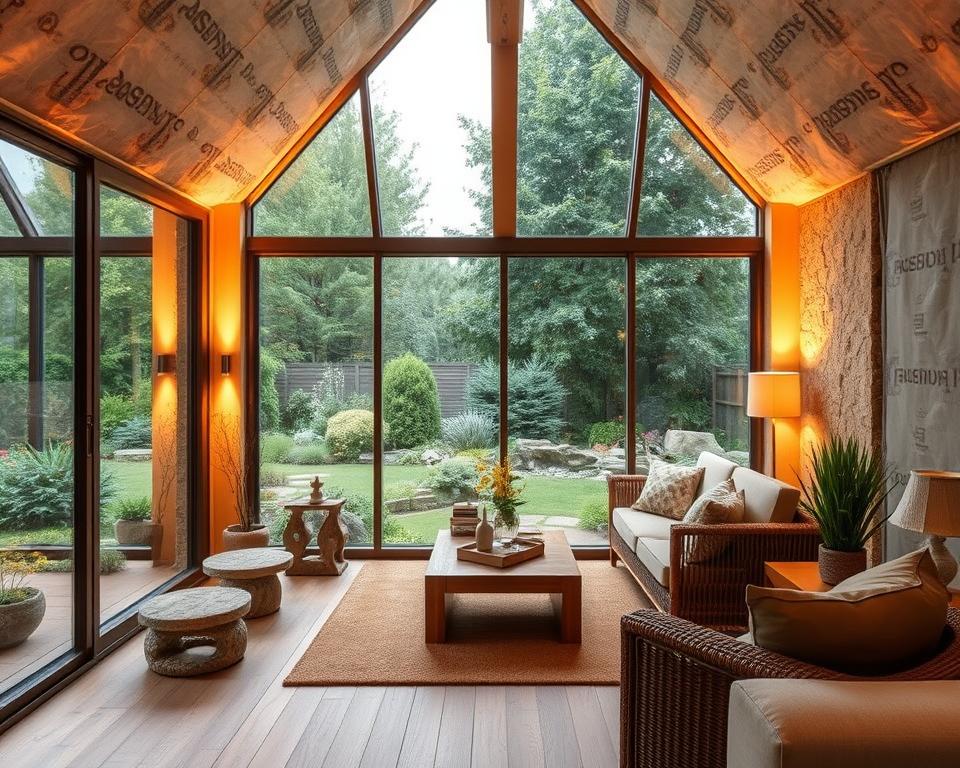
The same physical properties that trap heat also absorb sound waves effectively. Dense cellular structures within insulation materials disrupt sound transmission through walls and ceilings.
This creates a valuable acoustic barrier that minimises both incoming and outgoing noise. For spaces used as studios or offices, this sound dampening significantly enhances usability.
Proper installation also improves fire resistance in some materials. The closed-cell structure of rigid foam provides excellent thermal resistance while being lightweight. This combination of thermal and acoustic performance makes well-insulated rooms truly multi-functional spaces.
Exploring Garden Building Insulation Benefits
The true value of a well-designed garden space becomes apparent when it remains usable and pleasant regardless of external weather conditions. Proper thermal management delivers significant advantages that extend well beyond basic comfort.
Optimising Indoor Temperature Year-Round
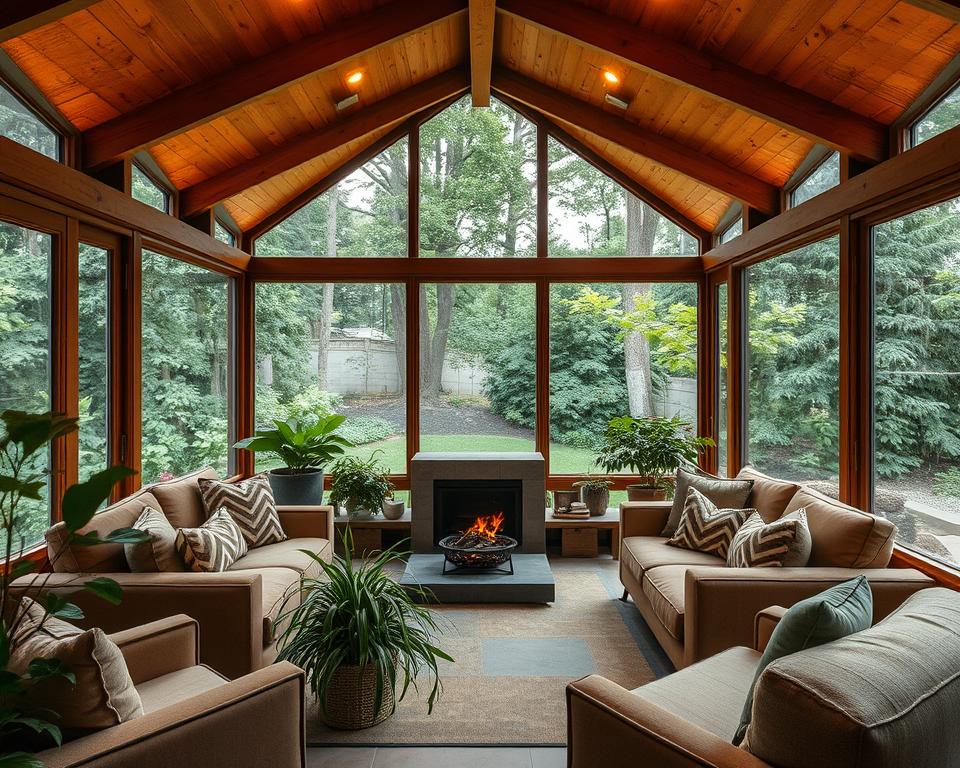
Strategic placement of thermal materials creates stable environments that resist seasonal extremes. During winter months, heat retention prevents cold spots and draughts. In summer, the same materials block excessive warmth from penetrating the structure.
This consistent thermal performance reduces reliance on supplementary heating and cooling systems. The result is enhanced energy efficiency and lower operational costs. Users enjoy comfortable conditions without constant temperature adjustments.
Floor systems play a crucial role in overall thermal control. Specialised underfloor barriers prevent heat loss through ground contact. They also manage moisture effectively, preventing condensation issues.
Different applications benefit from stable temperatures in unique ways. Home offices require consistent conditions for productivity. Fitness areas need proper ventilation alongside thermal regulation.
The protection extends to furnishings and equipment stored within these spaces. Sensitive electronics and valuable items remain safe from temperature-related damage. This comprehensive approach ensures long-term durability and functionality.
Choosing the Right Insulation Materials for Your Garden Room
Different insulation options offer distinct advantages, making the choice pivotal for achieving desired comfort levels. Homeowners must weigh factors like thermal performance, space requirements, and installation complexity.
Comparing Fibreglass, Cellulose, and Foam Options
Fibreglass material is popular and cost-effective. It fits easily into various spaces. However, it can be irritating to handle and may not seal air completely.
Cellulose, made from recycled paper, appeals for its sustainability. It provides good acoustic and thermal properties. Its downside is potential susceptibility to moisture and settling over time.

Rigid foam insulation boards are a great choice for maximising interior space. Their closed-cell structure offers excellent thermal resistance with minimal thickness. Spray foam insulation seals cracks effectively but uses less sustainable materials.
Assessing Material Thickness and R Values
Understanding R-values is crucial for comparing materials. This measure indicates thermal resistance. A higher R-value means better performance.
Thickness directly influences this value. For example, cellulose often requires a 220mm layer, while rigid foam insulation can achieve similar results at just 50mm.
| Material | Typical R-Value per 25mm | Common Thickness | Key Consideration |
|---|---|---|---|
| Fibreglass | 2.2 – 2.7 | 100-150mm | Good value, requires vapour barrier |
| Cellulose | 3.1 – 3.7 | ~220mm | Eco-friendly, can settle |
| Rigid Foam Board | 4.0 – 6.5 | 50-100mm | High performance, space-efficient |
| Spray Foam | 3.5 – 6.5 | 90-140mm | Excellent air seal, professional installation |
The right selection from this range of materials ensures an insulation garden room meets specific needs for efficiency and comfort.
Installation Techniques and DIY Insulation Tips
The quality of installation directly impacts how well thermal materials perform in outdoor spaces. Proper techniques ensure maximum efficiency and comfort.
Step-by-Step Preparation and Safety Measures
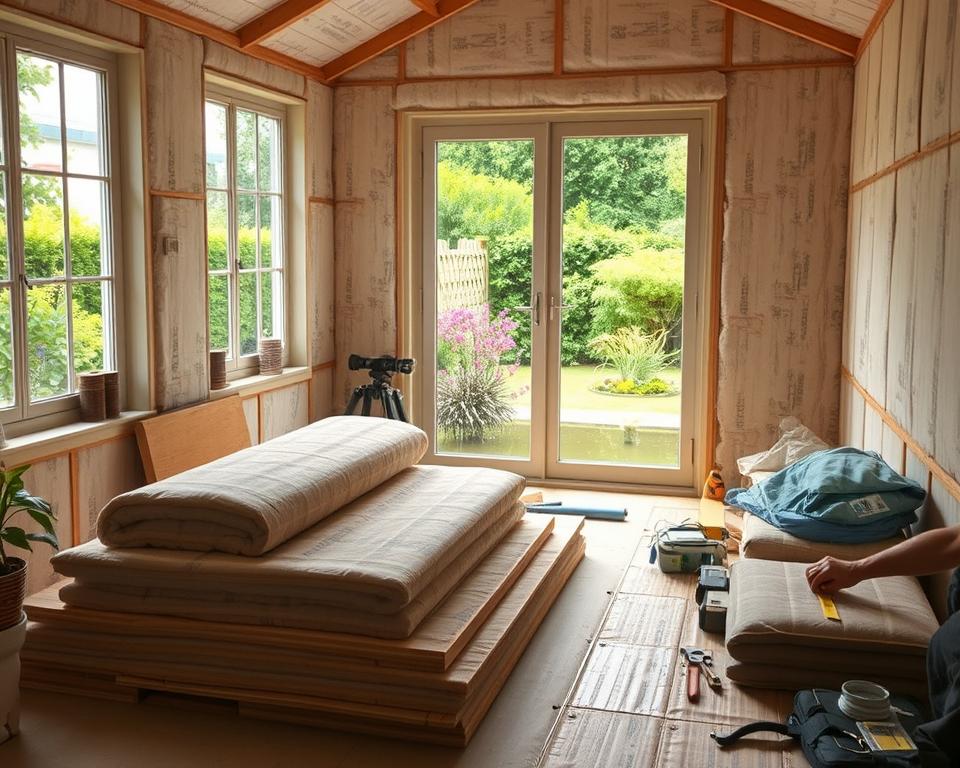
Before beginning any construction work, thorough preparation is essential. Accurate measurements prevent material waste. Safety gear like gloves and masks protect against irritants.
The installation sequence matters greatly. Walls should be addressed first, followed by roof areas, and finally floors. This systematic approach ensures comprehensive coverage.
| Installation Area | Key Consideration | Material Requirements |
|---|---|---|
| Walls | Fill stud spaces completely | Rigid panels or batt |
| Roof | Critical for heat control | Higher R-value needed |
| Floor | Prevents ground chill | Moisture-resistant |
Effective Sealing and Finishing Touches
Air sealing is the final, crucial step. Caulk and expanding foam seal gaps around windows and doors. This prevents thermal bridging and draughts.
Vapour barriers manage moisture movement effectively. Proper installation ensures the system functions as an integrated whole. These finishing details make a significant difference in performance.
Cost-Efficiency, Durability and Environmental Impact
Economic considerations and environmental responsibility converge when selecting thermal solutions for external spaces. The initial outlay for quality materials represents a strategic investment with compounding returns.
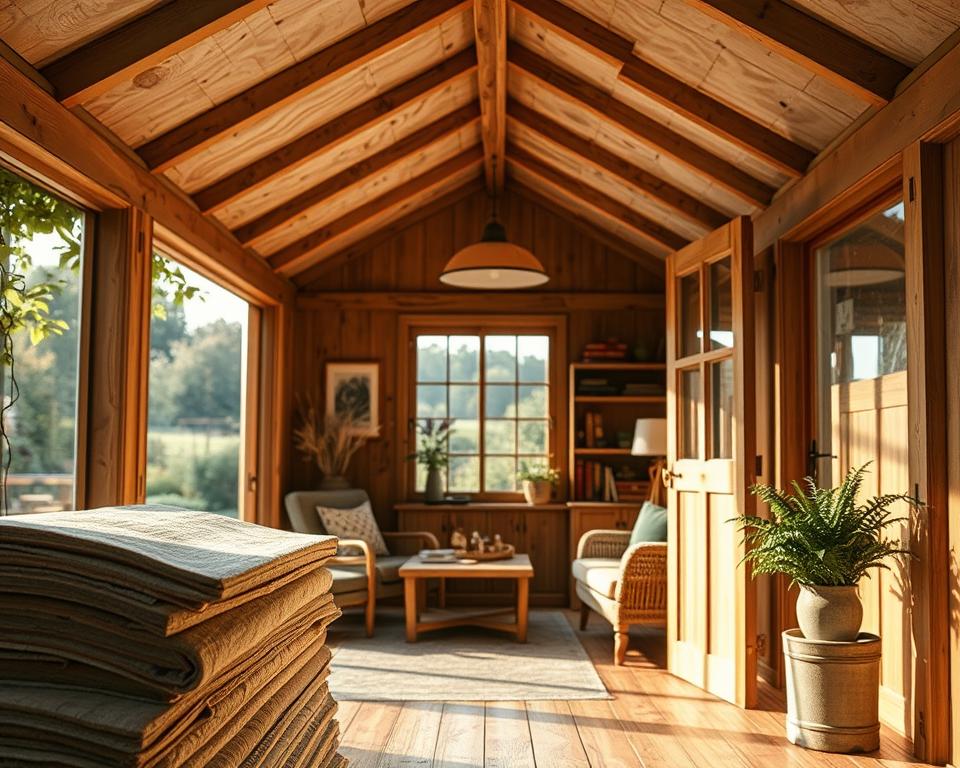
This approach delivers substantial long-term savings while supporting sustainable practices. Homeowners achieve better value through reduced operational costs.
Long-Term Savings and Reduced Maintenance
Proper thermal treatment significantly lowers energy consumption for heating and cooling. This reduction translates directly into lower utility bills throughout the year.
Well-protected structures require less maintenance and experience fewer weather-related issues. The initial investment pays dividends through extended lifespan and reduced repair costs.
| Cost Factor | Standard Structure | Thermally Treated Room |
|---|---|---|
| Annual Heating Costs | £300-£500 | £50-£150 |
| Maintenance Frequency | Annual checks needed | Biannual inspection sufficient |
| Expected Lifespan | 10-15 years | 20-30 years |
| Structural Repairs | Common after 5 years | Minimal for 10+ years |
Eco-Friendly and Sustainable Choices
Environmentally conscious materials like sheep’s wool and recycled cellulose offer excellent performance. These options minimise ecological impact while maintaining high efficiency.
Reduced energy use lowers carbon emissions and supports broader sustainability goals. Homeowners can create comfortable retreats that align with modern environmental values.
The combination of financial savings and ecological benefits makes thermal management a wise choice for any external room. This approach future-proofs the investment against rising energy costs.
Conclusion
Ultimately, the success of a garden retreat rests on its ability to provide consistent comfort throughout the seasons. A well-planned thermal strategy is the cornerstone of this achievement.
This approach transforms a basic structure into a versatile, year-round space suitable for an office, studio, or leisure area. It ensures reliable thermal performance in both winter and summer.
The initial investment yields significant returns through enhanced durability, lower energy costs, and minimal upkeep. Homeowners can make an informed choice from various materials to meet their specific requirements.
Whether a DIY project or professional installation, the effort creates a valuable home extension. A properly treated room becomes a practical and comfortable retreat for years to come.
FAQ
Why is it important to insulate a garden room?
Proper insulation is crucial for maintaining a comfortable temperature, reducing energy consumption, and preventing issues like condensation. It ensures the space is usable and pleasant throughout the year.
What are the primary advantages of a well-insulated garden building?
Key advantages include superior thermal performance for year-round comfort, lower heating costs, effective moisture control, and enhanced acoustic properties for a quieter environment.
How does insulation improve energy efficiency?
Insulation acts as a barrier to heat flow, meaning less energy is required for heating in winter and cooling in summer. This leads to significant energy savings and a smaller carbon footprint.
Which insulation material is best for a garden room?
The ideal choice depends on specific needs. Rigid foam insulation often offers high thermal performance, while materials like fibreglass or sheep’s wool are also popular. The best material balances thermal resistance, cost, and environmental impact.
Can insulation help with noise reduction?
Yes, many insulation materials also provide excellent soundproofing qualities. They absorb sound waves, creating a more peaceful and private retreat away from external noise.
Is insulating a garden building a worthwhile investment?
Absolutely. The initial investment in quality insulation pays for itself over time through lower energy bills, increased property value, and the creation of a versatile, all-weather space that can be enjoyed in every season.

