Effective Garden Privacy Ideas – Garden Screening Solutions

Creating a secluded retreat in your own back yard is a common goal for many homeowners. This comprehensive guide explores effective methods for enhancing seclusion in your outdoor space. It focuses on maintaining aesthetic appeal and functionality.
Screening combines practical privacy solutions with stylish design. These elements can significantly enhance property value. They create a personal sanctuary away from prying eyes and the surrounding urban environment.
The article presents multiple approaches. It covers everything from modern manufactured screens to natural hedging solutions. These options are suitable for properties of all sizes and architectural styles.
Readers will discover how incorporating hard landscaping elements can improve their plot. Features like metal screening, fencing, and trellis work add structure and beauty. They offer a durable and attractive way to define your territory.
The guide also addresses common challenges. It is particularly useful for those with properties near roads or adjacent to neighbours. It offers clever ideas for achieving peace in densely populated areas.
Inhaltsverzeichnis
Key Takeaways
- Discover various methods to create a secluded and peaceful outdoor area.
- Learn how screening can add both style and value to your property.
- Explore options suitable for different garden sizes and home designs.
- Understand how to use hard landscaping to improve aesthetics and function.
- Find solutions for properties in challenging locations, like near roads.
Introduction to Creating a Personal Garden Sanctuary
The primary function of a well-designed outdoor area is to offer a haven for relaxation and mental rejuvenation away from daily stresses. This personal sanctuary represents an essential retreat from the pressures of contemporary living.
It provides a dedicated space for quiet contemplation and a deeper connection with the natural environment. Many homeowners, however, face a common challenge.
They must balance the desire for open-air freedom with the necessary sense of seclusion. This is particularly true for properties near busy roads or close to neighbouring houses.
The good news is that this delicate equilibrium need not involve compromise. With thoughtful planning, one can achieve both accessibility and privacy simultaneously.
Creating a truly private oasis begins with a careful assessment of the specific characteristics of the garden. Key factors include its size, orientation, existing structures, and the nature of any overlooking elements.
This foundational approach establishes the principles for a harmonious transformation. The result is a personal oasis where seclusion and natural beauty coexist perfectly.
Garden Privacy Ideas – Garden Screening and Other Suggestions
Transforming an exposed plot into a private sanctuary requires thoughtful consideration of various screening methods. Homeowners can select from numerous creative approaches that suit their specific needs and preferences.

The available options span from manufactured panels to natural hedging solutions. These methods work effectively for compact spaces or larger landscapes. They offer alternatives to conventional wooden fences.
Contemporary approaches include decorative metalwork and modular screening systems. These provide flexible and stylish ways to define outdoor zones. They maintain visual interest while ensuring seclusion.
Living walls and strategic planting schemes represent eco-friendly alternatives. These solutions naturally obscure sightlines with botanical elements. They create dynamic, evolving screens that change with seasons.
Each method presents distinct advantages based on budget and maintenance requirements. Spatial limitations and desired aesthetics also influence the optimal choice. Property owners should consider how solutions complement existing architecture.
Understanding the full spectrum empowers informed decisions. Both permanent installations and adjustable systems are available. This allows for seasonal adaptations as outdoor layouts evolve.
Modern Garden Screening Techniques
Modern screening solutions represent a significant advancement in outdoor design, offering both visual interest and practical benefits. These contemporary approaches utilise innovative materials that provide effective seclusion while maintaining aesthetic appeal.
Metal, Glass and Slatted Panel Options
Metal screens have gained popularity for their durability and decorative potential. They often feature laser-cut patterns and come in various colours. Choosing rust-resistant materials ensures longevity in British weather conditions.
Glass screening offers a sleek, modern look while allowing natural light to penetrate. Frosted or patterned glazing provides privacy without creating dark enclosures. This option is naturally strong and weather-resistant.

Slatted panel designs present a balanced approach to outdoor division. They allow controlled visibility and airflow while establishing clear boundaries. The linear patterns create appealing shadow effects throughout the day.
Benefits of Contemporary Designs
These modern screening options provide reduced maintenance requirements compared to traditional solutions. Their enhanced weather resistance makes them suitable for year-round use in various climates.
The versatility of contemporary materials allows integration with both traditional and modern outdoor schemes. Homeowners can select from minimalist aesthetics to ornate patterns that complement their property’s architectural style.
Incorporating Natural Elements for Privacy
Utilising botanical elements offers an organic approach to creating secluded outdoor spaces. These living solutions provide an environmentally conscious alternative to manufactured barriers.
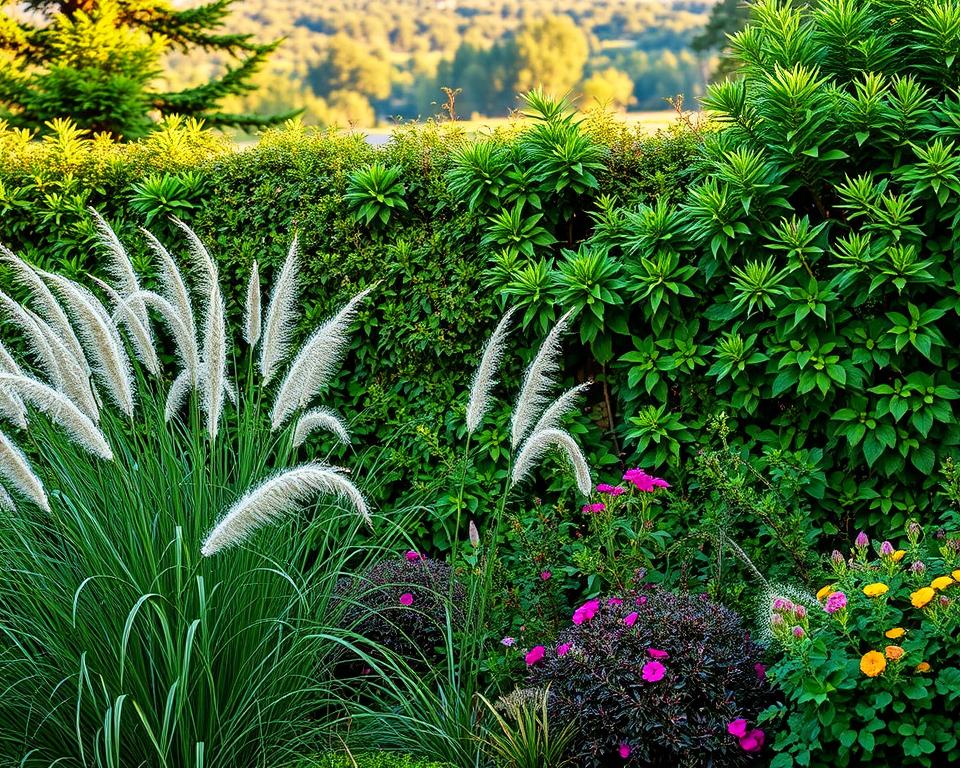
Using Hedges and Shrubs
Fast-growing varieties like cherry laurel and privet establish effective screening quickly. Leylandii can achieve impressive growth of 90cm annually with minimal maintenance. These plants deliver benefits beyond visual screening, including noise reduction and wildlife support.
Living Green Screens and Climbing Plants
Living screens provide immediate impact while maintaining a slim profile. They allow sunlight and air circulation while offering decent coverage. Training climbing specimens like sweet peas along structures adds fragrance and natural decoration.
Most hedge varieties require only annual pruning to maintain density. This makes them relatively low-maintenance compared to frequent fence repairs. The selection depends on soil conditions, sunlight exposure, and maintenance capacity.
Creative Uses for Garden Furniture in Screening
Outdoor furniture offers a surprisingly versatile tool for enhancing seclusion without sacrificing style or comfort. Clever arrangement turns functional pieces into effective visual barriers. This approach is ideal for creating intimate zones within a larger outdoor area.
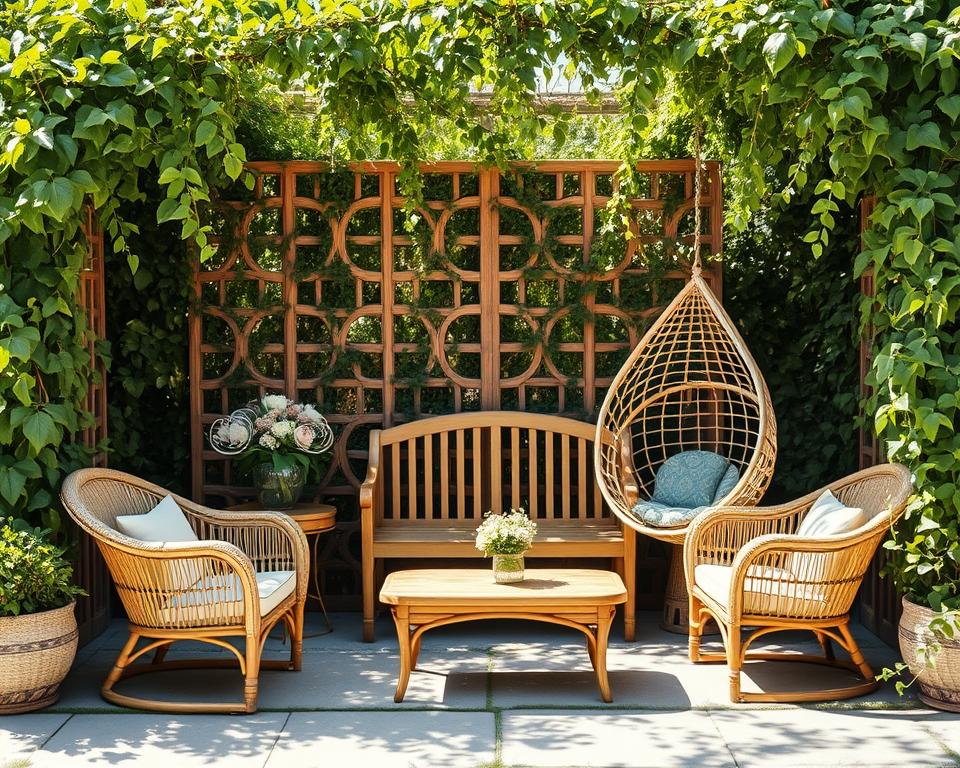
This method provides flexibility, especially where permanent structures are not desirable. It allows homeowners to adapt their space for different occasions.
High-Back Outdoor Seating Arrangements
High-backed benches and chairs serve a dual purpose. They provide comfortable seating while acting as elegant screens. Positioning them strategically can shield a specific zone from neighbouring views.
This creates a sense of enclosure for dining or conversation. It is a non-permanent solution that adds height to the overall design.
Multi-functional Fence Enhancements
Lining furniture along an existing fence reinforces spatial definition. A bench placed against a panel maximises the utility of both elements. It extends the functional living space effectively.
Selecting pieces that complement the fence’s material ensures visual cohesion. This technique is valuable for defining the boundaries of a seating area.
| Furniture Type | Best Use for Screening | Key Advantage |
|---|---|---|
| High-Back Benches | Creating intimate dining nooks | Provides both seating and a substantial visual barrier |
| Modular Sofas | Flexible zoning for entertaining | Can be reconfigured to suit different occasions |
| Planter Benches | Enhancing existing fence lines | Combines greenery with practical seating |
This creative approach proves particularly useful in rental properties. It allows for personalised seclusion without structural changes. The result is a comfortable and private outdoor retreat.
Utilising Garden Trellises and Climbing Plants
The integration of climbing plants on trellis frameworks creates dynamic privacy screens that evolve throughout the seasons. This approach combines structural elements with botanical growth for personalised screening solutions.
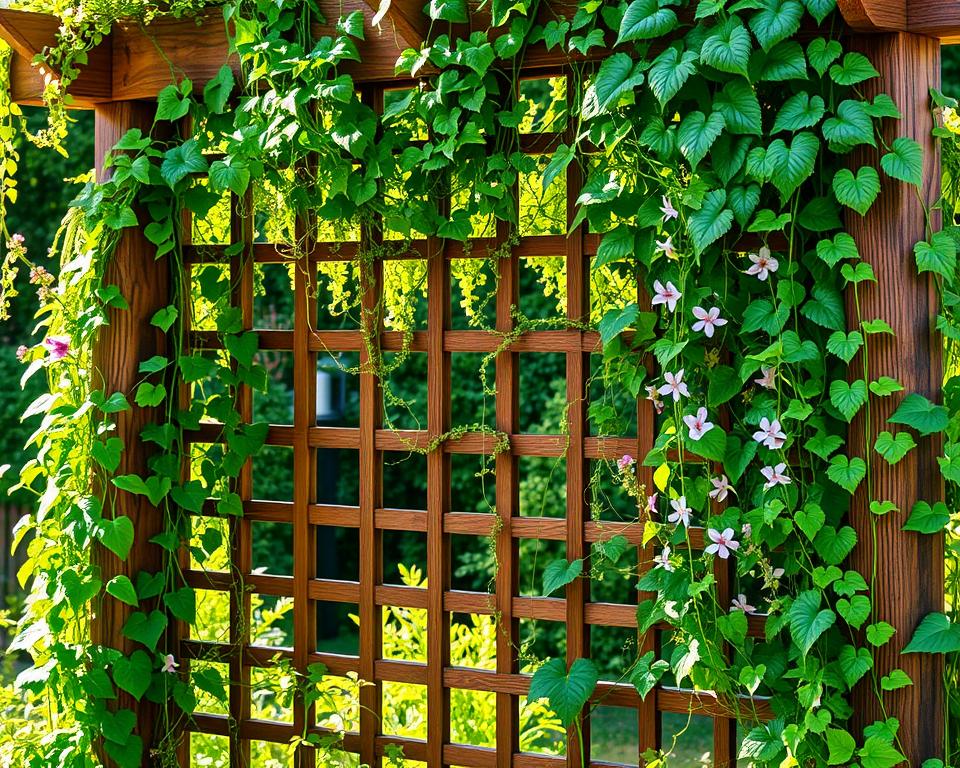
Trellis structures provide versatile frameworks for vertical gardening. They create effective screens through architectural elements and living plant material.
Structural Designs for Vertical Gardens
These designs accommodate multiple planting approaches. Ground-planted climbers ascend the framework while container plantings cascade downward. This adds texture and dimension to walls.
Fast-growing varieties like sweet peas and clematis fill visual gaps naturally. They introduce colour and fragrance that enhance outdoor spaces. The modular nature allows gradual expansion as plants mature.
| Trellis Type | Best Plant Choices | Installation Difficulty | Maintenance Level |
|---|---|---|---|
| Wooden Lattice | Clematis, Jasmine | Easy | Low |
| Metal Framework | Climbing Roses | Moderate | Medium |
| Modular Panel | Sweet Peas, Ivy | Easy | Low |
| Freestanding Arch | Wisteria, Honeysuckle | Moderate | Medium |
Trellis installations cover unsightly areas like worn fences. They provide support for vegetation that softens hard landscaping. This integrates screens into the broader aesthetic beautifully.
Innovative Screen Planters and Movable Solutions
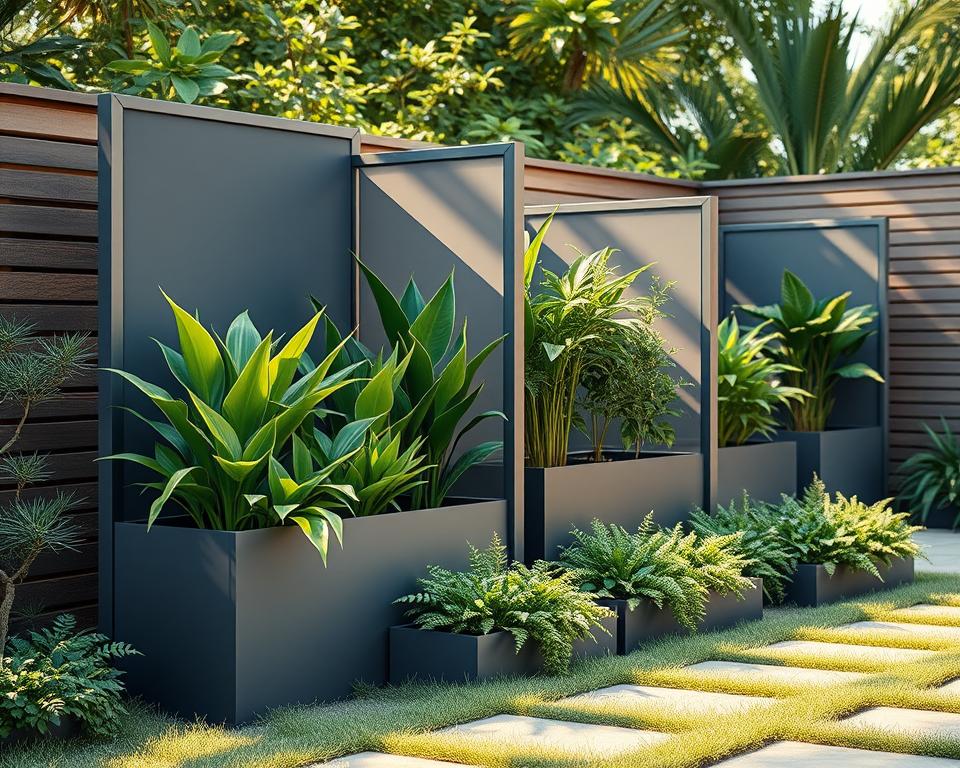
Screen planters offer a dual-function solution that is often overlooked in the quest for a more secluded exterior space. These clever units combine a structural panel with an integrated container for planting. This creates a versatile system for adding height and visual interest exactly where it is needed.
Freestanding Screen Planters Benefits
Freestanding units are particularly valuable where there is no existing wall or fence to anchor a traditional screen. They provide an opportunity to introduce planting while simultaneously erecting an effective visual barrier. This makes them ideal for defining zones within a larger plot.
The versatility of these planters allows homeowners to add privacy to specific areas. One can avoid the expense and visual impact of extending an entire boundary to a great height. They represent a targeted approach to screening.
Planting options are extensive, from trailing species that soften the structure’s edges to upright varieties that enhance the screen’s effectiveness. This allows for seasonal colour and texture. The self-contained nature facilitates experimentation with placement before committing to a permanent position.
Movable screen solutions offer exceptional flexibility. They are perfect for renters, seasonal reconfigurations, or temporary needs during nearby construction. These innovative options accommodate various budgets, with DIY projects or ready-made commercial products available.
Integrating Water Features and Ambient Elements
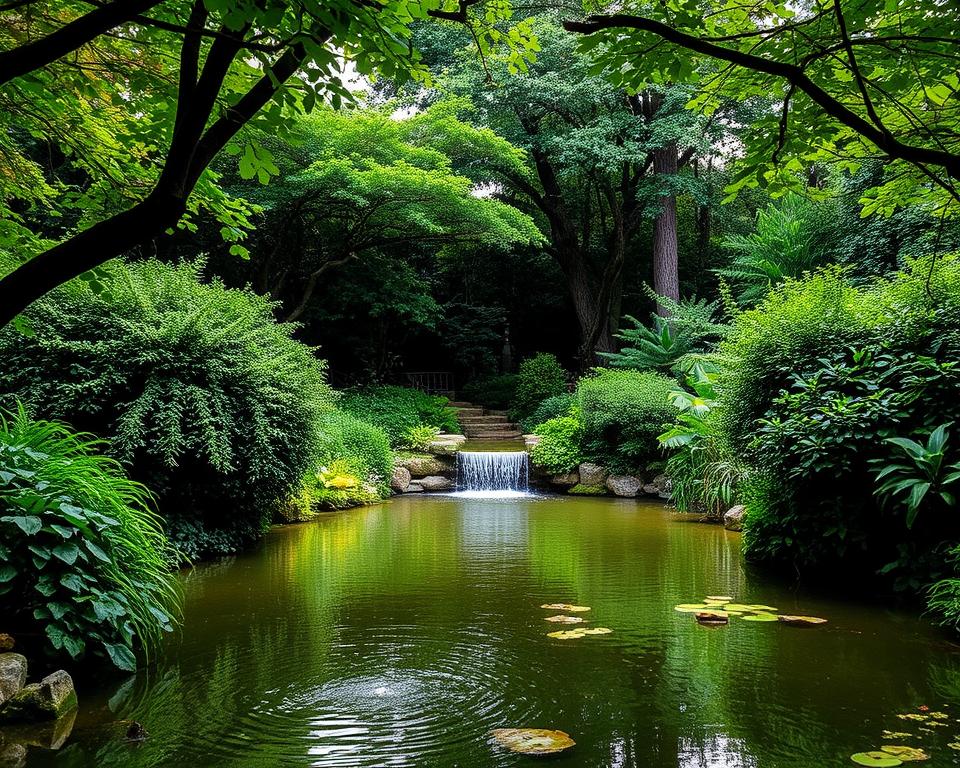
Ambient sounds from water installations offer a sophisticated method for masking urban noise and creating tranquillity. This approach adds a multisensory layer to any outdoor design, enhancing the perception of a secluded space.
The gentle sound of a fountain or cascade effectively obscures conversations and traffic sounds. This acoustic barrier contributes significantly to the overall feeling of privacy.
Designing with Fountains and Ponds
Homeowners can integrate water elements in several ways. Standalone features act as focal points that cleverly block sightlines. Wall-mounted units can enhance existing fences or panels.
These features provide more than just visual interest. The reflective quality of water surfaces adds depth to an enclosed area. This prevents the space from feeling cramped.
Strategic placement is key for maximum effect. Positioning a feature near a seating area maximises its relaxing benefits. It transforms a functional zone into a contemplative retreat.
- Multisensory Benefits: Water introduces soothing sounds and movement, creating a richer, more private atmosphere.
- Noise Masking: The ambient sound naturally dampens unwanted noise from neighbours or roads.
- Visual Depth: Reflections make the area feel larger and more dynamic.
- Flexible Integration: Options range from bespoke panels to simple additions to existing structures.
When combined with sympathetic planting and lighting, water elements help create a sophisticated outdoor room. This extends the living area of the home into a truly private sanctuary.
Designing with Pergolas and Retractable Awnings
A pergola introduces a permanent architectural feature that defines an outdoor space with elegance and purpose. This open-framed structure provides a foundation for creating a sheltered retreat. It masterfully blends open-air living with a sense of enclosure.

The framework offers a superb opportunity to cultivate climbing plants. These grow to form a living canopy overhead. This natural cover provides dappled shade and a beautiful, organic screen.
Side Shades and Climbing Plant Integration
Retractable side shades are a game-changer for customisation. They allow homeowners to adjust the level of seclusion and shade instantly. This is perfect for adapting to different occasions or weather conditions.
For a dual approach, the vertical posts support vines and foliage. This combination of fabric and flora creates a highly effective barrier. It ensures a secluded area is maintained throughout the year.
These systems are particularly suited to the British climate. They offer shelter from rain and sun. When not needed, they retract to prevent winter damage, making this a versatile and practical solution.
Even before plants mature, the structure allows for personal touches. Strings of festoon lights can be added for evening ambience. This transforms the space into a cosy, intimate extension of the home.
Enhancing Privacy with Stone, Brick and Metal Fencing
When seeking a lasting and robust method to enhance seclusion, homeowners often turn to the timeless appeal of stone, brick, and metal fencing. These durable materials provide permanent solutions that justify their initial investment for long-term property enjoyment.
Traditional fence panels are effective at blocking views but can lack visual appeal. A significant improvement involves painting them in contemporary colours like charcoal grey or navy. This creates a sophisticated statement that complements the landscape.

Styling with Colour and Material Choices
Brick walls offer exceptional durability and require minimal upkeep. Their rustic charm ensures long-lasting privacy that endures harsh weather. They can be transformed into feature walls with climbing plants or artistic elements.
Stone retaining walls serve a dual purpose in sloped gardens. They manage level changes while simultaneously acting as substantial privacy barriers. Using fieldstones creates a rustic, adventurous look that integrates naturally.
- Metal Options: Choices range from traditional wrought iron to modern powder-coated aluminium, suiting various architectural styles.
- Cost-Effectiveness: While the initial outlay is higher, the longevity of these materials makes them cost-effective over time.
- Enhancement Ideas: Solid structures provide perfect backdrops for decorative lighting, turning functional barriers into celebrated garden features.
Botanical Layering and Strategic Planting
Strategic planting arrangements create natural barriers that evolve beautifully over time. This approach uses tiered planting schemes to build depth and density.

Botanical layering employs plants of varying heights to form effective screens. This method proves particularly useful in irregularly shaped spaces.
Layer Planting Techniques for Seclusion
The three-tier approach maximises screening effectiveness. Tall evergreen trees form the top layer, while medium-sized shrubs like hydrangeas occupy the middle zone.
Low-growing perennials such as lavender complete the foundation. This structure creates diverse, visually interesting barriers.
Strategic positioning follows perspective principles. Screens closer to seating areas require less height to obscure views effectively.
Seasonal Planting and Maintenance Tips
Consider plants that offer year-round interest beyond screening functions. Spring blossoms, autumn colour, and winter bark add seasonal appeal.
Native species like birch and hawthorn encourage biodiversity. However, their deciduous nature reduces winter screening effectiveness.
Maintenance remains modest with annual pruning and seasonal tidying. The initial time investment pays dividends as plants mature and screening improves.
Contemporary Screens for a Modern Outdoor Look
Contemporary screening solutions elevate outdoor spaces with architectural precision and deliberate design choices. These approaches prioritise both visual appeal and practical function equally.
Modern screens serve as intentional design elements rather than mere afterthoughts requiring concealment. They transform basic privacy needs into celebrated features.

Minimalist and Bold Screen Options
Minimalist aesthetics feature clean geometric lines and unadorned surfaces. This philosophy recognises that restraint allows other elements to assume prominence.
Material selections favour glass, powder-coated metals, and engineered timber. These deliver consistent appearance and superior weather resistance.
Neutral colour schemes including black, white, and charcoal grey ensure seamless integration. They avoid visual competition with planting schemes and furniture.
Bold options incorporate statement-making patterns or dramatic scales. These transform privacy requirements into focal points within the overall composition.
| Screen Style | Primary Materials | Best For | Maintenance Level |
|---|---|---|---|
| Minimalist | Powder-coated steel, Tempered glass | Urban courtyards | Very Low |
| Geometric Pattern | Laser-cut aluminium, Composite panels | Modern architecture | Low |
| Textured Surface | Engineered timber, Perforated metal | Adding visual interest | Medium |
| Colour Statement | Colour-coated metals, Stained composites | Contemporary schemes | Low |
The contemporary aesthetic proves particularly effective where modern architecture predominates. It creates serene, uncluttered spaces where design features become focal points.
Economical and Low-Maintenance Screening Solutions
Achieving effective screening need not strain household finances. Numerous economical materials deliver impressive results while requiring minimal upkeep.
These solutions prove ideal for homeowners seeking practical ways to add privacy without significant investment. They balance affordability with reliable performance.
Budget-friendly Materials
Reed and willow screening represent exceptionally affordable options. Available in convenient rolls, they facilitate rapid installation with flexible, eco-friendly properties.
Willow may rot in persistently wet conditions if untreated. It offers thinner coverage compared to bamboo alternatives, which provide superior durability despite higher costs.

Bamboo screening encompasses two primary types with distinct characteristics. Understanding these differences ensures appropriate selection for specific settings.
| Bamboo Type | Growth Pattern | Containment Needs | Best For |
|---|---|---|---|
| Running Bamboo | Spreads aggressively | Root barrier essential | Container cultivation |
| Clumping Bamboo | Discrete clumps | Minimal containment | Direct ground planting |
Eco-friendly and Instant Hedging Alternatives
Recommended species include graceful Fargesia varieties, Phyllostachys aurea, and Pseudosasa japonica. These offer elegant screening that is easily managed.
Container cultivation requires vigilant watering to prevent drying. Artificial foliage panels provide immediate impressive results without waiting for growth.
Instant hedging delivers thick, lush coverage immediately. This offers an environmentally friendly boundary alternative to traditional fencing.
The selection between natural and manufactured materials depends on budget, desired immediacy, and maintenance preferences. Each option presents distinct advantages for creating effective barriers.
Conclusion
Careful consideration of one’s specific requirements forms the foundation for successful outdoor space enhancement. The diverse approaches explored demonstrate that effective solutions exist for every situation and budget.
From natural barriers using trees and climbing plants to manufactured structures like metal screens and bamboo fences, homeowners can select methods that complement their property’s aesthetic. Each option offers distinct advantages in terms of maintenance, cost, and visual appeal.
Strategic implementation focuses on key activity areas such as seating zones. This ensures privacy where it matters most. The right combination of height, shade, and screening elements creates comfortable, secluded environments.
With thoughtful planning, any outdoor area can become a private retreat. The investment in appropriate screening yields long-term benefits for property value and personal enjoyment.
FAQ
What is the quickest way to add screening to an outdoor space?
Freestanding screen planters and movable trellis panels offer an instant solution. These options require no permanent installation and can be positioned to block specific sightlines immediately.
Are there any low-maintenance alternatives to traditional hedges?
Yes, modern materials like powder-coated metal screens or composite slatted panels provide excellent barriers with minimal upkeep. For a natural look, consider fast-growing bamboo in contained planters to prevent spreading.
How can I create a secluded seating area without building a fence?
Strategic placement of high-back outdoor sofas or a pergola with side shades can define a space effectively. Integrating climbing plants on a trellis attached to the structure adds a living, green element for extra seclusion.
What are the benefits of using climbing plants for screening?
Climbing plants, such as clematis or jasmine, create a soft, living wall that improves over time. They add texture, fragrance, and can be trained on various structures like trellises or metal frameworks for a beautiful, natural barrier.
Can water features enhance privacy in a garden?
Absolutely. The sound of a fountain or small pond can mask neighbourhood noise, creating a sense of auditory privacy. Positioning a water feature strategically can also help draw the eye and distract from less desirable views.
What should I consider when choosing materials for a permanent screen?
Consider durability, style, and local planning regulations. Brick or stone walls offer longevity, while contemporary metal or glass panels provide a sleek look. Always check if your design requires planning permission, especially for structures over two metres in height.