
How to Block Wind in the Garden: Simple Solutions

Creating a beautiful outdoor space is a goal for many homeowners. Yet, harsh weather can pose a significant challenge. Strong gusts of wind can damage delicate plants and spoil the comfort of a garden.
This guide offers practical advice for shielding your green space. It explores various methods to mitigate the effects of blustery conditions throughout the year. The focus is on solutions that are both effective and aesthetically pleasing.
Understanding the specific challenges in your garden is the first step. From there, you can choose the right strategy. This ensures your plants receive the protection they need to thrive.
Whether you have a large plot or a small urban garden, there are options available. The aim is to create a more resilient and enjoyable outdoor environment.
Inhaltsverzeichnis
Key Takeaways
- Strong winds can cause significant damage to plants and reduce garden enjoyment.
- Assessing your garden’s specific exposure is crucial for selecting the right protection.
- Both natural and structural solutions are available to suit different spaces and budgets.
- Effective wind protection can enhance the overall design and sustainability of your garden.
- Implementing these measures can save time and effort on replacing damaged plants.
Understanding Wind and Its Impact on Your Garden
The invisible force of moving air plays a crucial role in determining garden health and vitality. Observing how atmospheric currents interact with outdoor spaces reveals important patterns. This knowledge forms the foundation for effective protection strategies.
Identifying Wind Effects on Plants and Soil
Strong winds can cause significant damage to vegetation and earth. They rapidly dry out soil, reducing moisture available to plant roots. Physical harm includes snapped stems and shredded leaves that compromise growth.
Gardeners might notice specimens leaning or suffering from wind scorch. This creates brown patches on foliage. Consistent exposure to harsh winds can uproot younger plants entirely.
Recognising Local Wind Patterns and Topography
Local geography dramatically influences air movement. In the United Kingdom, prevailing wind typically arrives from the south-west. However, damaging cold air currents from north and east directions pose particular risks.
Hilly landscapes experience complex airflow patterns. Elevations can create gusts around the side of slopes. Valleys and built-up areas may funnel air, creating concentrated wind tunnel effects. Understanding these dynamics helps gardeners identify problem zones requiring targeted intervention.
Assessing Your Garden for the Ideal Windbreak
The success of any wind mitigation strategy depends on proper site analysis. Gardeners should carefully evaluate their outdoor space to determine the most effective approach. This assessment ensures resources are used efficiently while maintaining aesthetic appeal.
Measuring the Garden Area and Required Shelter
A fundamental principle guides windbreak planning. A barrier will significantly reduce wind on its leeward side to a distance of ten times its height. This means a two-metre structure protects an area extending twenty metres downwind.

Proper measurement involves more than just the protected zone. Windbreaks should be wider than the area needing shelter. Alternatively, they can be extended down the sides to prevent wind slipping around the edges.
Different garden areas have varying protection needs. Seating spaces, vegetable plots, and delicate ornamental beds often require the most attention. Identifying these vulnerable zones helps prioritise intervention.
| Windbreak Height (metres) | Protected Distance (metres) | Recommended Garden Size |
|---|---|---|
| 1.5 | 15 | Small urban gardens |
| 2.0 | 20 | Average suburban plots |
| 3.0 | 30 | Large country gardens |
Height calculations must balance protection needs with practical considerations. These include potential overshadowing and maintaining desired sightlines. The final design should integrate seamlessly with the existing garden layout.
How to Block Wind in the Garden with Natural Windbreaks
Employing living plants offers the most elegant and sustainable method for wind protection. These living windbreaks mature over time, enhancing the garden‘s beauty and ecological value.

Planting Hedges, Shrubs and Trees
A well-chosen hedge serves multiple roles. It provides a sturdy barrier, creates privacy, and supports local wildlife. For formal designs, clipped hedges of beech or yew are excellent.
Country-style hedges mix shrubs like holly and hawthorn. Adding fruiting trees brings height and seasonal interest. These mixed planting schemes foster greater biodiversity.
Taller trees, such as pleached limes, offer elevated protection. Espaliered fruit trees trained against a wall are both functional and productive.
Creating Layered Planting for Optimal Protection
The most effective strategy uses a layered approach. Tall trees interrupt strong gusts higher up. Mid-level shrubs then filter the air further.
At ground level, ornamental grasses or bamboo protect delicate plants. This combination softens wind effectively without causing turbulence. It also adds beautiful texture to the garden.
This method safeguards specific areas, like vegetable plots, throughout the summer. It is a natural and visually appealing way to create a sheltered microclimate.
Evaluating Windproof Fencing and Structural Barriers
Understanding airflow principles transforms fencing from a simple barrier into a protective asset. The right structural solution balances aesthetics with functional performance.
Choosing Semi-permeable Fencing Solutions
Effective wind protection relies on a crucial principle. Barriers must filter approximately 50-60% of airflow to reduce strength without creating turbulence. Solid walls cause damaging eddies on either side.
Traditional overlapping slat fences often fail in exposed locations. They create solid barriers that shake violently during strong gusts. Many gardeners find themselves replacing panels and posts each winter.
| Fencing Type | Porosity Level | Best For | Aesthetic Style |
|---|---|---|---|
| Venetian | 50-60% | Contemporary spaces | Modern |
| Hit-and-Miss | 55-65% | Traditional settings | Rustic |
| Woven Willow | 50-60% | Natural gardens | Country |
| Traditional Solid | 0-20% | Calm areas only | Formal |

Wind-resistant fencing panels are specially engineered for durability. They allow air movement while maintaining privacy and security. Popular designs include Venetian style with small gaps between slats.
Hit-and-miss construction alternates boards on front and back. Woven willow or hazel hurdles offer natural filtration. Proper height selection follows the ten-times rule for maximum protection.
Implementing Artificial Screens and Temporary Wind Barriers
Gardeners seeking immediate shelter options will find artificial screens highly effective. These solutions offer instant protection while living windbreaks establish themselves. They work well alone or combined with natural barriers.
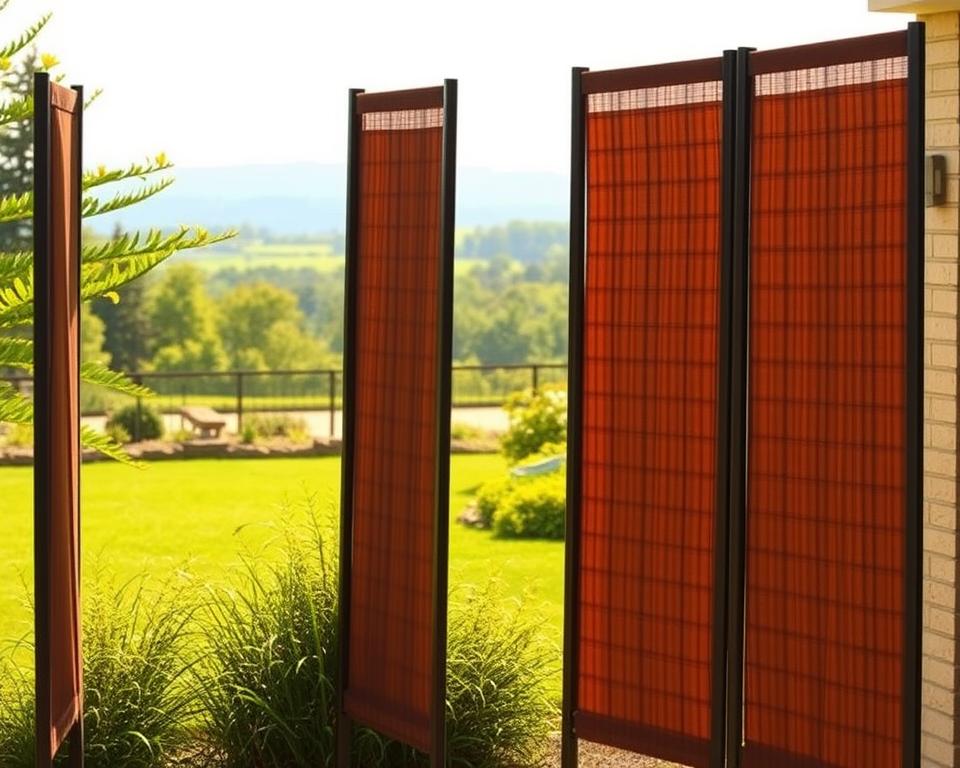
Woven plastic netting suits amateur gardeners for screens under 1.5 metres. For taller installations, professional heavy-duty strapping like ‘Paraweb’ provides necessary strength. This ensures durability against strong wind conditions.
| Screen Type | Height Range | Best Use | Installation |
|---|---|---|---|
| Plastic Netting | Up to 1.5m | Seasonal protection | DIY |
| Heavy-duty Strapping | Over 1.5m | Permanent screens | Professional |
| Fabric Windbreaks | Various | Temporary shelter | Quick setup |
Temporary fabric barriers and garden mesh offer seasonal solutions. They shield tender summer plants and protect vulnerable stems during establishment. These options reduce wind speed effectively.
Trellis panels with climbing plant varieties create dual-purpose protection. Roses, honeysuckle, and clematis provide beauty and shelter. This approach transforms exposed areas into comfortable outdoor space.
These artificial solutions work alongside traditional fencing. They offer flexibility for changing garden needs over time. The combination ensures continuous protection throughout the summer months.
Securing Garden Structures and Outdoor Equipment
A holistic approach to wind management extends beyond vegetation to include safeguarding man-made elements. This comprehensive strategy protects both property and people during adverse weather conditions.

Protecting Garden Buildings and Furniture
Mature trees require annual professional inspections to identify disease and structural weaknesses. Strategic pruning removes dangerous branches and reduces wind resistance, particularly important for evergreen species like conifers.
These trees retain leaves throughout winter, presenting greater surface area for strong winds. Height management through crown pruning helps maintain stability. Excess ivy growth in tree crowns creates top-heavy profiles that increase wind catch significantly.
Unsecured outdoor furniture, children’s toys, and garden ornaments transform into dangerous projectiles during storms. They can cause significant damage as they whirl around gardens.
Maintaining Safety During Stormy Conditions
When storms are forecast or at summer‘s end, store lightweight items in sheds or garden storage boxes. For items that cannot be stored, secure anchoring using heavy paving slabs or bags of compost provides effective protection.
Regular inspection of garden buildings identifies maintenance needs such as rot or structural weakness. Pay particular attention to windows, doors, and roof condition to prevent water ingress.
These practical tips create secure environments where families can enjoy their outdoor space throughout the year. Proper design and maintenance of structures like willow fences or garden wall features complement these safety measures.
Conclusion
A well-protected outdoor space offers a sanctuary from the elements. It allows delicate plants to flourish and creates a comfortable area for relaxation. The design of any shelter is as important as its function.
Combining different strategies often yields the best results. A living hedge provides long-term beauty and supports wildlife. Semi-permeable fencing offers instant privacy and robust wind filtering.
Following these practical tips ensures a garden can thrive despite challenging weather. This way of thinking transforms exposed gardens into resilient, enjoyable havens.
Ultimately, a thoughtful approach to shelter pays dividends. It protects your investment and enhances the value of your property.
FAQ
What is the best natural windbreak for a garden?
A dense, mixed hedge offers excellent protection. Planting species like beech, hornbeam, or privet creates a semi-permeable barrier that filters gusts rather than blocking them completely, which reduces turbulence. This method also provides valuable habitats for wildlife.
Can a solid fence effectively block wind?
While a solid fence may seem ideal, it often creates more problems. Strong winds hitting a solid surface are forced up and over, creating damaging downdraughts on the other side. Semi-permeable fencing or a living hedge is generally a superior choice for consistent shelter.
How high should a windbreak be to protect a specific area?
A windbreak’s effective shelter area extends to approximately ten times its height. For instance, a two-metre-high hedge will provide useful protection for about twenty metres downwind. This principle helps when planning the placement of barriers relative to key garden areas.
What are some fast-growing plants for a new windbreak?
For rapid establishment, consider shrubs like willow or laurel. These species grow quickly and can form a dense screen within a few years. For a more permanent solution, faster-growing trees such as Leyland cypress can be planted, though they require careful management.
How can I protect my patio furniture and garden buildings from wind damage?
Securing furniture with weights or ties is advisable. For sheds and greenhouses, ensure they are firmly anchored to the ground. Regular maintenance checks for loose panels or roofing can prevent minor issues from becoming major damage during stormy weather.
Are artificial screens a good temporary solution?
Yes, artificial screens made from materials like woven polypropylene are highly effective. They are versatile, easy to install, and can be repositioned as needed. These screens are ideal for providing immediate protection for young plants or creating a sheltered seating space.

