How to Build a Garden Workshop: Things to Consider

Creating a dedicated garden workshop offers a fantastic opportunity to enhance one’s property and pursue hobbies or professional projects. This space becomes a personal sanctuary for creativity and practical work. The journey from concept to completion, however, requires meticulous planning and a clear understanding of the steps involved.
A successful project hinges on several critical factors. Defining the primary purpose of the structure is the first essential step. This decision directly influences the required size, layout, and necessary features. Budgetary constraints also play a significant role, with costs for a quality workshop ranging from approximately £500 for a basic model to £5000 for a larger, fully insulated building.
One of the most important decisions revolves around the construction method. Individuals must weigh the pros and cons of a DIY building project against purchasing a pre-manufactured flat-pack unit. Each option presents different challenges regarding time, cost, skill level, and design flexibility.
Furthermore, navigating UK building regulations and potential planning permission requirements is a non-negotiable part of the process. This guide aims to demystify these aspects, providing a solid foundation for a successful and compliant construction project.
Inhaltsverzeichnis
Key Takeaways
- Establishing the workshop’s primary use dictates its necessary size and features.
- Project budgets can vary significantly, from a few hundred to several thousand pounds.
- The choice between a custom build and a flat-pack kit affects cost, time, and personalisation.
- Understanding and adhering to local planning rules and regulations is crucial from the outset.
- Careful planning of the foundation, materials, and tools ensures a smoother construction process.
Understanding the Purpose and Benefits of a Garden Workshop
A standalone structure in the garden provides numerous advantages beyond simple storage solutions. This dedicated area serves as a versatile environment for various activities, from creative pursuits to professional work.
Identifying Your Needs and Hobbies
The primary function of this space directly influences its layout and features. Individuals should consider which activities will occur within the structure. Woodworking requires sturdy workbenches and proper ventilation. Artistic pursuits benefit from abundant natural light.
Proper planning ensures the area meets specific functional requirements. The design should accommodate workflow optimisation and equipment access. This thoughtful approach enhances productivity and enjoyment.
Enhancing Storage and Home Business Potential
Storage capacity represents a significant advantage of these structures. They offer organised space for tools, materials, and seasonal items. This reduces clutter in garages or sheds throughout the property.
The versatility allows for dual-purpose usage. The same area can function as a hobby space during leisure hours. It also provides professional workspace for home businesses or consultancy work.
Considering future needs during planning ensures long-term functionality. The space can adapt from craft areas to home offices as circumstances change. This flexibility makes it a valuable addition to any property.
Essential Planning and Design Considerations
Strategic planning marks the critical first step in garden workshop creation. This phase determines the project’s success, functionality, and legal compliance. Careful consideration of the available space and intended uses guides all subsequent decisions.

Workshop Layout and Customisation Options
The interior layout significantly impacts workflow efficiency. Positioning workbenches, storage, and electrical outlets requires thoughtful planning. Natural light from well-placed windows enhances the working environment.
Customisation extends to external features like roof styles and door configurations. The size of the structure must balance available garden area with functional requirements. Rectangular designs often provide the most practical solutions.
Complying with UK Building Regulations
Understanding permitted development rights is essential. Most garden workshop projects qualify without planning permission if they meet specific criteria. Height restrictions are particularly important to note.
Buildings must not exceed 2.5 metres in eaves height when within 2 metres of boundaries. The overall height limit is 4 metres for pitched roofs. Consulting local authorities provides certainty, especially for properties in conservation areas.
Proper design and compliance ensure the workshop serves its purpose without legal complications. Always make sure the proposed building meets all regulatory requirements before commencing work.
DIY Versus Flat Pack: Weighing the Pros and Cons
One of the most significant choices facing prospective workshop owners is the construction method. This decision impacts everything from final quality to project timeline and overall costs.
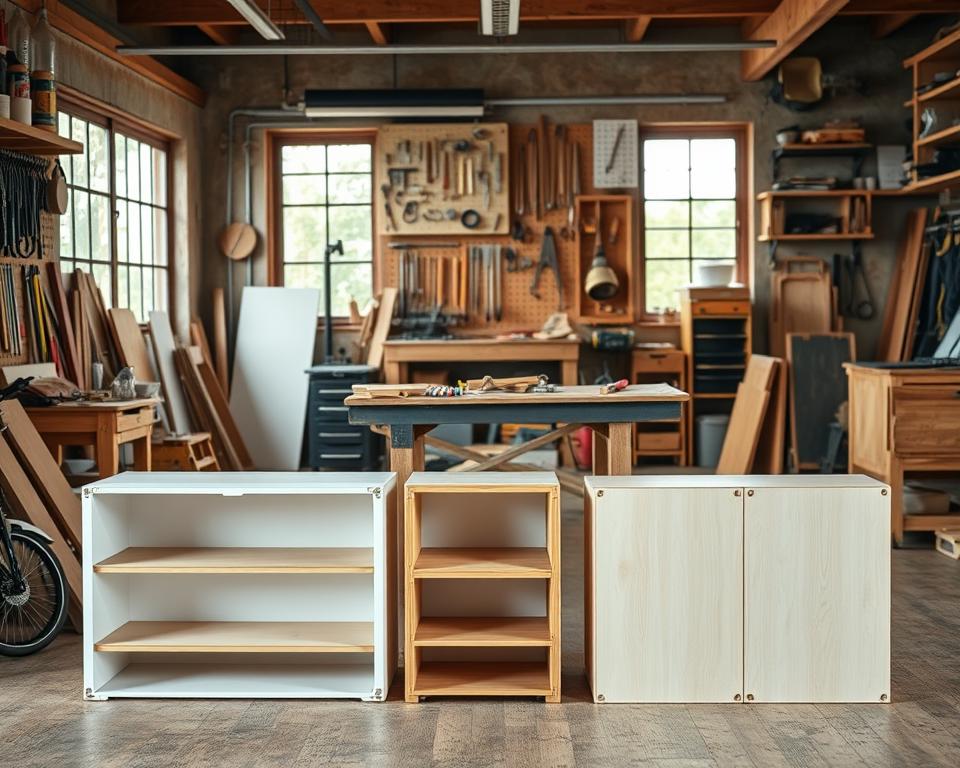
Custom building allows for superior material selection and construction techniques. Builders can choose thicker timber and more durable materials than typical flat pack alternatives.
Cost Savings and Improved Quality
A DIY approach often delivers better structural integrity. The resulting workshop typically features enhanced strength capable of supporting roof loads and resisting weather extremes.
Superior insulation becomes achievable through custom construction. Thicker walls provide better thermal performance and soundproofing qualities.
While cost savings may be modest after factoring in tool purchases, the long-term value is significant. Complete design flexibility enables unique shapes and configurations impossible with standardised products.
The primary drawbacks include substantial time investment and specialised tool requirements. Material sourcing and groundwork preparation present additional challenges for inexperienced builders.
Creating a Level and Stable Foundation
Establishing a proper base represents the cornerstone of successful workshop construction. The foundation directly influences the structure’s longevity and resistance to environmental stresses. Without a solid base, buildings may shift or settle unevenly over time.

Choosing the Right Base Type
Three primary base options exist for garden structures. Concrete foundations offer maximum stability for larger buildings but require professional installation. Paving slabs provide adjustable solutions for medium-sized workshops.
Timber sub-frames suit smaller structures on stable ground. Selection depends on soil conditions, budget, and maintenance preferences. Each option presents distinct advantages for different scenarios.
Preparing and Levelling the Site
Proper site preparation begins with clearing vegetation and debris. Accurate measurement ensures the foundation matches the planned workshop dimensions. Using string lines and stakes creates precise boundaries.
Levelling the ground requires careful attention to eliminate high spots and fill depressions. This process prevents water pooling and structural stress. Mechanical compaction increases load-bearing capacity significantly.
Installing weed membrane beneath the base prevents vegetation growth that could destabilise the structure over time. Thorough preparation ensures a durable foundation for years of reliable use.
Constructing the Workshop Base and Flooring
Selecting the right components for the workshop’s foundation is crucial for long-term durability and performance. The materials chosen directly influence the structure’s ability to withstand heavy equipment and environmental stresses.
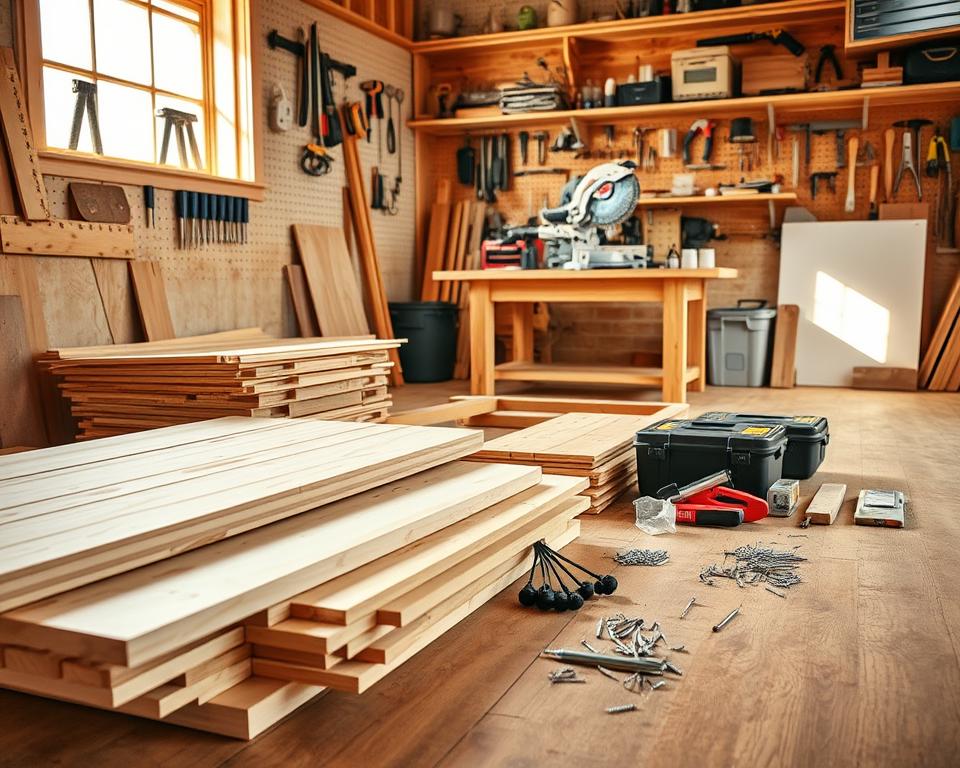
Selecting the Appropriate Materials
A raised wooden frame base typically employs pressure-treated timber sections, such as 70mm x 45mm C16 spruce. This garden building foundation rests securely on levelled slabs or concrete blocks.
The floor deck consists of 18mm OSB3 boards measuring 2440mm x 1220mm. Working with these standard dimensions minimises cutting and material waste during construction.
Upgrading to wider timber sections like 95mm or 145mm enhances load-bearing capacity. This modification also allows for additional insulation space beneath the floor.
Installing a vapour barrier membrane beneath the base is essential. This protective layer prevents ground moisture from compromising the workshop structure over time.
Structural integrity depends on proper fastening with 70mm wood screws. Regular spacing of these fixings prevents movement and ensures the workshop remains stable.
Quality materials represent a wise investment for any base construction. They prevent future structural problems and repair expenses.
Building Robust Walls and Exterior Cladding
The integrity of any outbuilding relies heavily on its walls. These components provide essential structural support and weather protection. Selecting the right materials and methods is crucial for durability.
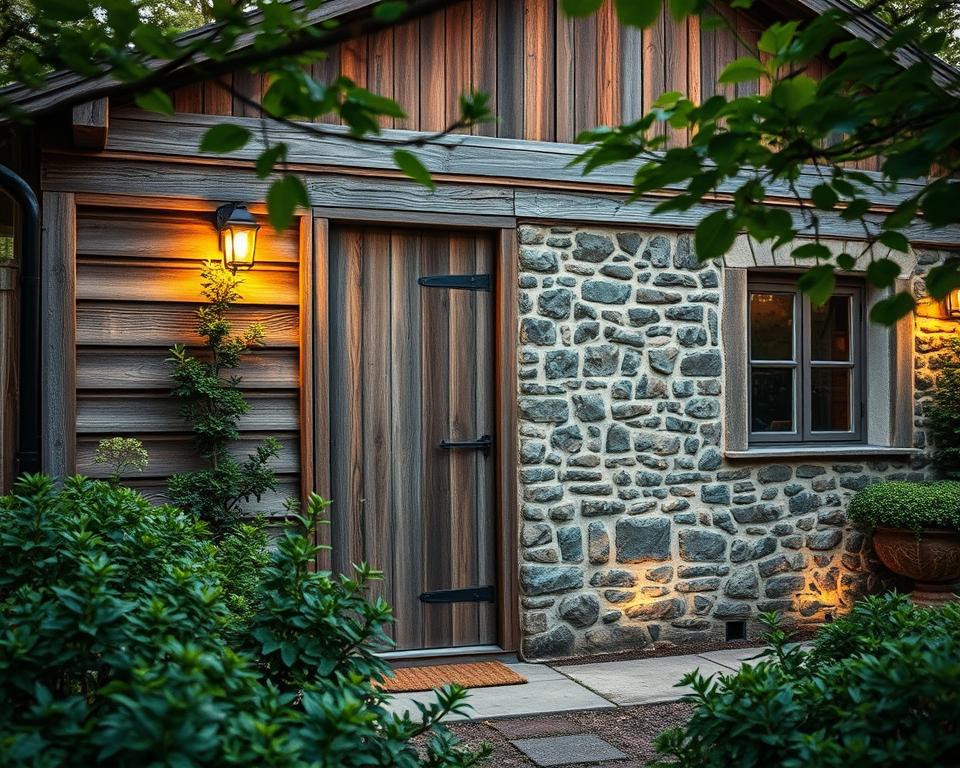
Proper construction ensures the workshop remains stable and secure for years.
Timber Framing and Wall Construction Techniques
Wall sections are typically built using 70mm x 45mm timber frames. These are spaced about 600mm apart to accommodate insulation. This spacing maximises energy efficiency.
Sturdy 90mm x 90mm corner posts are vital. They offer critical support where walls intersect. This enhances the overall rigidity of the structure.
Sheathing the exterior with 9mm OSB boards adds significant strength. Screws of 5mm x 70mm are ideal for this task. The boards act as a solid base for the next layers.
Cladding Options and Installation Tips
A breathable membrane is applied over the OSB sheathing. This layer allows moisture vapour to escape. It also prevents water from penetrating the walls.
Vertical battens are often added to create an air gap. This promotes ventilation behind the cladding. It is a key step for long-term protection.
Cladding choices include shiplap or loglap profiles. Shiplap offers a traditional overlapping design. Loglap provides a more substantial interlocking appearance.
Fixing cladding requires care. Use 4mm x 30mm screws for a secure fit. Always work from the bottom upwards to ensure weatherproof overlaps.
| Material | Purpose | Key Benefit |
|---|---|---|
| 70mm x 45mm Timber | Wall Frame | Creates a sturdy skeleton for insulation |
| 9mm OSB Board | Exterior Sheathing | Adds bracing and strength |
| Breathable Membrane | Weather Protection | Allows vapour escape, blocks water |
| Shiplap Cladding | External Finish | Provides durable, overlapping weather defence |
Roof Construction and Insulation Strategies
The roof represents one of the most critical components of any garden structure, demanding careful attention to detail during its construction. A well-built roof provides essential weather protection and contributes significantly to the building‘s overall structural integrity. Planning must balance performance with compliance to ensure the project remains within permitted development rights.

Determining the Ideal Roof Pitch
Calculating the correct roof pitch is essential for both function and legality. The angle must provide adequate water runoff while keeping the total height within the 4-metre maximum for pitched roofs. For standard 2-metre tall walls, the pitch is often limited to around 40cm to comply with regulations.
Building the rafters requires precision. Each piece must be cut to identical dimensions. Notches are cut where the rafters meet the wall plates for a secure fit, resisting wind uplift. Make sure to use 70mm screws driven down into the rafter tops to secure them firmly to the wall frame.
Installation of OSB Boards and Waterproofing Measures
Once the rafters are in place, 18mm OSB boards are secured across them to create a solid deck. The roof should overhang the walls by approximately 30cm to protect the cladding from rain. These materials form a sturdy base for the waterproofing layers.
The next step involves laying a breathable membrane over the OSB deck. Roof felt is then rolled out starting from the lower edges, with each roll overlapping the previous by at least 3cm. It is tacked securely using clout nails to create a durable, watertight seal for the workshop.
Incorporating Windows, Doors and Natural Lighting
The integration of windows and doors transforms a basic structure into a functional workspace. Careful planning ensures these elements work together harmoniously.
Installing UPVC French Doors and Alternative Options
Proper door installation begins with framing. Builders should construct door frames using double-thickness timber for added strength. Centring the main entrance on the front wall creates balanced aesthetics.
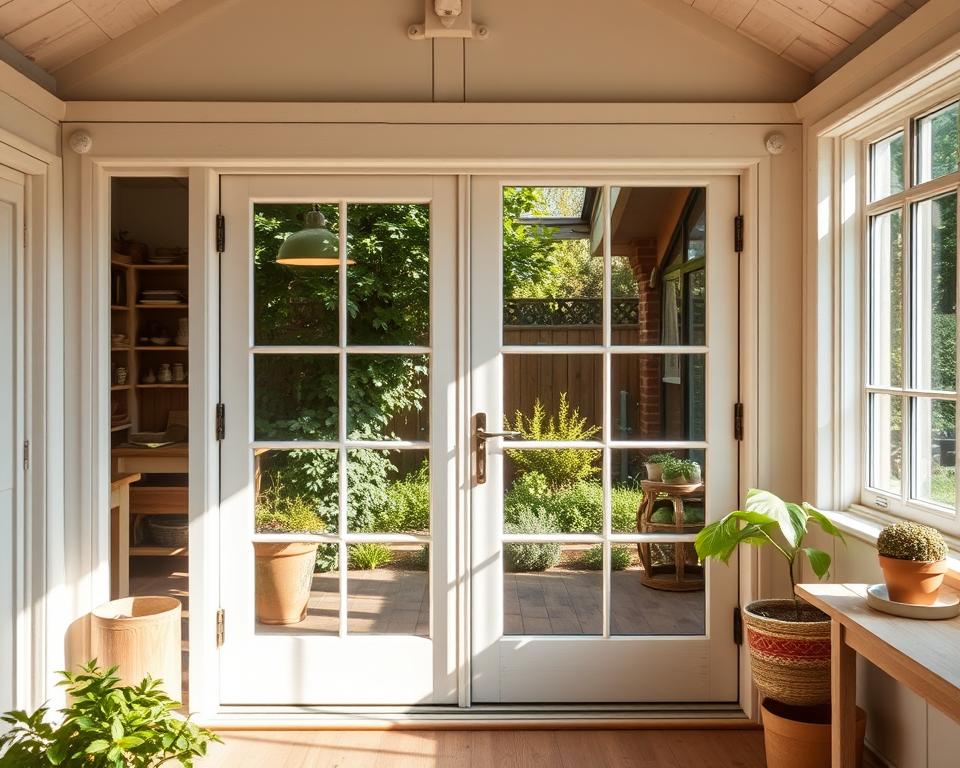
Window placement maximises natural lighting while considering ventilation needs. Strategic positioning enhances the workspace environment significantly.
| Feature | UPVC French Doors | Sliding Doors | Stable Doors |
|---|---|---|---|
| Space Efficiency | Good | Excellent | Average |
| Ventilation Options | Full opening | Half opening | Top half only |
| Security Level | High | Medium | Medium |
| Maintenance Needs | Low | Medium | High |
| Cost Consideration | Higher | Medium | Lower |
Natural lighting reduces electricity consumption and improves working conditions. Large double doors accommodate moving sizable equipment pieces efficiently.
Ventilation proves essential for clearing fumes and sawdust. Multiple window options provide flexibility for different workshop requirements.
Integrating Electrical and Heating Installations
Modern workshop functionality hinges on properly integrated electrical circuits and effective thermal management solutions. These systems transform a basic structure into a comfortable, year-round workspace. Careful planning ensures safe operation and efficient energy use.

Planning Safe Electrical Wiring and Sockets
Electrical installations require professional expertise for compliance with Building Regulations Part P. Socket placement around the perimeter provides convenient access for tools and equipment. This prevents trailing cables across the workspace.
Cable routing involves drilling 8mm holes through timber frames. Wires feed to designated socket locations before insulation installation. A metal-clad consumer unit with RCD protection ensures safety.
Proper cable selection is essential. 2.5mm three-core cable suits sockets while 1.5mm three-core works for lighting circuits. All electrical work must receive certification from qualified electricians.
Optimising Insulation with Plasterboard and Heating
Thermal performance improves significantly with 50mm mineral wool insulation. Sheets fit neatly between standard 600mm timber stud spacing. This creates an effective barrier against temperature extremes.
Plasterboard installation follows insulation placement. 9.5mm boards fixed with 40mm screws create smooth interior surfaces. Joints receive ready-mixed plaster and joining tape for seamless finishes.
Heating considerations depend on workshop usage frequency. LED strip lights provide efficient illumination while generating minimal heat. Proper insulation reduces heating requirements throughout colder months.
| Component | Specification | Application |
|---|---|---|
| Electrical Cable | 2.5mm three-core | Socket circuits |
| Lighting Cable | 1.5mm three-core | Lighting circuits |
| Insulation | 50mm Rockwool RWA45 | Wall cavities |
| Plasterboard | 9.5mm thickness | Interior surfaces |
Essential Tools, Materials and Construction Equipment
Successful project execution depends heavily on assembling the correct tools and materials before commencing work. Having the right equipment streamlines the entire construction process and ensures a professional finish.

A core set of tools equipment is fundamental. This includes a reliable combi drill, an impact driver, and a circular saw for cutting panels like OSB. Essential hand tools comprise a spirit level, measuring tape, saw, and a rubber mallet.
For larger tasks like site levelling, hiring specialised machinery from a builder’s yard is often more practical than purchasing. Equipment such as compaction plates or small diggers can be rented for the duration needed.
Selecting quality materials is equally critical for a durable structure. Key items include pressure-treated timber in various sizes, OSB boards of different thicknesses, and exterior-grade screws and nails. Proper insulation materials and roofing felts are also vital.
Organising all tools and materials beforehand prevents delays. This careful preparation makes the task of creating a functional workshop far more efficient and enjoyable.
Optimising Workshop Design for Storage, Hobbies and Home Office Use
Thoughtful interior planning elevates a garden building from simple storage to a versatile creative hub. The internal configuration determines how effectively the space serves its intended purposes.

Customising Interior Layout and Workbench Areas
Different activities demand specific layouts. Woodworking requires sturdy benches near power sources. Artistic pursuits benefit from natural light positioning.
Storage solutions should utilise vertical space efficiently. Wall-mounted cabinets and shelving keep floor areas clear for movement. This approach maximises available square footage.
Workbench selection depends on primary activities. Options range from basic wooden surfaces to specialised units with integrated storage. The right choice enhances productivity significantly.
| Workshop Type | Optimal Layout | Key Storage Features |
|---|---|---|
| Woodworking | Central bench with perimeter tool storage | Wall-mounted racks, drawer units |
| Art Studio | Open floor plan with easel space | Flat storage for canvases, drying racks |
| Home Office | Desk facing natural light source | Filing cabinets, shelving for supplies |
| Multi-purpose | Zoned areas with flexible furniture | Modular shelving, mobile storage carts |
Considering future needs during the design phase ensures long-term functionality. The space should adapt as requirements evolve over time.
How to Build a Garden Workshop: Things to Consider
The transformation from raw materials to finished workshop demands systematic progression through key stages. This comprehensive step-by-step guide consolidates all previous sections into a logical sequence.

Foundation work begins with thorough site clearance and precise marking. Builders must invest sufficient time in ground levelling using a spirit level for accuracy. The level base determines overall project success.
For raised timber frames, position paving slabs at support points. Use sharp sand for precise levelling at each support location. Construct the wooden frame and top with OSB board before weatherproofing.
Wall construction progresses systematically by assembling frame sections on the ground. Ensure square corners using diagonal measurements before erecting. Install 90x90mm corner posts for structural integrity.
| Construction Phase | Key Materials | Critical Checks |
|---|---|---|
| Base Construction | Paving slabs, sharp sand | Level base verification |
| Wall Assembly | Timber frames, OSB boards | Square corner alignment |
| Roof Installation | Rafters, waterproof membrane | Pitch consistency |
| Electrical Rough-in | Cables, junction boxes | Professional certification |
Roof assembly requires careful measurement and cutting. Maintain consistent pitch angles and ensure secure connections to wall frames. Electrical work should be planned before insulation installation.
Critical tips include never compromising on foundation quality. Always check levels and squares during construction. Seek professional assistance for electrical work and maintain patience throughout.
Conclusion
A thoughtfully constructed garden workshop becomes more than just a structure – it transforms into a personal sanctuary for creativity and productivity. The journey to create this versatile garden building requires careful planning but delivers exceptional long-term value.
Choosing the right size and type for your needs ensures the space serves its intended use effectively. Investing in quality materials and proper construction techniques, such as ensuring a level base with paving slabs, pays dividends through enhanced durability and reduced maintenance costs over time.
Whether used for hobbies, storage, or professional work, these versatile spaces adapt to changing requirements. The initial investment returns through enhanced property value and the personal satisfaction of creating a functional, attractive addition to your outdoor place.
This comprehensive exploration of the various options and considerations provides a solid foundation for anyone planning to build workshop spaces. With proper planning and execution, your garden workshop will serve as a valuable asset for decades.
FAQ
What is the most important first step in building a garden workshop?
The most crucial first step is careful planning. This involves determining the workshop’s intended use, deciding on the ideal size and location within the garden, and ensuring the design complies with any relevant UK building regulations.
Do I need planning permission for a garden workshop?
In many cases, a garden workshop falls under permitted development rights, meaning planning permission is not required. However, permission is typically needed if the building is intended for living accommodation, is over a certain height, or if the property is listed. It is always best to check with the local planning authority.
What is the best base for a garden workshop?
A solid, level base is essential. Popular options include a concrete slab or concrete paving slabs laid on a compacted sub-base of MOT type 1 and sharp sand. This foundation provides stability and protects the structure from ground moisture.
Is it cheaper to build a garden workshop from scratch or use a flat-pack kit?
Building from scratch can offer greater customisation and potentially lower material costs, but it requires significant skill and time. Flat-pack kits are generally quicker and easier to assemble, with pre-cut materials, making them a strong choice for those with less DIY experience.
How can I ensure my garden workshop remains dry and well-insulated?
Proper construction is key. This includes using a damp-proof course on the base, constructing robust walls with a suitable cladding material like shiplap timber, and installing a well-built roof with adequate insulation. Good ventilation is also important to prevent condensation.
Can I install electricity and heating in my garden workshop?
Yes, but electrical installations must be carried out by a qualified electrician to ensure they comply with Part P of the Building Regulations. For heating, efficient options include portable heaters or, for a more permanent solution, underfloor heating or a small wood-burning stove, subject to regulations.
What tools will I need for the construction?
A comprehensive toolkit is necessary. Essential items include a spirit level, power drill, saw, hammer, screwdrivers, and spanners. For foundations, a shovel and a plate compactor are useful. Safety equipment like goggles and gloves is also vital.
How do I maintain my garden workshop once it’s built?
Regular maintenance will prolong the life of the workshop. This typically involves treating wooden structures with a protective stain or paint every few years, checking the roof for damage, and ensuring guttering remains clear. Keeping the surrounding area tidy also helps prevent moisture buildup.