How to Maintain a Wooden Greenhouse for Optimal Performance

A well-kept wooden greenhouse is the heart of a thriving garden. While these structures require more attention than their metal counterparts, establishing a simple routine makes the process entirely manageable. The investment of time yields significant rewards for both your plants and the building itself.
Regular care provides a multitude of benefits. Clean glazing allows maximum light penetration, which is crucial for improved germination and optimal plant growth. A tidy environment also reduces hiding spots for pests and disease spores, creating a healthier space for your plants.
Furthermore, a systematic approach to upkeep ensures the structure remains in excellent condition for years to come. Addressing minor issues promptly prevents them from becoming major, costly problems. This guide will outline the essential steps for inspection, cleaning, and preservation.
Whether you use your greenhouse intensively throughout the year or seasonally, a consistent maintenance schedule is key. This article provides a practical framework for gardeners of all experience levels to protect their investment and maximise their gardening success.
Inhaltsverzeichnis
Key Takeaways
- Wooden structures demand more regular upkeep than metal alternatives but are manageable with a proper routine.
- Consistent maintenance directly improves plant health through better light transmission and a cleaner environment.
- A well-maintained greenhouse significantly reduces risks from pests and diseases.
- Proactive care extends the operational lifespan of the garden structure, protecting your investment.
- Establishing a simple, yearly schedule makes the process straightforward and highly effective.
- The effort invested in upkeep yields substantial returns in both plant productivity and structural longevity.
Wooden Greenhouse Structure and Cleaning Strategies
The integrity of the entire structure relies on careful monitoring of its wooden elements. A consistent inspection routine helps identify potential issues before they escalate into significant problems.
Inspecting the Wooden Frame and Joints
Regular examination of the frame is essential. Focus on areas where moisture accumulates, particularly around the base. Look for dark patches, soft spots, or cracks in the timber. These signs often indicate moisture damage or early rot development.
Joints and corners require special attention. Check for looseness or misalignment that could compromise stability. Promptly addressing these issues prevents more extensive repairs later. Ensure proper water drainage to avoid standing water near vulnerable areas.
Cleaning Panels, Windows, and Gutter Maintenance
Clean glass and polycarbonate panels maximise light transmission. Use a soft brush or cloth with warm, soapy water to remove dirt and algae. Pay close attention to window frames and door surrounds where debris collects.
Gutter maintenance is crucial for preventing water damage. Clear leaves and other debris regularly, especially during autumn. Properly functioning gutters direct water away from the wooden structure, significantly reducing rot risk.
“Regular care of the framework and glazing ensures optimal growing conditions and structural longevity.”
A thorough approach to these cleaning tasks creates a healthier environment for plants while protecting your investment.
Proven Strategies: How to Maintain a Wooden Greenhouse
A consistent approach to preservation safeguards the investment in garden buildings. Two critical practices ensure long-term performance and plant health.
Applying Wood Preservative Treatments
Applying protective treatments annually forms the primary defence against deterioration. The ideal timing is during dry periods in spring or early autumn. Summer application offers dual benefits of comfortable conditions and protection before colder weather.

Select plant-safe options like linseed oil or tung oil for preservation. Brush or spray application ensures thorough coverage. Pay particular attention to corners, joints, and the base frame where moisture accumulates.
This task requires time but prevents costly repairs later. A fresh protective coat shields the timber from rot and decay effectively.
Ensuring Optimal Airflow and Vent Operation
Proper air circulation prevents humidity buildup that damages both structure and plants. Regular checks ensure built-in vents operate smoothly without debris blockage.
Strategic door opening during appropriate times enhances natural ventilation. For larger spaces, oscillating fans provide mechanical air movement solutions. Consistent airflow creates optimal growing conditions while protecting the timber framework.
These fundamental strategies work together to preserve the garden structure. They benefit both the building’s longevity and the health of the plants inside.
Seasonal Greenhouse Maintenance and Cleaning Schedules
A proactive, year-round schedule ensures the structure supports plant life through every season. Tailoring tasks to the changing weather protects the investment and maximises gardening success.
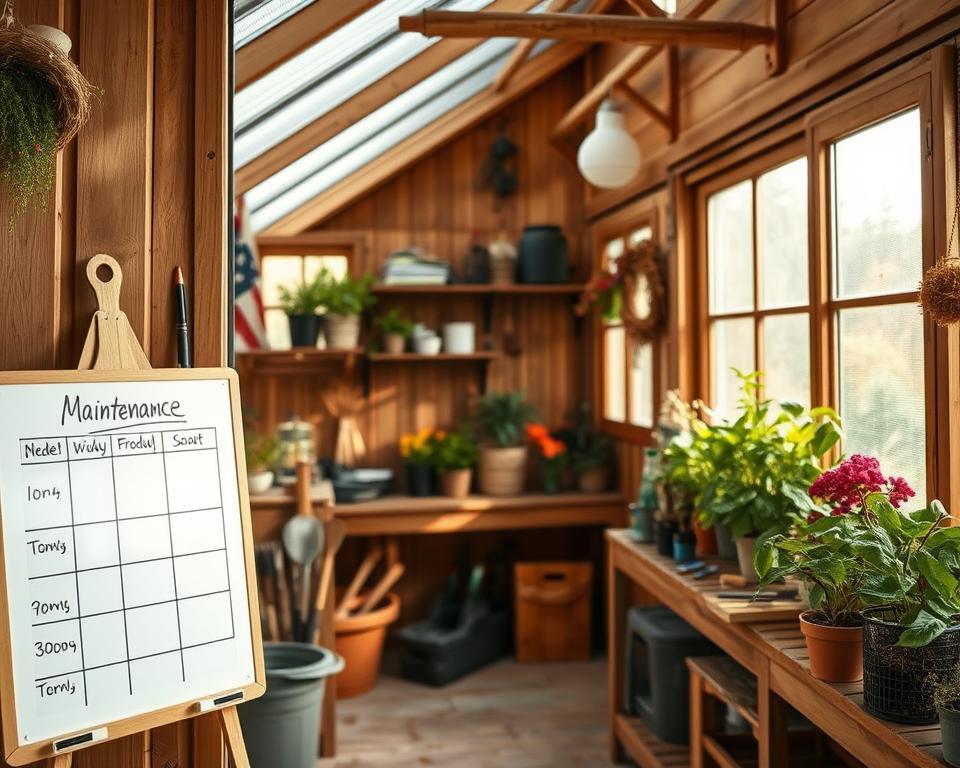
Spring and Autumn: Inspection and Repair
Early spring is a critical period. Gardeners should conduct a thorough inspection for any damage caused by winter weather. They check for loose panes, signs of rot on the frame, and ensure seals are intact.
This is also the prime time for a deep clean. Removing dirt and debris from windows maximises light transmission for seedlings. Autumn serves a similar purpose, preparing the garden building for winter.
After summer crops finish, a comprehensive clean-out is essential. It is the ideal moment to apply a fresh coat of wood preservative before colder, wetter weather sets in.
Summer and Winter: Cleaning and Adjustments
Summer maintenance focuses on climate control. Ensuring vents and doors function properly is paramount for airflow during warm spells. This prevents overheating and supports healthy plant growth.
Winter demands vigilance against the elements. Regularly check the roof for snow buildup and clear leaves from gutters. Look for pooling water around the base frame to prevent moisture damage.
Additional Tips for Managing Debris and Moisture
Consistent debris management is crucial. Use a stiff brush to sweep the floor and corners, removing soil and leaves. This simple task discourages pests and disease.
Always make sure to work on a mild, dry day. This makes the job easier and safer. For high-up windows and the roof, use a long-handled brush or seek assistance with a ladder.
Proper care throughout the year ensures the greenhouse remains a productive and sturdy asset in any garden.
Conclusion
A systematic approach transforms greenhouse care from a chore into a simple, rewarding habit. While the list of tasks may seem long, success lies in establishing a consistent routine of basic activities.
Regular attention to the structure, including its frames, windows, and doors, prevents minor issues from becoming expensive repairs. This vigilance protects your gardening investment effectively.
There is a direct link between a well-kept greenhouse and thriving plants. Clean glass maximises light, while good ventilation and water management create an ideal environment for growth.
Gardeners should adapt these maintenance principles to their own garden and available time. The fundamental goals remain the same, but the way you achieve them can vary.
Ultimately, the time invested in maintenance pays dividends. It extends the life of the structure, reduces future costs, and supports successful gardening for years to come.
FAQ
How often should a wooden greenhouse receive a fresh coat of preservative?
A wooden greenhouse typically requires a fresh coat of wood preservative every one to two years. This schedule helps protect the timber frame from moisture, rot, and weather damage, ensuring the structure’s longevity. The best time for this task is during dry, mild weather in late spring or early autumn.
What is the most effective method for cleaning greenhouse glass panes?
The most effective method involves using a soft brush or sponge with a mild, soapy water solution to gently remove dirt and algae. It is crucial to avoid abrasive tools that could scratch the glass. For the roof and upper panes, using a long-handled brush makes the job safer and easier. A final rinse with clean water leaves the glass sparkling, maximising light transmission for plants.
Why is maintaining the greenhouse vents and doors so important?
Properly functioning vents and doors are critical for regulating temperature and humidity inside the greenhouse. They ensure adequate airflow, which prevents the buildup of stagnant, moist air that can encourage fungal diseases and pest infestations. Regularly checking that they open and close smoothly is a key part of routine maintenance.
When is the best time of year to perform a major greenhouse clean-out?
The optimal times for a thorough clean-out are in the autumn, after the main growing season, and in early spring, before the new season begins. Autumn cleaning involves removing old plant debris and soil from the floor to eliminate overwintering pests. Spring cleaning prepares the environment for new plants by washing surfaces and organising the space.
How can one prevent debris from blocking the greenhouse gutters?
To prevent blockages, gutters should be cleared of leaves and dirt several times a year, particularly in autumn when leaf fall is heaviest. Installing a mesh gutter guard can significantly reduce the amount of debris that accumulates, making maintenance quicker and ensuring water drains away effectively from the structure.