
How to Paint a Wooden Shed
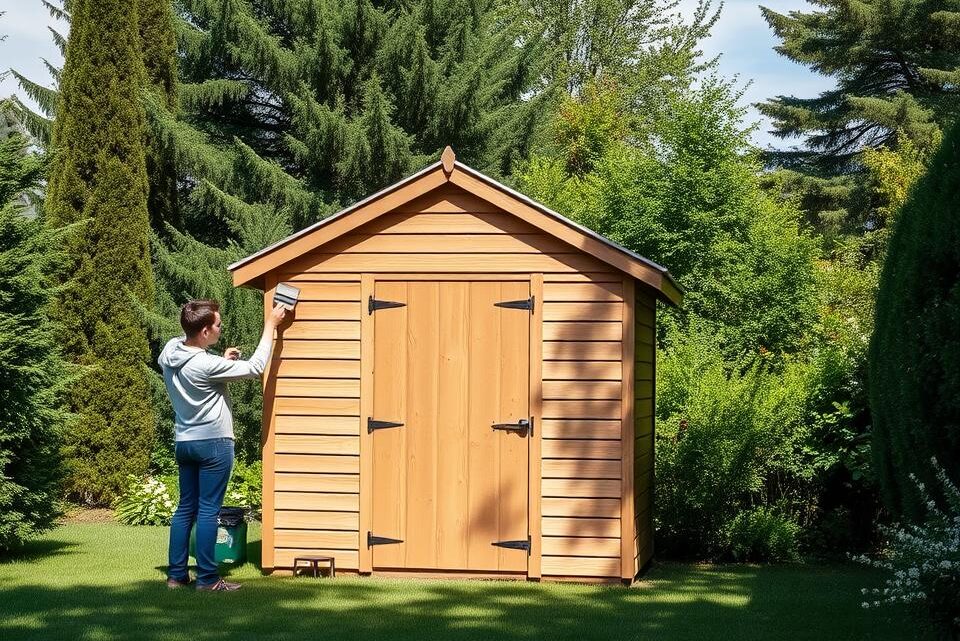
Giving a garden shed a fresh coat of paint is a rewarding weekend endeavour. It transforms an old structure into a smart garden feature. This task protects the wood from the elements for many years.
This guide offers a clear path for this popular DIY project. The entire process takes about five hours of work spread over two days. Proper preparation is the key to a professional finish.
Homeowners can achieve excellent results with careful planning. The steps include cleaning, sanding, and applying primer. Multiple coats of paint ensure durability and a beautiful appearance.
Using the correct materials and techniques is crucial. It guarantees the finish stands up to British weather. The effort invested saves money on professional services.
Inhaltsverzeichnis
Key Takeaways
- A fresh coat of paint significantly enhances a shed’s appearance and protection.
- The entire project can be completed over a weekend with proper planning.
- Thorough preparation, including cleaning and sanding, is essential for long-lasting results.
- Using quality primer and paint ensures the finish withstands weather conditions for years.
- This is a manageable DIY task that can save on contractor costs.
Initial Planning and Preparation
The foundation for a durable and attractive finish on a garden structure lies in the careful groundwork undertaken before painting commences. This initial phase is arguably the most critical step in the entire process. It dictates the quality and longevity of the final result.
Gathering Supplies and Tools
Before starting, it is essential to assemble all necessary equipment. This prevents frustrating mid-task delays. A comprehensive list includes a pressure washer, sanding blocks, exterior-grade primer and paint, quality brushes or a sprayer, and protective materials like tarps and painter’s tape.
Having everything on hand ensures a smooth workflow. It allows the project to proceed efficiently from start to finish.
https://www.youtube.com/watch?v=BLk_CAMmQPc
Assessing the Shed’s Condition
A thorough inspection of the shed is the next vital step. Homeowners should look for loose nails, damaged boards, signs of rot, and peeling paint. Any repairs must be completed before the painting shed work begins.
It is also crucial to check the weather forecast. Ideal conditions are temperatures between 10°C and 38°C with low humidity. Planning the time for this project requires several consecutive dry days.
One should make sure to examine all surfaces, including trim and hardware. Creating a checklist is the best way to ensure no detail is missed during this preparatory stage.
Choosing the Right Materials and Products
Material selection plays a pivotal role in determining how well a painted surface will withstand environmental challenges. The correct combination of products ensures both aesthetic appeal and long-term durability for outdoor structures.
Primer and Paint Selection
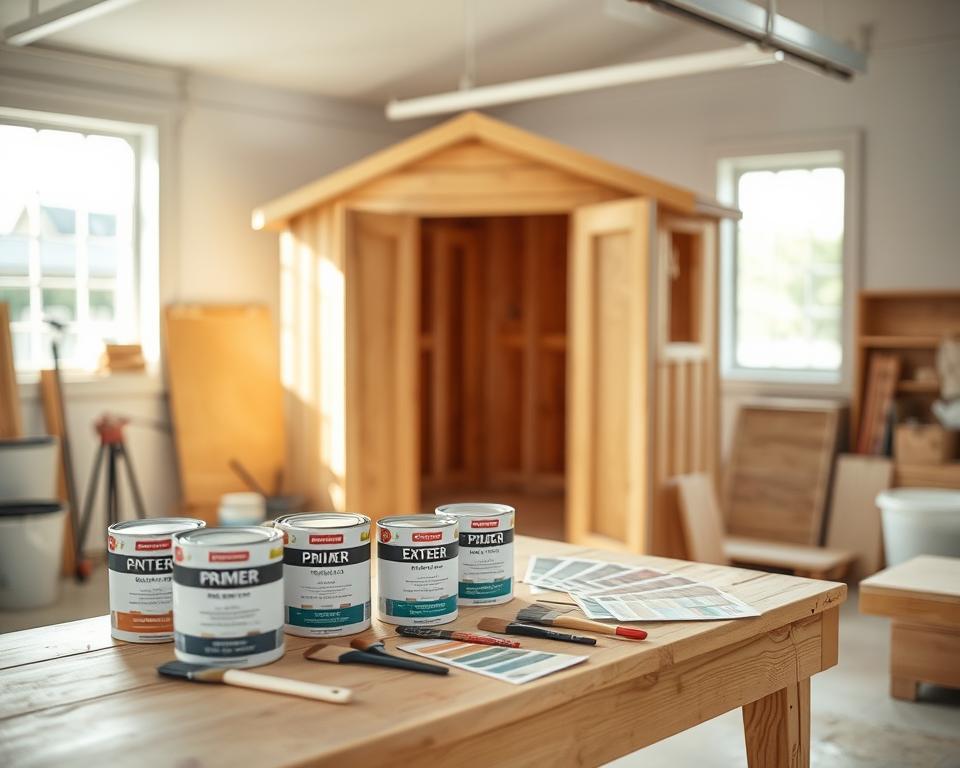
For wooden sheds, high-quality exterior primers like Fresh Start Exterior Wood Primer provide essential protection. Grey primers work best for dark colours, while white suits lighter shades.
Exterior-grade paints such as Behr Marquee or Regal Select offer superior fade resistance. They also combat mould and mildew growth effectively. Satin finishes are easier to clean than flat alternatives.
Wood preservers like Barrettine Premier Universal Preserver should be applied before painting. This treatment protects against insects, rot, and fungi for 1-2 years.
Essential Equipment Overview
Proper tools ensure efficient application and professional results. Paint sprayers like the Wagner FLEXiO 3000 provide excellent coverage for large areas.
Quality brushes and rollers handle detailed work effectively. Paint pails offer convenience when working on ladders. Protective materials like tarps safeguard surrounding areas during the process.
Calculating paint use depends on shed size. A typical 10’x10′ structure requires approximately one gallon for three coats on two sides.
Clearing and Prepping the Shed Area
Before any painting can begin, the workspace must be properly organised. This initial phase focuses on creating a safe and efficient environment around the structure. A well-prepared area prevents accidents and protects the garden.
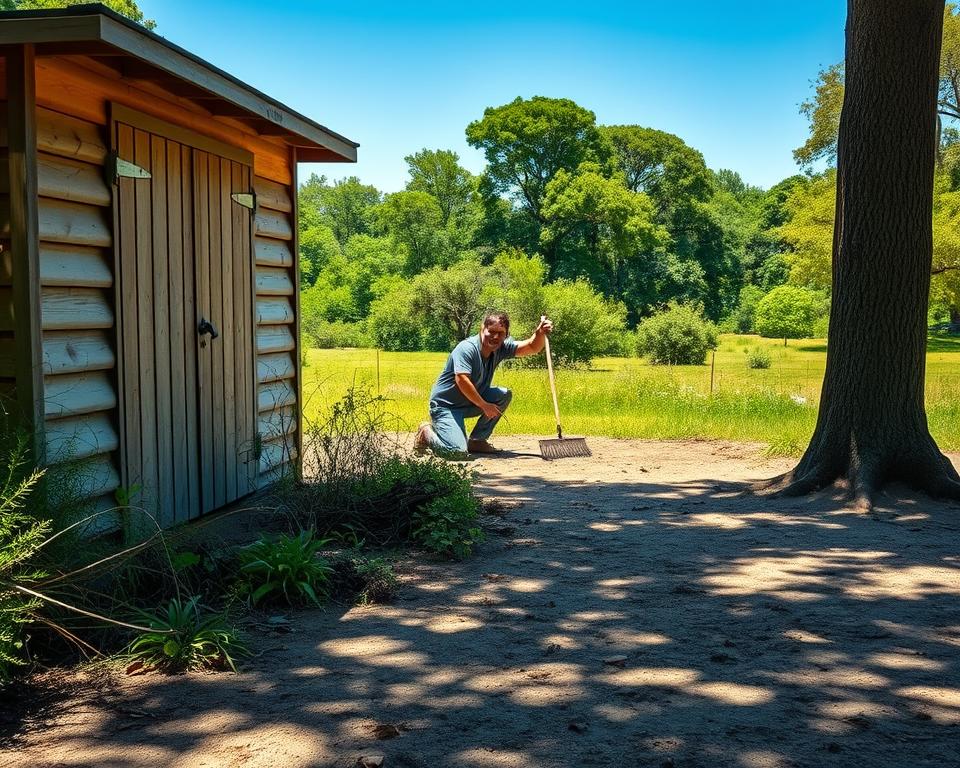
Start by cutting the grass and clearing vegetation from around the shed perimeter. This action removes tripping hazards and allows for easy movement of ladders and equipment. All movable items, such as planter boxes and garden furniture, should be relocated away from the work area.
Removing Obstacles and Covering Surroundings
Next, cover nearby shrubs, flowers, and landscaping features with drop cloths or tarps. Secure these coverings to shield plants from paint drips and debris. Lay additional protective sheets on the ground to catch spills, making the eventual clean-up much simpler.
For structures with exterior electrical fixtures, safety is paramount. Always turn off the power at the main source before carefully removing lights or outlets. Use tape to cover and protect any exposed wiring.
Finally, remove all exterior hardware. This includes handles, hinges, and old locks. Storing these small pieces safely prevents loss. This bit of effort, while time-consuming, is a crucial step in the project. It ensures a clean finish and protects surrounding surfaces from accidental marks.
| Task | Purpose | Key Consideration |
|---|---|---|
| Clear Vegetation | Create safe workspace | Prevent tripping hazards |
| Relocate Items | Prevent damage | Move planter boxes, furniture |
| Cover Surroundings | Protect from paint | Use tarps and drop cloths |
| Manage Electrical | Ensure safety | Turn off power, use tape |
Cleaning the Shed Thoroughly
A thorough clean is the unsung hero of any successful exterior renovation project. This vital process removes years of accumulated grime, mildew, and pollen that prevent proper paint adhesion. Skipping this step invites premature failure of the finish.

Proper cleaning demands the right approach for the material. Wooden structures require gentle pressure to avoid damage, while metal may need additional rust treatment. The effort invested here pays dividends in the final appearance.
Pressure Washing and Dust Removal
Pressure washing delivers the most effective clean for shed exteriors. The high-pressure water stream blasts away stubborn debris from all surfaces and crevices. For wooden structures, moderate pressure settings prevent timber damage.
Alternative methods include garden hoses with spray nozzles and manual scrubbing. Metal sheds often benefit from wire brushing to remove rust spots. Each approach requires patience to ensure comprehensive coverage.
| Cleaning Method | Best For | Key Consideration |
|---|---|---|
| Pressure Washer | Heavy grime removal | Adjust pressure for material |
| Garden Hose | Light cleaning | Combine with stiff brush |
| Manual Scrubbing | Detailed areas | Use warm soapy water |
“Proper preparation prevents poor performance. The cleaning phase cannot be rushed without compromising quality.”
After washing, complete drying is essential. Warm summer days may require only a few hours, while cooler conditions need longer. Check all surfaces before proceeding.
Final dust removal ensures a pristine surface. Use a clean cloth to address corners and trim where particles accumulate. This attention to detail separates amateur from professional results.
A lot of painting failures stem from inadequate cleaning. This critical time investment guarantees the new finish adheres properly and lasts for years.
Sanding and Surface Preparation
Working with the wood’s natural grain during sanding enhances the final appearance. This process creates microscopic grooves that help primer and paint bond securely. Proper surface preparation prevents future peeling and ensures a smooth finish.

Selecting the Correct Grit Sandpaper
The grit number indicates coarseness, with lower numbers being more abrasive. For heavily weathered timber, start with coarse 80-120 grit sandpaper. This removes old paint and smooths rough patches effectively.
Medium grits around 150 are ideal for general preparation. They create the perfect surface texture without damaging the wood. Finer grits above 180 are best for final smoothing.
| Grit Range | Best Use | Result |
|---|---|---|
| P80-P120 | Heavy material removal | Aggressive smoothing |
| P120-P150 | General preparation | Balanced finish |
| P180-P220 | Final smoothing | Fine surface |
Techniques for Even Sanding
Always sand in the direction of the wood grain to avoid visible scratches. Using a sanding block distributes pressure evenly across the surface. This prevents dips and ensures consistent material removal.
Pay extra attention to areas with existing paint damage. Feather the edges smoothly into surrounding surfaces. After completing the sanding, remove all dust with a power washer or vacuum.
This thorough approach guarantees that the primer will adhere properly. The effort invested in sanding pays dividends in the longevity of the finish.
How to Paint a Wooden Shed
Efficient paint application methods can significantly reduce the time investment required. The choice between spray equipment and traditional tools affects both the quality and speed of the project.
Proper technique ensures an even coat and professional-looking finish. Both approaches have distinct advantages for different situations.
Using a Sprayer for Efficient Coverage
Paint sprayers like the Wagner FLEXiO 3000 dramatically reduce painting time. They can complete three coats on a typical structure in approximately one hour.
Begin by loading paint into the material cup. Set the spray width control to low for detail work around trim areas. This minimises overspray on adjacent surfaces.
After cutting in edges, adjust to high width for main walls. Use continuous up-and-down motions with overlapping strokes. Material flow settings typically range from 6-7 for standard exterior paint.
Applying the Paint with Brush and Roller
Traditional methods offer precision for detailed work. Use a quality paintbrush to cut in edges and corners first.
Then switch to a roller for covering larger flat surfaces. Always follow the wood grain direction when applying paint. This technique disguises brush marks for a smoother finish.
Multiple thin coats provide better coverage than one heavy application. This approach prevents drips and ensures proper adhesion.

| Method | Application Time | Best For | Cleanup Time |
|---|---|---|---|
| Paint Sprayer | ~1 hour (3 coats) | Large flat surfaces | 5-7 minutes |
| Brush & Roller | Several hours | Detailed areas | 10-15 minutes |
“Patient, methodical application produces far superior results compared to rushed coverage. The way you apply paint significantly impacts durability.”
Hot weather accelerates drying time significantly. In temperatures of 29-32°C, subsequent coats can begin immediately. This reduces total project time to just a few hours.
Working systematically from top to bottom ensures complete coverage. Maintain consistent distance from the surface for professional results.
Applying Primer for Lasting Adhesion
This phase focuses on establishing a stable base through primer application before the final colour coats. The primer creates a uniform surface that enhances paint adhesion and durability.
Benefits of Priming Before Painting
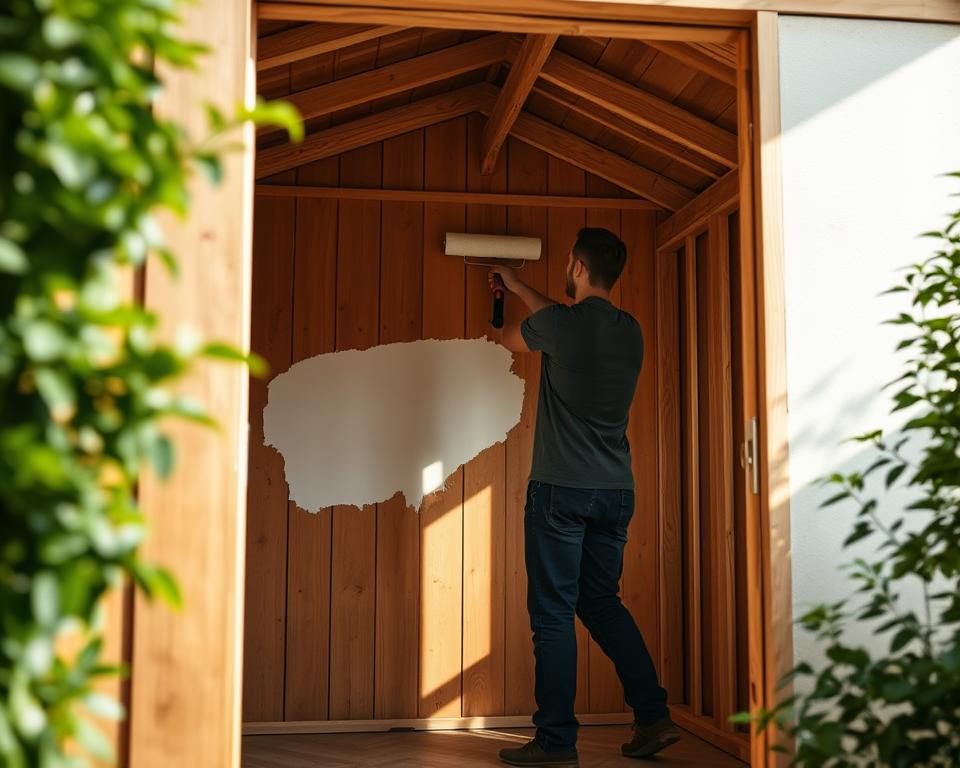
Applying primer before the top coat creates a critical bonding layer. This foundation dramatically improves paint adhesion and longevity on exterior surfaces.
Quality exterior primers seal porous wood, preventing moisture infiltration. This protection stops paint failure and extends the structure’s lifespan significantly.
The application process begins with cutting in edges using a brush. Then switch to a roller or sprayer for main surfaces. For spray equipment, adjust settings for the thicker primer consistency.
Primer selection should complement the final colour. Grey works best under dark shades, while white suits lighter colours. This ensures optimal colour accuracy.
Most projects require only one coat of primer. Allow proper drying time, typically overnight, before applying the finish paint. This small time investment yields substantial benefits.
Water-based acrylic primers offer easy cleanup and fast drying. They provide excellent adhesion and protection for wooden surfaces in various climate conditions.
The protection afforded by proper priming prevents moisture penetration. It also creates uniform porosity for even paint absorption across all surfaces.
Painting the Trim, Hardware and Details
The finishing touches on trim and hardware significantly elevate the overall aesthetic appeal. These elements demand precision work for professional results.
Techniques for Cutting In and Detailing
Trim work requires a steady hand and quality brush. Homeowners should use their favourite paint brush for cutting in around edges. This technique creates clean lines where colours meet.

For those uncomfortable with freehand work, tape provides excellent guidance. FrogTape works well on fresh paint. Apply three widths of 2-inch tape around fixed hardware.
Trim painting typically takes 1.5 hours. Architectural details like door frames and window surrounds need careful attention. This bit of extra effort enhances the final look.
Hardware elements deserve special consideration. Remove hinges and handles whenever possible. Spray them separately using Rustoleum Universal for minimal overspray.
Metallic finishes like oil-rubbed bronze update hardware appearance beautifully. This process adds about one hour but transforms the finish. The tip for success lies in patience and proper surface protection.
Attention to these details ensures a cohesive look. Perfectly painted walls gain impact from well-executed trim work. The professional finish depends on these careful touches.
Additional Finishing Touches and Upgrades
Once the main painting work is complete, homeowners can consider enhancements that add functionality and style. These final steps elevate the structure from merely refreshed to a standout garden feature.
Optional Steps for Enhanced Durability
For superior long-term protection, applying a dedicated wood oil or protector after the paint dries is an option. These products offer an extra barrier against UV rays and moisture. They can significantly extend the lifespan of the finish.
Products like Manns Premier UV Decking Oil provide cost-effective protection for sheds and fences. It is priced around £35 for 5 litres. More advanced formulations can cost over £245 for the same volume.
If you want to paint the inside of an unfinished, unheated shed, the same exterior paint is suitable. This creates a cohesive look and adds protection. Coordinating this project with fence painting saves time and materials.
Incorporating Decorative Elements
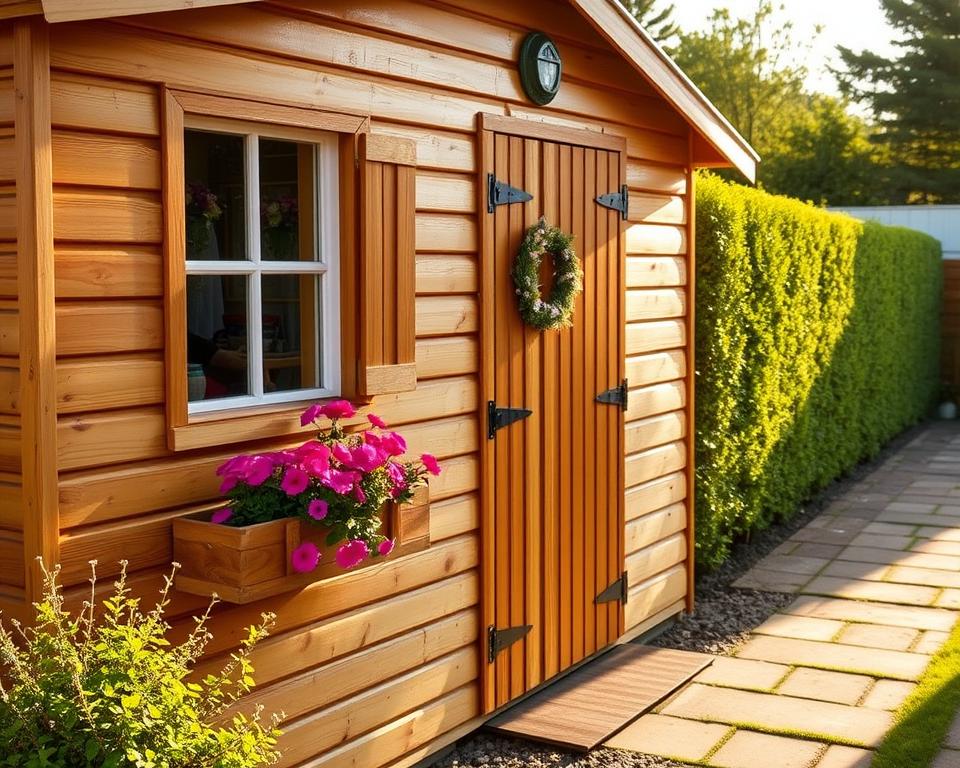
Functional upgrades like motion-detector lights improve security. Decorative lanterns add a welcoming ambiance. New planters placed around the base soften the exterior lines and integrate the shed into the garden.
Updating accessories, such as door handles or house numbers, personalises the space. A lot can be achieved with simple additions. These touches ensure the refreshed shed remains attractive for many years.
Conclusion
A weekend dedicated to shed transformation yields years of enhanced garden appeal and material protection. This accessible DIY project revitalises outdoor spaces with professional results.
The systematic process outlined ensures durable finish quality. Each step contributes to long-lasting protection against weather elements.
Homeowners achieve remarkable improvements within five hours of work spread over two days. Proper preparation determines the outcome more than the final painting technique itself.
Quality exterior materials justify their cost through extended lifespan. They maintain appearance for many years with minimal maintenance.
This approach applies to sheds, fences, and other outdoor structures. The skills gained transfer to numerous home improvement projects.
Regular inspection and cleaning preserve the beautiful results. Addressing minor issues promptly prevents major repairs.
The satisfaction from completing this visible transformation demonstrates the value of careful craftsmanship. It enhances property appeal while providing essential protection.
FAQ
What is the best type of paint to use on a wooden shed?
For optimal protection, a high-quality exterior wood paint or a microporous finish is recommended. These products are specifically formulated to withstand British weather conditions, offering superior durability and moisture resistance compared to standard interior paints.
How long should one wait between coats of paint?
Drying times vary by product and weather, but typically a period of 4-6 hours is sufficient. It is crucial to consult the manufacturer’s instructions on the paint tin for specific guidance to ensure proper adhesion and a flawless finish.
Is it necessary to apply a primer before painting?
Yes, using a primer is highly advisable. It ensures better adhesion of the topcoat, provides an even base for colour, and enhances the paint’s longevity. Priming is especially important for bare wood or surfaces previously coated with a different type of paint.
Can a shed be painted in damp or cold weather?
Painting in damp or cold conditions is not recommended. Moisture can prevent proper drying and adhesion, leading to peeling or blistering. The ideal conditions are dry, overcast days with moderate temperatures.
What is the best way to prepare the wood surface before painting?
Proper preparation involves a thorough clean to remove dirt and mildew, followed by sanding with medium-grit sandpaper to smooth the surface and open the wood grain. Any old, flaking paint should be scraped away, and the surface must be completely dry before application.
Should the inside of a shed be painted?
Painting the inside is optional but offers benefits. It protects the timber from internal moisture and pests. If the shed is used for storage, a coat of paint can brighten the space and make it more usable.
How can one achieve a professional-looking finish?
Using the right tools is key. A combination of a brush for detailed trim and a roller for large, flat areas often yields the best results. Applying thin, even coats and following the wood grain during application helps avoid streaks and brush marks.
How long does the painted finish typically last?
A well-executed paint job using quality materials can last up to 5-7 years. The longevity depends on factors such as exposure to the elements, the initial wood condition, and the quality of the products used.

