Step-by-Step Guide: How to Re-Felt a Shed Roof?
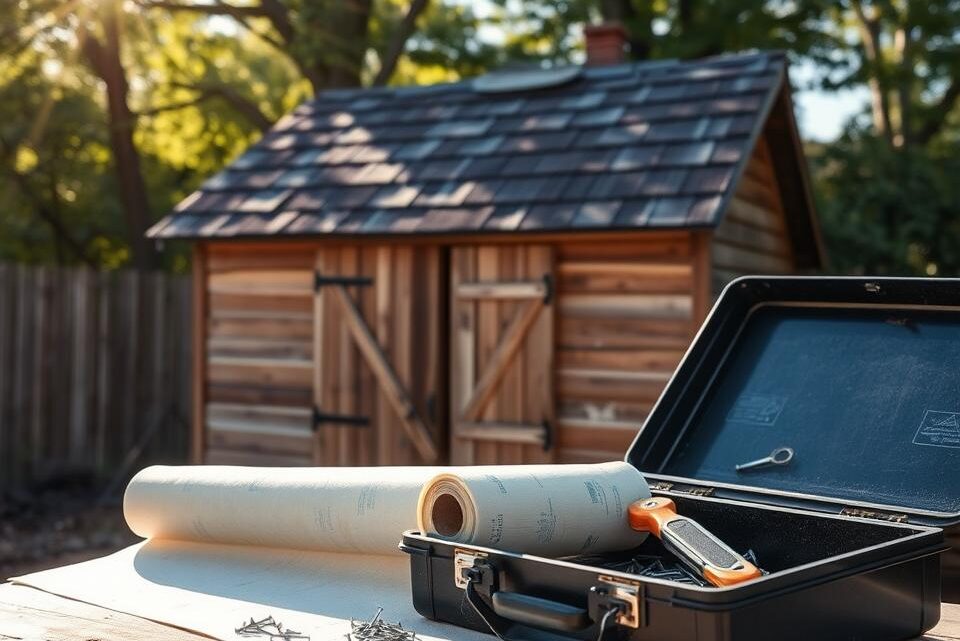
A well-maintained garden shed is a valuable asset, but its protection hinges on a single component: the roof covering. Over time, exposure to the British weather can cause the original felt to crack, peel, or tear. This deterioration exposes the wooden structure beneath to potential water damage and rot.
This comprehensive guide details the entire process for replacing the felt on a garden building. It is a manageable project for most homeowners, requiring common tools and materials that are readily available. With careful preparation and attention to detail, one can achieve professional-looking results.
The task involves several key stages, from initial safety checks and removing the old material to laying the new layers correctly. Proper technique, especially regarding overlaps and securing the felt, is crucial for long-lasting weatherproof integrity. A successful outcome will extend the life of the structure significantly.
Whether aiming for a quick, budget-friendly fix or a more durable, long-term solution, understanding the correct step-by-step approach is essential. This process can typically be completed in an afternoon, offering excellent value for the effort involved.
Inhaltsverzeichnis
Key Takeaways
- Replacing the roof felt is a vital maintenance task that protects the shed from water damage.
- The project is cost-effective and can often be finished within a single day.
- Correct installation technique, particularly overlapping the felt, is critical for success.
- Proper preparation, including a clean and dry surface, ensures the new covering adheres well.
- A successful job prevents leaks and preserves the wooden framework of the building.
- This guide offers professional insights suitable for both novice and experienced DIY enthusiasts.
Shed Roof Re-Felting Overview
Maintaining the integrity of an outdoor building’s top covering is a fundamental aspect of property upkeep. The process of applying new protective layers to this structure offers significant advantages.
Over time, the original weatherproof membrane on a garden building’s roof degrades. This is due to constant exposure to sun, rain, and frost.
Purpose of Re-Felting the Roof
The main goal is to establish a robust, waterproof barrier. This shield protects the underlying wood from moisture, which can lead to rot and structural weakness.
Neglecting this task risks damage to stored belongings and the building itself. Timely intervention is a cost-effective measure against expensive future repairs.
A quality installation can preserve the structure for years, offering excellent long-term value.
Benefits of a Renewed Roof
A newly covered roof delivers immediate improvements. It enhances weather resistance and the overall appearance of the shed.
The procedure also allows for a thorough inspection of the underlying framework. Any minor issues can be addressed before they become major problems.
The longevity of the result depends on material quality and workmanship.
| Felt Type | Expected Lifespan | Best Suited For |
|---|---|---|
| Budget Felt | 12-18 months | Short-term protection, temporary structures |
| Quality Felt | Up to 5 years | Long-term durability, main garden buildings |
| Reinforced Felt | 5+ years | Areas with harsh weather, heavy use |
Tools and Materials for Re-Felting
Gathering the correct equipment is the first practical step towards a successful project. Having everything on hand before starting prevents delays and ensures a smooth workflow.

The right tools make the job easier and produce a more professional finish.
Essential Tools
A claw hammer is vital. It removes old fasteners and secures new nails. A sharp Stanley knife is indispensable for precise cutting.
Specifically designed clout nails are a must. Their wide, flat heads grip the material securely without tearing.
Investing in quality tools upfront pays dividends in ease of use and final result.
Recommended Roofing Felt and Accessories
Choosing the right roofing felt is critical. Thick, high-quality roof felt offers far greater durability than budget options.
Bitumen adhesive is highly recommended. It creates a watertight seal at overlaps, preventing moisture ingress.
| Item | Purpose | Considerations |
|---|---|---|
| Quality Roofing Felt | Primary weatherproof layer | Resists tearing and weathering |
| Clout Nails | Securing the felt | Galvanised for rust resistance |
| Bitumen Adhesive | Sealing overlaps | Ensures a watertight bond |
Health and Safety Considerations
The structural limitations of garden building roofs demand particular attention to safety procedures. These surfaces are typically not engineered to support the full weight of an person, especially when the framework has weakened over time.

Using Ladders and Maintaining Stability
The safest way to approach the work involves performing tasks from a stable ladder. Proper ladder placement on firm, level ground prevents slips and falls.
Maintaining three points of contact when ascending or descending ensures stability. This methodical approach reduces the risk of accidents significantly.
Staying Safe at Height
When access to the roof surface becomes necessary, maintaining a low profile is essential. Crouching or kneeling distributes weight more evenly across the structure.
Spreading body weight across three contact points minimises pressure on any single area. Staying close to the edges where the structure connects to walls provides greater support.
It is wise to inform someone that roofing work is underway. Periodic check-ins confirm ongoing safety throughout the project.
Working on a garden shed requires careful planning. The right place for equipment and tools ensures a smooth workflow.
Taking the necessary precautions protects both the worker and the shed structure. A well-executed safety plan makes the entire roof maintenance process more efficient.
Removing the Old Felt and Preparing the Roof
A thorough preparation of the roof surface is the cornerstone of a successful felt replacement project. This phase ensures the new material adheres properly and provides lasting protection.
It is vital to strip away all of the old felt completely. Layering new material over the deteriorated existing cover creates an unprofessional finish and can conceal underlying damage to the wooden structure.
Stripping Off the Old Felt
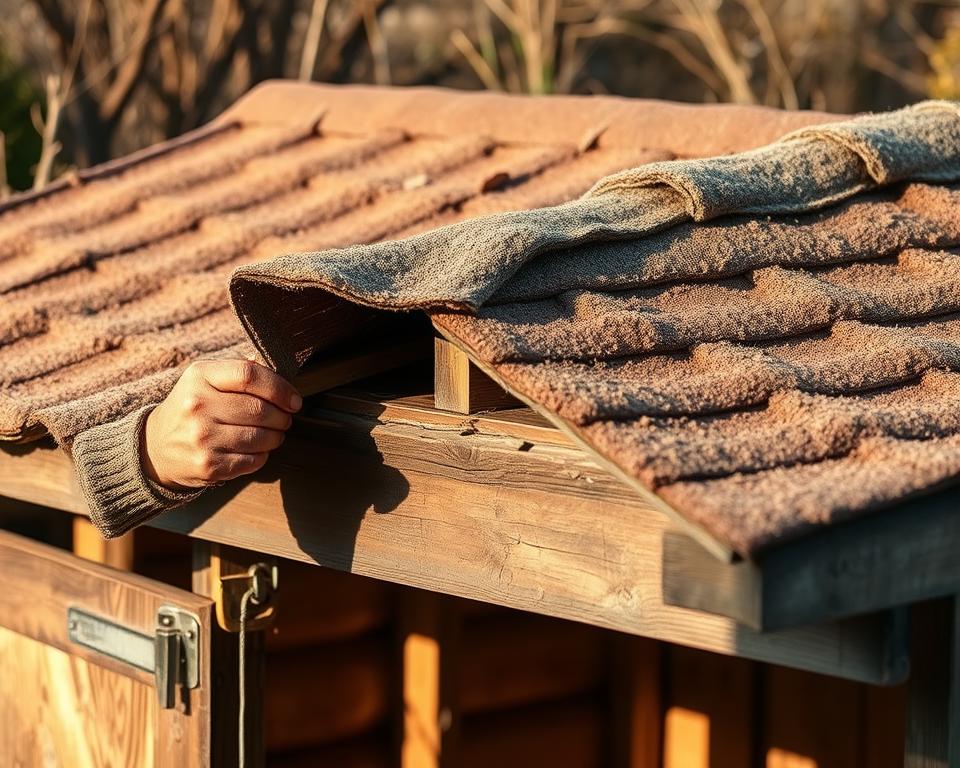
The remove old felt process begins systematically. Using the claw end of a hammer to pry up edges, a sharp Stanley knife helps cut and tear away the bulk of the material.
After the felt is stripped, attention turns to the fasteners. Old clout nails must be extracted fully using the hammer‘s claw or a screwdriver. Hammering them flat risks creating bumps that puncture the new covering.
Clearing Debris for a Smooth Surface
Once all old felt and nails are remove old, the roof must be swept clean. Grit, dirt, and any remaining fragments are cleared away.
This results in a smooth, clean surface. It is essential for proper adhesion and prevents sharp particles from damaging the underside of the new roof felt once installed.
This stage also offers a perfect opportunity to inspect the shed‘s roof boards for any rot or damage that needs repair before proceeding.
| Tool | Primary Function | Key Benefit |
|---|---|---|
| Claw Hammer | Prying felt and extracting nails | Provides leverage for complete removal |
| Stanley Knife | Cutting and slicing old material | Allows for controlled, precise stripping |
| Stiff Broom | Sweeping debris | Creates a clean, puncture-free surface |
How to Re-Felt a Shed Roof?
The core technique for applying new roofing felt revolves around a simple but vital directional principle. Correctly positioning the material is the most critical step for achieving a watertight seal that lasts for years.
Starting from the Bottom to Create Overlaps
Installation must always begin at the lowest edge of the sloped shed roof. The first piece of felt is laid along the eaves. Each subsequent piece is then positioned to overlap the one below it.
This bottom-to-top progression is the only correct way to ensure water flows correctly. It creates a series of shingle-like layers that work with gravity.

Ensuring Water Runs Off Effectively
When installed this way, rainwater naturally pours over the top of each overlap. It is prevented from being forced underneath the material. This is the fundamental mechanism that stops leaks.
Any moisture that penetrates an overlap can lead to rot in the underlying wood. A properly executed installation protects the entire shed structure. This systematic step-by-step approach is essential for professional roofing results.
Visual planning before starting helps identify the starting point. A methodical process guarantees a long-lasting roof that effectively shields the shed and its contents.
Measuring, Cutting, and Positioning the New Felt
The transition from imperial to metric measurements requires careful calculation for older structures. Many garden buildings were constructed using feet and inches, while modern roofing materials follow metric standards. This conversion process ensures adequate coverage without material shortages.
Accurate Measurements and Conversion from Metric
Begin by measuring the full length and width of the surface, including desired overhang for drip protection. For an eight-foot long structure requiring a 2.5-inch end drop, cutting felt to 8’6″ provides necessary coverage. Always allow extra material rather than cutting too short.
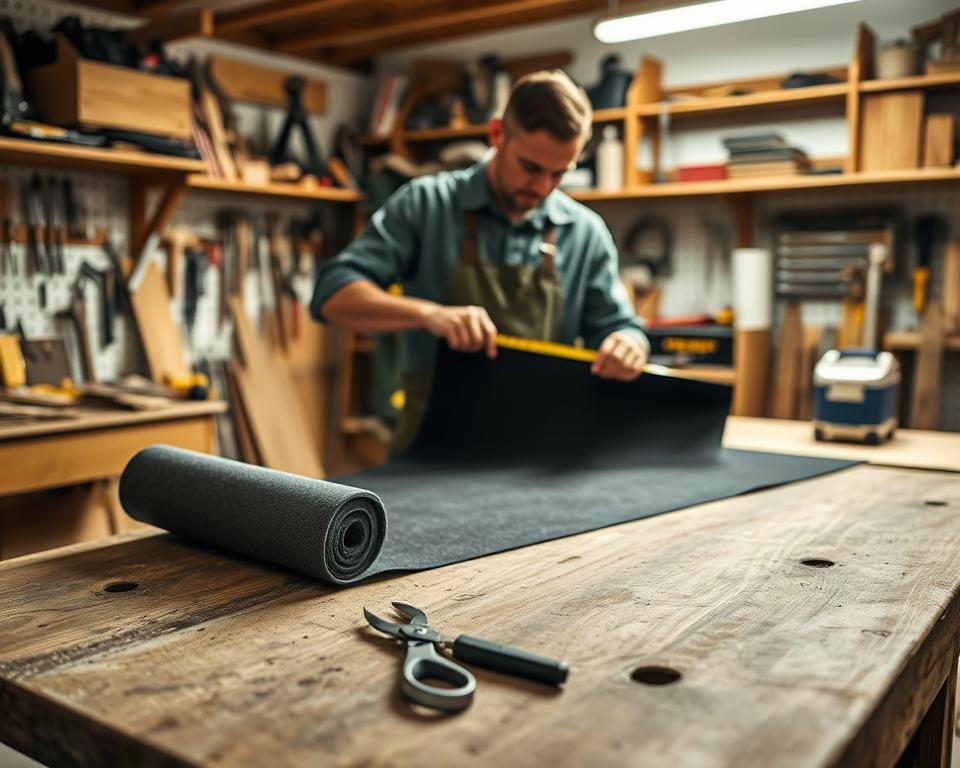
When the roof width exceeds the shed roof felt roll width, multiple strips become necessary. Typically, three pieces provide sufficient coverage for standard garden buildings. These pieces must overlap substantially to prevent water penetration.
The cutting process involves unrolling material across the roof surface with excess overhang. Using a sharp Stanley knife, make clean cuts along the measured length. Preparing all three pieces beforehand streamlines the installation workflow significantly.
Rolling cut pieces before lifting them onto the shed makes handling easier, especially when working from a ladder. This method allows for controlled unrolling and positioning once in place. Generous measurements ensure complete protection for the wooden framework beneath.
Installing the First Felt Pieces
Positioning the initial layer correctly sets the foundation for the entire project. It demands precision and a methodical approach.

The first piece must overhang the roof edge on three sides. This provides sufficient material to wrap down and cover the side-pieces of the structure.
Tacking Versus Full Nailing Techniques
A temporary tacking technique is highly recommended. Initially, secure the piece felt with just a few widely-spaced nails.
This allows for adjustments to the positioning before committing. Once satisfied with the alignment, proceed with full nailing.
Folding and Neatly Aligning the Corners
Proper treatment of the corners is crucial for weatherproofing. The correct method is a “blanket fold” rather than cutting.
This involves folding one section underneath and pushing the top piece down. It creates neat, watertight corners.
All edges and sides should be secured with 13mm clout nails roughly every 10cm. The second piece installs more easily, requiring placement with a suitable overlap.
Attention to neat alignment ensures a professional finish. It prevents one side from being too short whilst the other has excess material.
Additional Tips and Tricks for a Long-Lasting Roof
Achieving a truly durable finish on a garden building’s protective covering requires attention to detail beyond the basic installation steps. This section outlines professional practices that prevent common errors and enhance the final result’s resilience.

Common Mistakes to Avoid
Several frequent errors can compromise a felt roof. A major one is laying new material directly over old, deteriorated layers. This hides potential rot and creates a bumpy surface that reduces longevity.
Other critical mistakes include cutting corners instead of folding them neatly and using too few nails. Insufficient fastening leaves the material vulnerable to wind lift. Choosing the cheapest felt is also a false economy, as thin material tears easily.
For accidental bitumen adhesive spills, a clever fix exists. Gently scrape off excess bitumen. Then, fold a scrap of felt and rub it to create granules. Sprinkle these over the patch to camouflage it effectively.
Optimising Overlap for Enhanced Durability
Generous overlaps are vital for a watertight seal. A minimum of 10-15cm where felt sections meet provides redundant weatherproofing. This is a key step for a robust roof.
Taking sufficient time to work methodically pays dividends. Rushing leads to misalignment and future leaks. For precise adhesive placement, make light reference marks on the underlying felt with a hammer.
Following this comprehensive guide and its diy tips ensures a professional outcome. A well-executed roofing project protects the shed for many years, making the effort worthwhile.
Enhancing the Roof with Trim and Finish Work
The final stage of roof restoration focuses on trim and sealing details that elevate the project from functional to professional. These finishing touches distinguish basic repairs from comprehensive restorations.
Integrating Wooden Trim for a Polished Look
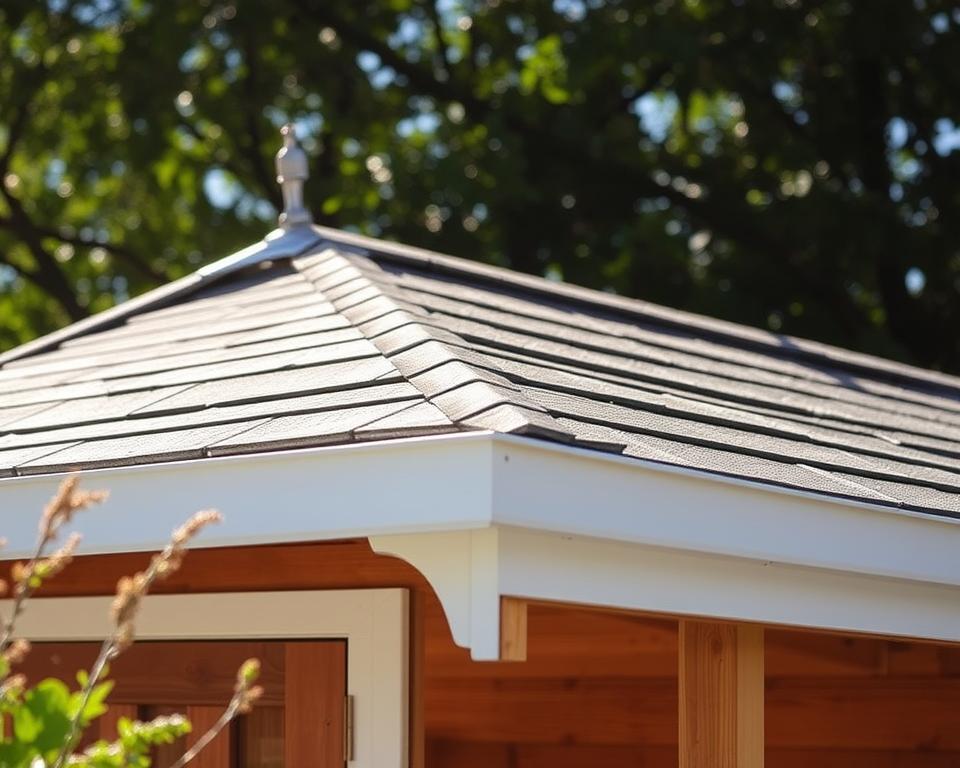
Wooden trim transforms the appearance of any garden shed structure. Using spare cladding material cut to length with a hand saw creates perfect trim pieces.
Treating the wood with preservative before installation prevents rot and extends lifespan. Pre-installing screws partially into trim pieces streamlines the process when working at height.
Using Sealants and Tapes to Prevent Leaks
Bitumen-based sealants provide additional protection in vulnerable areas. They create watertight seals between layers and under edges where moisture might penetrate.
Specialised roofing tapes laid over nail holes prevent moisture ingress. These measures ensure long-term weatherproof performance for the entire structure.
Trim pieces install along all roof edges where shed felt terminates. On front and back edges, pieces can join in the middle with decorative diamond pieces hiding junctions.
Conclusion
A modest investment in materials and a single afternoon’s effort can yield significant returns for any garden structure. This accessible diy project demonstrates that effective maintenance does not require a large budget or professional help.
By following each step with care, from initial safety checks to the final trim, homeowners achieve a durable, protective covering. The fundamental roofing principle of working from the bottom upwards is key to a watertight seal.
This process not only preserves the felt shed itself but also safeguards the contents stored within. The knowledge gained equips individuals for future upkeep in this area.
Ultimately, a well-executed project extends the life of a garden shed substantially. It is a satisfying and highly cost-effective way to protect a valuable outdoor asset.
FAQ
What is the primary purpose of re-felting a shed roof?
The main purpose is to restore waterproof protection. Over time, roofing felt degrades from sun exposure and weather, leading to leaks. Re-felting prevents water damage to the shed’s interior and stored items.
What tools are essential for re-felting a shed roof?
Essential tools include a claw hammer, a sharp Stanley knife, and clout nails. A sturdy ladder is also vital for safe access. Having the correct tools ensures a smoother installation process and a more durable finish.
How should one prepare the roof before laying new felt?
Preparation involves carefully stripping off the old, damaged felt and removing all debris. The roof deck must be clean, dry, and smooth. This provides a solid foundation for the new roofing felt to adhere to properly.
Why is it important to start laying felt from the bottom edge?
Starting at the eaves allows each higher piece to overlap the one below. This overlapping system is crucial for directing water off the roof effectively, preventing moisture from seeping underneath the felt layers.
What is the recommended technique for securing the roofing felt?
An initial tack with a few nails allows for adjustment before final fixing. Once positioned correctly, the felt should be secured thoroughly by nailing along the edges and across the surface. This prevents wind uplift and ensures longevity.
How can one ensure a neat finish at the roof corners?
For a tidy corner, make a small cut in the felt to allow it to fold flat. Neatly align the folded edges and secure them firmly. Properly folded corners prevent tearing and improve the roof’s resistance to weather.
What role does bitumen adhesive play in the re-felting process?
Bitumen adhesive seals the overlapping edges of the felt sheets. This creates a watertight bond that complements the nailing, providing an extra layer of protection against water ingress at the seams.
What is a common mistake to avoid during installation?
A frequent error is not allowing sufficient overlap between felt sheets. An overlap of at least 50mm is recommended for adequate protection. Insufficient overlap can lead to leaks and reduce the roof’s lifespan.