How to Soundproof a Shed

The traditional garden shed is undergoing a remarkable transformation. No longer just a dusty storage space for tools, these structures are being repurposed into valuable extensions of the home. They now serve as serene home offices, creative music studios, productive workshops, and peaceful relaxation spaces.
This shift in use creates a common challenge: managing noise. Containing sound within the structure prevents disturbances to neighbours and the main house. It also ensures external noises do not disrupt the quiet environment needed inside.
Effective acoustic treatment for a garden building requires a comprehensive strategy. The key lies in identifying and sealing all potential gaps where sound can travel. A successful approach must address every structural component, including walls, floors, ceilings, doors, and windows.
While sheds are often built with lighter materials, achieving significant noise reduction is entirely possible. This guide provides a clear path forward, detailing the materials, techniques, and considerations for creating a peaceful and private garden room.
Inhaltsverzeichnis
Key Takeaways
- Garden sheds are increasingly used as multi-functional spaces like offices and studios.
- Controlling noise is essential for both privacy and consideration for neighbours.
- A holistic approach targeting all structural elements is necessary for success.
- Sealing gaps is a fundamental first step in any soundproofing project.
- Effective solutions are achievable for various skill levels and budgets.
Introduction to Soundproofing a Shed
The humble garden shed has evolved far beyond its original purpose as a simple storage area. Many people now convert these structures into valuable workspaces like music studios, home offices, and therapy rooms. This shift makes effective acoustic treatment essential for both functionality and neighbourly consideration.
Creative spaces such as band rehearsal rooms and recording studios generate significant noise levels. Similarly, workshops with power tools require sound containment. Even quiet environments like writing spaces or therapy rooms benefit from blocking external disturbances.
Acoustic treatment serves a dual purpose in these settings. It prevents internal sounds from escaping to maintain peace with neighbours. Simultaneously, it shields the interior from outside noise, creating an optimal environment for concentration.
Standard garden buildings differ significantly from purpose-built structures in their acoustic properties. They typically feature thinner walls, construction gaps, and lightweight materials that readily transmit sound. These characteristics present unique challenges for effective noise control.
Despite these challenges, achieving substantial noise reduction is entirely feasible. Success requires a systematic approach that addresses the entire structure rather than isolated areas. Weak points left untreated can compromise the entire acoustic barrier.
Solutions exist for varying budgets and skill levels. Options range from basic DIY improvements to professional-grade installations. The key is selecting appropriate materials and techniques based on specific needs and the structure’s characteristics.
Understanding Acoustic Challenges in a Garden Shed
Garden sheds present unique acoustic challenges due to their standard construction methods. Unlike purpose-built structures, these buildings typically feature thinner timber walls and lightweight materials. This construction allows sound waves to pass through more easily.
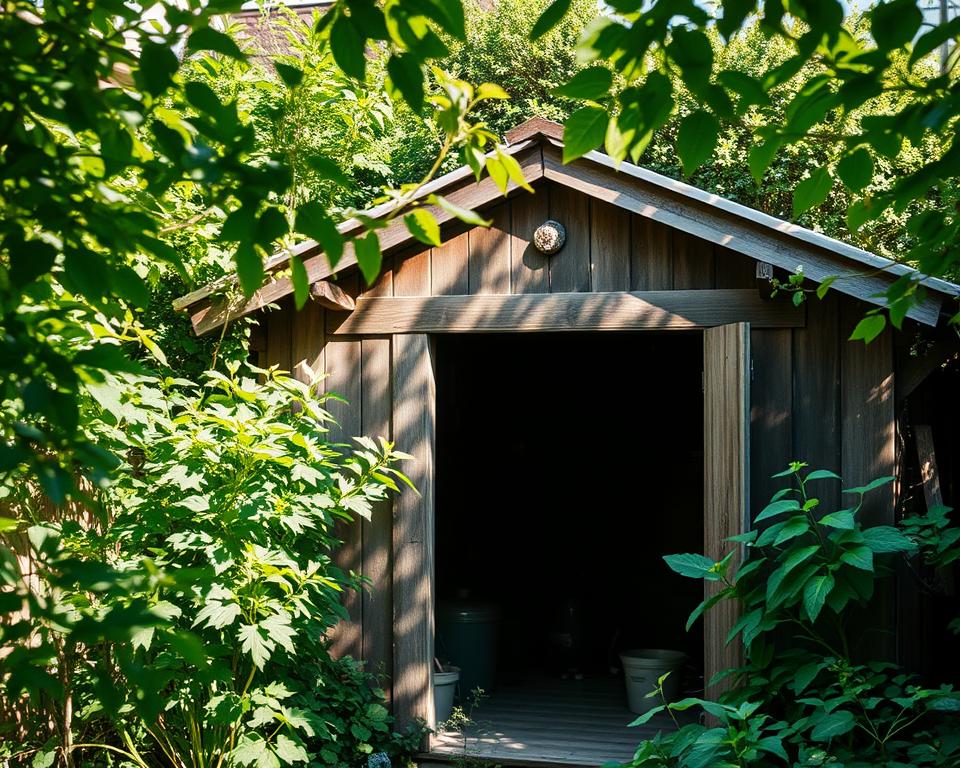
Sound energy naturally seeks the path of least resistance. It exploits any available opening—gaps, cracks, or thin materials—to travel through the structure. Even well-built sheds have weak points where sound transmission occurs.
Flanking transmission represents a significant challenge in timber frame construction. Sound travels along solid pathways through the base frame into wall structures. This bypasses direct barriers and spreads throughout the entire building.
| Transmission Type | Primary Pathway | Impact Level |
|---|---|---|
| Airborne | Through gaps and thin materials | High |
| Flanking | Along structural connections | Medium-High |
| Impact | Through rigid timber frames | Medium |
Understanding these acoustic principles is crucial before beginning any project. The timber frame creates useful cavities but also provides rigid pathways for vibrations. Effective treatment must address the shed as a complete system rather than isolated areas.
Ignoring floors, ceilings, or doors while treating walls yields disappointing results. A holistic approach recognises that soundproofing requires comprehensive coverage. This knowledge directly informs material selection and application methods.
How to Soundproof a Shed
Creating an acoustically isolated garden building demands a methodical strategy from the outset. The process involves addressing multiple structural elements that work together as an integrated system. Success relies on understanding how each component contributes to the overall acoustic performance.
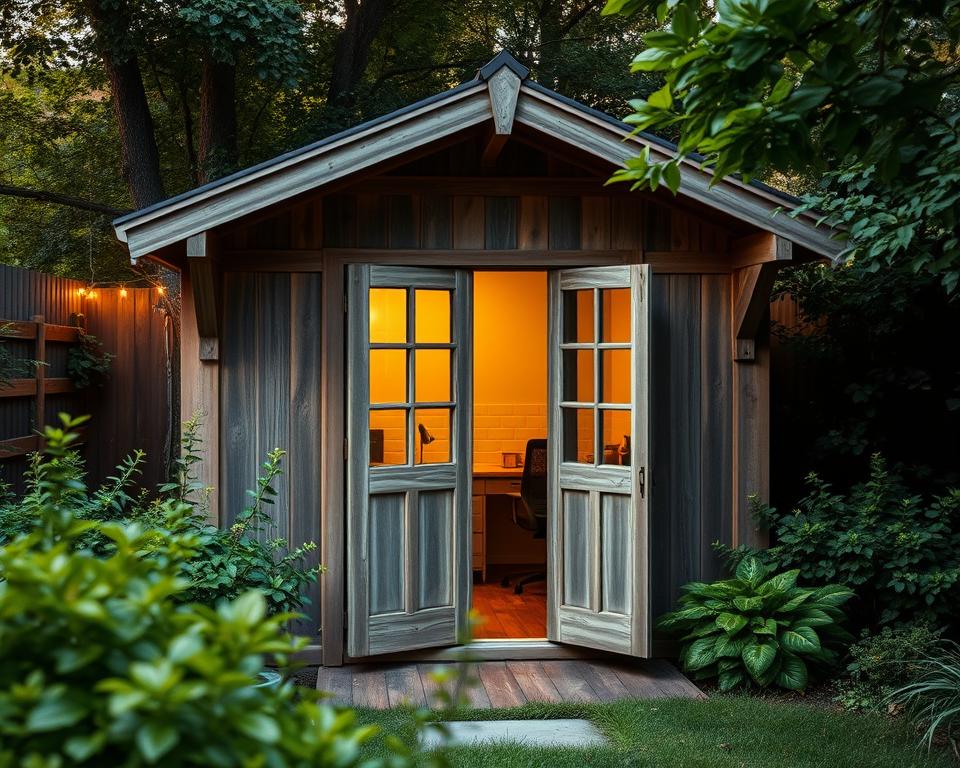
Four primary areas require attention for effective soundproofing of any garden structure. These include insulation within cavities, floor treatment, wall enhancement, and securing openings. Each element serves a specific purpose in the acoustic barrier.
The steps must be approached systematically. Insulation fills cavities to absorb sound waves. Floor treatment prevents vibration transmission through the foundation. Wall enhancement adds mass and density. Openings like doors and windows need special sealing attention.
This comprehensive way of thinking ensures no weak points remain. Sound will always find the path of least resistance. Overlooking even small gaps can significantly reduce the soundproofing effectiveness.
Proper planning is essential before beginning any work. Assess the current condition of the shed and identify acoustic weaknesses. Gather appropriate materials and tools for each phase of the project. This preparation makes sure the transformation into a soundproof shed achieves the desired results.
Essential Materials and Tools for Effective Soundproofing
Achieving optimal noise reduction depends on choosing suitable supplies and having the right implements. The quality of soundproofing materials directly impacts the final acoustic performance. Professional-grade products typically deliver superior results compared to standard DIY options.

These materials serve distinct acoustic functions. Mass-adding products like plywood and drywall increase density. Absorption materials include cavity insulation and acoustic wool. Isolation membranes convert sound energy to heat. Sealing products like acoustic caulk complete the system.
Specific professional products include Acoustiblok isolation membranes and QuietFibre cavity insulation. Tecsound 50 self-adhesive membrane and SBX acoustic boards are also effective. Rockwool RW5 acoustic wool provides excellent absorption properties.
The work requires standard construction tools. Essential implements include measuring tapes, electric drills, and utility knives. Caulk guns and electric screwdrivers ensure proper installation. Straight edges and levels guarantee accurate placement.
Each type of soundproofing challenge may require different materials. Containing low-frequency sounds demands different approaches than blocking external noise. Understanding these distinctions helps select appropriate soundproofing materials.
While premium products involve higher initial costs, they often represent better long-term value. Their durability and performance justify the investment for serious soundproofing projects. Proper preparation with the right materials ensures successful transformation of any garden shed.
Insulating Walls: Strategies and Materials
Wall insulation forms the cornerstone of any successful acoustic treatment for a garden building. The large surface area of the shed walls makes them the primary battleground for controlling noise. A typical timber frame construction creates cavities perfect for housing absorptive materials.
This initial layer is crucial for managing sound within the space. A multi-layered approach often yields the best results, combining different soundproofing materials for a comprehensive solution.
Types of Wall Insulation and Acoustic Panels
Several materials are effective for treating walls. Spray foam excels at sealing irregular gaps and crevices within the timber frame. It can be supplemented with standard fibreglass batts for additional absorption, though safety gear is essential during handling.
For adding mass without significant thickness, mass-loaded vinyl is a low-cost and effective option. Specialist insulation like Rock Wool or QuietFibre offer excellent performance but require a watertight structure to prevent damp.
Modern solutions like the Acoustiblok 3mm Isolation Membrane represent a significant advancement. This wafer-thin material converts sound energy into trace heat, outperforming traditional, thicker acoustic foam panels.

Decoupling and Damping Techniques
Advanced techniques further enhance a wall‘s performance. Damping involves installing two layers of dense board, like plywood or drywall, with a special compound sandwiched between them. This reduces vibration transmission significantly.
Decoupling breaks the direct physical connection between the inner and outer wall surfaces. Using resilient bars or decouplers attached to the studs, rather than the existing shed walls, prevents sound from travelling through the structure.
Combining these principles with added mass and absorption creates a professional-grade acoustic barrier. It is also vital to consider moisture management with vapour control layers to protect the insulation and timber frame.
| Material Type | Primary Function | Best For |
|---|---|---|
| Spray Foam | Sealing Gaps | Irregular cavities |
| Mass-Loaded Vinyl | Adding Density | Low-profile mass |
| Acoustic Wool (e.g., Rock Wool) | Absorb Sound | Cavity filling |
| Damping Compound | Reducing Vibration | Between rigid panels |
Soundproofing the Floor: Techniques and Options
Many overlook the significant role that proper floor treatment plays in achieving comprehensive noise control. The floor structure serves as a primary conduit for vibrations and impact noise. Addressing this surface is essential for a complete acoustic solution.
Underlay Materials and Floor Coverings
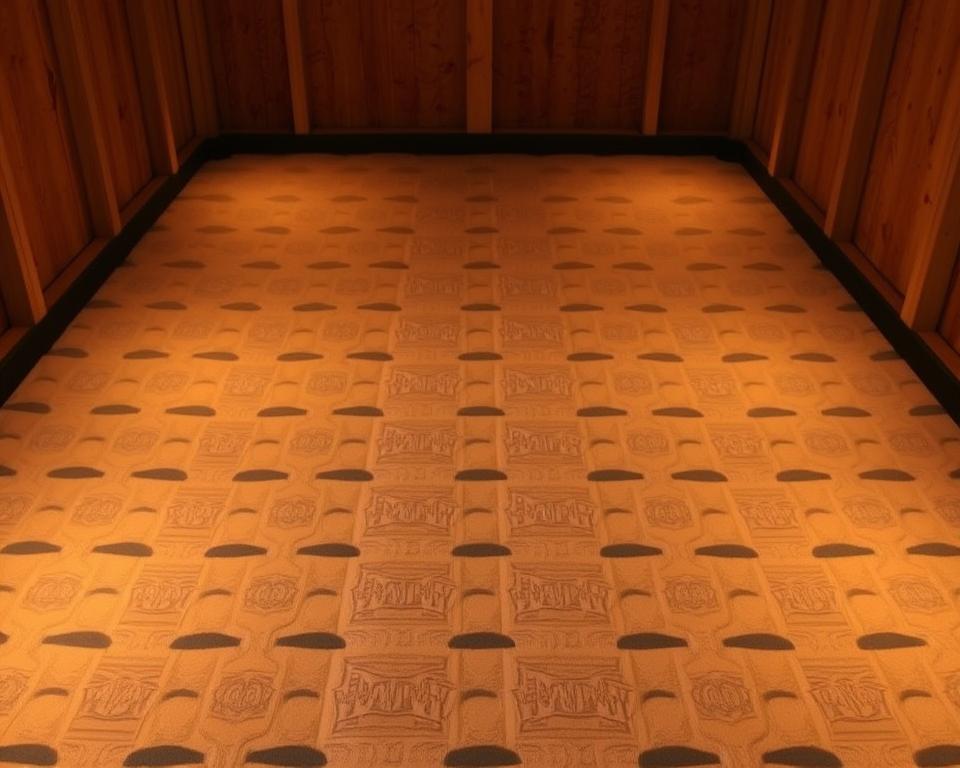
Budget-conscious options include carpet underlay and thick fabric. These materials provide reasonable impact noise reduction. They help minimise vibrations travelling through the horizontal base frame.
For superior performance, consider professional acoustic membranes. Products like Acoustiblok Isolation Membranes convert sound energy into heat. When combined with acoustic underlay, they deliver outstanding results.
Moisture management is crucial in exterior buildings. Traditional carpeting may develop mould in damp conditions. Interlocking gym mats offer a practical alternative for better durability.
Sealing the Floor-Structure Gaps
Gaps between walls and floor create direct sound pathways. Sealing these junctions before installation prevents acoustic leaks. This step is critical for maintaining the integrity of the acoustic envelope.
Adding mass to the existing floor increases its acoustic performance. An extra layer of dense board, such as plywood, enhances thickness and stiffness. This additional mass helps resist sound transmission more effectively.
A layered approach combining dense base materials with quality underlay creates a comprehensive system. This method addresses multiple sound transmission mechanisms simultaneously for optimal results.
Ceiling and Roof Soundproofing Approaches
The fifth surface often receives insufficient attention in garden building conversions. Overhead positioning and typically lightweight construction present unique acoustic challenges. Sound readily escapes through inadequately treated ceilings, creating an obvious weak point.

Principles used for wall treatment apply equally to the ceiling structure. Filling frame cavities with absorptive insulation forms the foundational layer. Rockwool RW5 Acoustic Wool cut between timber framing provides excellent sound absorption.
Acoustic Membranes and Insulation Layers
For roof structures, lightweight plywood often replaces heavier plasterboard. This material better supports insulation while reducing structural stress. The finishing layer should include high-grade membranes like Acoustiblok 3mm Isolation Membrane.
Installation follows a logical sequence: cavity insulation first, then isolation membranes, finally the finishing surface. This approach ensures comprehensive coverage while maintaining the shed‘s structural integrity.
Working overhead requires careful safety considerations. Achieving professional finishes can be challenging compared to vertical surfaces. However, acoustic performance typically takes priority over appearance in these spaces.
Neglecting the ceiling undermines entire projects. A complete acoustic envelope demands attention to all surfaces equally. Proper overhead treatment transforms the garden shed into a truly isolated space.
Doors and Windows: Sealing and Upgrades
Effective noise control requires special attention to the structural elements that typically allow the most sound transmission. These openings represent the weakest points in any garden building’s acoustic envelope.
Improving Door Seals with Weather Stripping
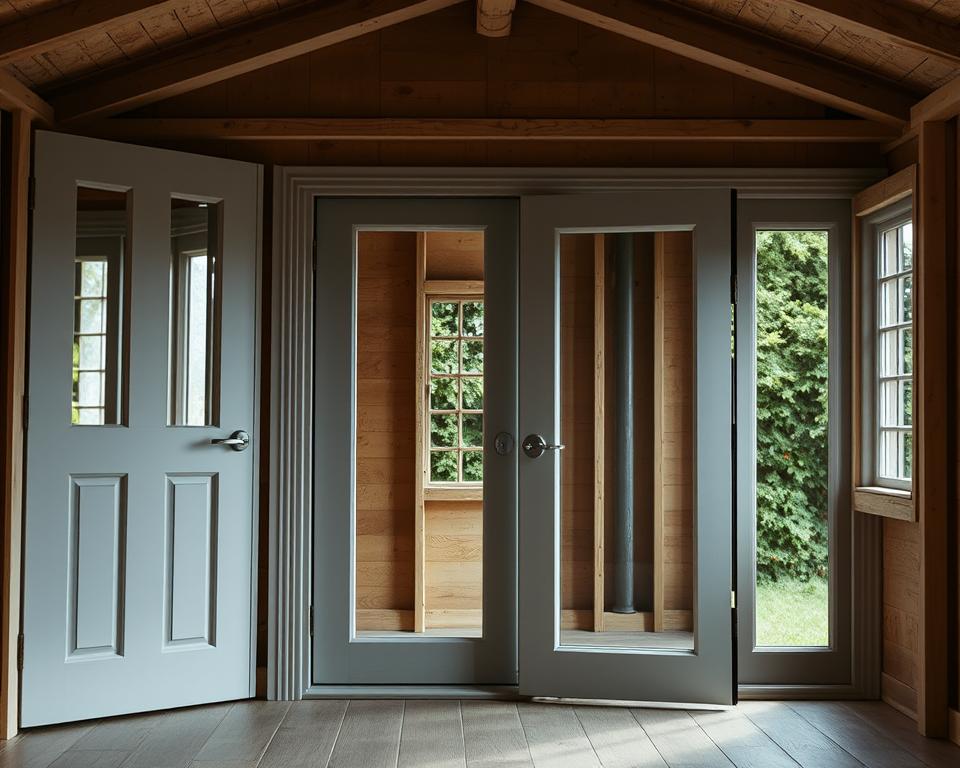
A typical shed door lacks proper sealing mechanisms. Gaps around the frame and bottom allow significant sound leakage. Weather stripping provides an effective solution for perimeter gaps.
Door sweeps address the bottom gap effectively. Acoustic caulking seals structural joints beneath sills. For serious applications, applying acoustic membrane directly to the door surface enhances performance.
Solid-core door designs outperform hollow alternatives acoustically. Upgrading the shed door itself may be necessary for optimal results. Proper sealing transforms any room into a more isolated space.
Window Insulation Options and Replacement Ideas
Standard windows present acoustic challenges due to thin glass and frame gaps. Various options exist across different budget levels. Soundproof window inserts offer affordable improvement.
Acoustic glass features multiple layers for superior performance. Budget-conscious options include thick plastic sheets applied to existing window surfaces. Acrylic panels provide better control than standard glass.
Curtains and blankets offer temporary solutions for window treatment. For maximum acoustic performance, removing windows entirely delivers the best results. Always make sure rubber seals are in good condition around all windows.
Sealing Gaps and Cracks for a Complete Acoustic Barrier
The integrity of any acoustic treatment depends fundamentally on eliminating all pathways where sound can travel through the structure. Even the smallest opening can compromise the entire system’s effectiveness.
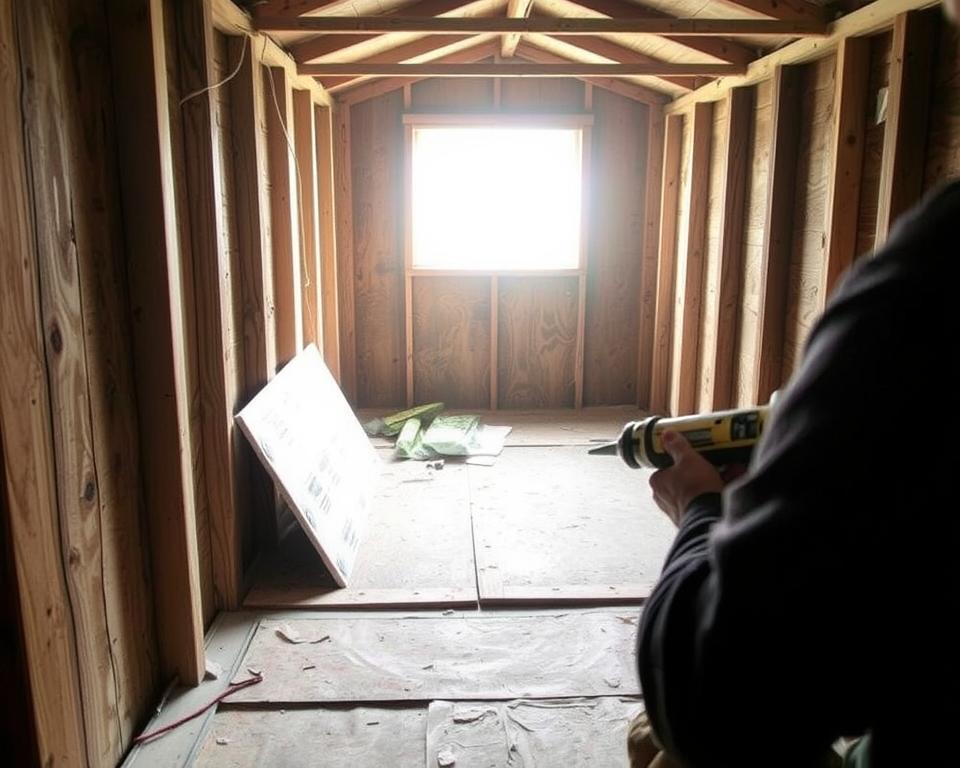
This critical work should begin during the initial assessment phase and continue throughout the project. A methodical way to approach this is by conducting a top-to-bottom inspection of the entire structure.
Pay close attention to areas around door and window frames where gaps commonly form. Check where walls meet floors and ceilings, and examine any utility penetrations for pipes or cables. It is essential to make sure every potential opening receives proper attention.
For effective soundproofing, professional-grade acoustic sealant offers the best results. Products like Acoustiblok Acoustical Sound Sealant remain flexible over time, maintaining their acoustic properties. This way of sealing ensures long-term performance.
The same principle applies to any garden building. The goal is to create an essentially airtight envelope that prevents both air and sound transmission. This dual benefit enhances both acoustic and thermal performance.
Remember that the project’s success relies on the weakest point in the system. Extensive work on walls and floors becomes ineffective if gaps remain unsealed. Always make sure to check and recheck all sealed areas.
Proper gap sealing transforms the space into a truly isolated environment. This comprehensive approach ensures that sound cannot find its way through the building’s envelope, creating the quiet retreat you desire.
Applying Acoustic Treatments with Professional Products
Professional acoustic products bring precision and high performance to any garden building project. Understanding the distinction between different materials is crucial. Isolation membranes block sound transmission, while absorption materials manage internal echo.
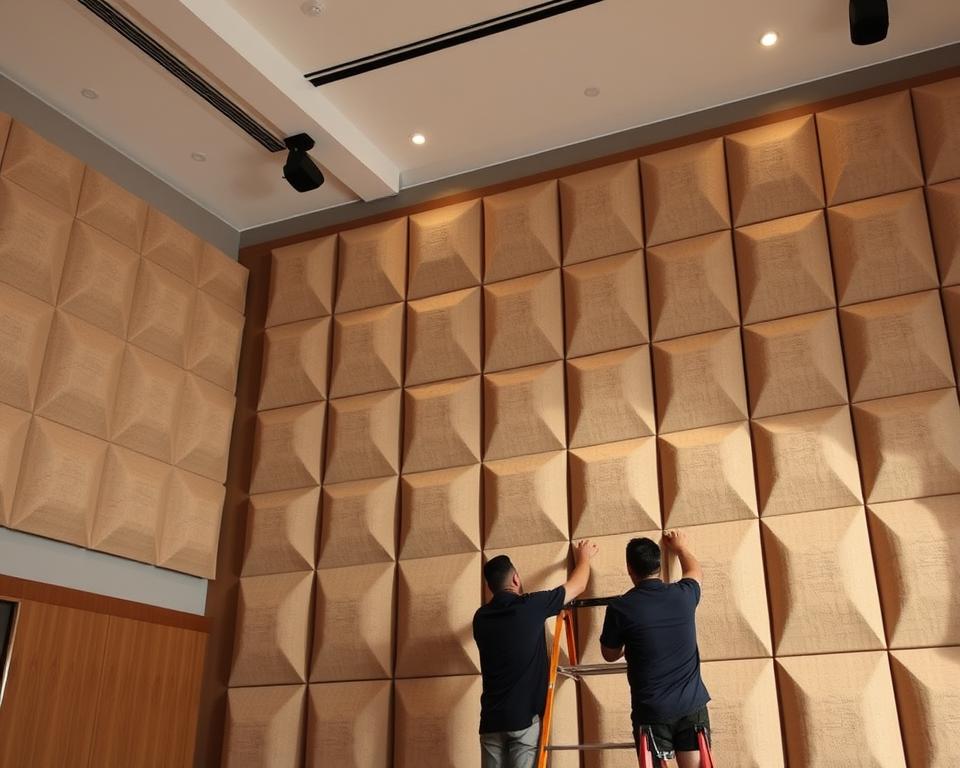
For application, the Tecsound 50 Self-Adhesive membrane requires a clean, dry surface. After cutting it to size, the backing is peeled off and the membrane is firmly applied. Using a roller ensures a smooth finish, free of air bubbles.
SBX Acoustic Boards offer combined acoustic insulation and thermal benefits. They are measured, cut, and screwed directly to walls. Sealing the cut edges with specialist tape is essential for maintaining the soundproofing integrity of the shed.
Cavity acoustic insulation, like Rock Wool, is fitted between timber studs. It is a cost-effective way to absorb sound within the structure’s framework. For floors, specialised underlays target impact noise effectively.
It is important to note that decorative acoustic panels and foam primarily refine the internal sound of a studio space. They reduce resonance but do not significantly prevent sound from escaping the shed. Following manufacturer instructions guarantees the advertised quality of performance.
DIY Versus Professional Soundproofing Solutions
Choosing between a DIY approach and hiring professionals is a crucial decision for any garden building project. The choice significantly impacts the final outcome, budget, and overall satisfaction.

For many people, the appeal of DIY lies in potential cost savings. A self-managed project typically ranges from £500 to £3,000. This way allows for full control over the work and material selection.
Hiring a contractor often costs between £1,000 and £4,000. This higher price reflects expert knowledge and guaranteed results. Professionals deliver superior quality and precise acoustic calibration.
Converting a garden shed into a functional studio requires careful consideration. For a serious recording studio, professional soundproofing is often the best way to ensure optimal performance.
However, a DIY project can achieve reasonable soundproofing for a garden room. The final aesthetic might not match professional standards. Yet acoustic performance can be quite effective.
Those uncertain about their skills might consider a hybrid approach. Consulting a professional for material advice while doing the physical work offers a balanced solution. This method combines cost savings with expert guidance.
Ultimately, the decision balances budget, skill level, and intended use. For a high-performance studio room, investing in professional work ensures the space meets its purpose.
Budget Considerations and Cost-Saving Tips
Managing the financial side of a project is a key step for any garden building conversion. A realistic budget helps plan the work effectively. It ensures the final result meets expectations without overspending.
DIY approaches typically range from £500 to £3,000. The final cost depends heavily on the shed size and the materials chosen. Hiring a professional contractor often costs between £1,000 and £4,000.
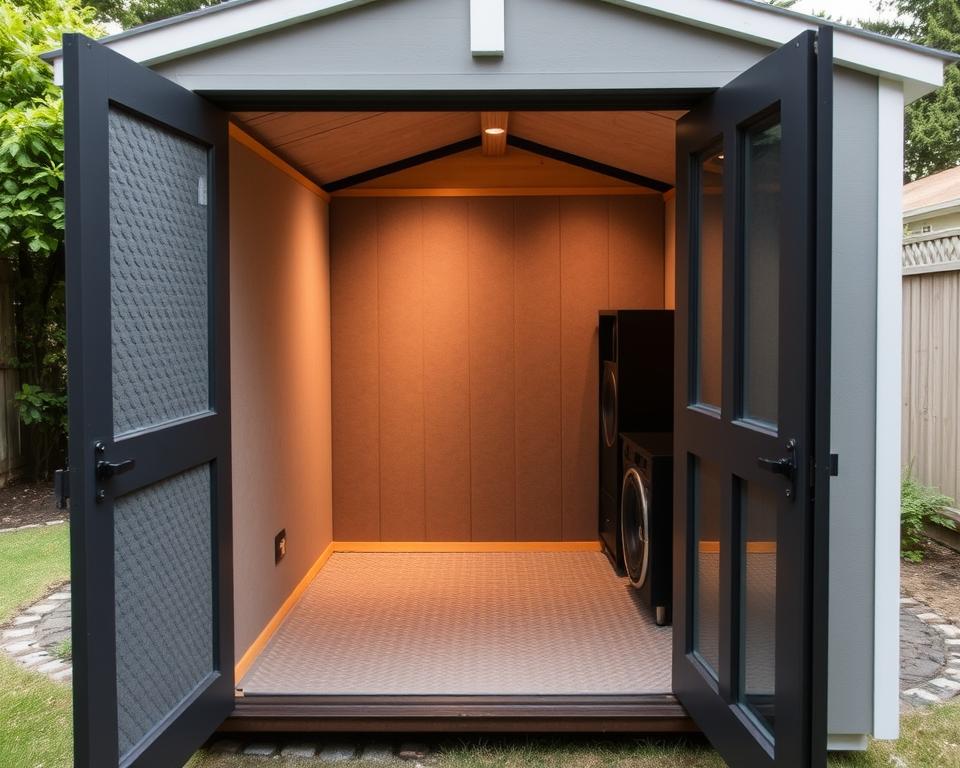
For those on a tight budget, several options exist. Using old carpet underlay and thick carpet is a cost-effective floor treatment. Thicker carpet generally provides better performance.
It is crucial to avoid false economies. Over-the-counter DIY products often disappoint compared to professional-grade materials. Using inferior products can lead to poor results, requiring rework.
A phased approach allows for progressive improvement. Start with the most critical elements for soundproofing. This method spreads the cost over time.
Focus investment where it delivers the most benefit. For example, sealing doors and windows often yields significant improvements. This type of targeted spending is smart.
Additional measures like heavy curtains or sound-deadening paint offer marginal gains. They are useful supplements but not primary solutions. The blog emphasises that a strong shed need not break the bank.
Adding mass to walls and using proper insulation are fundamental. Decoupling layers is more effective than relying on the existing structure. This approach ensures the mass works efficiently.
Careful planning and strategic materials selection lead to excellent results. A well-executed project creates a peaceful retreat. This blog hopes these tips help you achieve your goals.
Converting a Garden Shed into a Multipurpose Soundproof Space
Many properties feature an outdoor timber structure that holds potential far beyond basic storage. This versatile garden building can become a valuable additional room for various activities. The conversion process transforms simple sheds into professional studio environments.

Creative applications include art studio setups and writing retreats that require quiet. Professional uses encompass home offices and therapy rooms needing privacy. Recreational space conversions accommodate music practice and woodworking hobbies.
These conversions provide extra usable space without expensive home extensions. They represent a cost-effective alternative to loft conversions. The acoustic treatment serves dual purposes for different shed uses.
Noisy activities require containing sound within the garden shed. Quiet applications need protection from external disturbances. A properly converted soundproof shed achieves both objectives effectively.
Design considerations include adequate electrical supply for equipment. Proper lighting becomes essential when sealing windows. Thermal insulation complements acoustic improvements for year-round comfort.
Successful conversions integrate soundproofing with other upgrades. Planning ensures materials work with electrical installations and finishes. The result is a fully functional multipurpose room that enhances property value.
Practical Steps and Safety Measures for DIY Projects
A successful DIY project begins long before the first tool is picked up, with careful planning and preparation. The first of many steps is to assess the shed‘s current state. Check the timber frame for rot and ensure the building is structurally sound and weathertight.
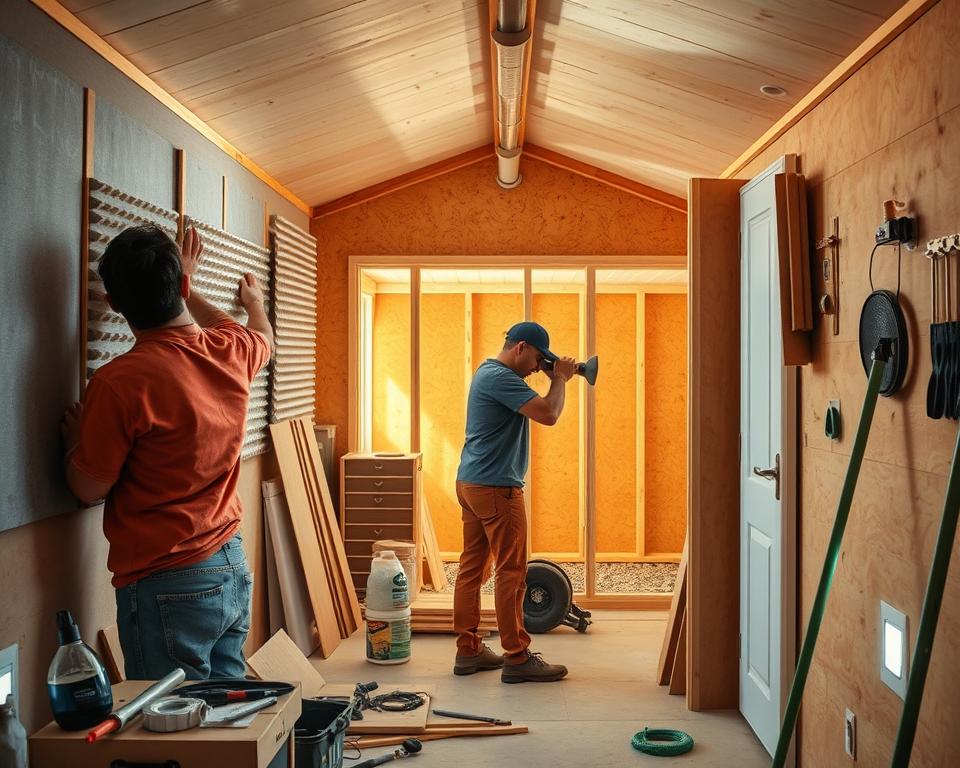
This protects your investment and ensures the materials you install will perform effectively. Establish the purpose of the space to determine the level of acoustic performance the shed will need.
Gather all necessary tools beforehand. Common items include a measuring tape, electric drill, utility knife, and a caulk gun. Accurate measuring and precise cutting are essential steps to eliminate gaps and reduce waste.
Safety is paramount during this work. When handling fibreglass insulation, always wear protective gear. This includes gloves, long sleeves, eye protection, and a dust mask. It is vital to make sure you are properly equipped before starting.
A logical sequence for the work yields the best results. Typically, this involves installing cavity insulation first, followed by isolation membranes, then adding mass layers. The final steps involve sealing all gaps and applying finishes.
Avoid common mistakes like treating only walls or leaving small openings unsealed. Patience and thoroughness are key. Rushing the steps can lead to substandard performance, undermining the entire project for your garden shed.
Advanced Soundproofing Techniques and Upgrades
For those seeking professional-grade acoustic performance, advanced techniques offer substantial improvements over basic methods. These sophisticated approaches are particularly valuable for demanding applications like recording studios.
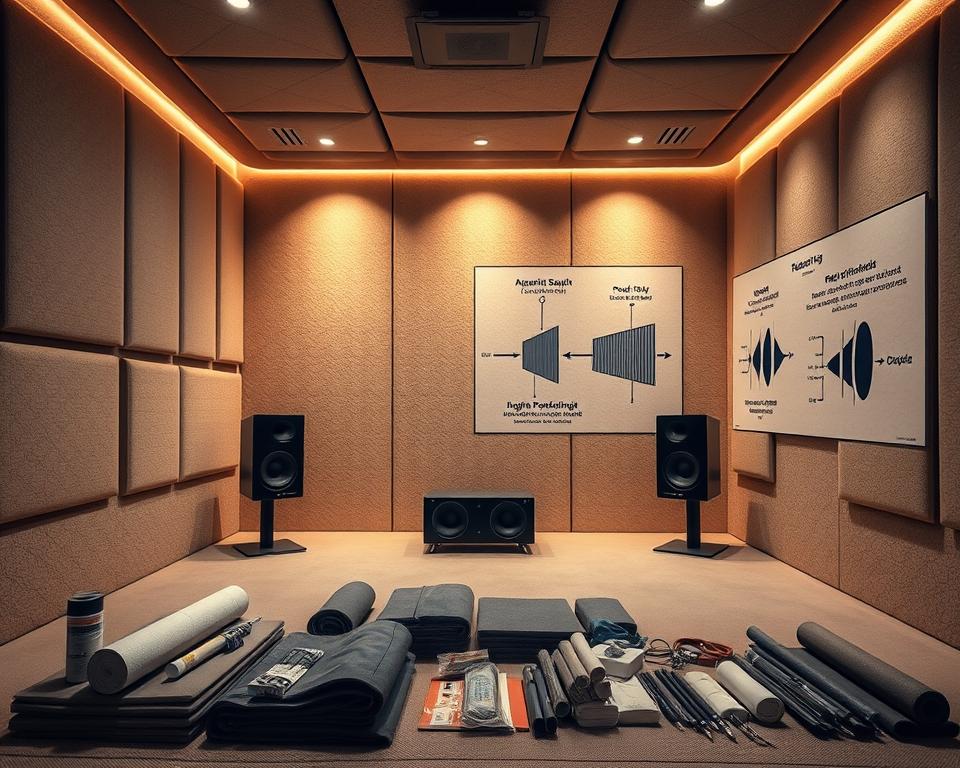
Damping represents a powerful principle where viscoelastic compounds are sandwiched between rigid panels. This converts mechanical vibration into heat, preventing sound transmission more effectively than mass alone.
Decoupling techniques break physical connections between inner and outer surfaces. Using resilient channels or isolation clips prevents vibrations from transferring through the timber structure. However, these methods consume interior space.
Specialist materials like Acoustiblok 3mm Isolation Membrane convert problematic sound energy into trace heat. Mass-loaded vinyl provides a low-cost alternative for adding density.
Advanced soundproofing should be implemented systematically across all surfaces. Combining multiple acoustic principles creates synergistic effects where total performance exceeds individual treatments.
For serious studio applications, these upgrades transform a basic garden shed into a professional acoustic environment. The investment delivers exceptional results for demanding users.
Conclusion
Transforming a garden building into a quiet, functional space is a rewarding endeavour. It demands careful planning and a systematic approach to be successful. The work involves addressing every part of the shed, from its timber frame to the smallest gap.
Achieving effective soundproofing relies on a holistic strategy. This means treating walls, floors, ceilings, doors, and windows as one complete system. The best way to ensure success is to use quality materials from the start.
Before beginning, establish the purpose of the room. A music studio will have different needs than a quiet home office. This blog has outlined the essential steps to guide your project.
Remember that the final result depends on the weakest point in your acoustic barrier. If in doubt, consulting a professional can be a wise investment. With the right approach, your garden shed can become a peaceful and versatile retreat.
FAQ
What is the most important principle for effective soundproofing in a garden shed?
The most critical principle is adding mass and creating an airtight seal. Sound travels through air gaps and vibrates through materials. Increasing the mass of the shed’s walls, floor, and ceiling with dense materials like acoustic plasterboard helps block sound energy. Sealing every crack and gap with acoustic sealant prevents noise from leaking in or out.
Can standard thermal insulation be used for acoustic insulation?
While thermal insulation like fibreglass or mineral wool can absorb some sound, it is not as effective as purpose-made acoustic insulation. Products like Rockwool RW3 or RW5 have a higher density, which is better at trapping sound waves. For optimal results, one should use materials specifically designed for soundproofing.
Is it necessary to soundproof the floor of a timber shed?
Yes, soundproofing the floor is essential, especially for a timber structure. Impact noise from footsteps or dropped objects can easily transfer. A soundproof floor often involves using a decoupling underlay, adding mass with a dense board, and sealing the perimeter to create a floating floor system that reduces vibration.
What is the best way to treat a shed door for soundproofing?
The best approach is a combination of methods. Replacing a hollow-core door with a solid core door adds mass. Installing high-quality weather stripping around the frame creates an airtight seal. For further improvement, adding an acoustic door seal kit or a second door to create a small lobby can significantly reduce noise transmission.
How can small windows be made more soundproof?
For existing windows, applying secondary glazing or using acoustic window inserts is highly effective. Upgrading to double or triple glazing with different glass thicknesses also improves performance. Sealing the window frame to the shed wall with acoustic sealant is a crucial, often overlooked, step to prevent flanking noise.
Are acoustic foam panels sufficient for soundproofing a shed?
Acoustic foam panels are designed to absorb sound within a room to reduce echo and reverberation; they do not block sound from entering or leaving the space. They are an excellent acoustic treatment for improving sound quality inside a studio but must be used in conjunction with proper soundproofing materials that add mass and seal gaps.
What are the key differences between DIY and professional soundproofing solutions?
DIY solutions are more budget-friendly and suitable for those with good practical skills. They often involve installing materials like mass-loaded vinyl and insulation. Professional services offer expertise in complex techniques like decoupling and can guarantee a higher performance standard, but at a greater cost. The choice depends on the desired acoustic quality and budget.