How to Stop a Metal Shed from Rusting: Effective Methods
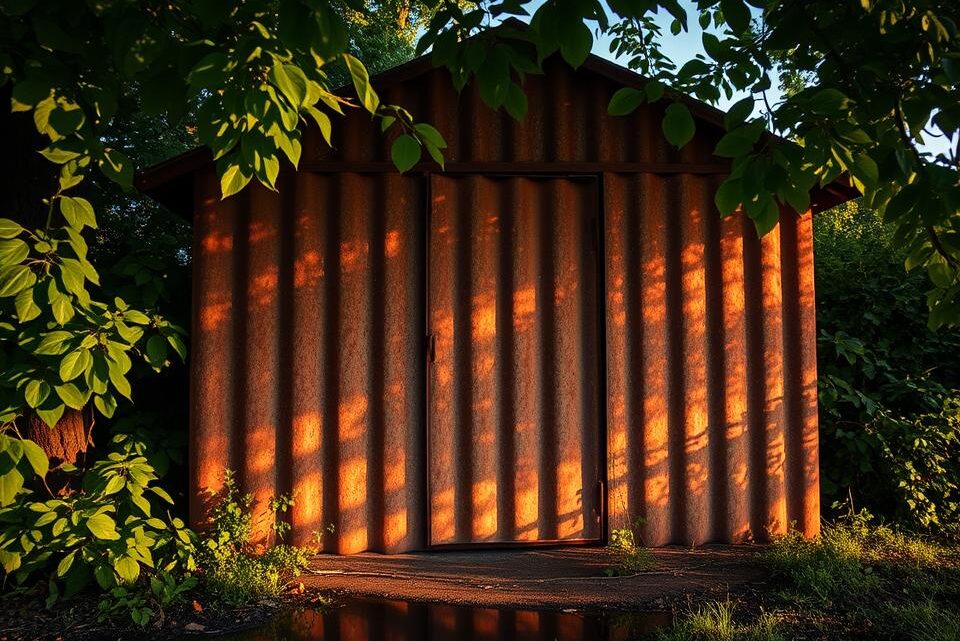
Metal garden sheds offer a robust storage solution, prized for their durability across many British gardens. However, even the sturdiest structures face a significant threat: corrosion. The damp climate and variable weather conditions prevalent in the UK create an ideal environment for rust to develop, which can severely compromise a shed’s integrity.
This comprehensive guide delves into practical strategies for combating this issue. It addresses the fundamental causes of rust formation and outlines essential maintenance routines. Homeowners will discover actionable techniques for both removing existing corrosion and implementing preventative measures.
The focus is on extending the structure’s longevity and preserving its aesthetic appeal. By following the advice presented, shed owners can effectively protect their valuable investment from the damaging effects of decay for many years to come.
Inhaltsverzeichnis
Key Takeaways
- Metal sheds are a common feature in UK gardens but are vulnerable to rust due to the climate.
- Understanding the causes of corrosion is the first step towards effective prevention.
- Regular maintenance is crucial for preserving the shed’s structure and appearance.
- Practical methods exist for treating existing rust and stopping its spread.
- Applying protective coatings is a highly effective strategy for long-term defence.
- Implementing these measures safeguards your investment and enhances the shed’s lifespan.
Understanding Rust and Corrosion
To effectively combat the deterioration of a garden storage building, one must first grasp the nature of its primary foe. Rust and corrosion are not merely cosmetic issues; they are processes that attack the very fabric of the structure.
Recognising the early signs is crucial for maintaining the building’s long-term health.
What is Rust?
Rust is a specific form of corrosion. It occurs when iron or steel reacts with oxygen and moisture in a process called oxidation. This chemical reaction produces a characteristic reddish-brown, flaky substance that weakens the material.
This oxidation process fundamentally alters the metal’s composition. It breaks down the material from the surface inward. Understanding this reaction is the first step towards effective prevention.
Effects on Structural Integrity
The impact of corrosion on structural integrity can be severe. Initially, rust creates pits and weak spots on metal surfaces. Over time, these areas expand, compromising the framework’s strength.
Unchecked rusting leads to a cascade of deterioration. Small spots can spread, leading to holes and significant weakening. This progressive damage threatens the entire structure’s stability and safety.
Steel components are particularly vulnerable. Constant moisture exposure accelerates the process. Early detection and intervention are therefore critical for preservation.
Knowing the Causes: Moisture, Water and Weather
The battle against rust begins with recognising the environmental triggers that initiate the corrosion process. Various elements in the environment work together to create conditions favourable for rust formation. Understanding these factors enables more targeted prevention strategies.
Impact of Rain and Humidity
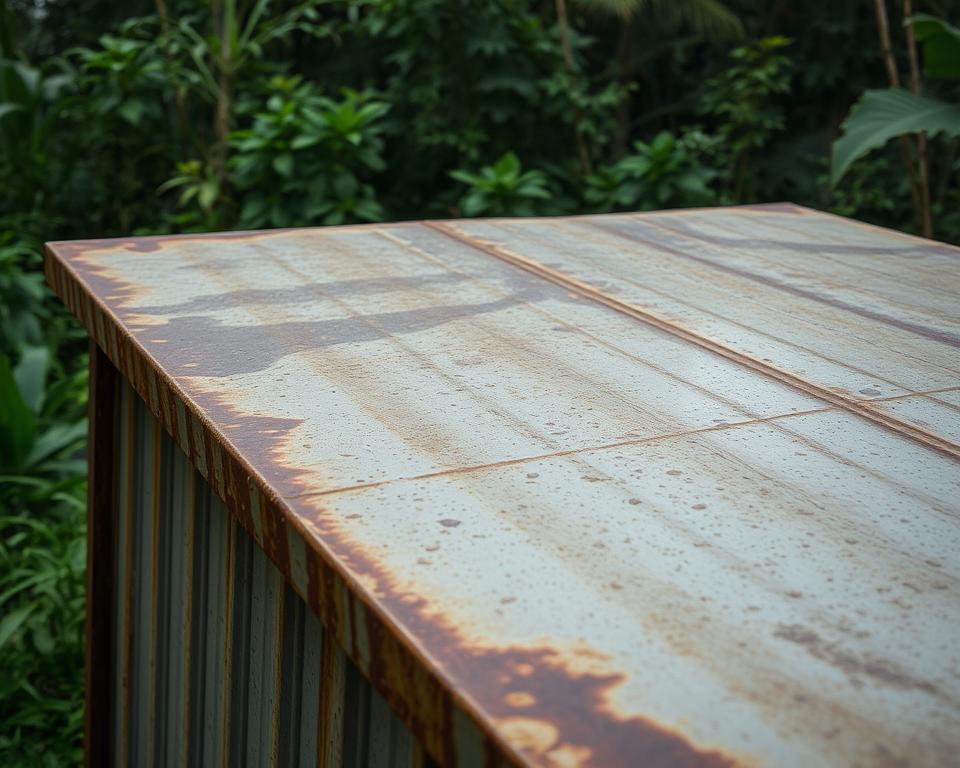
Rain provides direct contact with water, washing away protective coatings and exposing bare metal. Humidity maintains persistent dampness that fuels continuous rust formation. These conditions are particularly challenging in the UK’s changeable weather.
Coastal areas face accelerated corrosion due to salt content in the air. This salt combines with moisture to create an even more aggressive environment. Sheds in these locations require extra vigilance.
Certain areas of the structure are more vulnerable to moisture accumulation. Corners, joints, and base sections often trap water. Reduced air circulation in these spots prolongs exposure to damaging moisture.
The cyclical pattern of wetting and drying actually speeds up rust formation. Temperature fluctuations common in British weather create this damaging cycle. Regular monitoring helps identify problem areas before significant damage occurs.
Importance of Regular Maintenance
Proactive care is the cornerstone of preserving any outdoor metal structure. Without consistent upkeep, protective layers deteriorate, allowing corrosion to accelerate rapidly. A modest investment of time in the present prevents extensive, costly repairs later.
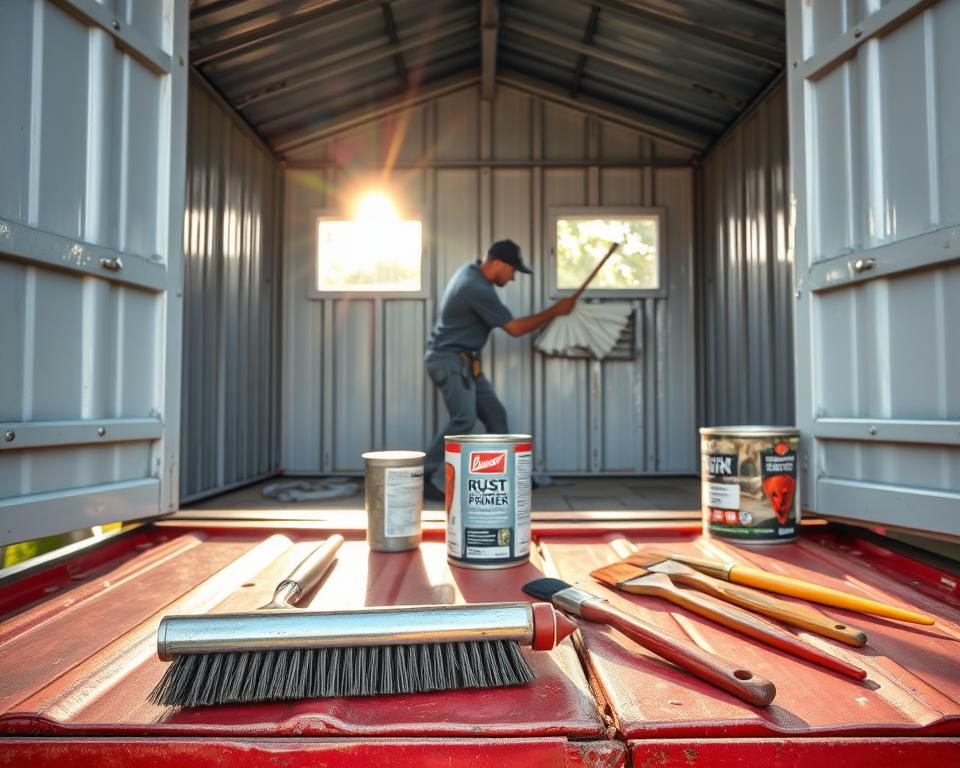
This disciplined approach offers significant advantages for the owner. It transforms reactive problem-solving into strategic prevention.
- Cost-Effectiveness: Routine checks and minor interventions are far less expensive than replacing entire panels or the structure itself.
- Early Problem Detection: A systematic schedule allows for the identification of small issues before they escalate into major structural weaknesses.
- Enhanced Longevity: The functional lifespan of the building is directly extended through diligent care, often by decades.
Establishing a simple, recurring routine is the most effective defence. This systematic effort compounds over the years, safeguarding the building’s value and integrity against environmental challenges.
Detailed Guide on Basic Maintenance
Practical maintenance procedures form the backbone of any effective corrosion prevention strategy. These fundamental practices establish a solid foundation for long-term protection.
Cleaning and Drying Techniques
The initial step involves systematic surface preparation. Owners should begin with dry removal of loose materials before introducing moisture.
Dry brushing eliminates surface debris and dirt effectively. This prevents abrasive slurries when wet cleaning commences.
Thorough cleaning requires a mild detergent solution. This gentle approach removes grime without damaging protective coatings.
The drying process represents a critical phase. Complete moisture elimination prevents the conditions that foster rust formation.
Essential Tools for Rust Removal
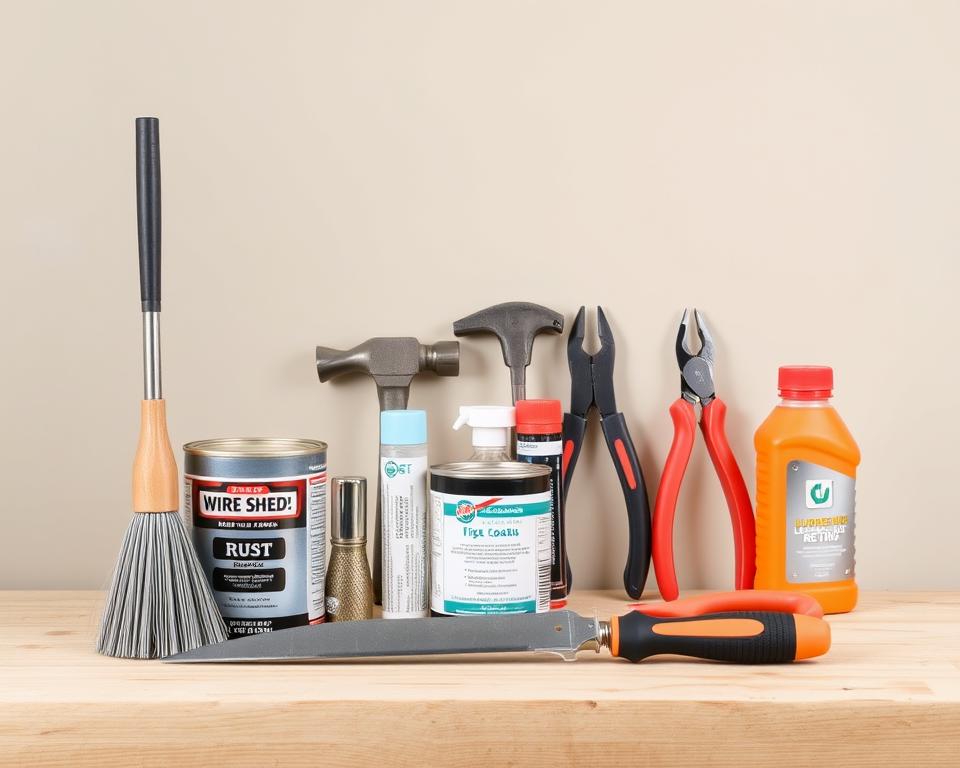
Proper equipment selection enhances maintenance efficiency. Wire brushes serve multiple functions in surface preparation.
Different grades of sandpaper allow progressive refinement. Coarse grades tackle heavy corrosion while fine grades create smooth surfaces.
Additional tools include putty knives and protective gear. These items ensure safe and comprehensive maintenance procedures.
How to Stop a Metal Shed from Rusting
The longevity of garden storage depends significantly on timely intervention. Addressing existing corrosion requires a systematic approach that prevents further damage.
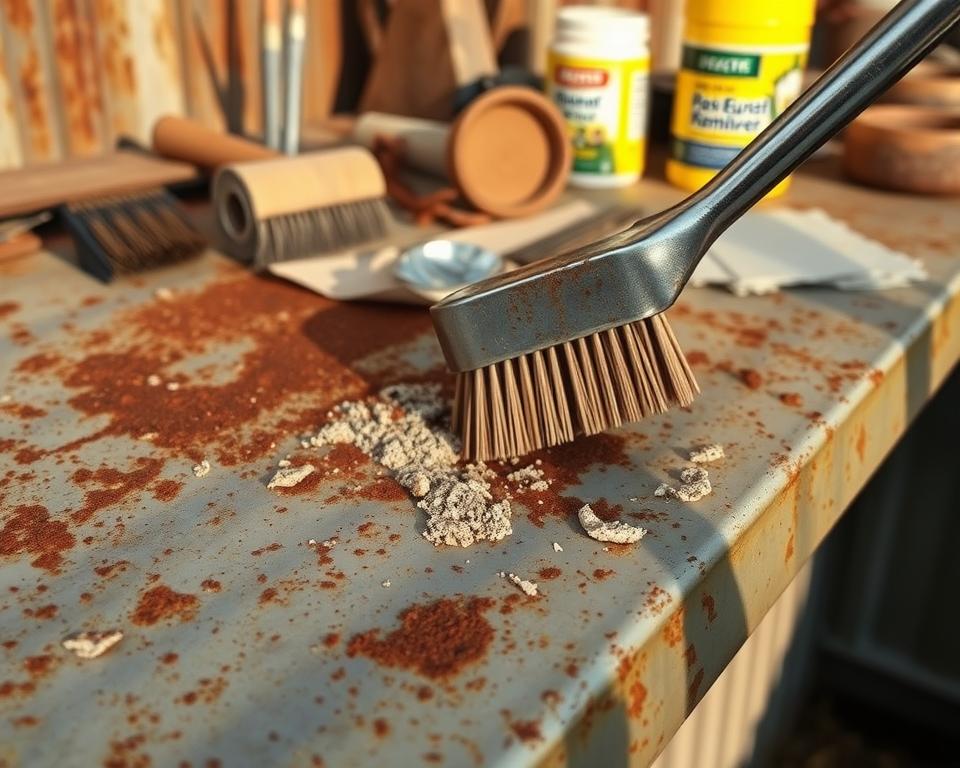
Regular inspections are crucial for identifying problems before they escalate. Look carefully for subtle changes in surface appearance.
Step-by-Step Rust Removal Process
This methodical process ensures thorough treatment of affected areas. Each action builds upon the previous one for maximum effectiveness.
| Signs of Rust | Recommended Action | Tools Needed |
|---|---|---|
| Surface discolouration | Light sanding | Fine sandpaper |
| Small reddish spots | Wire brushing | Stiff wire brush |
| Bubbling paint | Complete removal | Scraper, sandpaper |
Early detection makes the entire process much simpler. Spotting discolouration or texture changes allows for quick intervention. This prevents minor issues from becoming major structural concerns.
“The key to preservation lies in immediate action upon discovery. Delaying treatment only compounds the problem.”
Each step in the removal process requires attention to detail. Rushing leads to incomplete treatment and recurring issues. Proper rust prevention demands patience and thoroughness.
After mechanical removal, primer application protects the exposed surface. This creates a barrier against moisture and oxygen. The final coating should match the original finish for uniform protection.
Applying Protective Coatings
The application of specialised protective coatings represents a critical phase in defending an outdoor metal structure against environmental degradation. These coatings function as a comprehensive defence system, creating an impermeable barrier against moisture, oxygen, and contaminants.
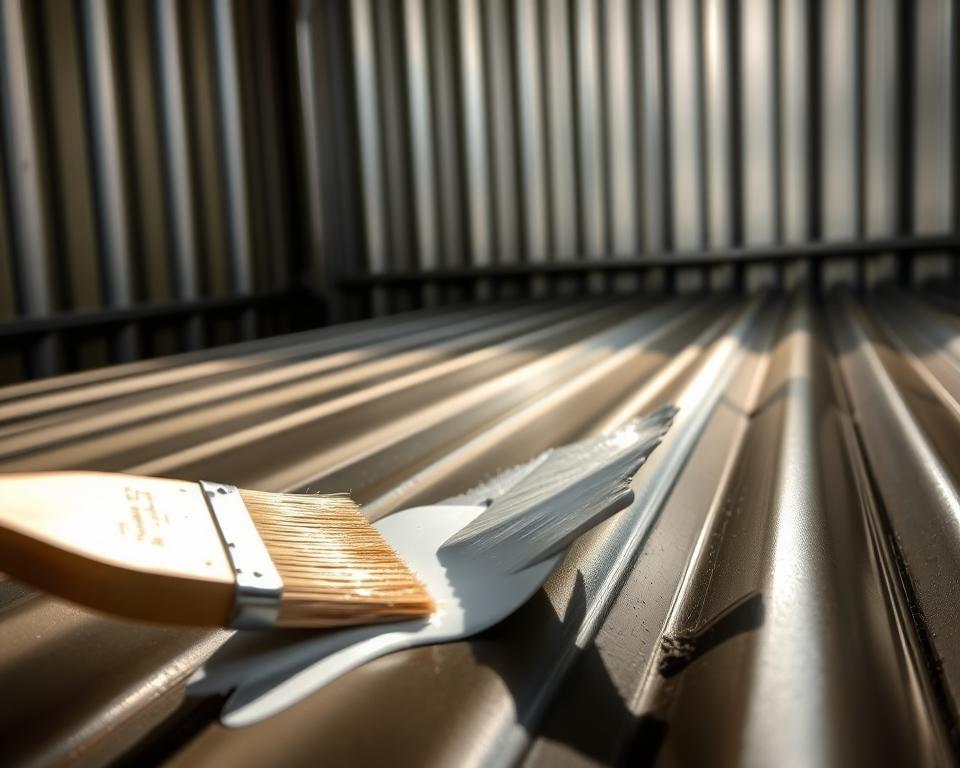
Surface Preparation for Primer
The success of the entire coating system hinges on meticulous surface preparation. The metal must be absolutely clean, dry, and free of any existing rust. A slightly rough surface promotes superior mechanical adhesion for the primer.
This foundational step ensures the rust-inhibiting primer can bond chemically to the bare metal. It actively prevents oxidation from initiating, serving as the crucial first layer of defence.
Layering Coats Properly
Proper technique involves applying multiple thin coats rather than a single thick application. Thin layers cure more completely and resist sagging, creating a more durable barrier.
Each coat of paint or primer must dry completely before applying the next. This prevents solvent entrapment and ensures maximum protective properties. The final layer should be a high-quality exterior metal paint, providing weather resistance and a finished aesthetic.
This synergistic approach, where each coat contributes specific properties, offers comprehensive rust prevention far superior to any single-layer application.
Advanced Rust Prevention Techniques
Beyond basic maintenance lies a realm of sophisticated approaches that significantly enhance corrosion resistance. These methods focus on environmental management within the storage area.
Enhanced Ventilation Strategies
Proper ventilation transforms the internal atmosphere of garden storage buildings. It creates air circulation patterns that prevent moisture accumulation.
Strategic placement of vents establishes natural convection currents. These draw moist air upward while pulling fresh air through lower openings.

Controlling Humidity Effectively
Active humidity management becomes essential in damp climates. Relative humidity above sixty percent creates ideal conditions for oxidation.
Dehumidifiers provide valuable moisture control inside shed environments. They are particularly useful during wet seasons or in regions with high atmospheric humidity.
Maintaining Door and Window Seals
Well-maintained seals create a critical barrier against external moisture. They prevent water ingress while allowing controlled ventilation.
Regular inspection identifies cracks, gaps or adhesion failures. Replacing worn components with high-quality weatherstripping ensures lasting protection.
Choosing the Right Products
The quality of protective materials directly influences the long-term preservation of outdoor metal structures. Selecting appropriate products ensures optimal performance against the UK’s challenging weather conditions.

Investing in high-quality formulations designed specifically for exterior applications provides superior protection. These specialised products withstand moisture, temperature fluctuations, and environmental stresses.
Selecting Rust-Inhibiting Primers
A quality rust-inhibiting primer forms the essential foundation for any protective system. These primers contain specialised compounds like zinc phosphate that chemically bond with steel surfaces.
The base chemistry of these primers prevents oxidation reactions at the molecular level. They create an impermeable barrier that stops corrosion before it can initiate.
Products formulated specifically for steel applications ensure proper adhesion and compatibility. This chemical matching is crucial for achieving long-lasting protection.
Opting for Outdoor-Grade Paint
The final protective coat should consist of high-performance exterior paint. Outdoor-grade formulations incorporate UV stabilisers and flexible binders.
These advanced coatings resist chipping, flaking, and moisture penetration. They maintain their protective properties through seasonal changes and persistent dampness.
Applying the correct type of paint ensures the entire system works synergistically. Each layer contributes specific properties for comprehensive defence against environmental challenges.
Environmental Considerations in the UK
Regional climate variations across the United Kingdom present distinct challenges for outdoor metal preservation. The country’s diverse weather patterns create different risk levels depending on geographical location.
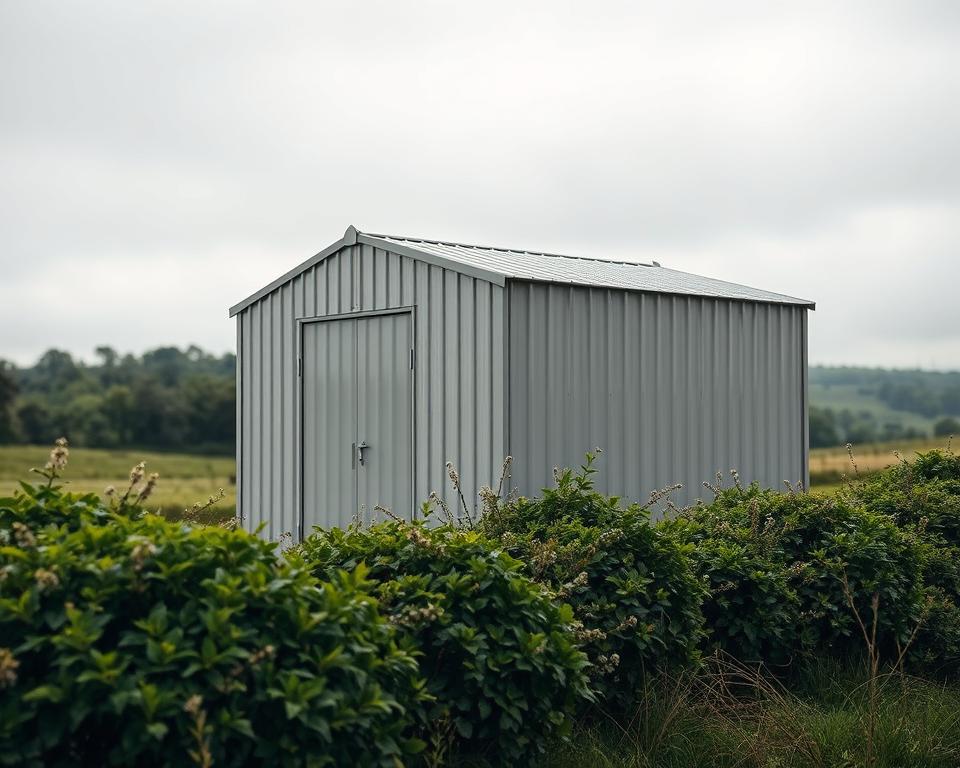
Understanding these location-specific factors enables owners to implement targeted protection strategies. Different regions demand different approaches to maintenance and coating selection.
Coastal versus Inland Challenges
Coastal areas present particularly aggressive environments for metal structures. Airborne salt particles dramatically accelerate oxidation rates, requiring enhanced protective systems.
The hygroscopic nature of salt means structures in these areas experience effectively higher moisture levels. Salt crystals absorb atmospheric humidity, maintaining damp conditions even during dry spells.
Inland garden settings face different but equally challenging conditions. Industrial pollutants and agricultural chemicals can compromise protective coatings, promoting corrosion.
UK garden environments introduce additional factors like fertiliser drift and organic debris. These elements trap moisture while introducing corrosive compounds against metal surfaces.
Microclimate variations within individual properties create localised high-risk zones. Shaded areas with poor air circulation require additional protective measures beyond standard protocols.
Owners in coastal areas should prioritise salt-resistant coatings, while inland residents focus on different atmospheric contaminants. This targeted approach maximises protection against specific corrosion threats.
Cost-Effective Maintenance Strategies
Effective upkeep can be surprisingly affordable when owners focus on high-impact, low-cost interventions. A modest investment of time and resources in the present prevents costly, extensive repairs later. This approach maximises the value of every effort.
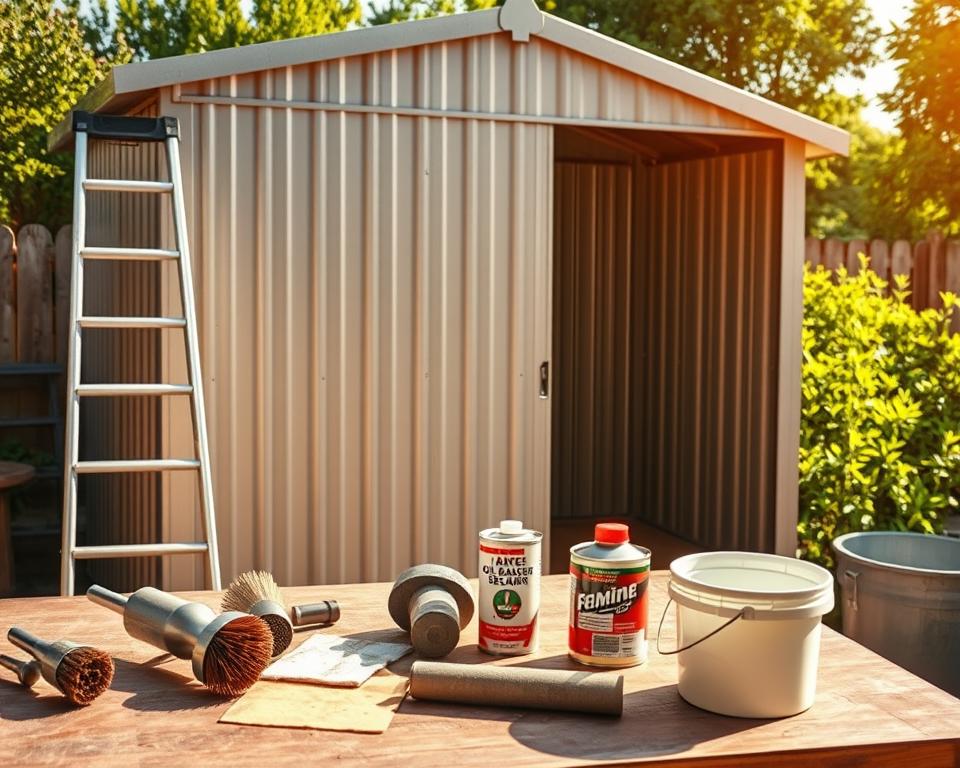
Budget-Friendly Tips
Smart purchasing habits significantly reduce long-term costs. Buying materials like primer and paint in larger quantities during sales offers substantial savings. Using multi-purpose products that clean and protect in one step also increases efficiency.
Several simple steps provide excellent protection at minimal expense. Keeping gutters clear and ensuring good drainage around the base prevents water accumulation. Regularly removing leaves and debris from the roof and sides is another vital, no-cost task.
Establishing a seasonal schedule for inspection and minor maintenance is the most powerful cost-saving strategy. It transforms reactive problem-solving into strategic prevention.
| Strategy | Key Benefit | Estimated Time Investment |
|---|---|---|
| Seasonal debris clearance | Prevents moisture traps and coating damage | 15-30 minutes per season |
| DIY spot treatment of rust | Eliminates labour costs, addresses issues early | 1-2 hours per occurrence |
| Focused work on vulnerable areas (base, seams) | Maximises protection efficiency | Added to primary maintenance tasks |
Learning proper application techniques ensures materials last longer, reducing waste. This knowledge turns a simple task into a highly effective one. Preventive care is consistently more economical than restoration, safeguarding the structure’s value for years.
Practical Steps for Long-lasting Protection
A steadfast commitment to routine observation is the ultimate strategy for safeguarding an outdoor storage building. This proactive approach ensures minor issues are resolved long before they escalate.

Quarterly inspections provide the ideal frequency for monitoring a garden structure. They strike a balance between diligence and practicality.
Regular Inspections
Systematic checks should cover every surface of the garden shed. Particular attention must be paid to joints, seams, and the base. These areas are prone to moisture accumulation.
Documenting findings with photographs creates a valuable timeline. It helps track changes over the seasons.
Addressing Early Signs of Rust
Recognising the initial signs of corrosion is a critical skill. Look for discolouration, bubbling paint, or texture changes. These early signs of rust indicate oxidation is beginning.
Immediate action upon discovery is non-negotiable. Prompt treatment of these small areas helps prevent rust from spreading. It is a simple yet highly effective measure.
This vigilant approach preserves the structural integrity of the metal framework. It ensures the steel components remain strong. The investment in regular care protects the value of the garden shed for many years.
Conclusion
Long-term preservation of outdoor steel structures hinges on consistent application of preventive measures. This comprehensive guide has detailed the essential steps needed to combat corrosion effectively. Implementing these strategies ensures garden sheds remain functional for many years.
The approach encompasses thorough surface preparation, appropriate coatings, and regular maintenance. Understanding the causes of rust formation empowers owners to create effective protection systems. Each component works synergistically to defend metal surfaces against environmental challenges.
By adopting these principles, owners safeguard their investment against deterioration. The modest effort required for ongoing care proves far more economical than major repairs. A well-maintained metal shed provides reliable service while retaining its structural integrity and appearance.
FAQ
What is the most critical factor in preventing rust on a metal shed?
Moisture control is paramount. The primary defence is a robust, intact protective barrier, such as a high-quality paint system over a rust-inhibiting primer. Regular maintenance to check for and repair scratches or damage to this coating is equally vital.
How often should a metal shed be inspected for early signs of corrosion?
A thorough inspection should be conducted at least twice a year, ideally in spring and autumn. In coastal areas or regions with high rainfall, more frequent checks every three to four months are advisable to catch issues early.
Can rust be stopped once it has started on a steel shed?
A> Yes, provided the corrosion is addressed promptly. The process involves removing all loose rust and flaking paint with a wire brush or sander, treating the area with a rust converter, and then applying a suitable primer and topcoat to seal the surface.
Is ventilation inside the garden shed important for rust prevention?
A> Absolutely. Good ventilation reduces condensation, which is a major cause of rust formation. Ensuring air can circulate, especially by installing vents near the roof, helps keep the internal surfaces dry and significantly hinders corrosion.
What type of paint is best for protecting a metal shed from the weather?
A> A durable, exterior-grade paint designed for metal surfaces is essential. Specialist metal paints, often enamel-based, provide a flexible, waterproof barrier that can expand and contract with temperature changes, offering long-lasting protection against rain and UV rays.
How does location, such as living near the coast, affect a shed’s maintenance needs?
A> Coastal areas present a greater challenge due to salt-laden air, which accelerates corrosion. Sheds in these environments require more frequent cleaning to remove salt deposits and may benefit from more robust protective coatings specifically formulated for such harsh conditions.