Laying Sod – Preparation, Step-by-Step Guide & Cost Overview

Transforming your outdoor space with a lush, green lawn is achievable through laying sod, offering immediate results compared to growing grass from seed.
Understanding the process of sod installation is crucial for a successful outcome. This comprehensive guide will walk you through every aspect, from initial soil preparation to post-installation care, ensuring your new lawn thrives.
By following this guide, you’ll be equipped with the knowledge to transform bare soil into a beautiful, functional lawn that enhances your property’s appearance and value.
Inhaltsverzeichnis
Key Takeaways
- Understand the complete process of laying sod before beginning.
- Soil preparation is crucial for successful sod installation.
- The cost to install sod DIY ranges from £0.31 to £0.82 per square foot.
- Professional installation can double the cost to around £0.86 to £1.75 per square foot.
- Proper post-installation care is essential for a thriving lawn.
Understanding the Benefits of Laying Sod
Laying sod is a popular choice for homeowners seeking an instant lawn solution. Unlike seeding, which can take months to mature, sod provides the instant gratification of a finished lawn in a single day. Sod is mature grass, professionally grown and harvested with its root system intact, ready to transform bare dirt into a lush, green lawn.
Instant Results vs. Seeding
One of the primary advantages of laying sod is the instant results it provides. When comparing sod installation to seeding, the immediate visual impact is undeniable. You’ll have a lush, green lawn within days rather than waiting an entire growing season. Professionally grown sod comes with a mature root system already developed, giving it a significant head start over newly seeded areas.
Erosion Control and Weed Prevention
Beyond aesthetics, newly laid sod provides immediate erosion control, particularly valuable for sloped areas or regions with heavy rainfall where soil loss is a concern. The dense nature of sod creates a natural barrier against weeds, reducing the need for chemical herbicides in the establishment phase. This not only saves you time and effort but also contributes to a more environmentally friendly process.
By choosing to lay sod, you’re investing in a new lawn that will not only enhance the beauty of your outdoor space but also provide a durable and resilient surface for various activities. With proper care, your sod lawn will promote healthy growth and yield satisfying results.
Best Time to Lay Sod in the UK
In the UK, the optimal time for laying sod varies depending on several factors, including the type of grass and prevailing weather conditions. Understanding these factors is crucial for a successful installation.
Seasonal Considerations
The UK climate allows for sod installation nearly year-round, but the best results are achieved during specific seasons. For cool-season grasses, late summer to early fall is ideal, while warm-season grasses thrive when laid in late spring to early summer.
Mid-spring to early autumn is generally considered the best period for laying sod, as soil temperatures are warm enough to promote root growth without requiring excessive watering. Late spring (April to May) and early autumn (September to early October) are particularly favourable due to the balance of soil warmth and natural rainfall.

Weather Conditions to Avoid
While summer installation is possible, it demands more attention to watering schedules due to potential heat and drought. Conversely, laying sod during winter months is not recommended due to frozen ground, which prevents root establishment.
Weather conditions to avoid include prolonged drought, excessive heat waves, heavy frost, and waterlogged conditions. Considering the local microclimate of your garden is also essential, as exposed areas may experience more extreme conditions.
| Season | Best for Grass Type | Conditions to Expect |
|---|---|---|
| Late Spring | Warm-season grasses | Warm soil, natural rainfall |
| Early Autumn | Cool-season grasses | Warm soil, consistent rainfall |
| Summer | Both types | Requires frequent watering |
Essential Tools and Materials for Laying Sod
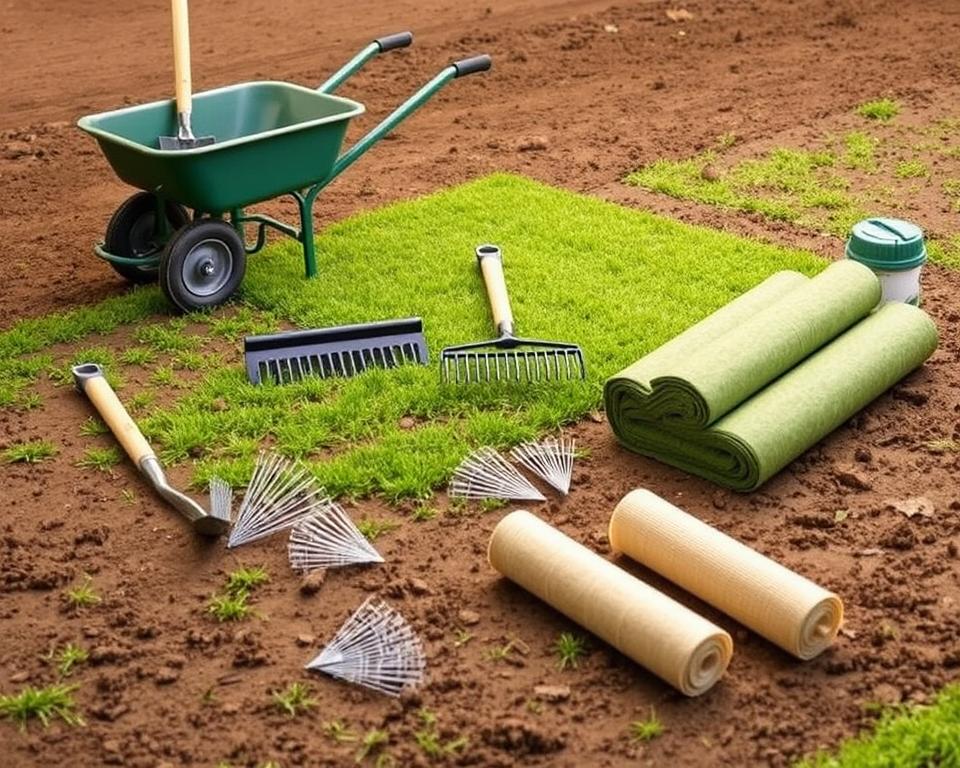
The key to a successful sod installation lies in preparing the right tools and materials beforehand. Having everything you need on hand will ensure the process goes smoothly without interruptions.
Required Tools Checklist
For a successful sod installation, you’ll need a variety of tools. For ground preparation, essential tools include a sod cutter (rentable for large areas), rototiller, garden rake, and wheelbarrow. These tools will help remove existing grass, loosen compacted soil, level the ground, and transport soil amendments.
For the installation itself, you’ll need a sharp utility knife with extra blades for cutting sod pieces, a water-filled lawn roller (also rentable) to ensure good soil contact, and a garden hose with sprinkler attachments for immediate watering.
Quality Sod Selection
Quality sod selection is paramount to the success of your lawn. Look for freshly harvested sod with a moist soil layer that’s approximately 1-2 cm thick and dense, uniformly green grass blades. When selecting sod varieties, consider your specific site conditions, including sun exposure, expected foot traffic, and maintenance preferences, to choose the most appropriate grass type for your lawn.
For UK gardens, common quality sod options include hard-wearing ryegrass mixtures for family lawns, fine fescue blends for ornamental lawns, or specialty mixes for shaded areas.
Soil Preparation: The Foundation for Success
Soil preparation is the foundation upon which a lush, thriving lawn is built, making it an essential step in the sod-laying process. Properly preparing your soil ensures that your new lawn will have the best possible start in terms of nutrients, drainage, and overall health.
Soil Testing and Amendments
Begin by conducting comprehensive soil testing to determine the pH levels and nutrient content. This will allow you to make targeted amendments rather than guessing what your soil needs. You can use an at-home soil testing kit available in the UK or send a sample to a lab for a more detailed analysis.
Most UK lawns perform best in soil with a pH between 6.0 and 7.0. Based on your soil test results, you may need to add lime to raise the pH or sulphur to lower it. This adjustment is crucial for creating an optimal environment for your lawn to thrive.
Removing Existing Grass and Debris
Thoroughly remove all existing vegetation, including grass and weeds, along with their root systems. For larger areas, consider renting a sod cutter to make this task more manageable. Clearing the area of debris such as stones, sticks, and building materials is also essential to prevent interference with root establishment and ensure an even surface.
Grading and Levelling the Surface
Proper grading is essential to ensure that water drains away from buildings while avoiding pooling. Create a gentle slope of approximately 1-2% away from structures. Use a rake to meticulously level the surface, eliminating any depressions or high spots that could be noticeable in the finished lawn and affect mowing quality.
Consider using a roller half-filled with water to compact the soil slightly before installation. This creates a firm but not hard surface that will support the sod while allowing root penetration.
Laying Sod – Preparation, Step-by-Step Guide & Cost Overview
Accurate lawn measurement is the foundation of a successful sod laying project. Before you begin, it’s crucial to understand the steps involved in preparing your lawn for sod installation.
Measuring Your Lawn Area
To determine how much sod you’ll need, start by measuring your lawn area. Use an open reel tape measure or a measuring wheel to calculate the square footage by measuring the length and width of the area where you’ll be installing the sod. For irregularly shaped lawns, break down the measurements into manageable sections, such as rectangles and triangles, to simplify the calculation.

Calculating How Much Sod to Order
Once you have your total square footage, add 5-10% to account for any measurement errors, damaged pieces, and odd spaces that need filling. This ensures you have enough sod to cover your entire lawn. In the UK, sod is typically sold by the square metre or in rolls of specific dimensions, so be sure to convert your measurements accordingly and consult with your supplier about their sizing.
Scheduling Delivery and Installation
It’s recommended to schedule your sod delivery for the morning of your installation day. Since sod is a living product, it can deteriorate quickly if left stacked, especially in warm weather. Coordinate your timeline carefully to ensure that your soil preparation is completed before the sod arrives, and that you have sufficient help on hand to lay the sod promptly.
Moistening the Soil Before Installation
The day before you plan to lay your sod, moisten the soil thoroughly to a depth of about 15cm. This creates ideal conditions for the sod to bond with your prepared ground. Aim for damp, not soggy, soil conditions to support immediate root growth without becoming waterlogged. Having your watering system ready before installation begins is also crucial, as newly laid sod will require immediate irrigation to prevent drying out.
By following these steps, you’ll be well-prepared for a successful sod installation. Proper planning and preparation are key to achieving a lush, healthy lawn.
Step-by-Step Sod Installation Process
The key to a successful sod installation lies in the preparation and the methodical laying of the sod pieces. As you embark on this process, it’s crucial to be meticulous and thorough to ensure a lush, green lawn that will be the envy of your neighbourhood.
Starting with the First Row
Begin the installation process by identifying the longest straight edge of your lawn area, typically along a driveway, path, or building foundation, which will serve as your starting point. Lay the first row of sod pieces along this straight edge, ensuring they are butted tightly together without stretching or overlapping, creating a clean, straight reference line for subsequent rows.
Creating a Brick-Like Pattern
For the second row, offset the joints by at least 15-20cm in a brick-like pattern to prevent seams from aligning, which would create channels for water runoff and potential erosion. Continue this staggered pattern throughout the installation, working systematically across the lawn area while maintaining tight seams between all pieces. As “a brick-like pattern is essential for a durable and visually appealing lawn”, this technique is vital for a successful sod installation.

Handling Curves and Obstacles
When encountering curves or obstacles such as trees or garden beds, use a sharp utility knife to cut the sod to fit precisely, making cuts from the soil side for greater accuracy. For circular cuts around sprinkler heads or posts, fold the sod piece in half and make a small incision, then unfold and cut a circular shape that fits snugly around the obstacle.
Using a Lawn Roller for Proper Contact
After laying several rows, use a water-filled lawn roller to press the sod firmly against the soil beneath, eliminating air pockets that would prevent proper root establishment. Pay special attention to edges and seams during rolling, as these areas are most susceptible to drying out if not in proper contact with the soil. As you roll, you’ll be ensuring that the sod makes good contact with the underlying topsoil, promoting healthy root growth.
Water your new sod immediately after installation, providing adequate moisture by watering it for 40 minutes to an hour. You want the top 4 inches of the soil to be moist, initiating root growth and preventing the new turf from drying out. According to gardening experts,
“Proper watering is crucial for the establishment of new sod, as it helps to settle the soil and promote root growth.”
Post-Installation Care for New Sod
To ensure your new sod thrives, post-installation care is paramount. The first few weeks are critical for root establishment and the overall health of your lawn.
Watering Schedule for the First Month
Watering your new sod correctly is vital for root development. For the first two weeks, water your lawn twice a day, in the morning and late afternoon, for approximately 15-20 minutes per session. This consistent moisture will help the roots grow deep into the soil.
After the initial two weeks, gradually reduce the frequency of watering while increasing the duration. This encourages the roots to grow downward, making your lawn more resilient.
When to Begin Mowing
It’s essential to time your first mow correctly. After 3 to 4 weeks, your grass will have grown 1/2 inch to 1 inch higher than its recommended mowing height. This is the ideal time for the first mow. Waiting longer can negatively impact root growth.
For the first mow, set your mower to its highest setting and remove no more than one-third of the grass blade length. Ensure your mower blades are sharp to prevent tearing the new turf.
Fertilisation Timeline
Wait until 30 to 60 days after installation, or after the fourth mow, before applying a starter fertilizer. This timing ensures that the roots are developed enough to absorb the nutrients.
Use a starter fertilizer with a higher phosphorus content to encourage root development. Subsequent fertilizer treatments should be applied according to the specific needs of your grass variety and seasonal requirements, typically every 6-8 weeks during the growing season.
Conclusion
With the steps outlined in this guide, you’re now equipped to transform your outdoor space with a beautiful new lawn through laying sod. Throughout this comprehensive guide, we’ve covered every crucial aspect of the process, from initial soil preparation to post-installation care.
Proper soil preparation is fundamental to the success of your new lawn, directly influencing how well it establishes and thrives. The installation process, while labour-intensive, can be completed in a single day with proper planning.
Post-installation care during the first month is critical for ensuring your new sod establishes strong roots. Common issues such as brown spots or seam separation can be prevented through proper techniques and diligent aftercare. For those with limited time or experience, professional landscaping services can handle the entire process.
A properly installed sod lawn enhances your property’s aesthetic appeal and provides practical benefits, including erosion control and increased property value. With proper ongoing maintenance, your new lawn can provide beauty and enjoyment for many years to come.
FAQ
What is the best time to lay new sod in the UK?
The best time to lay new sod in the UK is during the spring or early autumn when the weather is mild and rainfall is more consistent, allowing the sod to establish itself before extreme weather conditions set in.
How often should I water my new sod?
You should water your new sod daily for the first few weeks, ensuring the soil remains moist but not waterlogged. As the sod establishes, you can gradually reduce the frequency of watering.
Can I lay sod on existing grass?
No, it’s not recommended to lay sod on existing grass. You should remove the existing grass and debris before laying new sod to prevent weeds and other issues.
How long does it take for new sod to establish?
New sod typically takes around 2-3 weeks to establish itself, depending on weather conditions and care. You can start mowing it after this period, but be gentle to avoid damaging the new roots.
What type of fertiliser should I use on my new sod?
A starter fertiliser is recommended when laying new sod, as it promotes root growth and establishment. You can also consider a balanced fertiliser for ongoing lawn care.
How do I prevent weeds from growing in my new sod?
To prevent weeds, ensure you remove any debris and existing weeds before laying the sod. Properly preparing the soil and using a starter fertiliser can also help promote a healthy lawn that can outcompete weeds.
Can I walk on my new sod immediately after installation?
It’s best to avoid walking on new sod for the first few weeks after installation to prevent damaging the roots and disrupting the establishment process.
How do I care for my new sod during the first month?
During the first month, keep the sod consistently moist, avoid heavy foot traffic, and refrain from mowing until the sod is firmly rooted, usually after 2-3 weeks.