
Leveling the Ground for a Shed Without Digging – Simple Steps
When constructing a shed, it’s crucial to ensure that the foundation is level and stable. A shed is only as solid as the base it’s set on, and an uneven surface can lead to structural problems and a shortened lifespan.
You don’t need to undertake extensive digging to create a level base for your shed. By following a few straightforward steps, you can prepare the ground and ensure a stable foundation for your structure.
A level shed base is essential for the longevity and functionality of your shed. Without it, you may encounter problems such as uneven doors and windows, and unnecessary wear on the structural elements.
Inhaltsverzeichnis
Key Takeaways
- Creating a level base for your shed without digging is achievable with the right techniques.
- A stable foundation is crucial for the longevity and functionality of your shed.
- You can prepare uneven ground for a shed using simple, achievable steps.
- Different materials and techniques can be used to create a stable foundation on challenging terrain.
- Following these steps can help you avoid common problems associated with poorly leveled shed bases.
Why a Level Foundation Is Essential for Your Shed
The importance of a level foundation for your shed cannot be overstated. When you install a shed on uneven ground, you’re setting yourself up for a multitude of problems down the line.
Preventing Structural Damage
A level foundation is crucial for preventing structural damage to your shed. Uneven ground causes stress on the frame, potentially leading to warping, twisting, and premature deterioration. This stress can result in costly repairs or even render your shed unusable.
Ensuring Proper Door and Window Operation
Doors and windows require a perfectly square frame to function properly. Even slight shifts in the foundation can cause them to stick or jam. A level base ensures that your shed’s doors and windows operate smoothly, enhancing both functionality and security.
Avoiding Water Pooling and Moisture Issues
Proper leveling prevents water from pooling underneath your shed, which can lead to rot, mould, and rust. Standing water can also attract pests, potentially damaging your shed floor and stored belongings. By maintaining a level base, you can avoid these moisture-related issues.
| Benefits of a Level Foundation | Consequences of Uneven Ground |
|---|---|
| Prevents structural damage | Warping and twisting of the shed frame |
| Ensures proper door and window operation | Doors and windows sticking or jamming |
| Avoids water pooling and moisture issues | Rot, mould, rust, and pest infestation |
Choosing the Perfect Location for Your Shed
When building a shed, selecting the right location is crucial for both functionality and longevity. The ideal location should balance practical considerations with aesthetic integration into your garden landscape.
Assessing Ground Conditions
When assessing the ground conditions for your shed, look for areas that are naturally level or only slightly sloped. Avoid low-lying areas where water tends to collect during rainy periods, as these can lead to ongoing moisture problems. A level ground is essential for the stability and longevity of your shed.
Considering Accessibility and Aesthetics
Consider the accessibility of the shed location, ensuring it is close to your home, garden equipment, and pathways. The location should also be aesthetically pleasing, enhancing your outdoor space rather than detracting from it. A shed that receives some natural sunlight can help prevent dampness and mould growth.
“A well-placed shed can be a valuable addition to any garden, providing storage and enhancing the overall aesthetic.”
Checking Local Regulations and Utilities
Before finalising your shed location, check local building regulations and planning permissions. Identify and mark any underground utilities such as water pipes, electrical cables, or drainage systems to avoid costly and dangerous accidents. Compliance with local regulations is crucial to avoid potential fines or removal of the shed.
| Consideration | Factors to Consider |
|---|---|
| Ground Conditions | Level ground, slope, water collection |
| Accessibility and Aesthetics | Proximity to home, garden equipment, natural sunlight |
| Local Regulations and Utilities | Building codes, planning permissions, underground utilities |

Essential Tools and Materials for Leveling Without Digging
Before you start leveling the ground for your shed without digging, it’s essential to gather the necessary tools and materials. Having the right equipment will save you significant time and prevent frustrating interruptions during the process.
Basic Tools You’ll Need
To begin, you’ll require some basic tools for measuring and grading. Essential measuring tools include a carpenter’s level (preferably 4-foot or longer), string line, stakes, and a tape measure to ensure your base is perfectly square and level throughout the preparation process.
You’ll also need basic digging and grading tools such as a shovel, rake, and tamper, though the no-dig method minimises their use compared to traditional foundation preparation techniques.
Materials for Creating a Level Base
Materials for creating a level base without digging typically include landscape fabric to prevent weed growth, pressure-treated timber for framing, and gravel or pea gravel for creating a stable, well-draining surface.
The quality of your materials matters—choose pressure-treated timber that can withstand ground contact and angular gravel rather than rounded pebbles for better compaction and stability.
Optional Equipment That Makes the Job Easier
Consider investing in or renting a laser level for larger shed projects, as this tool significantly improves accuracy when working with larger areas or slightly sloped ground.
Optional equipment that can make the job easier includes a wheelbarrow for transporting materials, a tamping tool for compacting gravel, and knee pads to reduce discomfort during the leveling process.
Leveling the Ground for a Shed Without Digging – Simple Steps
Marking out the shed area is a crucial preliminary step in the process of leveling the ground for your shed. This initial task ensures that you have a clear guide for the subsequent steps involved in preparing a stable base for your shed.
Marking Out Your Shed Area
To accurately mark out the area, begin by placing stakes at each corner of where your shed will be positioned. Run a string between these stakes to define the perimeter. It’s essential to square the corners using the 3-4-5 rule, also known as the Pythagorean Theorem, to ensure your shed’s foundation is properly aligned.
Once you’ve squared the corners, stretch a line tightly around all four stakes. Use spray paint to mark the footprint of your shed base along this line. This step provides a clear visual guide for the next stages of preparation.
Removing Surface Debris and Vegetation
Clear the marked area of all surface debris, rocks, and vegetation. This step is crucial for creating a clean slate for your shed’s foundation. Remove only the top layer, taking care not to dig deeply into the soil structure beneath.

Creating a Square and Level Outline
Creating a perfectly square outline is vital for your shed’s structural integrity. Use the 3-4-5 triangle method to verify that your corners are at right angles. Measure 3 feet along one string and 4 feet along the perpendicular string; the diagonal should measure exactly 5 feet if your corners are square.
| Measurement | Distance |
|---|---|
| Along one string | 3 feet |
| Along perpendicular string | 4 feet |
| Diagonal | 5 feet |
With your outline established, use a long spirit level on a straight piece of timber to identify any high spots across the area. Focus on removing only the highest points of soil to maintain the natural ground structure as much as possible.
By following these steps, you can effectively level the ground for your shed without extensive digging, ensuring a stable and level base.
Using Gravel and Sand for a Solid Shed Base
Gravel and sand are essential materials for constructing a level and stable shed base. By combining these materials effectively, you can create a durable foundation that will support your shed for years to come.
Creating a Perimeter Frame
Begin by constructing a perimeter frame using pressure-treated 4×6 timbers. This frame will serve as the boundary for your gravel base and provide a level reference point. Ensure the frame is square and firmly secured to the ground using metal spikes or rebar.
Laying Down Landscape Fabric
To prevent weed growth and soil erosion, lay high-quality landscape fabric inside the frame. This step is crucial for maintaining the integrity of your gravel base and ensuring it remains separate from the soil beneath.
Adding and Leveling Your Gravel Base
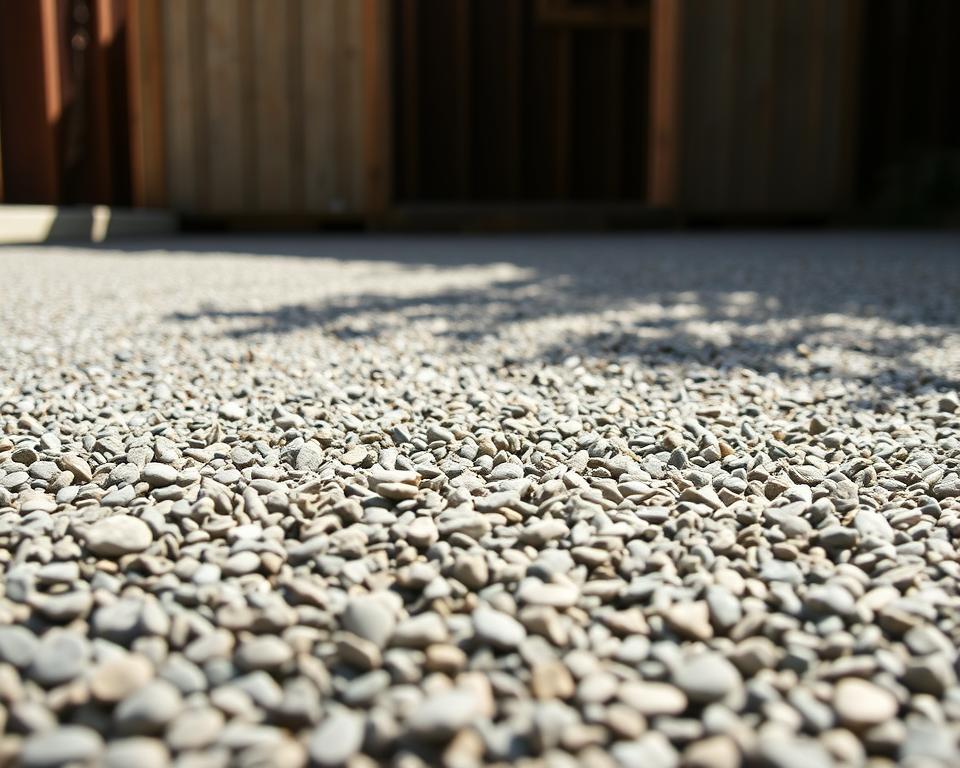
Fill the framed area with 4-6 inches of 3/4″ crushed stone or gravel, compacting it in layers to create a solid base. Finish with a top layer of finer pea gravel or sharp sand to achieve a smooth surface. Use a level on a straight piece of timber to check for evenness and make adjustments as necessary.
By following these steps, you can create a stable and level shed base using gravel and sand, ensuring your shed remains secure and functional.
Alternative Methods for Difficult Terrain
Uneven or sloping land doesn’t have to prevent you from building a shed, as there are effective solutions. When faced with challenging ground conditions, you can opt for alternative methods to create a level base for your shed.
Using Concrete Blocks for Severely Uneven Ground
Concrete blocks offer an excellent alternative for creating a level base on severely uneven ground. By placing solid blocks at strategic points beneath your shed’s floor joists and adjusting their height individually, you can achieve a perfectly level surface. This method involves identifying high and low spots across your site and compensating for terrain variations with taller or shorter stacks of blocks.
Building a Raised Platform for Sloped Areas
For significantly sloped areas, building a raised platform is a viable solution. This involves using pressure-treated posts anchored into the ground with concrete to create a level frame above the uneven terrain. While this method requires more materials and construction skills, it offers the advantage of creating usable storage space beneath your shed.
Pier Systems for Extreme Slopes
Pier systems represent a robust solution for extreme slopes, using adjustable metal or concrete supports that can accommodate significant height differences across your shed site. Each pier can be adjusted to ensure that they all support the weight of the shed floor evenly, making it suitable for sites that are 3+ feet out of level.
When selecting an alternative method, consider factors such as your budget, available materials, local soil conditions, and the degree of slope you’re dealing with to determine the most appropriate approach for your specific situation.
Ensuring Proper Drainage Around Your Shed
To protect your shed from water damage, proper drainage is key. Proper leveling means water flows away from your shed instead of pooling underneath it, protecting both your shed and whatever you’re storing inside. If your shed base isn’t level, water will naturally flow toward the low spots and just sit there, creating a perfect recipe for rot, mold, and rust.
Creating Slight Slopes Away from the Structure
When leveling ground for your shed, incorporate a slight slope (approximately 1-2 inches per 8 feet) away from the structure on all sides. This ensures rainwater naturally flows away from your foundation. The gravel base you’ve installed already provides excellent drainage properties. Pay particular attention to the uphill side of your shed if built on a slight slope, as this is where water will naturally flow toward your structure during heavy rain.
Using pea gravel around the immediate perimeter of your shed creates an attractive transition from your structure to the surrounding landscape while providing additional drainage benefits.
Installing Simple Drainage Solutions
Consider installing a simple French drain system around the perimeter of your shed in areas with heavy rainfall or clay soil that doesn’t drain well naturally. French drains consist of a shallow trench filled with gravel and a perforated pipe that collects and redirects water away from your shed foundation to a suitable drainage area on your property.

For sheds built on level ground in areas with minimal rainfall, simply ensuring the surrounding soil slopes away from the structure may be sufficient for proper drainage. Regularly inspect the area around your shed after heavy rainfall to identify any low spots where water collects, addressing these areas promptly by adding additional soil or gravel to maintain proper drainage away from your foundation.
Conclusion
The key to a successful shed installation lies in preparing a level base, a task that’s well within the reach of most DIY enthusiasts. Generally, achieving level ground is the first step towards having a long-lasting shed floor. Whether you choose to use concrete blocks, a pier system, or another method for your shed foundation, a level base is essential to build a shed that lasts.
By following the step-by-step approach outlined in this guide, you can create a professional-quality shed base that will support your storage shed for years to come. Leveling the ground for your shed without extensive digging is achievable for most homeowners with basic DIY skills, saving you time, money, and physical effort. The time invested in properly marking your area, creating a level frame, and establishing good drainage will pay dividends throughout the lifespan of your shed.
With your perfectly level shed base complete, you’re now ready to assemble your storage shed with confidence, knowing it rests on a solid foundation that will keep it stable, functional, and protected from moisture damage for years to come.
FAQ
What is the best material to use for a shed base?
A layer of compacted gravel or pea gravel is often recommended as it provides good drainage and a stable base for your shed.
How do I ensure my shed is installed on a level surface?
Use a spirit level and string lines to check the ground is level in multiple directions, and adjust as necessary by adding or removing material from the base.
Can I build a shed on uneven ground?
Yes, but it may require additional work to create a level base, such as using concrete blocks or building a raised platform to compensate for the unevenness.
What are the consequences of not having a level shed base?
An uneven base can lead to structural damage, problems with door and window operation, and water pooling around the shed, potentially causing moisture issues.
How do I prevent water from accumulating around my shed?
Create a slight slope away from the shed and consider installing a simple drainage solution, such as a French drain, to direct water away from the area.
What tools do I need to level the ground for a shed?
Basic tools include a shovel, rake, spirit level, and string lines, while optional equipment like a plate compactor can make the job easier and more efficient.
Can I use sand as a base material for my shed?
While sand can be used, it’s not the most recommended option as it can shift over time, potentially causing the shed to become unlevel; a more stable material like gravel is generally preferred.

