Practical Log Shed Ideas: Storage Solutions for Your Garden
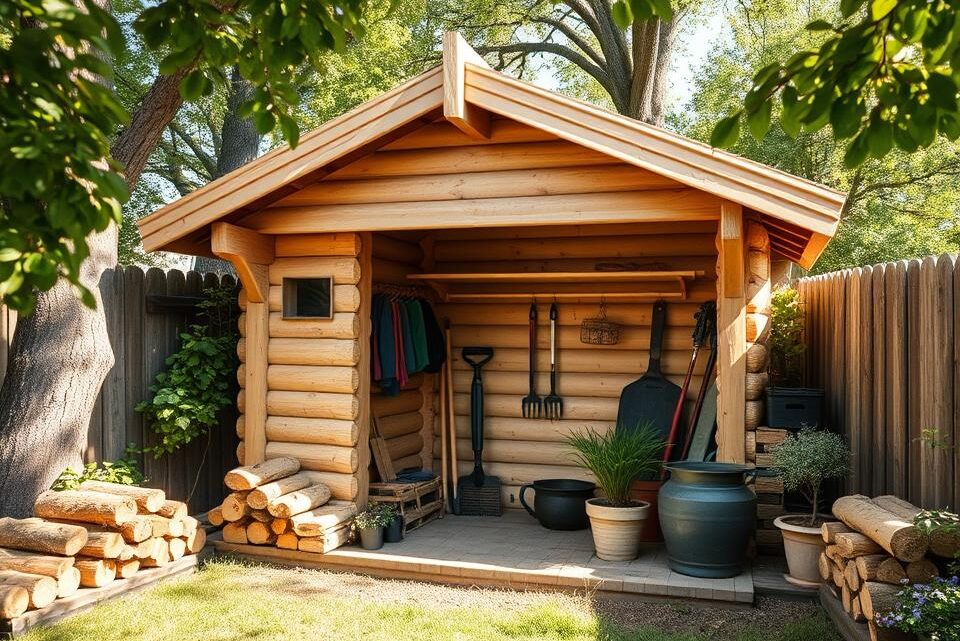
For homeowners who rely on wood-burning stoves, fireplaces, or outdoor fire pits, proper firewood storage is essential. A dedicated structure protects valuable timber investments from weather damage and moisture, ensuring dry wood is always available.
A well-designed log store serves as a specialised garden feature. It keeps firewood organised, accessible, and in optimal condition throughout the year. This becomes particularly important during colder months when heating demands increase significantly.
Proper storage goes beyond mere convenience. It preserves wood quality for efficient burning and maintains garden aesthetics by preventing unsightly piles of timber from disrupting landscaping efforts. This guide explores comprehensive solutions for gardens of all sizes.
Inhaltsverzeichnis
Key Takeaways
- A dedicated storage structure protects firewood from weather damage
- Proper organisation ensures easy access throughout the year
- Quality preservation leads to more efficient wood burning
- Well-designed storage enhances overall garden aesthetics
- Solutions are available for gardens of various sizes
- Compliance with UK building regulations is important
- Effective storage combines functionality with visual appeal
Understanding Log Storage Essentials
The art of keeping firewood in optimal condition relies on understanding several critical storage principles. Proper methodology ensures timber remains dry, efficient, and ready for heating purposes throughout the year.
Key Principles of Proper Log Stacking
Correct stacking techniques significantly impact wood quality. Arranging timber in alternating layers promotes essential airflow between pieces. This method creates stable structures that resist collapsing.
Orientation matters greatly when preparing wood for storage. Placing logs with bark facing upwards helps shed rainwater effectively. This simple technique minimises moisture absorption through exposed end grain.
| Storage Factor | Optimal Condition | Common Mistakes | Impact on Wood Quality |
|---|---|---|---|
| Moisture Content | Below 20% | Storing green wood | Poor combustion efficiency |
| Air Circulation | Free airflow between logs | Tight stacking | Mould development |
| Ground Contact | Elevated on supports | Direct soil contact | Rapid decay |
| Storage Duration | 2-5 years maximum | Over-seasoning | Reduced heating value |
Importance of Air Circulation and Elevated Storage
Raising timber off the ground represents a fundamental storage requirement. Using concrete blocks or treated timber supports prevents moisture absorption from soil contact. This elevation also reduces decay risks from ground-dwelling organisms.
Proper ventilation stands as the most critical factor in seasoning firewood effectively. Leaving strategic gaps between stacked pieces prevents moisture trapping. Regular inspections help identify and remove compromised timber promptly.
Practical Log Shed Ideas
Today’s firewood storage options offer clever designs that transform essential garden structures into aesthetic assets. Homeowners can select from various configurations that balance functionality with visual appeal.
Triangular Designs for Enhanced Space Efficiency
The geometric shape of triangular log stores creates an attractive focal point in any outdoor area. These units fit neatly into corners or against fences, maximising limited garden space effectively.
Multiple shelves within these designs allow organisation by log size and seasoning stage. This arrangement ensures easy access while maintaining excellent air circulation around all timber pieces.

Combining Shed and Log Store Features
A shed log store combination provides comprehensive storage solutions for homeowners. These structures typically feature a secure compartment for tools alongside dedicated timber storage areas.
The log store section often includes slatted walls to promote optimal airflow. In exposed locations, doors offer protection against strong winds and driving rain, preserving wood quality throughout seasonal changes.
DIY Log Shed Designs: Innovative and Cost-Effective
Constructing a DIY storage unit allows for complete customisation to fit specific garden requirements. Homeowners can achieve substantial savings while creating tailored solutions that match their available space perfectly.
Creating a Pallet Wood Log Shed
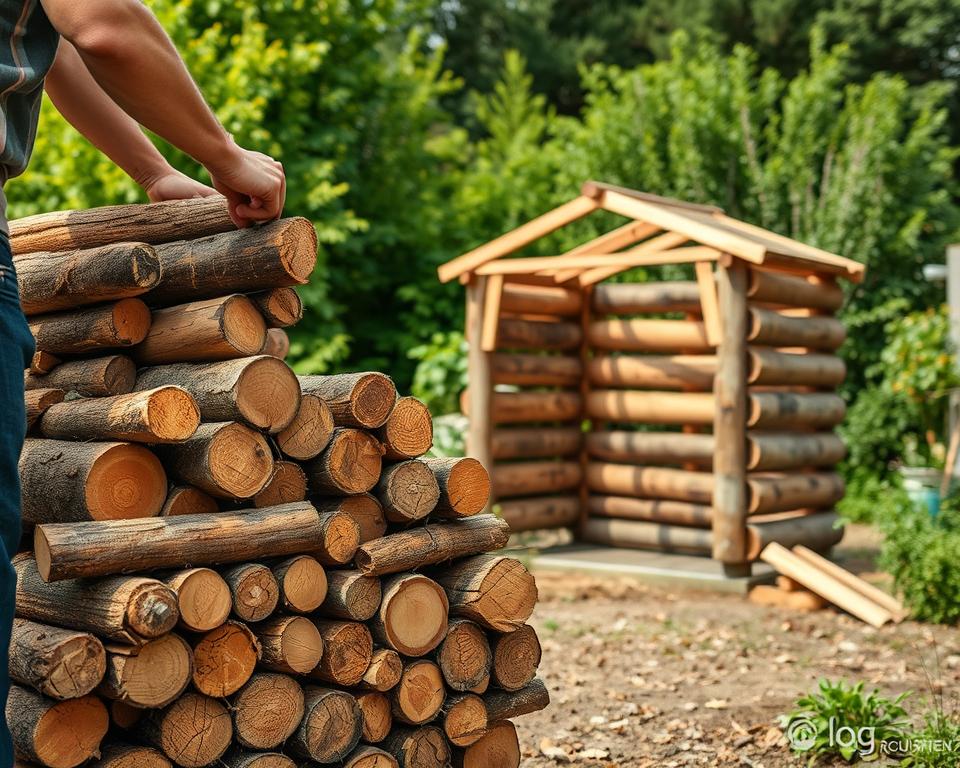
Pallet wood offers an economical foundation for building storage. Sourcing heat-treated pallets from local businesses provides quality materials at minimal cost.
The construction process begins with site preparation and ground levelling. Builders arrange pallets to form a sturdy base and walls, securing them firmly in place. Adding a simple roof frame completes the basic structure.
This approach supports sustainable building practices by upcycling materials. Protective treatments extend the lifespan of the finished unit against weather exposure.
Exploring Lean-to and A-frame Constructions
Lean-to designs utilise existing structures like house walls for support. This method reduces material needs and construction complexity significantly.
A-frame constructions feature distinctive sloping roofs that promote excellent water runoff. The triangular profile offers inherent strength and efficient space utilisation.
Both options provide effective shelter for firewood while conserving valuable garden area. The choice depends on available space, existing structures, and personal preferences.
Outdoor Shed Optimisation for Garden Appeal
Strategic placement and design transform a simple storage unit into a valuable garden asset. Careful consideration of location and form ensures the structure functions efficiently while enhancing the overall outdoor space.

Thoughtful positioning maximises the natural drying process for firewood. This approach blends practical needs with visual harmony in the garden.
Positioning for Sunlight and Moisture Control
In the UK, prevailing winds typically come from the west. This means the open side of a storage unit should ideally face south. A south-facing spot receives maximum warmth from the sun.
Placing the unit on the south side of a home is ideal. Reflected warmth and extended sun exposure create a microclimate that accelerates moisture evaporation. This natural process draws moisture from the wood effectively.
When building against a wall or fence, leave a gap of at least 10 cm. This clearance ensures sufficient air circulation behind the structure. It also prevents moisture transfer from existing surfaces.
The roof should always slope forward, not back. This design directs rainwater runoff away from stored materials. Proper drainage prevents damp issues from developing.
Utilising Vertical Space in Small Gardens
For compact gardens, thinking vertically is key. A tall, narrow design maximises storage capacity without consuming excessive ground area. This is an efficient use of limited space.
Piling materials high takes advantage of vertical space. The narrow profile improves vertical airflow patterns. Air currents naturally draw moisture upward and away from stacked contents.
This design promotes efficient drying by allowing air to circulate. It helps reduce moisture content and prevents decay. Planning access routes is also important for convenience.
Ensure a clear path for a trolley or wheelbarrow from the storage area to the home. This makes transporting materials much easier, especially in poor weather.
| Garden Size | Recommended Storage Type | Key Benefit | Consideration |
|---|---|---|---|
| Small/Urban | Tall, narrow unit | Maximises vertical space | Ensure stable construction |
| Medium | Standard unit with side access | Balanced capacity and access | Allow for air circulation |
| Large | Multiple units or large capacity | Seasonal storage | Strategic placement |
Indoor Firewood Storage Solutions
Moving indoors, firewood storage solutions become an integral part of home living spaces, blending utility with interior design. For those with a wood-burning stove or fireplace, keeping a supply of dry timber inside offers significant convenience.
Firewood Baskets and Built-in Storage Options
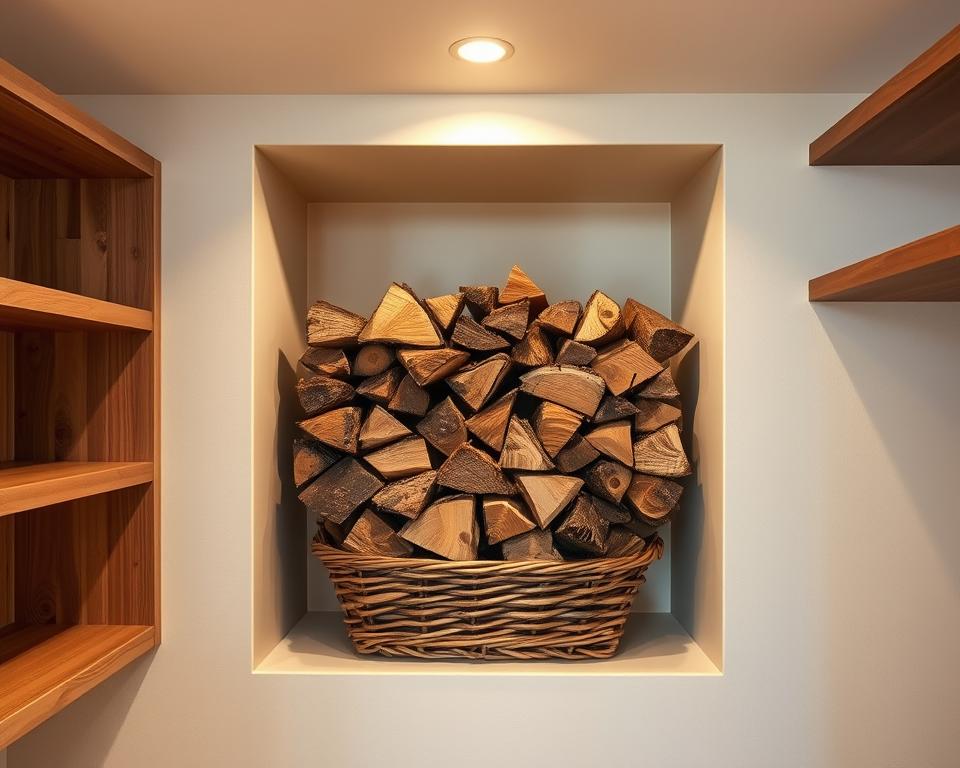
Decorative firewood baskets are the most versatile option for immediate use. They are available in various materials like wicker, metal, or leather to complement any home’s décor.
These baskets serve a dual purpose. They provide easy access to fuel for the fire while acting as attractive design features. Choosing the right size is crucial; smaller baskets suit occasional use, while larger ones support primary heating needs.
For a more permanent solution, built-in storage is ideal during renovations or new builds. This can involve creating a bespoke recessed niche or an enclosed compartment near the stove.
The key advantage of built-in options is their seamless integration. They eliminate floor clutter and provide a dedicated, safe space for combustible materials. This approach offers an elegant way to keep logs neatly contained.
Practical considerations are important for indoor storage. Using a protective mat underneath a basket helps manage debris and bark. It is also wise to only bring fully seasoned wood into the home to prevent moisture and pests.
Positioning is vital for both safety and aesthetics. Ensure the storage area has sufficient clearance from the active stove. It should also be placed for easy access and to enhance the room’s visual appeal.
Proper Material Selection and Planning Considerations
Building a durable storage structure requires careful consideration of both materials and local regulations. The right choices ensure longevity, functionality, and compliance from the outset.
Choosing the Right Wood, Tools and Roofing Materials
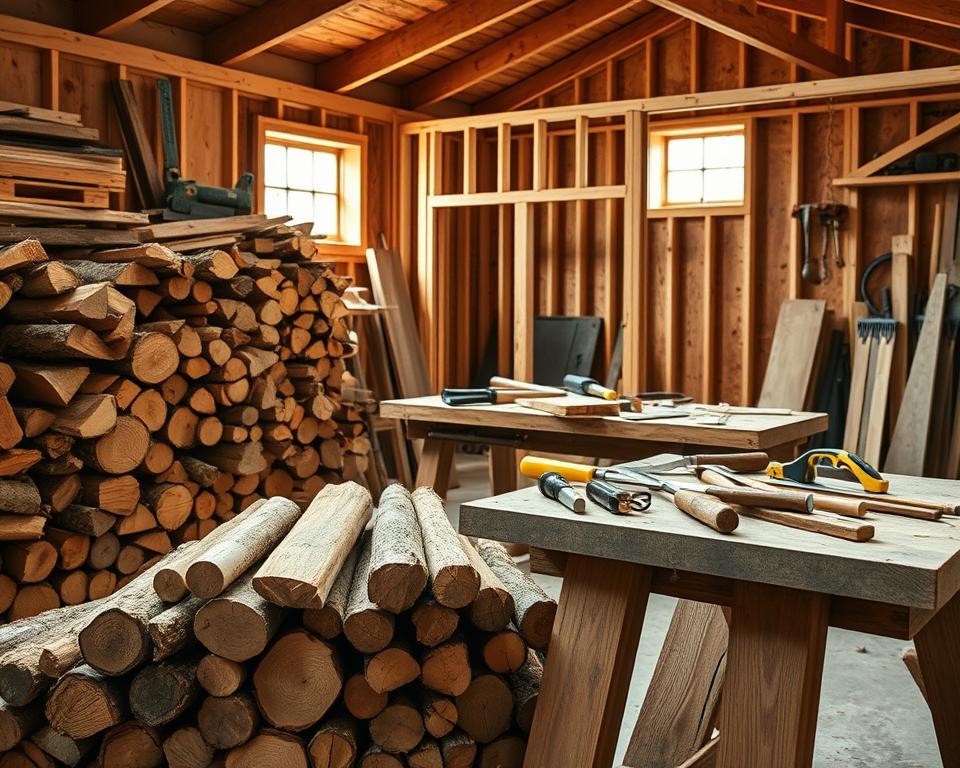
A successful build starts with quality materials. The foundation typically uses pre-cast concrete decking blocks and gravel for stability. Structural timber, like spruce or pine, forms the frame.
Using pre-treated wood is crucial. It resists rot and insect damage, extending the structure’s life. For the roof, a corrugated metal sheet offers excellent durability and weather protection.
Essential tools include a cordless drill, spirit level, and saw. A chainsaw helps cut timber pieces to size. Having the correct equipment makes assembly accurate and efficient.
Understanding UK Building Regulations and Planning Permission
In the UK, most garden stores fall under ‘permitted development’. This means formal planning permission is often not required.
Structures generally must not exceed 2.5 metres in height. Homeowners should always verify local rules before they build. This is especially important in conservation areas or for listed properties.
Checking current regulations prevents potential issues. It ensures your new store is compliant and avoids future complications.
Step-by-Step Log Shed Build Guide
Following the careful planning and material selection, the actual construction phase begins with preparing a solid foundation. This comprehensive guide outlines the systematic process for creating a durable storage solution.
Preparing the Foundation and Base
The first step involves preparing the ground where the structure will stand. Clear the area of weeds and level the surface thoroughly. Use stakes and string to mark the perimeter accurately.
Excavate holes for decking blocks to a depth of 30cm plus the block height. Compact the earth at the bottom before adding 20cm of gravel followed by 10cm of crushed stone chippings. Set the blocks so they protrude no more than 1cm above ground level.
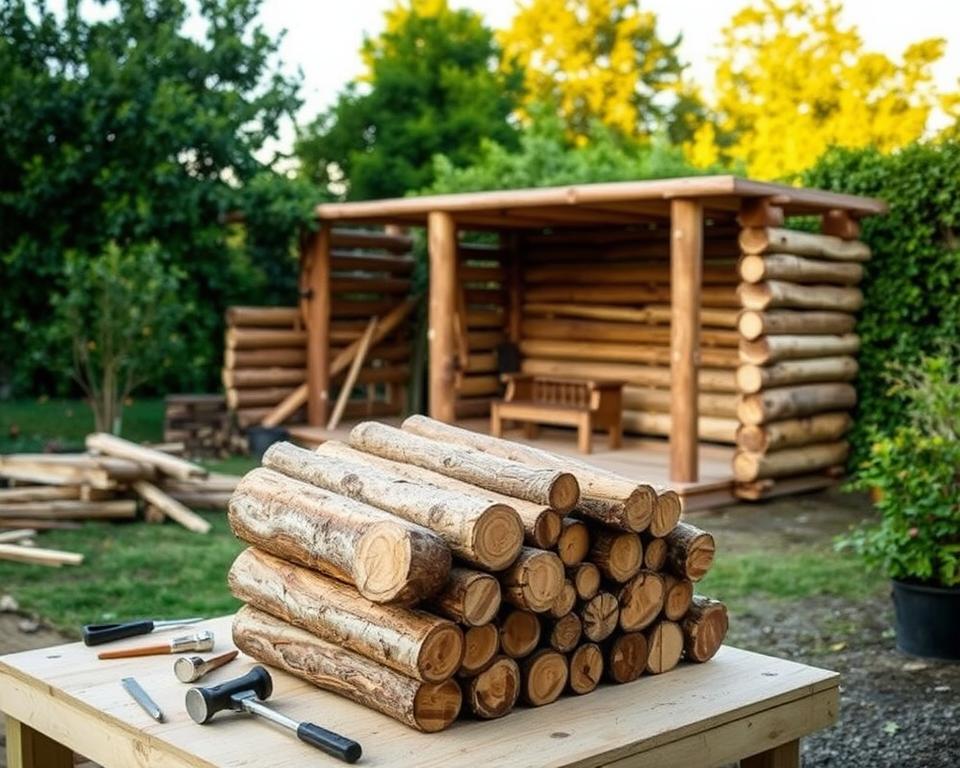
Constructing the Frame, Roof and Walls
Cut three 1-metre beams from 50x100mm timber for base joists, slotting them into the decking blocks. Build the floor frame using 76x50mm timber cut to specified lengths, creating a rectangular structure with butt joints.
Install uprights with precise 8-degree angle cuts at the top, ensuring front posts are 12.5cm taller than rear ones for proper roof pitch. Add the floor using 23 evenly spaced laths screwed to the frame.
Construct walls with laths spaced approximately 6.5cm apart for optimal air circulation. The roof frame requires careful cutting of beams and struts before fixing the corrugated sheet in place.
Effective Techniques for Stacking and Seasoning Firewood
Once construction is complete, proper stacking ensures efficient seasoning. Stack firewood loosely with small gaps between pieces to promote air movement throughout the pile.
Place split logs across the front to prevent wood from sliding out. Keep all timber clear of ground contact and organic debris. With correct stacking, firewood typically reaches 20% moisture content within two years.
Using a moisture gauge provides accurate verification when wood is ready for burning. This ensures clean, efficient combustion in your stove or fireplace.
Conclusion
Effective firewood management transforms a simple necessity into a valuable garden asset. This guide has outlined a clear way to achieve organised and efficient storage.
From space-saving triangular log store designs to versatile shed log store combinations, the options are diverse. DIY projects offer a custom garden solution, while built-in units provide indoor convenience.
Correct positioning, ventilation, and material selection are crucial. They ensure each piece of log seasons properly for optimal burning efficiency.
Homeowners are now equipped to select the best log shed ideas for their needs. The right choice delivers long-term benefits, enhancing both property value and daily comfort.
FAQ
What are the key principles for stacking firewood correctly?
Correct stacking involves creating stable piles that allow air to circulate freely. This practice helps wood to dry evenly and prevents moisture from becoming trapped, which can lead to rot.
Why is air circulation so important in a wood store?
Adequate air flow is crucial for seasoning firewood. It allows moisture to evaporate, resulting in drier wood that burns more efficiently and produces less smoke.
Should a log store be placed directly on the ground?
It is advisable to raise the structure slightly off the ground. An elevated base protects the wood from ground damp and improves ventilation underneath the stack.
Can a log store be attached to an existing garden shed?
Yes, a lean-to design can be integrated with a shed. This approach saves space and can create a cohesive look in the garden, provided the shed’s wall is suitable.
What materials are best for building a durable log store?
Treated timber is a common choice for frame and walls, while a metal roof offers excellent weather protection. Using durable materials ensures the structure withstands the elements.
Is planning permission required to build a log shed in the UK?
Typically, a log store falls under ‘permitted development’ if it meets certain conditions regarding size and location. However, it is always best to check with the local planning authority.
How can you maximise storage in a small garden?
Utilising vertical space with tall, narrow designs or multi-level storage systems can be very effective. A-frame or triangular constructions are particularly space-efficient.
What is the ideal location for a log store in the garden?
A spot that receives sunlight and has good air flow is ideal. It should also be conveniently located for easy access to the house, especially during colder months.
How long does firewood need to season before use?
The seasoning period can vary, but it often takes between six months to two years for wood to be properly dried and ready for efficient burning.
Can old pallets be used to build a log store?
Yes, pallet wood can be a cost-effective material for construction. It is important to ensure the pallets are sturdy and haven’t been treated with harmful chemicals.