
Arches 8x6 - Best offers in UK
Showing the single result
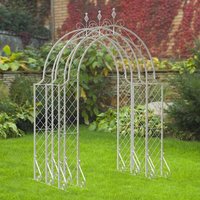
8×6 garden arches for borders, climbers and entrances. Find steel, wood and trellis styles, plus shape differences, fitting points and quick buying tips for garden arches 8×6.
Lines that lift a border
An 8×6 garden arch brings height into a planting scheme without taking over the whole scene. The 8ft span gives room for a full passage or a broad planting gap, while the 6ft depth keeps the structure readable in a garden rather than looming like a gatehouse. It draws the eye up, then gently back down to the planting beneath.
In a long border, this size can act like a pause mark. It splits one area from the next, frames a path, or gives a climbing plant a clear place to travel. The result is not just decoration; it is shape, rhythm, and a bit of structure that helps the garden make sense.
What the 8×6 size says in the garden
The 8×6 proportion suits spaces where a standard narrow arch would feel cramped and a full pergola would be too much. It has enough width for a person to pass through comfortably, and enough depth to let the form show from the front and side. This matters in gardens where views come from several angles.
Compared with smaller arches, an 8×6 frame gives climbing plants more face area to work with. Roses, clematis, honeysuckle and jasmine can spread over the top and soften the outline, while the opening below remains clear. The shape reads as a feature, not a hurdle.
Very small space. Very clear shape. Big visual lift. garden feature arch pieces often work best when the size matches the path and not just the planting plan.
Shapes that change the mood
Not every arch feels the same. The top line changes the whole tone, even when the measurements stay at 8×6. A rounded top gives a softer look and works well with informal planting. A pointed top has more architectural tension and suits a path that already has straight edging or a sharper layout. A square-edged arch feels firmer, almost like a frame, and can sit neatly between clipped hedging or plotted borders.
There are also gentle variations in side profile. Some arches have straight legs with a curved crown; others lean into a tunnel-like depth. A deeper frame creates a stronger passage effect, while a shallower one keeps the view open and airy. The difference is subtle, but it changes how quickly the eye moves through the garden.
Materials with their own character
Material choice shapes both look and presence. A powder coated steel arch often gives a crisp outline with slender bars and a clean finish. It suits modern plots, restrained planting, and climbers that need firm support without a bulky frame. A steel garden arch can also carry a more traditional mood if the curves are gentle and the uprights are not too heavy.
Wooden arches bring a warmer note. The grain, the colour, and the slightly softer edges sit well in cottage-style borders, orchard settings, and informal paths. Timber can feel more hand-made, which many gardens need when the planting already has a loose, layered look. It can also blend into the background more easily than darker metal.
Trellis-style arches add more climbing surface. If the arch has side panels or lattice sections, smaller stems can catch hold sooner and the whole structure can disappear under leaf and bloom. That creates a heavier floral effect, but it also changes the silhouette, making it broader and more planted in feel.
Open sides, lattice panels, and fuller frames
The side structure matters as much as the top. Open-sided arches feel light and let the garden breathe around them. They work well when the arch is already acting as a marker and does not need to carry too much planting. Lattice or panel sides offer more grip for climbers and give the frame a denser visual edge.
Some 8×6 arches use narrow rods or bars, which look refined and suit slimmer stems. Others use thicker members or extra cross-bracing, which creates a sturdier visual mass. This is one of the clearest differences between garden arch types: some are made to disappear under growth, while others are meant to stay visible as part of the design.
Thin bars. Woven sides. Heavier lines. The choice changes the whole feel.
Where an 8×6 arch earns its keep
This size works well at the mouth of a path, where it gives a sense of entry without turning the route into a tunnel. It can also mark a change in level, a turn in a border, or the point where a lawn meets a planted area. In larger gardens, an ornamental climbing arch can stand as a mid-point feature, pulling the eye through the space.
In vegetable plots or kitchen gardens, the form has another use: it creates a neat transition between sections, especially where peas, beans or scented annuals are grown on either side. In decorative borders, the arch can hold a pair of climbers and become a twin-sided display. That contrast between empty centre and planted edges is one of its strongest visual tricks.
Climbers that fit the frame
The arch should match the plant, not fight it. A rose with long, flexible stems can sweep over the crown and soften the structure. Clematis adds finer texture and can bring flowers high into the frame without making it feel heavy. Honeysuckle gives scent and a more twisting, relaxed outline. Jasmine can work where the arch is near seating or a route you pass often.
For a fuller covering, mixed planting often gives more depth than one climber alone. A woody base climber can build the main shape, while a lighter companion fills gaps and keeps the arch from looking sparse in the first seasons. The right mix depends on how dense you want the form to become.
Not too crowded. Not too bare. Just enough reach.
How width and depth change movement
An 8ft width gives a different passage than a narrow bow-top arch. It feels more open, almost like the garden is letting you through without closing off the view. The 6ft depth, meanwhile, means the arch has presence from the side as well as the front. This matters beside a lawn edge or a broad border where the structure is seen obliquely.
Depth also affects planting. A deeper arch provides more room for climbers to settle on both sides, which can improve the sense of enclosure. A shallower one keeps the view across the garden more open. If the garden is already busy with trees, shrubs or dense borders, a lighter depth can prevent visual clutter.
Finish and colour: small details, large effect
Black and dark green finishes often recede into planting, letting flowers and foliage do the talking. White or pale finishes can brighten a shady route and make the arch read as a clean line against darker leaves. Natural timber shades work when the aim is to fold the arch into the border rather than stand it apart.
The finish also influences how the structure feels through the seasons. In summer, a dark frame can nearly vanish under foliage, while a pale one stays visible through leaf growth. In winter, the same frame becomes a line drawing in the garden. That seasonal shift is part of the appeal of arches in this size.
Choosing the right style for the right setting
If the garden is formal, look for straight uprights, balanced curves and a more measured outline. If the setting is relaxed, a rounder top or a more open trellis can sit better. A strong metal garden arch 8×6 suits a crisp route or a modern layout, while a timber version feels softer beside mixed planting and winding paths.
It helps to think about the arch as a transition point rather than an object on its own. The best choice often echoes nearby features: fencing, edging, paving or the shape of the beds. That way the arch feels placed, not dropped in.
Fitting notes that are easy to miss
Measure the passage space, not only the frame size. The 8×6 name describes the structure, but nearby planting, edging and path width all affect how it will sit. Check whether the arch needs to sit over a path, stand inside a border, or bridge between two posts. Those use cases are not the same.
If it is being used as a climbing support, think about where the plant will anchor first. Some climbers need a few seasons to reach the crown, so a structure with useful side grip can save frustration. If the arch is placed in a windy part of the garden, a firmer frame and secure fixing are worth more than a delicate outline.
Check the space twice. Then once more.
What changes between arch types
The main differences are usually in shape, material, side support, and the feeling of density. A simple arch with open sides reads lightly and suits a garden that already has enough structure. A panelled or lattice arch gives more climbing area and more visual weight. A rounded top feels gentler than a peaked one, and a metal build will often appear slimmer than timber at the same size.
There are also differences in how the structure behaves once planted. A strong, narrow frame can allow the plant to dominate, which suits gardeners who want flowers to hide the support. A wider or more visible frame keeps the arch present even when growth is thin. The choice depends on whether you want a frame first or a plant first result.
Why gardeners keep returning to this size
An 8×6 arch gives scale without fuss. It can stand alone as a marker, or sit in a pair to create a repeated rhythm along a path. It suits roses with long canes, clematis with light growth, and evergreen climbers that keep the shape working beyond the flowering season. The size is broad enough to feel generous, but still neat enough for domestic gardens.
In smaller plots, it can make a route feel more considered. In larger ones, it can join sections together and lead the eye from one room of the garden to another. The balance of width and depth is what gives it this range.
Final touches that make the arch read well
When an arch is placed well, it does more than fill a gap. It frames a view, guides movement, and gives climbers a clear stage. The best 8×6 designs are the ones that match the planting style, the route beneath, and the overall mood of the garden.
Look for the arch that suits the line of the garden, the weight of the climber, and the kind of entrance you want to make. Then let the structure do its quiet work, season after season.
- climbing rose support frame for long canes and arching bloom
- trellis-sided garden arch for denser covering and quicker grip
- black steel walkway arch for a crisp outline against planting
- timber garden archway for a softer, warmer garden tone
- ornamental path arch for marking a transition between garden spaces