
Arches - special offers - Best offers in UK
Showing 1–8 of 17 resultsSorted by price: low to high
-
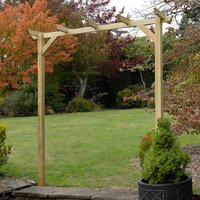
19% discount: Forest Hanbury Flat Top Wooden Garden Pergola Arch 6’10 x 1’8 £71.9919%
-
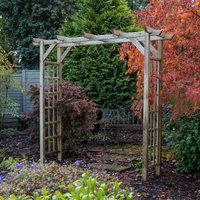
23% discount: Forest Classic Flat Top Wooden Garden Pergola Arch 6’11 x 2’4 £91.9923%
-
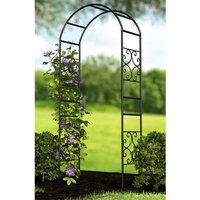
23% discount: Panacea Scrolls Metal Garden Arch 7’5 x 3’2 £113.9923%
-
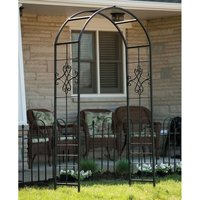
23% discount: Panacea Quatrefoil Metal Garden Arch 7’5 x 3’6 £113.9923%
-
23% discount: Panacea Ogee Metal Garden Arch 8’6 x 3’9 £113.9923%
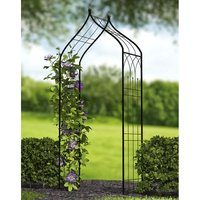
-
23% discount: Panacea Curve Metal Garden Arch 7’5 x 3’2 £113.9923%
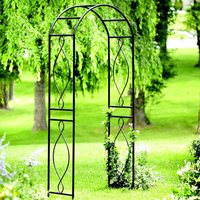
-
23% discount: Panacea Camberwell Wave Top Metal Garden Arch 7’4 x 4′ £121.9923%
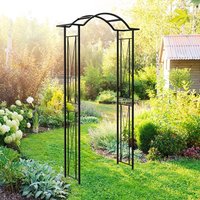
-
23% discount: Panacea Camberwell Metal Garden Arch 7’8 x 3’2 £121.9923%
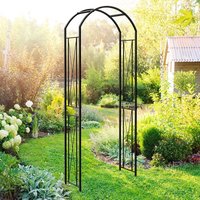
Garden arches special offers with wrought iron, steel, wooden and rose arch styles, curved or gothic forms, for borders, paths and entrances. Compare shapes, widths and finishes in one place.


Arch lines that frame a garden story
Arches do more than mark a passage. They sketch a line through the plot, pull the eye forward, and give a border or entrance a clear shape. In this garden arches sale section, the offers lean towards pieces that change the feel of a space with a single structure. Some stand light and open, others look solid and architectural. Some are for climbing roses, some for narrow paths, and some for wider gates or seating zones.
Very short. Very clear. Very useful.
What makes an arch worth a second look is not only the price, but the form. A simple half-round shape gives a soft sweep. A pointed top feels more formal. A flat-top frame carries a cleaner, modern line. Those differences matter when the arch sits at the edge of a lawn, over a gate, or between two planting beds.
Shapes that change the whole outline
Garden arches come in several forms, and each one gives a different visual rhythm. A rounded arch is the most familiar. It creates a gentle curve and works well where the planting is loose or informal. A gothic or pointed arch has a sharper profile and brings more height and drama. A rectangular arch with only a slight curve looks more architectural and can suit structured garden rooms.
There are also tunnel-style arches, which repeat the same curve over a longer run, and pergola-style archways, where side frames and a top beam create a more open passage. Tunnel forms can make a path feel longer and more ceremonial. Pergola archway shapes offer a stronger overhead line and suit entrances where the structure needs to read from a distance.
- Rounded arches: soft outline, easy pairing with roses and clematis
- Pointed arches: a sharper silhouette, more height in the centre
- Flat-top frames: straight lines, neat transitions between areas
- Tunnel arches: repeated curve, good for longer pathways
- Pergola arches: more open top, stronger architectural feel
Materials with different voices
The material decides more than colour. It changes how the arch sits in the scene. Metal arches, often steel or wrought iron, tend to have slimmer profiles and can carry a fine outline without feeling heavy. They suit climbers that need a firm framework, and they often appear in the offers because they cover a wide range of shapes.
Wooden arches speak in a different tone. Their posts and beams look warmer and less rigid, especially beside timber fences, decking, or gravel paths. In special offers, wood can be found in rustic, arched, or straight-lined forms. It gives a softer edge to the entrance, though the look is more natural than ornamental.
Powder-coated steel arches often sit between the two. They keep a crisp profile and usually come in darker colours such as black, green, or bronze. That can help them recede into planting or stand out as a dark line against pale walls and bright foliage. Wrought iron styles show more decorative bends and scrolls, while plain tubular steel is usually cleaner and lighter in appearance.
Small details that change the mood
It is often the little things that decide whether an arch feels simple or ornate. Scrollwork can turn an opening into a focal point. Side panels can give climbers more surface to hold on to. Spiked tops can make the profile taller, while finials or plain caps finish the top edge with different levels of detail.
Some arches have extra depth at the sides, which makes them read more like a gateway. Others are slim and nearly wire-like, which keeps the planting centre stage. A narrow arch can suit a compact route between beds, while a wider one gives a stronger passage and can frame a bench or seat at the end of a line.
There are openwork models with plenty of air through the frame, and denser designs where the metalwork forms a more visible pattern. The difference is not only decorative. A more open arch lets leaves and flowers show through at once. A denser arch creates a stronger shape even before the climbers settle in. That can matter if the structure itself needs to do the visual work from day one.
Where arches work best in the layout
An arch can define a border, mark a transition, or lead a view toward another part of the garden. Placed over a path, it gives that route a clear beginning or end. Set across a threshold between lawn and planting, it suggests a change of mood. Used at an entrance, it makes a direct statement without needing a wall or gate to do the full job.
In smaller gardens, slim arches can help divide space without blocking sight lines. That keeps the plot from feeling cut up. In longer gardens, a stronger arch can act as a pause point, breaking a run of paving or grass into sections. A pair of arches can also work as repeated markers, giving a sense of rhythm along a walkway. Nice and tidy. A bit formal. Still light.
When comparing special offers, the width of the opening matters as much as the height. A low arch can feel intimate and compact. A tall one creates a more lifted line and lets taller climbers travel upward before they spill outward. If the space is tight, the structure should not crowd the path. If the route is wide, a broader span can hold its own without looking pinched.
Climber pairings and the shape they make
Although this category is about the arches themselves, their form shows most clearly once plants begin to trace the lines. Rose arches usually call for a balanced curve or a sturdy top where canes can be tied in. Clematis suits slender frameworks because the stems can weave through the openwork. Honeysuckle often benefits from a structure that gives a little shelter and plenty of contact points.
Not every arch is built for the same amount of growth. A decorative arch with fine bars looks delicate and can be overpowered by thick stems if the climber is too vigorous. A heavier frame with broader side members can take more weight and presents a bolder line. This is one of the main differences in the offers: some arches are made to be seen on their own, while others are designed to disappear under foliage.
A useful tip is to match the arch’s visual weight to the climber’s habit. Loose, airy planting suits slimmer forms. Dense or fast-climbing growth can sit better on a more substantial structure. If the aim is a clean outline, choose a frame with fewer ornamented parts. If the aim is a full, garden-room look, a deeper and more detailed arch can hold the scene together.
Timber tones, dark frames, and painted lines
Colour shifts the effect fast. Black metal arches tend to give a crisp, classic outline, especially against pale gravel or bright flowers. Green arches blend more readily into the planting and let the leaves take the lead. Bronze, grey, or muted finishes can sit somewhere in between, softening the contrast without losing shape.
Wooden arches usually come in natural or stained tones, which can feel more relaxed in cottage-style or informal plots. They are less reflective than metal and can look gentler beside softer planting. If the garden already has a lot of hard structure, a timber arch may stop the scene from feeling too sharp. If the garden is loose and full, a dark metal arch can bring better definition.
The offer pages often show a clear split between decorative and plain finishes. Decorative finishes may include curves, motifs, latticework or side scrolls. Plain finishes focus on line and proportion. Neither is better across the board. It depends on whether the arch should lead the eye quietly or stand as a visible feature on its own.
What to look at before choosing
Think first about the opening it needs to span. A path arch differs from a border arch in width, and a gateway style differs again if it must sit between posts or stand free. Then look at height. A low arch can be snug, but it should not feel cramped. A tall arch can look grand, yet it should still suit the scale of the garden. Too much height may make a small space feel thin.
Then comes structure. If the arch needs to support heavier climbers, a stronger frame is worth the attention. If the aim is mostly decorative, a lighter model may be enough. Pay attention to the spacing of bars or supports. Wider gaps give a cleaner look and more sky through the frame. Closer bars give more support and a fuller outline.
It also helps to decide whether the arch should blend in or act as a marker. Blending arches often have softer colours and simpler geometry. Marker arches use bolder lines, stronger curves, or visible extras like finials and side panels. One is not more useful than the other; they just do different jobs in the layout.
Why special offers make sense here
This category often draws people who already know the kind of line they want, but are still comparing forms. Special offers can include several arch styles side by side, which makes it easier to weigh a rounded shape against a pointed one or a plain frame against a decorative one. That comparison can matter more than the price alone.
Another benefit is that the range may cover more than one use. One arch might suit a walkway, another a narrow entrance, and another a planted tunnel. If the garden has more than one opening to shape, the offers can make it easier to keep the look consistent while varying the scale. A pair of matching arches can tie separate areas together without making them feel copied.
There is also the simple advantage of variety. Some gardens need a quiet frame, others need a stronger gesture. In the sale range, those differences become easier to spot. You can compare curves, pick a form that sits with the fencing or stonework, and avoid a shape that fights the setting. Tiny choice, large visual effect.
Quick notes for faster comparing
Short. Handy. Easy to scan.
- Round shapes soften a route
- Pointed tops add lift
- Dark frames recede into greenery
- Wood feels warmer beside natural materials
- Openwork keeps the arch visually light
- Heavier frames suit more vigorous climbers
- Wide spans mark bigger transitions
- Narrow forms suit tighter plots
Details that separate one offer from another
Among arches on offer, the real difference is often in proportion. Some are high and narrow, which makes them read like a doorway. Others are broader and lower, with a calmer stance. Some show side lattice, while others are mostly a simple curve with just enough support to guide growth. Those choices change how the arch sits in front of a hedge, beside a fence, or over a gravel run.
There may also be differences in how the structure meets the ground. Some designs have straight legs that sink visually into the soil. Others flare slightly or show a more defined base. That base can affect how steady the arch appears, even before anything is planted around it. A more grounded shape can feel anchored; a finer one can seem almost drawn in line.
For gardeners who want a feature with a bit more presence, decorative side scrolls or repeated curves can add movement. For those who want the planting to carry the scene, a plainer frame leaves more room for leaves and blooms. This is where the best match usually appears: not in the loudest shape, but in the one that fits the route and the planting together.
A final glance at what suits what
If the space is compact, lean toward a slim arch with a clear outline. If the route is long, a tunnel or paired arch can create a stronger sense of direction. If the look is traditional, a rounded or wrought iron style often sits well. If the setting is more structured, a straighter frame or pointed form may carry the line better.
That’s the trick with arches. They are small structures, yet they alter the whole reading of a garden. One curve can make an entrance feel measured. One frame can turn a plain path into a passage. One offer can be the difference between a gap and a feature.
Look closely. Compare the line. Then choose the shape that fits the space, not the other way round.