
Decking - special offers - Best offers in UK
Showing 17–24 of 57 resultsSorted by price: low to high
-
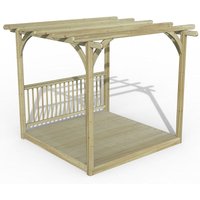
21% discount: 8′ x 8′ Forest Pergola Deck Kit No. 2 (2.4m x 2.4m) £869.9921%
-
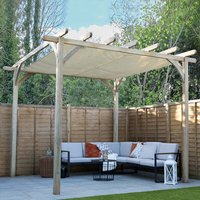
23% discount: Forest Large Ultima Wooden Garden Pergola with Retractable Canopy 12′ x 12′ £949.9923%
-
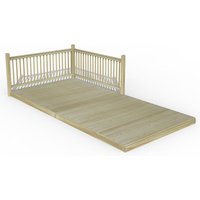
7% discount: 8′ x 16′ Forest Patio Deck Kit No. 2 (2.4m x 4.8m) £979.997%
-
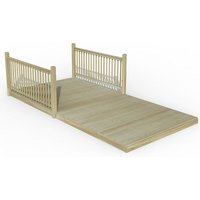
7% discount: 8′ x 16′ Forest Patio Deck Kit No. 3 (2.4m x 4.8m) £992.997%
-
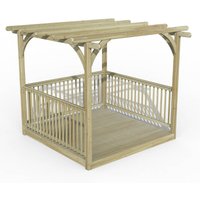
24% discount: 8′ x 8′ Forest Pergola Deck Kit No. 3 (2.4m x 2.4m) £1,019.9924%
-
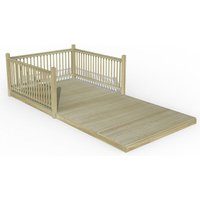
11% discount: 8′ x 16′ Forest Patio Deck Kit No. 4 (2.4m x 4.8m) £1,044.9911%
-
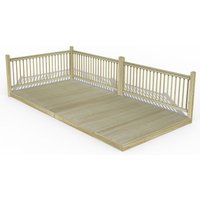
12% discount: 8′ x 16′ Forest Patio Deck Kit No. 5 (2.4m x 4.8m) £1,049.9912%
-
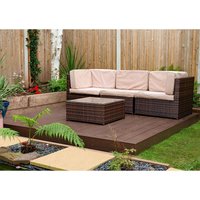
15% discount: Forest 8′ x 8′ Composite Decking Kit – Brown (2.4m x 2.4m) £1,059.9915%
Decking special offers for timber, composite and slip-resistant boards, with mixed sizes, end-of-line colours and clearance packs for patios, terraces and garden walks. See shapes, finishes and pack formats in one place.
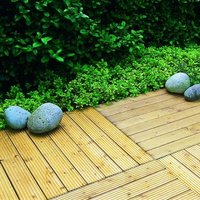
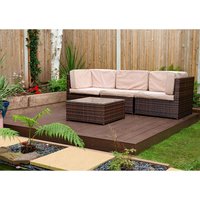


Deals that sit in the grain
Special offers in decking are not just about a lower ticket. They often come from overstock, seasonal runs, discontinued shades, short-length bundles, or boards sold in mixed pack sizes. That means you may find a quieter price point on products with the same core job: building a raised platform, a neat path, or a sitting area with a defined edge.
Short runs. Mixed packs. Last pallets.
The key is reading the offer closely. Some discounts are tied to board length, some to finish, and some to a limited colour batch that won’t be repeated. If you are matching an existing deck, the exact tone matters more than the headline reduction, because wood and composite both carry their own character from batch to batch.
What sits inside a decking special offer
Offers tend to fall into a few clear groups, and each one comes with a different type of buying decision:
- Pressure-treated timber decking in standard grooved boards, often sold in practical lengths and widths.
- Composite decking boards with capped or uncapped surfaces, sometimes cleared in particular colours.
- Reversible boards with two surface looks, such as fine rib on one side and broader grooves on the other.
- Solid boards for a heavier feel and sharper cut edges.
- Hollow boards for lighter handling, usually with a different span and fixing approach.
- Starter and end trim packs when the offer includes finishing pieces alongside the main boards.
These underlines matter because the price cut may apply to one type of board, yet the surface, shape and fixing pattern can differ a lot. A grooved timber board and a capped composite plank may both sit in the decking category, but they behave very differently once laid out across a frame.
Boards with edges, grooves and sides that speak
Decking is not one plain thing. It comes with profiles that change the look underfoot and the way the deck reads from the garden. Grooved boards bring lines across the surface and can help with grip. Smooth boards give a cleaner visual run, with less visual noise between planks. Reversible boards let you choose between two faces, which is useful when a special offer includes mixed stock and you want more room for matching.
There are also differences in board form. Wide boards make fewer joins and can create a broader field, while narrower boards give a tighter pattern. Square-edge decking tends to create crisp gaps and a more defined line, while rounded-edge boards soften the join. Some composite boards arrive with a wood-grain finish, others with a flatter surface and a more restrained look.
Timber, composite and the feel underfoot
Timber offers natural variation in tone and grain, so each bundle can look lively and less uniform. That suits spaces where the deck is part of a planted scene and the aim is for the boards to sit beside bark, slate or gravel without looking too rigid. Composite, by contrast, gives a more consistent visual field, with colour and texture repeated more evenly across the run.
The difference is not only appearance. Timber usually comes in a more traditional board rhythm, often with visible growth pattern and treatment marks. Composite tends to show a more controlled face, and some special offers include matching trims that carry the same finish from edge to edge. If a deal mixes board lengths, timber may be easier to work into smaller sections, while composite can help the deck keep one steady visual note.
Shapes that change the whole layout
Some special offers are built around standard straight boards, but decking can also be shaped by the way it is cut and laid. Long planks stretch a terrace out visually. Shorter lengths can be used for tighter runs, steps, borders or smaller platforms. In some offers you may find boards with a dual-use face, which helps if you want to switch the surface mood without buying another line of product.
Decking also varies in thickness. Thicker boards often feel more substantial and can suit a stronger frame build. Slimmer boards can be easier to handle in smaller garden zones. The profile, thickness and edge detail all shape the final look, so a reduced price should sit beside the geometry of the board, not replace it.
Why the reductions can work in your favour
There are several useful reasons to shop a decking special offer, beyond the obvious price change. End-of-range boards can free you to use a material you might have skipped at full cost. Mixed packs can suit small projects, repairs, or a deck that uses more than one zone. Clearance colours can create a more restrained garden palette, especially where you want the deck to echo fences, planters or a boundary wall.
- Lower spend on a large surface area.
- Access to board styles that may no longer be listed in full range.
- Chance to use mixed lengths for awkward corners and cut-down areas.
- Possible match with existing stock if you only need a section.
- More room in the budget for fixings, trims or edging pieces.
These savings can be practical rather than flashy. A reduced bundle of grooved timber may suit a narrow run beside a shed. A composite clearance colour might be right for a raised seating zone where a steadier tone matters. The offer becomes useful because it fits a layout, not because it shouts the loudest.
When the finish changes the mood
Decking finishes change how the surface sits in daylight. Brushed textures can appear softer. Deep grooves cast clearer lines. Smooth faces catch less shadow and can make a space feel more open. If a special offer includes a finish you have not used before, it is worth thinking about how that finish will look beside steps, pots, railings or glass.
Colour matters too. Warm brown tones often lean towards timber-like comfort, while grey boards create a cooler line that sits neatly with stone and metal. Dark shades can frame a space, but they show cut edges more clearly. Lighter tones can make a compact area seem less boxed in, though they may also ask for cleaner joins and a more considered board layout.
Small tips for choosing from the offer pile
Read the board count and the total coverage, not only the price per pack. A lower pack price can hide a smaller usable area, especially when lengths vary. Check whether the offer is for full boards only or includes trims and fascia pieces. If the listing gives board width and thickness, compare those details with the rest of your project so the deck doesn’t end up with awkward transitions.
For mixed length packs, think about how the boards can be staggered across the frame. That can help reduce visible pattern repetition. For composite, note whether the surface is single-sided or reversible, because that changes how much choice you have at the point of laying out the run. For timber, look at the treatment finish and profile together; the words may seem similar, but the board can feel quite different once installed.
A useful habit is to plan the deck shape before buying. Straight rectangles, side returns, corner nooks and wraparound edges all use boards in different ways. A special offer is stronger when its lengths and widths line up with your layout instead of forcing too many offcuts.
Grooved, smooth, solid or hollow: the differences that matter
Grooved boards are often chosen for the lines they cast across the surface. They can make the deck look more structured and help the eye follow the board run. Smooth boards give a flatter visual break and can make a simple layout feel less busy. Solid boards carry more weight in hand and often feel more substantial in the build. Hollow boards are lighter and can be easier to move, though the choice depends on the structure and the product itself.
These are not just surface labels. They shape handling, cutting, and the final rhythm of the deck. If a special offer includes one of these forms, it helps to read the shape before the reduction. A lower price on the wrong profile is still the wrong profile. A slightly higher price on a board that fits the layout can save time and waste later on.
Useful cues in the product listing
In a decking offer, the listing details do a lot of the speaking. Look for board dimensions, surface type, material, colour name, pack size and whether the stock is limited to a remaining batch. If the offer mentions matching accessories, check whether these are the same finish line or simply a related colour family. The difference can matter when you want the edging to sit neatly with the deck face.
- Board width for the visual spacing across the deck.
- Board thickness for the feel of the finished run.
- Length range for cutting and staggered laying.
- Surface pattern for grip, shadow and style.
- Colour batch if you need one steady tone.
Offer wording can be brief, so the product facts need to carry weight. A clearance pack may have a simple title, yet the board profile and dimension tell the real story. That is where the choice becomes practical rather than guesswork. It’s worth slowing down for the small print; a tiny note can shape the whole layout.
A deck that fits the garden line
Decking special offers often suit spaces where the edge of the garden needs a clear line: beside a house wall, around a corner, across a split-level section or along a narrow side passage. The right board type can turn that line into something tidy and readable. Timber may bring a warmer, more varied finish. Composite may keep the colour steadier across a wider platform. Grooved faces can give the surface a stronger rhythm. Smooth faces can calm it down.
What makes these offers useful is the mix of shape, surface and stock movement. Some are short-lived. Some repeat in new colours. Some arrive as end-of-line runs that won’t return. That means the category is less about browsing endlessly and more about spotting the board that fits your space, your layout and your budget in the same glance. Cheap doesn’t always suit, but a well-shaped offer can slot in without fuss.
Quick points to scan before you choose
Decking on special offer can be a neat route into timber or composite boards when the details are read properly. Shape, profile, finish, length and colour all matter just as much as the discount. If the boards match your frame and your space, the offer becomes more than a price note; it becomes a working part of the garden layout.
Plain boards. Strong lines. Quiet savings.