
Driveway Gates - special offers - Best offers in UK
Showing all 8 resultsSorted by price: low to high
-
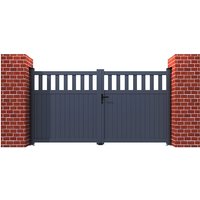
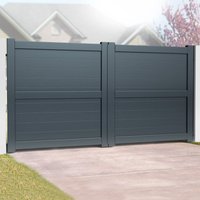
24% discount: Devon Premium Metal Driveway Double Gates – Grey £1,009.0024%
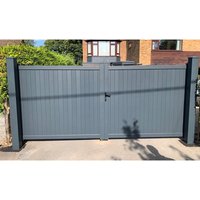
-
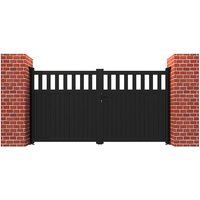
24% discount: Devon Premium Metal Driveway Double Gates – Black £1,009.0024%
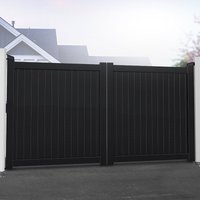
-
24% discount: Barnstaple Premium Metal Driveway Double Gates – Grey £1,019.0024%
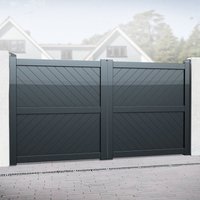
-
24% discount: Barnstaple Premium Metal Driveway Double Gates – Black £1,019.0024%
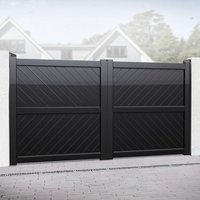
-
24% discount: Exeter Premium Metal Driveway Double Gates – Grey £1,029.0024%
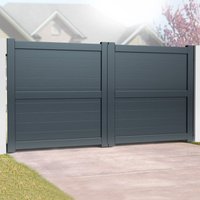
-
24% discount: Exeter Premium Metal Driveway Double Gates – Black £1,029.0024%
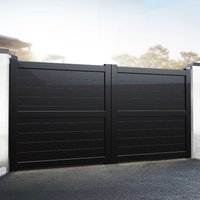
-
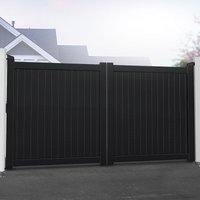
17% discount: Partial Privacy Premium Metal Driveway Double Gates – Black £1,229.0017%
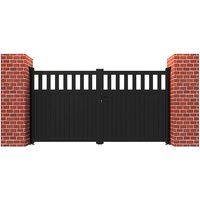
-
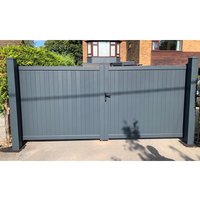
17% discount: Partial Privacy Premium Metal Driveway Double Gates – Grey £1,229.0017%
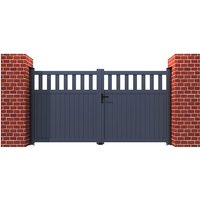
Driveway gates special offers for timber, steel and aluminium styles, with swing, sliding and automated options for homes, farms and shared entries. Browse practical shapes, compare opening styles, and choose a gate that suits the width, slope and look of the drive.
Gate fronts that set the tone
Driveway gates do more than close a gap. They frame the entrance, set the first line of privacy, and shape how the whole property reads from the road. In a special offers category, the range often changes from week to week, so it helps to read each item by its form rather than only by its price.
The main choices usually split into timber driveway gates, steel driveway gates and aluminium driveway gates. Each material carries its own weight, texture and look. Timber brings warmth and grain, steel feels more solid and has sharper lines, while aluminium keeps a lighter profile and is often chosen where the opening mechanism needs less load.
Short sentence. One look matters. The gate changes the entrance.
Opening styles that move in different ways
The way a gate opens affects the whole drive, not just the finish. A pair of swing leaves needs space to arc inward or outward, while a sliding gate runs along the boundary and keeps the driveway clear. That difference is often the biggest reason one style fits and another does not.
Swing driveway gates suit drives with a clear run and level ground. They can be split into two leaves or made as a single leaf where the width allows. A twin-leaf layout gives a classic entrance feel, while a single leaf can suit narrower openings with less visual break. Be careful with slopes, though, as ground clearance can become an issue.
Sliding driveway gates work in a different way. Instead of opening across the drive, they travel sideways. That makes them useful where cars park close to the entrance or where the turning space is tight. They also bring a neat line across the front of the property, which can suit modern fencing and lower boundary walls.
Automated driveway gates can be built around either opening pattern. The main difference is in how the gate is handled and how the hardware is set out. Automation may suit larger entrances where regular use makes manual opening less convenient. There is a practical trade-off here: the structure must carry the extra system parts, so material choice and gate weight matter more than with a hand-operated setup.
Shapes, bars and solid panels
Within driveway gates, shape is not just decoration. It changes privacy, airflow and the way the gate reads at street level. A solid panel gives a stronger barrier and blocks views into the drive. An open-bar design leaves gaps between vertical or horizontal elements, which can soften the boundary and reduce the heavy feel of a tall gate.
Common forms include:
- Panelled gates with broad faces and fewer gaps
- Vertical bar gates with a classic, upright look
- Horizontal slat gates for a longer, cleaner line
- Curved-top gates that lift the eye at the centre
- Arched-top gates that echo older entrances and garden walls
The difference between these forms is not only visual. Open styles let wind pass through more freely, while solid styles can feel heavier in strong weather. Curved or arched tops may also change how the gate sits against posts and brickwork, so the full entrance should be checked as one unit, not as separate pieces.
Why special offers matter on a working entrance
Special offers can open up material or style choices that might otherwise sit above budget. That matters because a driveway gate is rarely only about looks; it must match the opening width, the post structure and the daily use of the property. A lower offer on the wrong type is still the wrong type.
The best value often comes from understanding what is included in the gate itself. Some offers may cover a standard size only, while others may include a pair of leaves, a specific finish, or a plain frame with no decorative additions. It pays to compare the construction detail, not just the headline wording.
When reading offer details, check for:
- Gate width and height
- Material thickness and frame style
- Opening type, such as swing or sliding
- Whether the gate is suited to manual use or automation
- Any limits on colour, infill or top shape
Materials with very different characters
Timber driveway gates bring a natural finish that sits well with brick, stone and planted borders. They can look bold or understated depending on whether the boards are close-set or spaced. A timber gate often feels softer at the edge of the property, though the grain and tone can vary from one piece to the next, which adds character rather than uniformity.
Steel driveway gates tend to show sharper lines and a more robust frame. They suit properties that need a stronger visual boundary or a more formal front. Steel can also support detailed bar work, scrolls or simple geometric layouts. The weight gives a firm feel, but it also means post alignment and hinge choice carry more importance.
Aluminium driveway gates are often selected when a lighter structure is preferred. That lighter build can help with wider spans and some automated setups. Aluminium also allows a cleaner surface finish, which works with plain modern facades, rendered walls and narrow side returns. It is a different kind of presence: less heavy, more pared back.
Useful differences to spot before choosing
Two gates may look similar from the road and still behave very differently. The profile of the frame, the direction of the infill and the method of opening all change how the gate works on site. For example, a tall solid gate gives more screening, but a slatted version can feel less enclosed while still marking the boundary clearly.
Pay attention to the opening clearance on swing styles. A pair of leaves may suit a wide entry, but if one side meets a wall or planted bank, the setup can feel awkward. Sliding types need a clear run along the fence line, so the side space matters as much as the width of the entrance itself. These gate comes in many forms, and the site usually decides more than the style sheet.
Very short. Measure twice. Check the slope. Leave room for posts.
Tips that save time when scanning the range
To move quickly through a category of driveway gates, focus on the entrance layout first and the finish second. That order helps narrow the choice without getting lost in surface detail. The most useful filter is often the opening style, followed by the material and then the top shape.
- Start with drive width and side clearance
- Decide whether privacy matters more than visibility
- Compare single-leaf, twin-leaf and sliding forms
- Match gate weight to the support structure
- Choose a profile that sits well with the boundary line
If the entrance is narrow, a neat vertical bar gate can keep the area from feeling boxed in. If the frontage is broad, a pair of swing leaves can give a wider, more balanced read. For a drive with limited turning space, sliding gates often remove the awkward pause of swinging panels. In that sense, the right gate is not about fashion alone; it is about how the opening behaves when used.
Where design and use meet
The best looking driveway gate is the one that also fits the daily pattern of the property. A rural entrance may call for a stronger frame and a more open span. A suburban frontage may lean towards tidy panels or slim bars. A modern home may ask for straight edges and fewer decorative touches, while an older building might suit an arched top or a more traditional leaf arrangement.
There is also a visual difference between a gate that stands apart and one that blends with fencing and walls. A gate with matching infill can make the boundary feel continuous. A contrasting gate can turn the entry into a focal point. Both approaches have value, but they speak in different tones.
Choose the tone first. Then the form. Then the finish.
Practical things worth checking in the offer
Special offers can change quickly, so the fine detail matters. A gate listed as one style may still differ in frame depth, bar spacing or top line. That is why the product notes should be read as part of the entrance plan, not as a separate piece of writing.
Look for the following points when scanning the range:
- Whether posts are included or sold separately
- The opening direction for swing leaves
- The side space required for sliding runs
- The level of privacy created by the infill
- The difference between plain, decorative and mixed layouts
A small note can change a whole decision. For example, a gate that appears slim may still need strong support because of its height. A broad-looking gate may be lighter than expected if it uses open bars rather than a solid board face. These details shape the final feel more than the headline style name.
A category built for quick comparison
Driveway gates special offers make it easier to compare material, form and opening style in one place. That is useful when the entrance has to do several jobs at once: mark the boundary, control access, and sit neatly with the rest of the frontage. Timber, steel and aluminium each bring a different finish; swing, sliding and automated layouts each solve a different space problem.
For fast reading, think in layers. First the opening. Then the material. Then the shape. After that, the finer points such as privacy, bar spacing and top line. A well-matched gate does not shout for attention; it sits there with purpose and gives the drive its edge.
Clean lines. Firm frame. Clear entrance.