
Fencing - special offers - Best offers in UK
Showing 17–24 of 30 resultsSorted by price: low to high
-
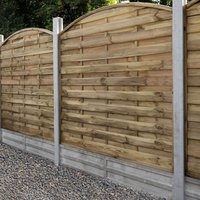
34% discount: Forest 6′ x 6′ Pressure Treated Decorative Domed Top Fence Panel (1.8m x 1.8m) £64.9934%
-
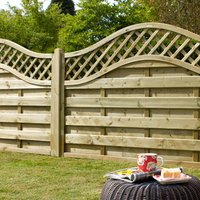
44% discount: Forest 6′ x 3′ Pressure Treated Prague Decorative Europa Fence Panel (1.8m x 0.9m) £66.9944%
-
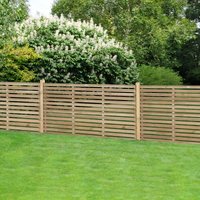
29% discount: Forest 6′ x 3′ Pressure Treated Contemporary Slatted Fence Panel (1.8m x 0.9m) £69.9929%
-
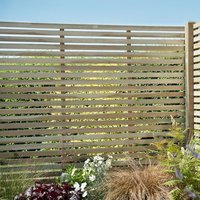
41% discount: Forest 6′ x 5′ Pressure Treated Contemporary Slatted Fence Panel (1.8m x 1.5m) £69.9941%
-
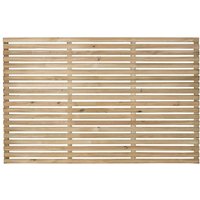
27% discount: Forest 6′ x 4′ Pressure Treated Contemporary Slatted Fence Panel (1.8m x 1.2m) £79.9927%
-
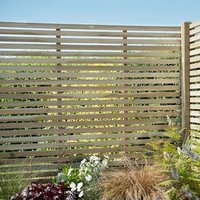
42% discount: Forest 6′ x 6′ Pressure Treated Contemporary Slatted Fence Panel (1.8m x 1.8m) £80.9942%
-
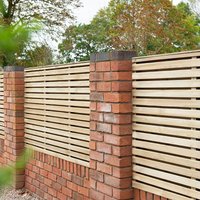
34% discount: Forest 6′ x 4′ Pressure Treated Contemporary Double Slatted Fence Panel (1.8m x 1.21m) £84.9934%
-
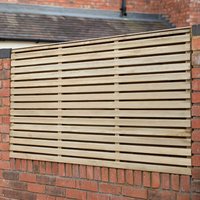
24% discount: Forest 6′ x 3′ Pressure Treated Contemporary Double Slatted Fence Panel (1.8m x 0.91m) £89.9924%
Fencing special offers bring together wire, panels, posts and gates at reduced prices, with options for garden boundaries, pet runs, paddocks and site protection; compare mesh gauges, heights, coatings and panel styles before you choose.


Bargains that still do the job
Special offers in fencing are often built around overstock lines, seasonal clears, bundle packs, end-of-range panels or mixed pallets. That means the lower price does not always point to lower usefulness; it often points to a change in stock, a colour run closing, or a batch being replaced by a newer size. For a garden project, that can open the door to stronger sections than you first planned, or to a neat finish that sits a bit lower on the budget.
There is a lot of ground to cover in fencing, and the offer label can hide some useful differences. A clearance roll of mesh is not the same as a decorative panel pack, and a reduced gate kit will not behave like a long run of stock fencing. The trick is to look at the shape, spacing, coating and fixing method, then match it to the space you are working with.
Wire, panels and rails: the main forms
Fencing special offers often fall into a few clear undertypes:
- Welded mesh for tidy straight runs, small enclosures and garden division.
- Chain link for long boundaries, pet areas and places where visibility matters.
- Overlap panels for a familiar timber look with solid screening.
- Closeboard sections for heavier, more private side and rear runs.
- Post-and-rail for paddocks, open borders and loose boundary marking.
- Hit-and-miss boards where a little air movement is wanted through the fence line.
- Stock fencing for fields, rough edges and wider spans with tensioned wire.
- Slatted or decorative panels for a patterned finish rather than full screening.
These forms do not only differ in looks. They also differ in how they carry wind, how much light they let through, and how much fixing hardware they need. A panel with close boards feels heavier and more enclosing. A mesh line feels lighter and more open. A rail fence sits somewhere between the two, with structure but not much blocking.
Heights, spacings and the feel of the line
Fence height changes the whole mood of a garden edge. Lower runs can mark a bed or path without making the plot feel boxed in. Mid-height panels can divide seating from lawn or hide bins and utility corners. Taller sections are used when a more enclosed line is wanted, though the rise in height also changes how much wind the fence must take.
Spacing matters just as much. Tight board spacing gives privacy and a denser face. Wider gaps create a lighter, more rural edge and can reduce the sense of bulk. In wire fencing, the mesh opening does the same job: smaller apertures suit pets and containment, while larger apertures are better for general boundary work where visibility is helpful.
The shape of the top edge also changes the result. Flat-topped panels read as neat and formal. Arched or curved tops soften the line. Feathered edges on closeboard panels give a less severe profile. Even on offer stock, these small details can shift the whole appearance of a run.
Coatings, timber and metal: what the surface tells you
Special offers usually include different materials, and each one behaves in its own way. Treated timber fencing has a warm look and suits natural garden settings. It can come as overlap, waney-edge, closeboard or decorative slats. The key difference lies in the board shape, the overlap pattern and the thickness of each section. Thicker boards feel sturdier, while thinner ones are lighter and often easier to handle.
Metal fencing shows a different character. Galvanised wire resists rust more strongly than plain steel, and powder-coated finishes add a layer of colour and protection. Black mesh, green mesh and dark rail systems often sink into the background more quietly than pale timber. That makes them useful where the boundary should sit back and let planting lead the scene.
Some offers mix material types across the same purchase, such as timber panels with metal posts or steel mesh with timber rails. These combinations are worth a close look. They can change the way the fence looks, but they also alter weight, fixing style and the feel of the finished edge. A lighter panel on a strong post can be easier to handle than a heavy board run on soft timber alone.
Where each type earns its place
Different fencing styles suit different jobs, and the offer shelf can be a useful place to compare them side by side.
- Privacy gardens usually lean towards closeboard or overlap panels.
- Front boundaries often use lower decorative panels or post-and-rail.
- Pet zones tend to benefit from mesh with smaller openings and secure fixing points.
- Paddocks work well with post-and-rail or stock fencing.
- Allotment plots often suit wire sections that let light through.
- Boundary repairs may need mixed offer packs with panels and posts in matching sizes.
The main difference is not just the look but the use. A solid fence is better at screening and blocking stray views, yet it can catch more wind. An open fence carries less visual weight and often works well in long runs, but it gives less cover. That trade-off is central when choosing from a special offer range.
Small details that change the whole fit
Post size, fixing method and panel width all matter when you are dealing with fencing special offers. A discounted panel is only useful if the post centres suit it. A gate is only useful if the hinges, latch and opening direction fit the route you need. Even a modest mismatch can lead to extra cuts or awkward gaps.
It helps to check whether the items are sized in metric widths, whether posts are slotted or face-fixed, and whether panels sit between posts or over rails. These things sound minor, but they shape the whole run. A slotted post system can be quicker to assemble. A face-fixed panel may give a more traditional timber face. A rail-led build can allow more adjustment on uneven ground.
Here the difference between decorative fencing and functional fencing becomes clear. Decorative lines focus on finish and pattern. Functional lines focus on span, strength and enclosure. Special offers can include both, so the label alone tells only half the story.
Useful tips for checking an offer fast
If you are scanning a page or standing in front of a reduced-price display, a few quick checks help narrow the choice:
- Measure the run first, then match the panel or roll width to it.
- Check the height against neighbouring fences so the line does not jump oddly.
- Look at the gap size in mesh if pets, children or garden access are involved.
- Compare coating type if the fence will face damp or exposed conditions.
- Confirm whether posts, caps, clips and gates are part of the same offer.
- Watch for mixed packs where the number of pieces does not match the full run.
That last point matters more than it seems. Some special offers are best for patching a section or starting a smaller project, while others suit a full boundary line. If the pack contains odd numbers of items or a reduced set of matching pieces, it may still be useful, but only when the project shape fits it. A clever buy is often the one that avoids awkward leftovers.
Privacy, airflow and sightlines
Not every fence is trying to do the same thing. Some are there to shut out views, while others are there to show a clear boundary and still let the garden breathe. Closeboard, overlap and solid decorative panels create stronger screening. Hit-and-miss or slatted panels break the line into narrow gaps, softening the visual block. Mesh and post-and-rail leave much more open space, so the garden feels less closed in.
That difference changes how a plot reads from the house and from the path. A dense fence can make a narrow side return feel more private but also more enclosed. A lighter fence can keep the eye moving and make the boundary feel less harsh. In windy corners, open designs can also be less of a sail, which is useful on exposed edges and along long straight runs.
Timber looks, steel lines and rural edges
Offer fencing can carry a very different tone depending on the material family. Timber is warmer and softer in mood, often tied to domestic gardens and mixed planting. Steel and wire lines are cooler and more technical, often chosen for clear definition and strong practical use. Post-and-rail sits between the two, with a rustic edge that suits open plots, field margins and spacious gardens.
Those differences are not only visual. Timber generally gives a more enclosed feel in short panel runs. Wire allows views and works well where you need to see through the boundary. Rail fencing is strong in shape but light in obstruction. Because special offers can include any of these, the material family should be part of the choice, not just the price tag.
Matching the offer to the ground
The ground itself influences what fencing deal makes sense. Flat ground is easier for standard panel lines. Sloping ground can suit stepped panels, adjustable rails or mesh that follows the fall more naturally. Uneven edges may need more posts or smaller sections to prevent odd gaps. If the line bends, short runs or flexible mesh can be easier to lay than rigid panels.
That is why fencing is rarely one-size-fits-all. The same special offer can be brilliant for one stretch and awkward for another. A rigid panel is neat on a straight run, but less forgiving on changing levels. A roll of wire is less showy, but it can handle long uneven sections with more ease. The difference in handling is often the real story behind the sale price.
Clear choices, fewer surprises
When you strip it back, fencing special offers are about shape, span and surface. The forms vary, the materials vary, and the purpose varies too. Some lines bring privacy. Some mark space with very little visual weight. Some fence styles are made to sit quietly in the background, while others speak up more strongly in the garden scene.
A reduced price can hide a strong buy, especially when the dimensions line up with what you need. Look closely at height, width, post type, mesh opening, panel profile and coating. Compare open and solid styles. Compare timber and metal. Compare straight panel runs with more flexible fencing forms. Those differences are where the value sits.
Short run. Tall line. Light wire. Heavy board.
One pack, many uses.
Price matters, but shape matters more.
A neat edge changes a plot.
Read the sizes twice.
From garden boundary panels to wire mesh fencing, from closeboard privacy screens to post-and-rail sections, the right special offer is the one that fits the line you need, not just the tag beside it. Some have more screening, some more air, some more strength in the span. That mix is what makes the category worth a closer look.