
Forest Garden Storage - special offers - Best offers in UK
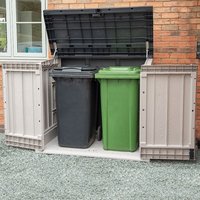
Forest Garden storage special offers bring timber garden storage, compact sheds, log stores and outdoor boxes into one browsing space, with shapes, sizes and finishes that suit tighter plots, side returns and working corners.
Deals with a timber tone
There is something quietly useful about storage made in wood. It does not shout for attention, yet it sits in the garden with a natural line and a calm face. In this category, the focus is on Forest Garden storage pieces that turn unused edges into working space. That may mean a neat box for cushions, a slim store for tools, a bike shelter, or a larger timber store for outdoor kit. Each piece has a different footprint, a different opening style and a different way of using the space you already have.
The word “storage” sounds plain. Here, it is more like a shaped answer to a cluttered corner. A narrow run beside a fence can hold a vertical cabinet. A patio wall can take a low chest. A path end can host a taller unit with doors. The special offers section makes those choices easier to compare, because the range often brings together several forms that solve different jobs. It is less about one box for everything and more about finding the form that fits the object, the site and the way you move through the garden.
What sits inside the range
Forest Garden storage in special offers often covers a mix of outdoor forms, each with its own use. You may see small garden storage boxes for seat pads and hand tools, larger units for furniture cushions, timber log stores for stacked fuel, compact bike stores for two-wheel cover, and shed-style storage units for mixed equipment. The names may differ, but the shape tells the story quickly.
Some pieces are low and broad. Others are tall and slim. Some lean against a wall; others stand on their own. That matters when you are trying to place storage in a garden that already has a route, a view and a few fixed points. A low chest leaves sight lines open. A taller cupboard uses height rather than floor area. A store with a sloping roof shifts rain away from the front and gives the unit a more cabin-like outline. These differences are not just visual. They change how the item is used, what it can hold and where it feels at home.
- Garden storage boxes for cushions, seat pads and smaller outdoor items
- Timber bike stores for keeping cycles out of the weather and off the path
- Log stores with open or partly open sides for stacked fuel and airflow
- Compact sheds for mixed storage in a smaller footprint
- Vertical cabinets for long-handled tools and narrow spaces
Shapes that change the feel
The shape of a storage unit changes more than its outline. A chest shape gives a low, steady look and works well where a seat-height surface would be useful. A cupboard shape makes better use of height and keeps the ground area clear. A store with a pitched or sloping roof adds a traditional garden silhouette, while a flat-topped box feels more modern and tight to the ground. It is not only about style, though style matters. It is also about access, loading and the room needed to open lids or doors.
Wide lids suit quick throws of soft items inside. Double doors help when larger pieces need to be lifted in and out. Single-front openings can suit narrow runs where there is only one approach. Some units are square-edged, some are more elongated, and that difference can make a long fence line feel more ordered. A rounded or softened roofline can ease a hard corner visually, while a boxier form can sit still beside a patio or shed. Tiny detail, big effect.
In practice, shape should match what you store most often. If it is cushions and throws, a broad top opening can save time. If it is tools, a front door and interior height may be more useful. If it is bikes, the width and turning room matter more than the finish. Simple, but important.
Timber grain, colour and finish
Forest Garden products are known for timber construction, and that gives these storage pieces a warm, garden-friendly look. The grain, board direction and panel layout all play a part in how a unit sits among planting, paving and fencing. A vertical board face can feel more structured. Horizontal boards can lengthen the look of a unit. Overlap details and framed doors often give a more traditional character, while cleaner panel lines can look sharper and more contemporary.
Colour also changes the mood. Natural timber shades blend into planting and bark. A painted or factory-finished surface can create stronger contrast against stone or gravel. Even in an offer section, these differences matter because a storage piece is not just a box. It becomes part of the backdrop. Put beside a gravel path, it can look crisp. Set among grasses or shrubs, it softens. Near a deck, it can read like an extension of the structure rather than a separate object.
Small difference, real effect. A lighter tone can seem less heavy in a tight garden. A darker finish can settle visually in shaded spots. And if the store is near seating, the timber texture helps it feel less like a utility item and more like part of the outdoor setting.
Where each type earns its place
Different storage types work better in different spots. A garden storage box suits a patio edge, where cushions, throws and smaller accessories need to stay near the seating. A bike store usually wants a side run, driveway edge or back access point where wheels can move in and out without awkward turns. A log store belongs closer to a house wall, garden room or sheltered side, depending on how the fuel is used and how much stacking height is needed. A compact shed-style store can sit at the end of a border, in a service area, or where the garden already has a utility zone.
This is where special offers are especially handy. They let you compare forms without having to jump between categories. If space is tight, the differences between a low chest and a vertical cabinet become obvious. If the site is open but shallow, a long narrow store may work better than a square one. If access is from one side only, the opening style matters more than the overall volume.
It can help to sketch the space as a simple rectangle and mark the swing of doors or lid. That small step often shows which units suit the route and which ones would get in the way. No fuss. Just clear spacing.
Benefits that show in daily use
The main benefit of Forest Garden storage is not only hiding things away. It is creating a cleaner rhythm in the garden. Tools stop leaning against walls. Cushions no longer travel indoors after every use. Logs can be stacked in a tidy line rather than spread under tarps. Bikes get a home that is not the hallway, shed path or porch. The result is a garden that feels more settled because the useful things have a fixed place.
Another benefit is the way timber storage can sit with planting and hard landscaping. Metal or plastic can work well, but timber has a softer edge, especially in gardens with natural textures. It ties in with fencing, planters and pergolas more easily than hard reflective surfaces. That makes the storage piece less visually loud.
There is also the matter of access. A well-chosen store means less shifting around when you want something quickly. The right size avoids overfilling, so the contents stay easier to reach. A unit that matches the item shape also reduces odd gaps inside. That sounds minor, yet it affects how often the storage stays tidy in practice.
- Creates a fixed place for seasonal and outdoor kit
- Helps reduce visual clutter along paths and patios
- Brings timber texture into functional areas
- Makes narrow plots more usable by using height or depth wisely
- Supports faster access to items used often outside
Differences that matter when comparing offers
When looking through special offers, the differences are often in the details rather than the category label. One unit may have a front opening, another a top lift. One may be better for long objects, another for bulky soft items. One may suit a sheltered position, another may be more enclosed. One may have a slighter profile for tucked-in spaces, while another offers a fuller internal volume. These differences shape the buying choice more than the headline name.
It helps to compare internal use rather than just external size. A box with thick timber sides may have a different usable space than a taller but slimmer cabinet. A store with a sloping roof may reduce standing height at one side, which matters if you are storing taller items. A bike store with wide opening doors can be easier to use than a narrower unit with more height but less access. The offer section gives you a way to weigh those trade-offs without guessing.
Also worth noting is the visual footprint. Some pieces look light because of board spacing or roof shape. Others feel solid and enclosed. Neither is better on its own. It depends on whether you want the item to blend into planting or stand as a neat utility feature. That is one of the small pleasures of timber storage: it can be practical without feeling harsh.
Useful tips for choosing the right one
Start with the item you need to store, not with the unit name. Cushions need dry, quick access. Logs need stacking room and suitable airflow. Bikes need width, turning space and an opening that does not force a tight angle. Long-handled tools need height and a clear front. Once the item is clear, the right shape is easier to spot.
Measure the space with the opening action in mind. A lid needs room to lift. Doors need space to swing. A narrow gap between fence and path may suit a vertical store, but not a broad chest. If the unit is going beside a wall, think about whether the doors will open fully without catching planting, downpipes or steps. A few centimetres can make a difference.
It also helps to look at the garden from the place you use most. A store may seem small from the patio and bulky from the lawn, or the other way round. The eye reads scale in relation to what is around it. That is why shape, board pattern and roofline matter so much in this category.
- Match the opening style to the item stored most often
- Check lid and door clearance before deciding on position
- Use height for narrow spaces and width for soft items
- Think about how the unit will sit beside fences, walls or planting
- Compare usable space, not only outer dimensions
A category for corners, lines and quiet order
Forest Garden storage special offers work well because they bring together pieces that are often chosen for one exact corner, one route, or one specific outdoor job. A garden can have several of these jobs at once, and that is where the range becomes useful. The category is shaped by practical forms, but it also has a visual side: low boxes for unobtrusive storage, upright cabinets for spare height, log stores with open rhythm, bike stores with a more enclosed shell, and compact sheds for mixed use.
The best match often comes from the smallest details. A single door versus double doors. A low lid versus a front opening. A broad, squat outline versus a taller, slimmer one. These are not decorative extras. They decide how easily the unit fits into the garden and how naturally it can be used. A good choice feels like it has always been there. It does not crowd the area, and it does not ask too much from the space around it.
That is the appeal of this kind of storage. It brings shape to the useful parts of the garden. It gives the clutter somewhere to go. It lets timber, line and function do the work quietly. And if the special offer happens to give a little more room for that choice, so much the better.
Small box. Big help.
Timber stays calm.
Space feels neater.
Doors matter more than you think.
One corner changes everything.
For shoppers comparing Forest Garden storage special offers, the clearest path is usually the simplest one: measure the item, note the opening style, check the footprint, and choose the form that fits the route as well as the wall. That keeps the choice grounded in the garden you already have, not some imagined version of it. The result is storage that sits well, works hard and leaves the rest of the space free to breathe.