
Garden Gates - special offers - Best offers in UK
Showing 1–8 of 9 resultsSorted by price: low to high
-
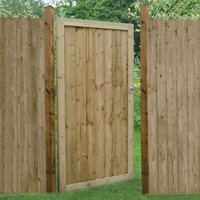
26% discount: Forest 3′ x 6′ Featheredge Pressure Treated Wooden Side Garden Gate (0.92m x 1.8m) £116.9926%
-
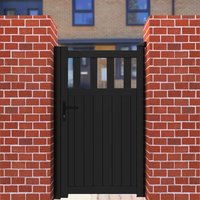
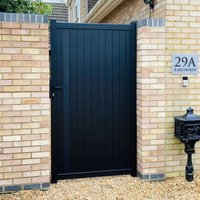
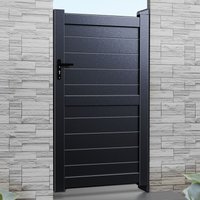
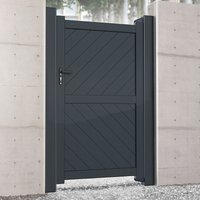
31% discount: Partial Privacy Premium Metal Side Gate – Black £256.9931%
-
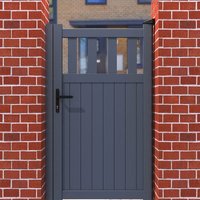
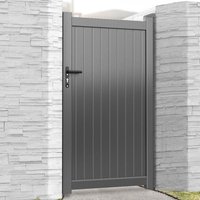
30% discount: Partial Privacy Premium Metal Side Gate – Grey £260.9930%
-
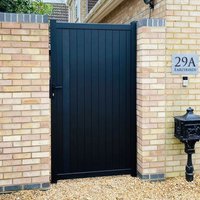
26% discount: Devon Premium Metal Side Gate – Black £311.9926%
-
26% discount: Exeter Premium Metal Side Gate – Black £311.9926%
-
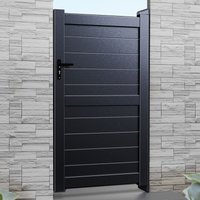
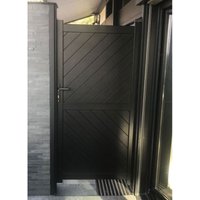
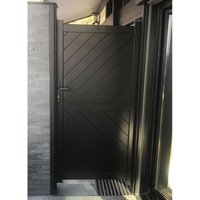
26% discount: Barnstaple Premium Metal Side Gate – Black £311.9926%
-
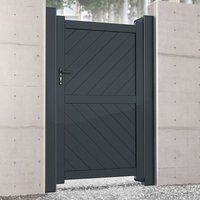
26% discount: Barnstaple Premium Metal Side Gate – Grey £311.9926%
-
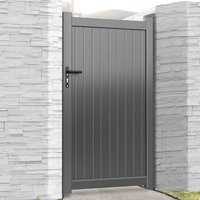
25% discount: Devon Premium Metal Side Gate – Grey £314.9925%
Garden gates special offers bring timber, steel and composite styles together for side entries, front boundaries and orchard paths; compare shapes, locks and finishes for a gate that fits your space and look.
Deals that shape a first glance
Garden gates do more than close an opening. They set the line between inside and outside, and the shape you choose changes the whole read of a border. A narrow pedestrian gate feels light and neat, while a wider driveway gate carries more weight and presence. Some special offers focus on single gates, others on matching pairs, and that difference matters if your opening is tall, broad, or set in a fence run that needs balance.
Short openings call for compact formats with tidy frames. Wider spans may use a pair of leaves that meet in the middle, which can suit formal paths and broad entrances. There are also arched tops, straight tops, curved braces, and framed designs with slats or panels. Each one brings a different line to the garden, from plain and practical to more decorative and layered.
Timber grain, steel line, composite shell
Timber garden gates carry a natural grain and can sit softly against planting, hedges and stone. They often suit cottage-style borders, rustic paths and enclosed yards where a warmer look is wanted. Larch, softwood and hardwood styles can vary in tone and density, so two wooden gates may feel very different even when the shape is similar.
Steel garden gates tend to show thinner bars, stronger frames and a sharper outline. This makes them useful where visibility matters, because light and air pass through more easily. They can look slim against brick piers and masonry walls, while still marking a clear boundary. Powder-coated finishes also give a cleaner surface look than plain metal.
Composite garden gates usually combine a timber-like face with a more stable core structure. The main visual difference is the surface: it can resemble wood but sit with a straighter, more even finish. These gates suit buyers who want a neat board effect without the uneven look that some natural timber can show over time.
Frames that speak in different ways
Frame style changes how a gate sits in its opening. A framed ledged gate uses horizontal rails to hold boards together and gives a straightforward, grounded shape. A braced gate adds diagonal support and can look more traditional, with the diagonal line drawing the eye across the panel. Framed tongue-and-groove styles create a tighter face, with less gap between boards and a more enclosed feel.
Open bar gates are another type altogether. They suit spaces where you want a view through the boundary and where the gate is as much a line as a barrier. In contrast, solid-panel gate designs hide more of the garden behind them. That can create a stronger sense of enclosure at the entrance, especially along side passages or shared boundaries.
Panelled garden gate styles often carry a more composed look, while slatted forms feel a bit airier. That difference affects both appearance and how the opening sits beside the fence. A slatted gate can echo modern screen fencing, whereas a vertical-board gate feels more rooted in classic garden boundaries.
Single leaves, twin leaves, different jobs
A single gate leaf is common for side access and narrower walks. It is simple to handle and works well where the opening is not too wide. A pair of gates, sometimes called double gates, can suit broad entrances or places where vehicles, tools or larger garden equipment need to pass through. The split in the middle also changes the look, giving the opening a more formal centre line.
For long driveways or grander approaches, double gates are often chosen for symmetry. For a rear path or kitchen garden entrance, a single gate usually feels more direct. The difference is not only about width. It is also about movement: a pair opens from the centre and creates a wider passage, while a single leaf swings from one side and keeps the mechanism compact.
Double leaf garden gates can need matching hardware so both sides meet cleanly. That makes alignment important, but it also gives a balanced face when shut. Single gates are easier to fit into tight runs and can sit beside post-and-rail or closeboard fencing without taking over the whole section.
Shapes that change the mood
Shape has a strong effect on the feel of a gate. Straight-topped gates keep the silhouette level and calm, which suits modern boundaries and neat fence lines. Arched tops soften the line and can echo curved planting beds, old brickwork or traditional cottage entrances. A modest rise in the centre often feels less formal than a full arch, but still adds some movement.
There are also gates with decorative top rails, pointed pickets or cut-out detail. These changes are small, yet they alter how much of the garden is seen from the street or path. A low visibility gate lets more of the border show through, while a denser shape gives a tucked-away feel. The choice is not only visual; it also affects how open or enclosed the threshold seems.
Special-offer details worth a close look
When browsing discount garden gates, the offer usually sits in the detail rather than the headline price alone. Check the dimensions first, because a bargain on the wrong size is no bargain at all. Measure the opening width, post spacing and swing direction, then compare those figures with the gate listing. Left-hand and right-hand hanging can change whether the gate suits a path, wall or neighbouring post.
Look at the hinge points and latch position too. Some gates are sold as gate only, while others are paired with simple fittings or a frame format. If a special offer includes a framed design, it may suit a more stable install on posts or piers. If it is a plain leaf, the surrounding fence structure becomes more important.
gate clearance measurements matter for uneven ground, gravel approaches and sloping paths. A gate that seems fine on paper may scrape below if the opening drops slightly. This is where small differences in underside gap, rail position and post alignment can make a practical change.
Hardware that changes the feel
Even when the gate itself is the same width and material, the hardware alters use and appearance. Heavy-duty hinges suit larger or denser gates, especially where the leaf has more weight to carry. Smaller strap hinges can suit lighter timber forms and give a more visible, traditional look. The latch style matters as well: ring latches, bolt latches and more enclosed catches all give a different hand feel.
A gate that swings smoothly into the space beside it can make daily use easier, especially in a narrow passage. A gate that binds or over-swings can spoil the line of the fence. So, while the special offer may centre on the gate itself, the fixings help decide whether the opening feels neat or awkward. The hardware is not just accessory; it is part of the gate’s character.
hinges and latches for gates also affect the visual language. Dark ironwork against pale wood feels more pronounced. Slim zinc-coloured fittings look quieter. That contrast can either highlight the gate or keep the eye on the panel surface.
Useful distinctions for different garden settings
A front garden gate often needs a lighter, more open form so the boundary feels inviting without giving everything away. A side gate usually needs more privacy and a firmer swing line, especially if it leads to bins, storage or a service path. Rear garden gates may be broader, because they often connect to utility areas or another section of the plot.
In a formal layout, matching gate and fence styles can create a steady rhythm. In a more relaxed planting scheme, a contrasting gate can stand out as a feature. A timber gate beside hedging feels softer, while a metal gate against brick can look crisp and spare. These contrasts are useful if you want the opening to either blend in or act as a point of focus.
privacy garden gates usually have denser boards, fewer gaps and a taller profile. decorative garden gates may use scrolls, finials or light openings that keep the boundary visible. The difference is clear: one gives more seclusion, the other more detail and line.
Small choices that make a big change
Colour can alter the gate without changing its form. Dark green, black and brown tones sink into planting and fencing, while pale wood shades sit more visibly in the landscape. A gate with a painted finish feels different from one left to show its grain. In metal designs, the coating can change both sheen and the way the gate reads from a distance.
Think about the opening line as well. A gate that meets a fence at the same height creates a clean run. One that sits lower or higher can become a feature. For narrow gardens, a vertical emphasis can make the boundary feel taller. For wide entrances, a broader horizontal feel can calm the view.
match garden gate height with the surrounding boundary if you want the whole line to read as one piece. If you want the entrance to stand out, a slight change in height or top shape can do that without using extra ornament.
Buying with the opening in mind
Special offers are easier to use when the gate is matched to the exact job. A pedestrian side gate should be light enough to open with ease yet firm enough to close with certainty. A driveway or broad entrance gate needs stronger support and a more stable frame. If the ground slopes, check whether the gate can clear the surface as it swings. If the opening is between posts, confirm the width between faces rather than relying on a rough estimate.
It also helps to think about the surrounding materials. Timber gates pair naturally with timber fencing, but they can also soften brick and stone. Metal gates often sit well with masonry and railings, giving a sharper edge. Composite gates may bridge the gap, bringing a wood-like surface with a neater, less uneven look. None of these are wrong; they just shape the feeling at the boundary in different ways.
garden boundary gate offers should be read as a set of choices, not one fixed answer. Once the opening, shape and material are clear, the special offer becomes easier to judge. That is where the useful value lies.
Quick notes for easy scanning
- Single gates suit narrow paths and side access.
- Double gates suit wider entrances and split openings.
- Solid panels increase enclosure; slats keep more openness.
- Arched tops soften the outline; straight tops keep a sharp line.
- Timber feels warmer; steel looks slimmer; composite sits in between.
- Check swing direction before you compare price.
- Measure post-to-post width, not just the gap at eye level.
A closing line on form and fit
A gate is a small part of a garden, yet it carries a lot of the first visual work. In special offers, the best value often comes from a clear match between material, shape and opening type rather than from the lowest number on the label. A slim steel leaf, a framed timber panel or a twin gate set can each suit a different kind of boundary. The choice changes how the garden reads from the outside and how the path feels from within.
That is why the details matter: the top line, the frame, the width, the finish, the latch, the way it opens. Get those right and the gate feels settled in its place. Get them wrong and it look out of place, even if the price was low. These gate choices are small, but they shape the whole entrance.