
Glass Greenhouse 8x6 - Best offers in UK
Showing the single result
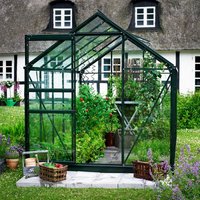
Glass greenhouse 8×6 space for seed trays, tall tomatoes, citrus in pots and neat staging; a clear-roofed growing room with a compact footprint, bright aspect and the crisp look of 8×6 greenhouse size.
Small footprint, full character
An 8×6 glass greenhouse works with a modest plot without feeling clipped. The footprint stays tidy, yet the inside can still be arranged with a central aisle, one side for staging, and the back for taller pots or climbing crops. That balance is what pulls many gardeners to this size: it sits between a very tight lean-to and a larger walk-in house, so you get room to move, but not a sprawling structure that swallows the garden.
The glass gives the frame a clean outline and a bright interior. Light travels further through glass than through opaque sheeting, so the whole space feels open even when trays and pots begin to stack up. For a garden where every metre matters, the 8×6 format can be a neat fit.
What the 8×6 shape brings to the plot
Freestanding greenhouse layouts in 8×6 form are often chosen for balanced access. You can usually enter from one end, then work down the length without constant turning. That makes the shape easy to plan around shelving, staging, and the taller plants that need a vertical run.
The proportions also suit regular row planting. A narrow width encourages a clear working line, while the six-foot depth offers enough space for pots, seed trays, and a few larger containers without making the interior awkward. It’s a size that feels purposeful rather than overdone.
Short. Bright. Neat.
It keeps its shape. It keeps the light. It does not crowd the border.
Glass types that change the feel
In this category, the glass itself changes the whole character of the greenhouse. Horticultural glass greenhouse panels give a traditional look with a classic sparkle, while toughened safety glass has a more robust feel and is often chosen where strength matters. Both bring that clear, reflective finish that makes glass structures stand out among softer, cloudier coverings.
Some glass houses use plain clear panes, which show the structure sharply and keep the inside bright. Others use safety-glass panes that break into smaller pieces if damaged, so the surface feels more reassuring in busy gardens or more exposed spots. The difference is not only in strength; it also changes how the greenhouse sits visually in the garden.
- Horticultural glass for the traditional greenhouse appearance
- Toughened glass for a sturdier panel choice
- Clear panes for crisp visibility and strong light transmission
- Textured or obscure sections where a softer side panel look is used
Frame styles that alter the outline
The same 8×6 size can feel very different depending on the frame. An aluminium greenhouse 8×6 gives a slim, modern outline with clean lines and less visual bulk. A painted or darker frame can make the glass seem even more pronounced, while a greener finish blends more gently with planting and lawn edges.
There are also shape changes. An apex greenhouse with a peaked roof creates a familiar triangular profile and extra headroom at the centre. A pent greenhouse has one sloping roof face and often suits a side wall or boundary position. A lean-to style, where available in similar dimensions, tucks against a wall and uses the building as part of the shelter. The size stays 8×6 in spirit, but the form changes the feel of the whole corner of the garden.
These frame differences matter because they affect how the glass looks from outside, how tall plants sit inside, and where the light lands through the day. A higher roof line can give more space for canes and hanging baskets. A lower roof line can feel more compact and sheltered.
Why glass behaves differently from other covers
Glass is visually sharper than many plastic coverings. It gives a greenhouse a clean edge, and the view through the panes stays clear rather than hazy. That means the inside often feels more like a working room than a tented shelter. For gardeners who like a solid, architectural look, that difference matters.
The material also supports a more defined interior layout. Because the panels are rigid, the walls read as straight and firm, which makes it easier to plan shelves, staging, and narrow paths. In an 8×6 build, that clear structure can help the space feel more ordered from the start.
Glass looks cooler. Glass feels sharper. Glass catches the light.
Classic, lean, or practical: the main subtypes
Within the 8×6 category, the subtypes are usually about shape and framing rather than dramatic size shifts. A classic apex form suits a traditional garden setting and gives a balanced roof line. A lean-to form works beside a house or wall and can feel tighter but more integrated with the plot. A more decorative Victorian-style outline, where offered in glass, adds curved ridges and a more ornate silhouette without changing the usable floor area much.
Each subtype creates a different working feel. Apex models often give a central high point that suits taller crops. Lean-to models can make strong use of one sheltered side and may feel easier to pair with an existing wall. More ornate designs favour appearance and garden presence, while plainer forms often put emphasis on usable space and straightforward access.
- Apex greenhouse 8×6 for a familiar peaked roof and balanced height
- Lean-to greenhouse for a wall-side position and a tighter footprint
- Victorian style greenhouse for decorative lines and a more traditional profile
- Walk-in greenhouse feel in a manageable size, with room to move around
Inside the width: how the space works
The 8×6 plan is interesting because it is small enough to organise, yet wide enough for more than one approach. Some gardeners run a single central path with staging on both sides. Others place tall crops against the back and use the front for trays and smaller pots. That flexibility makes the category useful for mixed growing habits.
The width also changes how light falls across the structure. In a narrow greenhouse, side panes can feed the interior with brightness from dawn to later in the day. In a glass build, this often gives strong edge light, which is handy for seedlings on the staging and for crops that prefer an even spread rather than a single hot pocket.
Space speaks. Light answers. Plants take the cue.
Useful differences in panel layout
Not all glass greenhouse 8×6 layouts look the same. Some have full-length side panels, while others break the sides into smaller sections that give the frame a more divided appearance. Door position can also shift the use of the floor plan: end entry supports a long working line, while a side entry can make a corner feel more open and less interrupted.
The roof design changes things too. A straight roofline gives a crisp, simple outline; a higher ridge allows more vertical room; and a lower profile can reduce the visual presence of the greenhouse from the rest of the garden. These are not just style points. They change how it feels to step inside, turn around, and reach the upper shelves.
Some houses feel tall. Some feel snug. Some do both.
Where the category stands apart
Compared with smaller 6×4 or 6×6 models, an 8×6 greenhouse gives more breathing room for staging and taller containers. Compared with larger glass houses, it is less demanding on garden space and can sit more neatly against fencing, lawn edges, or a paved base. That middle position is one reason it appears so often in compact and medium gardens.
The glass finish also gives it a stronger visual presence than lighter coverings. It reads as a proper garden structure, not a temporary cover. For buyers who want a greenhouse that looks as settled as the shed or the potting bench, the glass category has a clear edge in appearance.
The frame line matters too. Slim aluminium edges make the panes stand out. Thicker visual framing gives the structure more weight. Both approaches work, but the mood is different: one reads modern and spare, the other more solid and old-school.
Choosing by garden position
Position changes the experience of any 8×6 glass greenhouse. In an open site, clear glass can catch a lot of light and feel airy, but it may also show every internal detail from outside. Tucked behind a hedge or beside a wall, it becomes more enclosed and can sit quietly in the background while still drawing in brightness.
For a corner plot, a lean-to or pent shape can line up neatly with boundaries. For a central lawn edge, an apex form often feels balanced from all angles. If the garden has strong sightlines, the glass structure becomes part of the view, so the shape and frame colour matter as much as the growing space.
A glance. Then another. It holds the eye.
Handy pointers for the 8×6 category
When comparing glass greenhouse 8×6 options, it helps to look at how the dimensions are arranged inside rather than only reading the label. Some layouts feel wider at the entrance, some deeper at the back, and some make the usable area feel more open because the frame is slimmer. That can change what fits without changing the nominal size.
Also think about the balance between wall space and headroom. Side staging is useful, but if the roof line is low, taller crops may need the central strip. If the frame is taller, the upper space can be used more freely for hanging baskets or climbing support. Small differences in roof height and ridge shape have a bigger effect in an 8×6 than people often expect.
- Check whether the main access point suits your working flow
- Compare apex, pent and lean-to outlines for the garden position
- Look at how much vertical room the ridge adds above the floor
- Note how slim the frame appears, as this affects the visible light
- Consider how the interior lines up with staging and taller pots
A clean, practical look with a strong garden presence
A glass greenhouse in 8×6 form sits in a rare middle ground. It has enough presence to look established, enough width to arrange properly, and enough clarity in the glass to keep the inside bright and readable. The result is a structure that feels well proportioned without taking over the plot.
For buyers browsing by category, the differences often come down to glass type, frame style, roof shape, and position. Those features change how the greenhouse looks from the path, how it sits with the rest of the garden, and how the interior feels once the door opens. A good 8×6 glass greenhouse does not shout; it simply stands there with a clear shape and a bright face.
Sharp lines. Clear panes. Calm profile.
It earns its space.
And it leaves room for the garden around it, too.