
Metal Garages 9x7 - Best offers in UK
Showing the single result
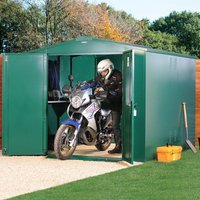
Metal Garages 9×7 bring a compact steel footprint, hard-edged weather defence, and tidy storage for cars, tools, bikes, and workshop kit in one measured space.
Small footprint, strong shell
A 9×7 metal garage sits in that useful middle ground where space is tight but the need is not. The 9×7 size gives a neat rectangular area that can hold a single vehicle, a ride-on mower, shelving, or a mix of garden gear without swallowing the plot. It is a shape that feels controlled and deliberate, not bulky. That matters when the garage has to sit beside a boundary, at the back of a garden, or within a drive layout where every metre counts.
The metal structure brings a crisp, rigid envelope around the contents. Unlike timber builds that can move with moisture, steel frames and cladding keep their line with far less fuss. For buyers comparing garage types, the main attraction is the way a metal shell holds itself together while staying visually restrained. The space is not wasted on thick decorative walls or awkward joins. It is workmanlike, with clean planes and practical edges.
What 9×7 actually gives you
At this size, proportions matter more than raw area. A 9×7 garage is often chosen for:
- a single compact car
- motorbikes or scooters
- garden machinery and long-handled tools
- stacked storage along one wall
- a bench zone with room to move around it
The width lets the interior breathe just enough for side access, while the depth keeps the build from feeling like a tunnel. It is not a cavern; it is a measured box with a clear use. That shape also helps if the garage is being placed near other structures, because the footprint stays readable and the build does not overpower the surroundings.
There are, of course, limits. A 9×7 garage is not a sprawling multi-car structure, and that is part of its character. The fit is tighter by design. For many buyers, that is the point: less unused air, more useful square footage. It keeps the whole arrangement compact, which can be useful when planning a driveway or garden corner where access and turning room already take a slice out of the usable land.
Roof shapes that change the feel
Metal garages in this size come in different roof forms, and the roofline alters both the look and the interior behaviour. A pent roof leans to one side with a simple slope, giving a lower front or rear profile and a pared-back silhouette. It can suit modern plots where a low visual line is wanted. A apex roof, by contrast, rises to a central ridge and gives the garage a more traditional shed-like outline, with extra headroom in the middle.
That extra height can be useful if the garage needs storage above the car line or space for taller items like ladders, shelving uprights, or stacked containers. A curved or arch-style roof creates a different atmosphere again. The rounded profile sheds rain cleanly and removes sharp roof corners from the design. It is a more industrial look, less domestic perhaps, but it often suits buyers who want a plain, practical structure with a slightly softer top line.
The roof choice changes more than appearance. It affects how the garage meets neighbouring structures, how tall the internal space feels, and how the front elevation reads from the drive. The roofline do a lot of visual work in a compact build, so the right one can make the whole unit feel better proportioned.
Frames, cladding, and the steel character
Metal garages are usually judged by the frame and skin working together. The frame gives shape and load-bearing structure, while the cladding forms the weather-facing shell. In a 9×7 model, that relationship is especially important because the unit is small enough for every panel line to be noticed. A neat frame alignment and evenly fixed cladding help the garage feel solid rather than improvised.
Many buyers look at galvanised steel because it has a clean, bright finish and resists corrosion better than untreated metal. Colour-coated options change the mood again, with darker shades often making the garage recede visually against fencing or planting. Lighter tones can read as sharper and more contemporary. The difference is not only aesthetic; darker finishes may absorb more heat, while pale ones tend to soften the appearance in bright weather.
Panel profile also matters. Flat sheets give a blunt, modern face. Ribbed or corrugated cladding introduces lines across the elevations and adds visual texture. Those lines can make a small garage feel more structured and less plain. The choice is less about ornament and more about the way the surfaces break up light and shadow through the day.
Door styles: one opening, many habits
The door arrangement shapes how the garage is used from day to day. A single up-and-over door keeps the front clean and simple, with one wide opening that suits vehicle access. Side doors change the rhythm more than people expect, because they allow entry without swinging the main opening each time. For a 9×7 layout, that can be useful when the garage doubles as storage and the car is not always moving in and out.
Some buyers prefer sectional doors because they move in panels and can sit well within tighter driveways, where the clearance in front is limited. Others choose a side-hinged pair for a more traditional look and straightforward access to the full width of the front. Each style brings its own habits: some need more approach space, some offer quicker walk-in access, and some keep the opening higher and clearer for loading.
Door position also changes interior planning. If the garage will hold shelving, then a door on one side or a narrower access point can leave a useful wall run untouched. If the aim is vehicle parking, a broad opening keeps the approach simple. In a compact build, these choices have real impact because there is less slack to absorb a poor layout.
Underarten that suit different plots
Metal garages in 9×7 are often split by shape and use more than by decoration. A few common underarten stand out:
- single vehicle garage with clear central parking and side storage
- tool-store hybrid with shelves, racks, and bench area
- motorbike shelter with easier side movement and lockable sections
- compact workshop shell with open floor space for jobs and parts
- boundary-fit garage designed to sit neatly along edges or fences
Each version uses the same footprint differently. A vehicle-focused build needs the front approach and turning line to be clear. A storage-first layout benefits from wall height and organisation more than floor width. A workshop-style arrangement asks for more breathing space around the centre, so the interior does not become cramped with benches and boxes. The best setup depends less on the garage name and more on how the square metres will actually be used.
Why steel changes the balance
One of the quieter strengths of a metal garage is the way it handles volume. The structure can feel slimmer than a masonry build of similar size, so the outer form leaves more visual room in the garden or drive. That matters where the garage sits close to planting, paving, or existing walls. Steel can keep the presence compact while still providing a firm, enclosed store.
There is also a practical difference in how the material is experienced. Metal surfaces tend to have a crisp, exact finish. That can suit modern paving, gravel bays, and simple boundary runs. The garage reads as an element of the plot, not a heavy addition. For people wanting a low-profile outbuilding, that distinction is useful. It gives enclosure without the mass of brickwork.
Another point is modularity. Many metal garages arrive in panels or sections that define the build clearly. That makes the 9×7 size easier to read and often easier to place in a planned spot. The structure feels organised. Every part has a role, and there is little decorative drift. It is a straightforward, disciplined kind of shelter.
How to judge the right layout before buying
A good 9×7 garage choice starts with the object it is supposed to hold. Measure the largest item first, then allow for opening doors, side access, and the space needed to step around it. A car may fit neatly on paper but still feel awkward if the mirrors, door swing, and wall clearance are not considered. That is where the shape of the garage matters as much as the size.
Think about which side needs to stay open. If the front is for vehicle access, the walls are your storage canvas. If the garage is mainly for tools, the front opening can be paired with more shelving depth and a smaller turning demand. The placement of the door, roof slope, and internal fixtures should all be considered as one system rather than as separate choices.
It is also wise to think about the plot edge. A garage along a side boundary may benefit from a lower roof profile, while a garage facing a drive may suit a more balanced apex shape. If the space is tight, a side access door can prevent the whole front from needing to be opened for every small task. These are small decisions, but they make the building easier to live with.
Useful differences between shapes and finishes
Not every metal garage feels the same, even when the measurements match. The shape of the roof, the depth of the door opening, and the finish of the panels all shift how the garage functions. A pent roof gives a simpler side profile, often with a lower front edge. An apex roof offers a more classic outline and can create a stronger sense of internal height. An arch roof removes the ridge altogether, changing the structure into a continuous curve.
Finishes create a second layer of difference. Smooth sheeting has a clean, almost plain face, while profiled panels add visual rhythm. A plain galvanised finish feels utilitarian and bright. A coated finish can tie the garage into fence panels, garden walls, or drive surfacing. The best visual match is not always the strongest contrast; sometimes a garage works better when it sits quietly beside the rest of the plot.
Even the colour depth makes a difference. Darker tones can reduce the visual bulk of the garage from a distance. Lighter tones can make the unit feel sharper and more visible. If the garage is near planting, a muted finish may sit better than a bright one. If it stands on a large drive, a stronger tone can give it more presence without changing the footprint at all.
Practical advantages in a compact build
The main advantage of a 9×7 metal garage is the way it uses space without asking for much in return. The footprint is manageable, the shell is direct, and the result is a storage or vehicle space that can be slotted into gardens and drives that would not suit a larger outbuilding. That gives more freedom in planning, especially when the land is already spoken for by paths, fences, sheds, or planting beds.
There is also a neatness to the form. A steel garage can keep its lines well, and the interior can be organised around the walls instead of around irregular corners. That makes racking, hooks, and long items easier to place. In a 9×7 unit, one wall might hold tools, another could take seasonal kit, and the remaining space stays open for movement or parking. The layout becomes purposeful rather than improvised.
For buyers who want a garage that does one job cleanly or two jobs with restraint, this size often lands in the right place. It is not oversized, and that is part of the appeal. The structure stays proportionate to the task.
Before the final choice
When comparing metal garages 9×7, the main question is not simply what fits, but what fits well. A vehicle, a bike, or a stack of garden kit can all claim the same space in different ways. The garage should reflect that use through its door style, roofline, and panel finish. Once those parts line up, the building feels settled in its setting.
Keep an eye on access, clearance, and wall use. A garage with the wrong opening pattern can waste its own space. A garage with the right one can feel surprisingly roomy, even in a modest footprint. That is the quiet strength of this size: it gives structure without excess.
Metal garages in 9×7 are compact, clear-cut, and built for plots where each metre counts. They suit driveways, side returns, and garden corners where a larger structure would crowd the view. For storage, vehicle shelter, or a tidy mix of both, they hold their place with no faff, and with less visual bulk than many alternatives.
Small frame. Straight lines. Hard shell.
Space used, not wasted.
Shape does the talking.
Steel keeps its posture.
Compact, but not cramped.