
Metal Garages - special offers - Best offers in UK
Showing all 7 resultsSorted by price: low to high
-
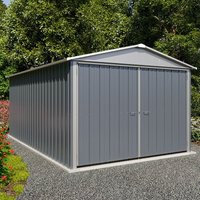
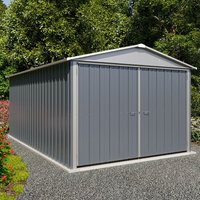
10% discount: 10′ x 17′ Yardmaster Metal Garage (2.97m x 5.22m) £949.9910%
-
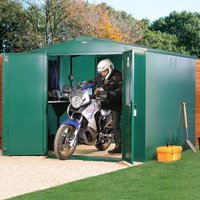
14% discount: 9′ x 4′ Trimetals Titan 940 Premium Motorcycle Metal Garage – Security Storage £1,329.0014%

-
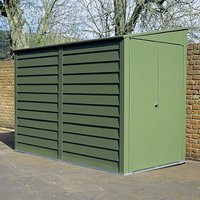
16% discount: 9′ x 5′ Trimetals MCG950 Premium Motorcycle Metal Garage- Security Storage (2.65m x 1.60m) £1,559.0016%
-
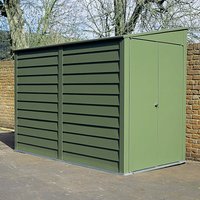
11% discount: 9×6 Trimetals MCG960 Premium Motorcycle Metal Garage – Security Storage (2.65m x 1.83m) £1,789.0011%
-
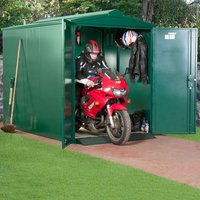
6% discount: 5’2 x 9′ Asgard Secure Motorbike Garage (1.58m x 2.74m) £1,869.006%
-
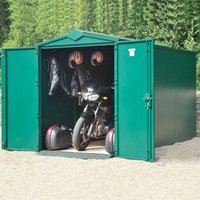
8% discount: 5’2 x 10’11 Asgard Secure Motorbike Garage Plus (1.52m x 3.33m) £1,939.008%
-
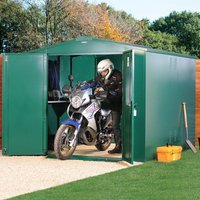
8% discount: 7’4 x 8’11 Asgard Gladiator Motorbike Garage (2.24m x 2.72m) £2,049.008%
Metal garages special offers for steel storage, workshop shelter and vehicle cover in the UK. Compare single bay, double width and open front styles, with roof shapes, cladding choices and fitting tips.

Steel space with a clear purpose
Metal garages bring a firm outline to a plot, giving parked vehicles, tools and larger equipment a place with a strong outer shell. In special offers, the appeal is often the balance between structure and value: the frame, the panels and the layout are doing clear jobs without extra fuss. They sit neatly in gardens, side spaces and driveways where timber can feel softer or where brick work would ask for more time and more outlay.
Short. Solid. Straight to the point.
What makes these garages different
The difference with a metal garage is not just the material, but the way the material shapes the whole unit. Steel and galvanised steel units are usually chosen for their rigid form, their crisp lines and their tidy fit against varied ground plans. Some buyers want a closed box for full enclosure, while others look for an open-front shelter that works more like a covered bay. The shape changes the use, and the use changes the shape.
- Galvanised steel for a cleaner, coated surface.
- Single bay units for one vehicle or compact storage.
- Double bay layouts for wider access and more turning room.
- Lean-to forms that sit against another wall or boundary.
- Free-standing garages that define their own footprint.
Forms that change the feel of the space
Special offers often include a mix of forms, and each one brings a different feel to the site. A pitched roof gives a more classic garage silhouette and creates a higher central line. A pent roof leans in one direction, which can suit a boundary wall or a lower build profile. A flat roof profile keeps the height low and the shape firm, useful where planning limits or neighbouring lines matter. There are also units with open sides, half walls, or full front openings, each changing how air, access and cover work together.
Very direct. Very neat. Easy to place.
That range matters because garden plots are not all the same. One site may need a narrow run beside the house, while another may have a broad rear section with room for doors that open wide. A garage with a wider span can take larger vehicles, but a slimmer unit may leave more space for paths, planting or extra hardstanding. The right form is less about “more” and more about what sits well in the land.
Roof lines and why they matter
Roof shape is one of the clearest differences between metal garage types. A pitched roof gives a stronger vertical feel and can help create extra internal headroom in the middle. A pent roof slopes in one direction and tends to have a sharper, more minimal profile. A curved roof, where offered, brings a rounded line that can look lighter on the eye and can shed water in a smooth flow. These roof types do not only alter the look; they also alter how the garage sits against trees, fences and nearby buildings.
- Pitched for a taller centre line.
- Pent for a low, directional slope.
- Curved for a rounded outer profile.
- Flat for a compact outline where height is tighter.
Under a steel shell: use and access
A metal garage is often chosen for more than parking. It may be used for bikes, garden machinery, boxed stock, sports kit or a compact work area. The layout decides how usable that enclosed space feels. Double doors give broad entry, roller-style openings reduce swing space, and side access can make the whole unit easier to use when the main opening is blocked. These details are small, but they shape the day-to-day rhythm of the building.
Open front. Easier sweep. Fast access.
Another useful difference is between fully enclosed garages and partial cover units. A fully enclosed model creates a distinct boundary around what is kept inside. A partially open unit keeps movement simpler and can suit objects that are regularly moved in and out. For some plots, a garage with one closed side and one open side gives a useful balance between shelter and access, especially where space is tight or turning angles are awkward.
Why buyers keep looking at metal over other builds
Metal garages have a character that sits between utility and clean design. They are often less visually heavy than block-built structures, yet they still give a firm, enclosed form that reads clearly in the garden. Compared with timber, the lines tend to be sharper and more industrial. Compared with masonry, the build can feel quicker and visually lighter. That difference is one reason special offers draw attention: the structure has a straightforward look, but it still brings a strong presence.
- Steel frame for a rigid outline.
- Panelled sides for a consistent surface finish.
- Door choice that changes access and stance.
- Span width that affects vehicle fit and interior movement.
- Height profile that alters both storage and appearance.
Shapes that answer different plots
There is a practical difference between a narrow single garage and a broad double unit. A single bay sits more quietly in a smaller garden and often leaves breathing room around the edges. A double garage can take two vehicles side by side, but it also works as one wide storage hall with room for shelves, benches or large items to one side. For awkward plots, corner-friendly or lean-to arrangements may fit better than a standard rectangular shell, especially where fences, trees or existing paving create a tighter frame.
Small footprint. Wide span. Different needs.
In special offer ranges, some garages are sold as straightforward enclosed shells, while others include features such as extra door options or different roof directions. Even when the core structure is similar, these details create noticeable differences in daily use. A wide opening may suit larger items, but a side door can be better when regular entry is by foot. One type is not automatically better; it is more about the way the space will be used and how the site allows the building to sit.
Useful tips before choosing a layout
It helps to measure the usable area, not just the whole plot. Boundaries, slopes, overhanging branches and nearby walls can all affect placement. Think about door swing, turning space and where a vehicle would actually line up before it enters. If the garage is to sit near a path or drive edge, a slimmer model may leave enough circulation room without crowding the plot. If access is from a side approach, a wider front opening or a side door can change the ease of use quite a bit.
- Check the width needed for opening doors fully.
- Allow space for movement around mirrors and handles.
- Match roof profile to nearby height limits.
- Use a shape that follows the line of the garden.
- Compare enclosed, open-front and side-access versions.
Special offers with practical variety
When a category is built around special offers, variety becomes part of the value. Buyers may see different widths, roof lines and access formats in one place, which makes comparison simpler. A narrow steel garage may suit one car and compact storage. A wider model can take two vehicles or a vehicle plus shelving. A higher roof can create extra clearance, while a lower profile may sit more discreetly against the setting. The point is not to fill the site with bulk, but to choose a structure that works with the space in front of it.
Strong frame. Clean edge. Clear use.
Metal garages also stand apart by the way they make a garden feel organised. Even before anything is stored inside, the structure creates a defined zone. That is useful where a plot has several roles at once: parking, storage, movement, and perhaps a path to the rear. A steel garage can give one part of the land a fixed purpose, helping the rest of the space stay open. That contrast between defined shelter and open ground is often what draws attention to this category.
Choosing by use, not by guesswork
Start with the vehicle or items that need cover, then work backwards from that need. If the main aim is vehicle storage, door width and internal span become central. If the garage is also for boxed goods or seasonal gear, look for a layout that leaves a strip of usable floor beside the parked item. If the plot is unusual, choose the form that follows the site rather than forcing the site to follow the form. Metal garages come in enough variations for that kind of matching to be done with care.
- Single width for compact plots.
- Double width for broader access.
- Lean-to for boundary placement.
- Pitched roof for a more marked garage profile.
- Open-front for quick entry and exit.
A category with clear edges and real choice
Metal garages in special offers are defined by useful contrasts: closed or open, narrow or wide, low or high, straight or sloped. That range lets the buyer compare structure by structure rather than settling for a vague idea. The strongest choice is the one that matches the plot, the access and the way the space will actually be used. When those points line up, the garage feels settled in place rather than simply added on.
Compact shape. Firm shelter. Simple logic.