
pent sheds - special offers - Best offers in UK
Showing all 3 resultsSorted by price: low to high
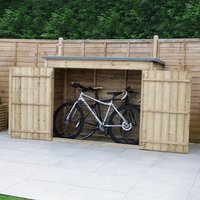
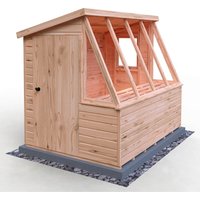
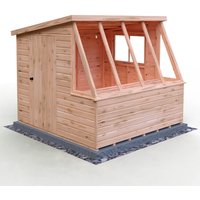
Pent sheds special offers bring low-line storage, clean roof angles and sharper prices into one neat category. Browse lean-to garden sheds, single-slope roof shapes and compact timber storage options made for tight side spaces.

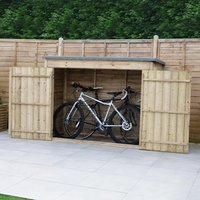

Low roof, clear purpose
Pent sheds take their name from the roof: one slope, one direction, no fuss. That single line gives them a tidy profile, so they sit close to fences, walls or garages without stealing the eye. In a garden with narrow runs or awkward corners, the shape works with the space rather than fighting it.
These sheds are often chosen for tools, bags of compost, long-handled gear and the clutter that tends to gather by the back door. Their shape keeps the height lower at the rear and higher at the front, which can change how the shed feels from the outside and how you move inside. Small thing. Big difference.
What sits inside the special offers
Special offers in this category usually cover a mix of sizes, cladding styles and roof finishes. The list can include budget-friendly units, upgraded timber builds and reduced lines from different stock levels. It is less about flash and more about taking a solid garden store and setting the price down a notch.
- Single-slope sheds for side passages and boundary lines
- Compact storage sheds for hand tools, pots and feed sacks
- Workshop-style pent sheds with a wider front wall and more internal reach
- Windowed versions for a brighter interior feel
- Windowless versions for a closed-in storage look
Some offers lean toward smaller footprints, while others focus on larger rectangular runs. The difference matters. A short shed with a deep floor can suit stacked storage, while a wider frontage gives more room for shelves, rakes and access without awkward twisting.
Shapes that change the feel
Pent sheds are not all cut from the same cloth. The roof angle may be similar, but the body shape can vary quite a bit. A narrow model tucks in easily and is often chosen for the side return. A broader model gives a more room-like inside, with less of that squeeze you get when every inch is spoken for.
Some versions feel boxy and direct, with straight sides and a practical front opening. Others soften the look with a slight overhang or a lighter roof line. There are also models with the door set centrally, and others where the opening sits to one side to leave a more usable wall section for hooks or shelving.
Here, shape is not just style. It changes how items are arranged. A central door can help with direct access, while an offset layout can free up a wall for vertical storage. That is useful if the shed is doing more than holding a lawnmower.
Timber types and cladding clues
In this category, timber construction often takes centre stage. Look for terms such as overlap, shiplap and tongue-and-groove. They are not the same thing, and they do not sit on the shed in the same way. Overlap cladding has a simpler, lighter feel. Shiplap gives a tighter join. Tongue-and-groove is the more interlocked approach, with boards fitting into one another for a firmer wall structure.
These differences matter when the offer descriptions look similar at first glance. A cheaper price on one shed may reflect overlap boarding, while a slightly higher price may bring a denser board profile or a more substantial frame. That does not make one irrelevant. It just changes what the shed is trying to do.
Roof coverings also vary. Some special offers include mineral felt, while others may use a sturdier panel finish. Frame thickness, timber grade and the way the panels are fixed can all shift the feel of the build. Read the details. The wording is often brief, but it carries the clue.
Where a pent roof helps
The roof line is the feature that gives pent sheds their character. Because the slope runs one way, rainwater moves off the roof in a single direction. That makes siting easier when there is a fence line or wall on one side and open space on the other. It also gives a modern, less bulky outline when seen from the garden.
Compared with an apex shed, a pent shed often feels lower and more directional. An apex roof rises in the middle and can give more head height right down the centre. A pent roof may not create that same peak, but it can suit spaces where a taller ridge would feel intrusive or clash with boundary limits.
Very short line: the roof is doing the talking. Shorter still: one slope. One run. One neat silhouette.
Difference between storage styles
Special offers sometimes sit across different shed families, and the detail matters more than the label. A small pent shed may be all about tool storage and garden bits. A taller version can become a working corner with more standing room and a better spread for shelves. A windowless model is more closed-off, while a glazed one pulls daylight in and softens the inside feel.
Also worth noting is the door style. Double doors help with bulkier items such as wheelbarrows, compost bins or boxed equipment. Single doors keep the frontage tighter and can suit a smaller run where every centimetre counts. A low threshold may make access simpler, although the exact detail depends on the shed specification.
Another difference lies in the layout depth. Some pent sheds are shallow but long, making them strong candidates for side-return storage. Others are more square, which gives a less tunnel-like interior. That shape choice affects what fits comfortably and what ends up wedged at the back.
Special offers that change the choice
When a pent shed is reduced, the key question is not only how much is saved, but what has been included in the structure. A lower price on a smaller unit may make sense if the size matches the spot on offer. A larger discounted shed may look attractive, yet be awkward if it overhangs the intended base or blocks a path.
Some of the better value comes from straightforward features: solid panel layout, usable door opening, practical roof line and a size that answers a real need. If the offer includes a more resilient board profile, that can alter the comparison even when the outward look is close.
- Check the internal dimensions, not only the external footprint
- Compare door position against where items will be moved in
- Note whether the roof slope sends water toward a fence, hedge or open area
- Look at cladding type before weighing up the price gap
- Measure the siting area with the door swing in mind
Useful tips for choosing by space
Think first about where the shed will stand. A pent shed is often selected for a boundary line, garage side or narrow rear strip, so the placement can decide the shape. If the area is long and slim, a rectangular pent unit can use it well. If the ground is broader, a more square version may feel less forced.
Then look at the opening. A front-facing single door is fine for smaller kit. Double doors can make loading easier where larger items need to pass through. If the shed is for mixed storage, the door position should not block the best wall for hooks or shelving. That detail is often overlooked, then missed later.
Also check the roof slope direction in relation to the plot. If the lower side faces a tight boundary, it may look visually calmer. If the higher side faces the open garden, it may give a better sense of interior lift. Small differences, but they shape how the shed settles into the space.
Smaller sheds, sharper lines
Compact pent sheds have a compact charm of their own. They do not try to dominate the garden. They slip into place. For urban plots, narrow courtyards and terrace side runs, that can be the whole point. A small model can still hold pruning tools, folding chairs, seed trays and the sort of odds and ends that never quite belong indoors.
Larger units stretch the usefulness further. They can separate seasonal equipment from everyday items, or give one side to long tools and the other to stacked containers. In a discount range, size becomes part of the equation: a larger shed on offer may cost only a bit more than a tiny one, yet shift the amount of space quite a lot.
Why the offers draw attention
Pent sheds on special offer tend to appeal because they answer a practical gap without overcomplicating the garden view. The roof line is restrained, the form is clean, and the use is direct. There is no need for a grand structure when the job is storage with a modest footprint.
They also suit people who want a shed that sits beside a path or wall rather than in the middle of a lawn. The shape makes that easier. The lower roof edge can feel less imposing, while the higher front gives enough room to work with. It is a quiet kind of usefulness.
Quite simple. Very neat. No drama.
How to read a listing with a sharp eye
Read beyond the headline reduction. A special offer can hide a different roof felt, a different door arrangement or a different cladding pattern. These are not small footnotes; they are the parts that affect how the shed behaves in place.
Watch for these points in the description:
- Pent roof storage for low-profile placement
- Timber garden shed wording that indicates natural wood construction
- Side access shed clues for narrow boundary fitting
- Single door shed or double-door wording for access type
- Cladded shed panels that hint at the wall build
Each phrase says something different. Taken together, they help separate a quick bargain from a useful purchase. If the garden space is measured, the route in and out is known, and the item list is clear, the choice becomes much easier.
Final glance at the range
Pent sheds special offers cover more than one look and more than one use. There are small units for tucked-away storage, wider forms for heavier kit, windowless lines for a closed-in feel and lighter versions that draw in daylight. The roof, wall build and door position all shift the story.
That is where the category earns its place. Not in noise, but in fit. A good pent shed does not ask for extra room. It makes room work harder. And when the offer is right, the shed can suit the plot without turning the garden into a compromise.