
Plastic Sheds 4x3 - Best offers in UK
Showing the single result
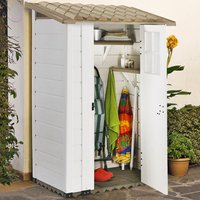
Plastic sheds 4×3 bring a compact footprint, clean lines and useful storage into tighter garden spaces, with weather-resistant panels, simple access and a range of roof styles for everyday outdoor kit.
Small outside, steady inside
A 4×3 plastic shed sits neatly where bigger buildings would feel heavy or awkward. That 4×3 size is often chosen for narrow side returns, patio edges, and modest plots where space is measured carefully. The shape gives you enough room for hand tools, bags of compost, plant pots, folding chairs or a mower, without taking over the garden. It feels contained, but not cramped.
Because the structure is made from plastic rather than timber, the walls usually have a cleaner, more uniform finish. That means less visual bulk, and often a sharper outline against fences, paving or lawn. Some buyers prefer the low-key look; others like how the pale or neutral tones blend into the background instead of shouting for attention.
Short and neat. Easy to place. Easy to use.
Panel forms, roof lines and door layouts
Within the 4×3 category, the details change the feel of the shed quite a bit. The most common differences appear in the roof shape, wall panel design and door opening. These features affect headroom, water run-off, light inside and how simple it is to move larger items in and out.
- Single-door plastic sheds use one access point and work well when the contents are smaller or stacked in a tidy way.
- Double-door plastic sheds open wider, which helps with bikes, bulkier boxes, and items with awkward handles.
- Flat-roof designs keep the profile low, so the shed sits quietly under windows or along boundary lines.
- Apex-roof designs create a raised centre point, giving a more traditional shed silhouette and extra space in the middle.
- Sloped-roof styles guide rain in one direction and can suit sites where water needs to run away from a wall.
These are not just visual choices. They shape how the shed feels day to day. A low flat roof is less noticeable from the house, while an apex top gives a bit more vertical room for shelves, hooks, or tall garden canes. Double doors can make the space feel less like a box and more like a practical store.
Plastic wall types and what they do
Not all plastic sheds use the same wall construction. Some have single-skin panels, while others use thicker, ribbed or reinforced sections. The wall pattern matters because it changes stiffness, light diffusion and the general sense of solidity.
Ribbed panels can give a stronger outer appearance and add definition. Smooth panels, on the other hand, tend to look simpler and cleaner. Some sheds use windows integrated into the walls or doors, which can brighten the interior without needing electricity. Small glazed sections also help you spot what’s inside at a glance.
A useful detail is the way panels fit together. Well-aligned joins make the shed feel more ordered. If the design includes separate floor panels or a raised floor option, this can help keep stored items above damp ground. It’s a small point, but a useful one.
Why plastic changes the feel of storage
Plastic sheds differ from timber and metal in more than appearance. They are often selected for the balance of weight, weather response and everyday convenience. For a 4×3 footprint, those differences matter because the building is small enough that every inch counts.
Weather-resistant garden storage is one of the clearest appeals. Plastic does not have the same absorbent nature as untreated wood, so the shed keeps a crisp outer surface in changing conditions. The material also tends to keep its shape well in damp outdoor settings, which is useful where the climate turns wet and cool.
Low-maintenance shed design is another strong point. Many buyers want storage without a long list of extra jobs. That makes plastic a familiar choice for people who want a straightforward building that does its job without much fuss. The exterior usually stays fairly uniform, and the inside gives a no-nonsense place for sorting seasonal items.
Light, tight, and contained.
Sizes within the 4×3 footprint
Even though the category says 4×3, there can still be important differences in the way the internal space is used. Some designs make the most of wall height, while others prioritise floor area and ease of movement. The same footprint can feel very different depending on the slope of the roof, thickness of the panels and position of the doors.
A taller apex design may give you room to stack containers upwards, while a flatter build can feel more discreet outside but slightly more limited inside. If you plan to store long-handled tools, check the internal headroom near the walls as well as at the centre. If you want to stand a bike or a garden vacuum upright, the doorway height matters too.
The small difference between one layout and another can decide whether the shed feels neatly organised or annoyingly tight. So, the shape is not just a style choice — it changes what the shed can actually hold.
Common uses that suit this size
A 4×3 plastic shed often suits storage that is useful but not oversized. It works for households that need one dedicated place for outdoor things without moving into larger outbuildings. The category usually appeals when the job is specific and the garden is not huge.
- Garden hand tools and long-handled equipment
- Plant pots, trays and seed-starting items
- Folded outdoor cushions
- Small watering gear and hose reels
- Children’s outdoor toys
- Recycling sacks or tidy bins
- Compact DIY boxes and repair kits
The useful part is how the space can be divided. One wall might take shelving, another hooks, while the centre stays open for larger items. That sort of layout helps the shed do more without needing more ground space.
Shapes that change how the shed reads in a garden
Shape matters in a way people often notice only after the shed is in place. A boxy rectangular form gives a clear, simple outline and usually makes the best use of the 4×3 area. A more softly pitched roof changes the profile, making it look less severe. Door placement can also alter the visual balance; a central opening feels formal, while an offset door can make the front look more casual.
In tighter gardens, a low profile can help the shed sit near fences or planting without feeling too tall. In more open spaces, an apex or slightly raised form can make the shed stand out as a proper feature rather than a tucked-away store. There’s no rule that one shape should suit all plots. The point is to match the structure to the line of the garden, not fight it.
Practical details worth noticing before you choose
With plastic sheds in this size, small technical details become very important. Door width decides how easily larger items pass through. Roof style affects how much interior height you get. Window placement changes light and visibility. Floor design affects how the shed sits on the ground. These are the things that shape daily use far more than the name on the product page.
It also helps to look at how the shed is meant to sit on the site. A level base matters for any outdoor store, and with a compact 4×3 footprint, even a slight tilt can make the doors feel awkward. If the base is square and steady, the shed usually feels more settled. That’s not a fancy detail, but it saves bother later on.
Check the opening path too. A double-door shed may be easier to load, but it needs clear space in front. A single door can suit a narrower run beside the house, though it may ask for a bit more sorting inside.
What sets this material apart from timber and metal
Compared with timber, plastic tends to offer a cleaner surface and a more uniform finish. That can suit modern gardens, paved corners and places where a simpler look is wanted. Compared with metal, plastic usually feels less rigid in appearance and can look softer against planting or lawn edges.
Compact outdoor storage in plastic form often appeals where the aim is neatness over presence. Timber can bring a warmer, more traditional look. Metal can feel more utilitarian. Plastic sits somewhere in between: lighter in tone, less visually heavy, and often easier to place in a smaller garden without the building dominating the space.
The difference is not just about style. It’s also about how the shed interacts with its surroundings. In a narrow space, a plastic shed may feel less imposing. In a busy family garden, it can blend into the background while still doing proper storage work.
Simple tips for choosing the right 4×3 layout
Think first about what goes in the shed most often, not just what might go in it someday. If the main items are long and narrow, look for a door arrangement that gives a clean route in. If the store will hold stacked boxes, pay attention to internal height and the roof shape. If you want the shed tucked along a boundary, a lower roofline may suit better.
Also consider how often the contents will be accessed. Frequently used items are easier to reach when the door opens wide and the inside is easy to scan. Less-used items can sit deeper in the shed, especially if shelves or hooks create clear zones. A bit of planning here stops the inside becoming muddled later on.
One small but useful habit is to imagine the shed in use, not just in place. Open the door in your head. Picture carrying in a mower or lifting out a box. That simple test tells you a lot.
A tidy footprint with a clear purpose
There’s a reason 4×3 plastic garden shed searches stay focused on this compact format. The size is manageable, the material is straightforward, and the range of shapes gives enough choice without making the decision messy. For gardens that need order rather than volume, this category stays close to the point.
It’s a storage building with a neat outline, a practical interior and a modest presence outside. It can look quiet in the garden, while still handling the jobs that keep outdoor spaces from getting cluttered. That mix of size, shape and material is what gives the category its staying power.
Small footprint. Clear job. No fuss.
Short notes to scan fast
- Plastic panel shed: steady outer look, simple finish, clear structure.
- Compact apex shed: a raised centre line with a familiar shed shape.
- Flat roof store: lower profile for tighter boundary spaces.
- Double-door access: easier for wider items and quicker loading.
- Single-door access: suits slimmer sites and smaller stored items.
For many gardens, that is enough: a neat shell, a useful interior, and a size that fits without taking over. The detail lies in the layout, and the layout is what makes a 4×3 plastic shed feel right in place. It can be, in the best sense, very unassuming. And that is often the point.