
Pressure Treated Fence Panels - special offers - Best offers in UK
Showing all 7 resultsSorted by price: low to high
-
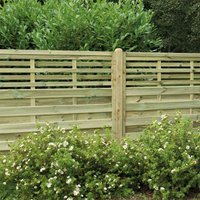
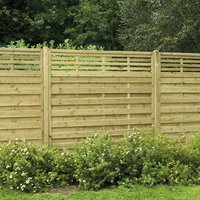
45% discount: Forest 6′ x 4′ Kyoto Pressure Treated Decorative Fence Panel (1.8m x 1.2m) £53.9945%
-
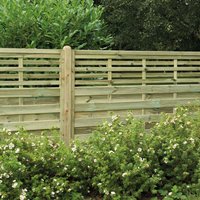
40% discount: Forest 6′ x 5′ Kyoto Pressure Treated Decorative Fence Panel – 1.8m x 1.5m £64.9940%
-
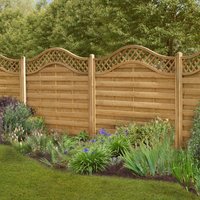
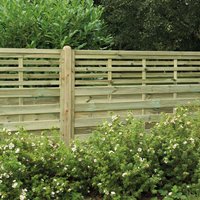
48% discount: Forest 6′ x 4′ Paloma Pressure Treated Decorative Fence Panel (Europa Prague) – 1.8m x 1.2m £66.9948%
-
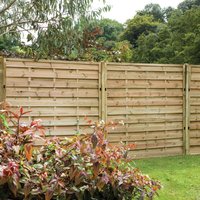
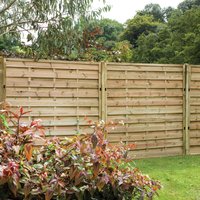
44% discount: Forest 6′ x 6′ Europa Plain Pressure Treated Decorative Fence Panel (1.8m x 1.8m) £71.9944%
-
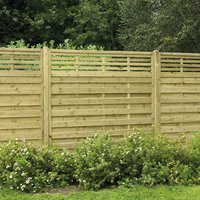
31% discount: Forest 6′ x 6′ Kyoto Pressure Treated Decorative Fence Panel (1.8m x 1.8m) £73.9931%
-
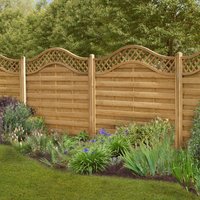
44% discount: Forest 6′ x 5′ Paloma Pressure Treated Decorative Fence Panel (Europa Prague) – 1.8m x 1.5m £77.9944%
-
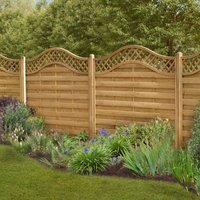
44% discount: Forest 6′ x 6′ Paloma Decorative Fence Panel (Europa Prague) – 1.8m x 1.8m £88.9944%
Pressure treated fence panels in special offers, with overlap, closeboard and decorative styles for British gardens. Compare timber forms, panel heights, edge details and stronger boundary options.

What pressure treatment changes in the timber
Pressure treatment pushes preservative deep into the wood under vacuum and pressure, so the protection is not just sitting on the surface. In garden fencing, that matters because panels live with damp soil, driving rain and standing moisture at the base. The result is timber that is made to cope better with the day-to-day outdoors, rather than wood that only looks good on day one.
These panels are usually chosen where a boundary needs a solid, ready-made section rather than loose boards. The timber often has that greenish or honey tone from the treatment process, and the finish can be left as it is or painted later if the buyer wants a different look. For a special offer range, the point is usually value across a full panel run, not just one panel on its own.
- Preservative treatment goes into the timber fibre
- Built for repeated wet and dry changes
- Often supplied in standard garden sizes
- Works with common timber posts and arris rails
Panel forms that show up most often
The main types are easy to spot once you know the shape of the boards. Overlap fence panels are made with horizontal boards that cross over each other, giving a more open, stepped texture and allowing some air movement through the surface. Closeboard fence panels, by contrast, use vertical featheredge boards fixed closely together, so they feel denser and stronger in appearance. Then there are decorative fence panels with pattern-cut tops or lattice sections, which soften a boundary line without turning it into a blank wall.
Panels also differ by their edge design. Some are framed all the way around, which gives a tidier border and helps the panel hold its shape. Others are square-topped and simpler, often used where the fence line should stay straightforward and practical. The shape at the top matters more than many buyers expect, because it changes the whole look along a run of fencing.
- Overlap panels for a lighter, layered look
- Closeboard panels for a heavier, more solid face
- Trellis-top panels for a raised finish with airflow
- Decorative panels for pattern and softer lines
Why special offer panels can work well in a full run
When a garden needs several panels, special offers can reduce the sting of buying the same item more than once. That matters because fencing is rarely one panel only; it is usually a line of repeated sections, so any difference in price gets amplified across the whole job. A matched offer can also make the finish look more even, since the timber tone and panel pattern stay consistent from bay to bay.
There is another small advantage too. If the stock is from the same production batch, the boards and framing often share similar thickness and shade. That can help when a straight boundary is being built along a lawn, driveway or rear garden edge. The less fuss the better, though that does not mean every panel is identical in grain or knotting.
Short line. It adds up.
One batch, one feel.
Less matching about.
Shape, height and the way a fence reads from the path
Fence panels are not only about security or screening; the outline they make matters too. A 6ft panel draws the eye to a firm boundary, while a 3ft or 4ft section works more like a gentle edge between areas. Taller pressure treated panels usually suit back boundaries, whereas shorter decorative sections can be used closer to seating spaces or front gardens where a softer line feels better.
Height is only one part of the story. The top profile changes how the run sits in the garden. A straight top feels orderly, while an arched or curved top breaks the line and gives the fence a bit more movement. Trellis toppers, often used as add-ons, reduce the blocky look without removing the structure beneath.
- Straight tops for crisp boundary lines
- Arched tops for a gentler outline
- Curved tops for a more flowing profile
- Trellis tops for air and a lighter finish
Where the practical advantages show up
Pressure treated fence panels are often bought because they offer a useful mix of timber strength and ready-made convenience. They can be used to replace tired fence sections or to build a new boundary without starting from loose boards. The treatment helps the wood stand up to the weather, while the panel format keeps the line of the fence neat and consistent.
Another benefit is the range of looks available within the same timber treatment. A garden on a busy street may call for dense closeboard panels, while a more open space may suit overlap panels or a decorative top. That gives buyers a chance to choose based on how much screening, airflow and visual weight they want from the fence line.
Also, the grain stays visible. Some buyers like that.
It feels like timber, not plastic.
Differences that matter when comparing options
Not every pressure treated fence panel behaves in the same way once it is in the garden. The difference between overlap and closeboard is not just appearance; it is also about how the boards sit and how much of the backing structure shows through. Overlap designs use horizontal layering, so they can appear a little more relaxed. Closeboard designs use vertical boards, giving a denser and more upright feel.
Frame type also changes the character. Fully framed panels often look tidier and more contained. Unframed or less visibly framed panels may feel lighter and more open. Some garden owners prefer a panel that sits quietly in the background, while others want the fence to be part of the garden scene. There is no single answer, only the shape that suits the line being made.
Thickness can vary too. A chunkier board and frame usually brings a more robust look, while slimmer sections can feel less heavy against planting. The special offer should be read with that in mind: not just price, but the visual weight the panel will bring to the garden.
Small buying tips that save a second guess
Check the size before ordering, because panel height and width need to match the posts and the gap being filled. A standard run may use 6ft wide sections, but the actual arrangement depends on post centres and any slope in the ground. It is worth measuring more than once, since a fence line that looks even from a distance can still shift by a few centimetres along the ground.
Think about the finish at the top and bottom too. If the fence is backing onto planting, a more closed panel can give a stronger visual stop. If the boundary needs a lighter touch, a trellis-top or decorative design can reduce the heavy feel. The special offer is only useful if the panel type suits the way the garden is laid out.
- Match width to post spacing before buying
- Check whether the run needs tall screening or a lower edge
- Choose framed panels where a tidier outline matters
- Use decorative tops where a hard block would look too stern
Timber character, not just a plain board
Pressure treated fence panels come with visible knots, grain lines and natural timber variation, and that is part of the appeal. The surface is rarely flat in a machine-like way, so each panel keeps some of the wood’s own texture. On a special offer listing, that timber character matters because it helps the fence look grounded rather than overworked.
Different panel styles handle that character differently. Overlap panels tend to show more layered texture, while closeboard panels create a more direct vertical rhythm. Decorative panels may add cut shapes or framed inserts, which breaks the timber field into something lighter. For buyers comparing the range, the best approach is to look at the shape of the boards first and the decorative detail second.
Wood stays wood. That is the point.
Common uses across a garden boundary
These panels are often used for rear boundaries, side returns and dividing lines between garden zones. A lower decorative section can mark out a seating patch, while a taller panel can screen a compost area, utility corner or neighbour-facing edge. Because the panels are pressure treated, they are often selected where the fence will meet damp ground, path splash-back or exposed weather without much shelter.
Special offers are especially useful when several styles are being matched in one layout. A straight run may use one panel type, then a trellis-top version or a decorative section may be used where the fence turns a corner or needs to soften near a patio. That kind of mixed layout works best when the timber treatment and colour tone stay close across the range.
- Rear boundaries with more screening
- Side lines where space feels narrow
- Garden zones that need a visual divider
- Mixed fence runs with different top treatments
A few straight answers before choosing
Pressure treated does not mean the panel is all the same. The board style, frame layout, top shape and height can change how the fence behaves in a garden and how it reads from the house. A closeboard section will feel more closed in, while overlap will seem a touch softer and less rigid. Decorative panels sit somewhere else again, bringing pattern and lightness without losing the timber look.
Special offers work best when the buyer already knows the line they want to build. If the garden needs a firm boundary, pick the denser form. If it needs a gentler run, use a more open profile or a trellis top. Measure the span, match the panel shape, and the fence line will make more sense from the start.
That saves a bit of head-scratching, doesn’t it?