
Raised Beds - special offers - Best offers in UK
Showing all 5 resultsSorted by price: low to high
-
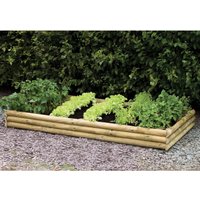
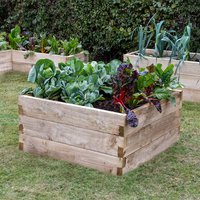
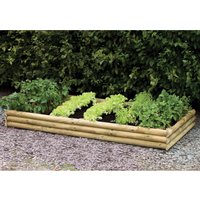
33% discount: Forest Raised Bed Kit 6’6 x 3’3 (2.0 x 1.0 m) £72.9933%
-
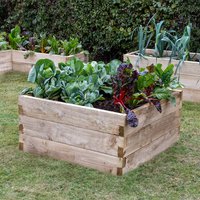
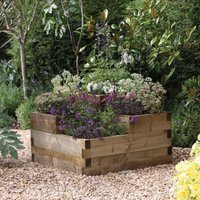
46% discount: Forest Caledonian Square Raised Bed 3’x3′ (0.9mx0.9m) £79.9946%
-
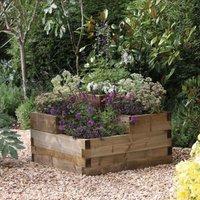
23% discount: Forest Caledonian Tiered Raised Bed 3’x3′ (0.9×0.9m) £129.9923%
-
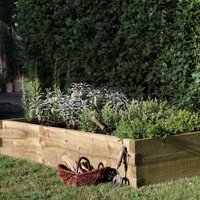
22% discount: Forest Caledonian Rectangular Raised Bed 6’x3′ (1.8×0.9m) £139.9922%

-
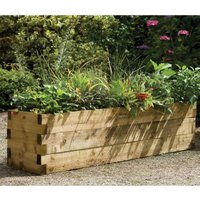
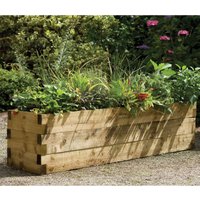
22% discount: Forest Caledonian Trough Raised Bed 5’11×1’6 (1.8×0.45m) £139.9922%
Raised beds special offers for timber, metal, and modular garden planters, with square, rectangular, and corner formats for tidy planting, tighter spaces, and smarter use of soil depth.
Frames that change the shape of a garden
Raised beds do more than lift soil off the ground; they bring a clear outline to a plot, turning loose patches into planted spaces with edges, lines, and a stronger sense of order. In a special offers range, that matters because the choice is not just about price, but about shape, size, and the way each bed sits in the garden.
Square beds suit compact layouts and corner spots where every inch counts. Rectangular beds stretch along fences, patios, and paths, giving longer planting runs for rows of salad leaves, herbs, or mixed colour blocks. Narrow trough-style beds work near walls or in small courtyards, while deeper formats suit root crops or mixed planting where more soil volume is needed.
Some beds arrive as simple open frames, others as sectional kits that slot together, and a few use corner brackets or panel systems to create sharper lines. That difference changes the whole feel: open frames can seem lighter, while panel constructions tend to look more structured. This is where special offers become interesting, because the reduced price often makes a larger size or sturdier finish easier to choose.
Timber grain, steel edges, and other contrasts
The underartes in raised beds are not only about form, but material. Timber beds bring a softer, warmer look, often blending into traditional gardens and mixed borders. Steel and galvanised metal beds read more sharply, with clean sides and a crisp outline that suits modern spaces. Composite and recycled-look options sit somewhere between the two, with a practical finish and a steady visual tone.
Each material behaves differently in the garden scene. Timber can suit a cottage-style plot or a space full of climbers and loose planting. Metal beds give a firmer frame to straight paths, paving, and gravel. Deep-sided beds in either material make a bolder statement than low edging styles, and the choice between them often comes down to how much visual weight you want the bed to carry.
There are also differences in surface finish. Smooth panels create a neat line, while ribbed or corrugated sides add texture and a little shadow play. Some beds have rolled edges or folded lips for a more polished outline; others keep a plain profile and let the planting do the talking. Neither is a rule, just a different mood.
Low, deep, and stacked: the small changes that alter use
Not all raised beds are built the same way, even when the footprint looks similar. Low beds are often used for framing lawns, separating paths, or lifting soil just enough to create a border with shape. Medium-depth beds suit most vegetables and mixed planting, while deeper versions are chosen when extra root room or a more pronounced raised effect is wanted.
Stacked or tiered beds add another layer of choice. They can create stepped planting areas, useful on uneven ground or when a stronger garden structure is needed. Multi-level beds also let different crops or flowers sit at different heights, so the display doesn’t feel flat. It is a neat trick, and it changes how the space feels without needing a full redesign.
There are even difference in wall thickness and side height. Thicker walls often give a sturdier impression and can suit larger beds. Slimmer profiles look lighter and can be useful when the garden already has plenty of mass from paving, fencing, or big containers. This sort of detail matters more than people expect.
Special offers that shift the choice
When raised beds appear in a special offers section, the price reduction can make certain types easier to pick. A discounted large-format bed may suit a plot where you planned two smaller ones. A reduced modular set can give more layout options, since the sections may be arranged in straight runs, L-shapes, or repeated blocks. That flexibility is often the quiet advantage.
Offer-led buying also helps when you are comparing finishes. If a timber bed and a metal bed are both on offer, the decision may move from cost to style and intended position. For example, a bed beside decking may work better in metal if you want a sharper line, while a timber version can soften the border beside lawn or shrub planting.
Another point is quantity. Some special offers are suited to one statement bed, while others work when several matching units are needed for a repeated layout. A set of identical beds can create rhythm in a kitchen garden, but a mix of sizes may be better for a more informal plot. The offer is not only about saving money; it can shape the whole pattern of the space.
- Square beds for compact, tidy planting blocks
- Rectangular beds for rows, repeats, and longer runs
- Corner beds for awkward spaces and boundary turns
- Tiered beds for stepped layouts and height changes
- Modular beds for layouts that can be changed later
Forms that suit different garden moods
Raised beds carry a strong visual identity, and the form changes that identity. A straight-edged rectangular bed feels organised and measured. A square bed feels compact and deliberate. A set of shallow beds arranged in a grid gives a kitchen garden an orderly look, while a single long bed can act almost like a low wall, guiding the eye along a path.
Round and curved forms do exist in some ranges, though they are less common than straight-sided ones. Curved beds soften hard paving and break up rigid layouts, especially in spaces with arcs, bends, or circular patios. By contrast, boxy beds create stronger geometry and usually make the garden feel more structured. Neither one is better; they simply lead the eye in different ways.
Some beds are sold as high-sided planters with a strong container feel, while others are closer to open frames that sit directly on the ground. The first kind tends to stand out more as an object, the second tends to merge into the garden layout. If you want the planted area to be read as a feature, a higher-sided form has more presence. If you want it to feel embedded, a lower frame is less intrusive.
Why shape and height matter more than you think
The difference between shallow and deep raised beds is not only about soil volume. It also changes planting pattern, access, and the way the garden is perceived from standing height. A low bed can make a border feel longer. A deep bed can make a small area seem more intentional, because the vertical sides create a clearer edge.
Height also affects the look of mixed planting. In a low bed, foliage often spills more naturally over the sides and the bed can blend with surrounding paving or lawn. In a taller bed, the side panels form a stronger frame, so the planting can appear more contained. That is useful when you want different parts of the garden to feel separated without building a full divider.
There is a visual difference too between slim beds and chunky ones. Slender sides feel light and neat. Thick sides look more substantial and can lend a grounded, almost furniture-like quality. When special offers include both types, it is worth thinking about the proportions of the garden, not just the headline price.
Practical tips for choosing from the offer stack
Before buying, measure the exact patch you want to use, including walkways and corners. A bed that is only a little too wide can upset the line of a path or block a gate. If several beds are going beside each other, check how the joins will read visually: some layouts work best with even gaps, while others need a tight run.
Think about whether you want one statement bed or a repeated set. One large unit can act as a focal point, while a group of smaller beds helps create structure. If your garden already has strong lines from paving or fencing, a straighter bed style will usually sit more naturally. If the space is loose and informal, a less rigid form may feel less forced.
Also look at the bed’s side profile. A bed with a cleaner edge can echo modern paving and architectural planting, while a more rustic finish can sit happily with mixed borders and older brickwork. This is not about matching everything; it is about balancing the visual weight. A garden with too many heavy forms can feel cramped, while a set of lighter beds can keep things open.
Small details, big differnce
It is often the little things that decide whether a raised bed feels right. The finish of the corners, the rhythm of the panels, the depth of the sides, and the way the bed closes at each end all change the final look. Two beds of the same length can feel very different if one has bold corner posts and the other has slim, almost invisible joins.
Drainage openings, base style, and whether the bed is open-bottomed or base-supported also alter the type. Open-bottomed beds connect straight to the ground beneath, while base-supported planters behave more like containers. That difference can shape not only how they sit, but how they are arranged in a special offers purchase, especially if you are planning a repeat pattern or a run along a wall.
Sometimes the best choice is the one that leaves room for the rest of the garden to breathe. Sometimes it is the one that gives a blank patch a clear edge. Raised beds do that neatly. They draw a line. They hold the scene. And in a special offers section, they let that line be set with a bit more freedom.
- Choose long shapes for rows and repeated planting blocks
- Choose square forms for tight, balanced layouts
- Choose deep sides when stronger visual presence is wanted
- Choose lighter profiles if paving or fencing already dominates
Short, neat, and counted. Raised beds do the framing.
Metal cuts a sharper line.
Timber feels softer.
Deep beds stand taller.
Modular sets bend to the space.
One offer can change the whole layout.