
Wooden Arbours 6x6 - Best offers in UK
Showing the single result
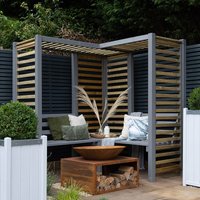
Wooden Arbours 6×6 bring a framed timber feature to patios, paths and quiet corners, with square proportions, open sides and climbing-friendly lines for gardens that need shape and character.
Six-by-six wooden arbours sit neatly in many outdoor layouts, giving a defined passage, a garden pause point, or a small architectural accent without taking over the space. Their square footprint gives them a steady look, while the timber finish keeps the feel warm and grounded. They are not loud. They just stand there and make a scene.
Square lines, soft timber
A 6×6 arbour is usually chosen for its balanced proportions. The equal width and depth create a compact frame that feels ordered, which is why it works so well beside straight paths, lawn edges and focal planting. Compared with narrower versions, a square wooden arbour has more presence from the front and side, so it reads as a small outdoor room rather than a simple archway.
Wood brings a different mood from metal. It has grain, shade and natural variation, so the structure sits more quietly in planting. That softer look suits cottage-style borders, rustic layouts and more formal gardens too, depending on the finish and detailing.
Forms you’ll see in the range
Wooden arbours in this size often appear in a few clear shapes and constructions:
- Flat-top arbours with straight posts and a horizontal canopy line for a crisp outline
- Curved-top designs that soften the frame and echo rounded planting
- Side-panel arbours with lattice or trellis sections for climbing plants
- Open-frame arbours that keep the structure light and airy
- Bench arbours where seating is built into the centre or sides
These forms change the feel of the garden quite a lot. A flat-top model looks sharper and more architectural, while a curved version has a gentler outline. Add lattice sides, and the arbour becomes part support, part screen. Leave the sides plain, and the focus stays on the timber shape itself.
Why the 6×6 size works so well
The 6×6 format gives enough width for a comfortable visual gateway without needing a huge garden. It can mark the transition between lawn and border, lead towards a seating spot, or sit at the end of a path as a clear destination. Because the footprint is compact, it can work in smaller gardens where larger pergola-style structures would feel heavy.
This size also gives flexibility in placement. It can sit free-standing on a paved area, rest over a short path run, or frame a narrow entrance into another part of the garden. The result is a feature that feels deliberate but not overdone.
Timber character, not just structure
Pressure-treated timber arbours are common in this category, and that treatment matters because it supports the structure for outdoor use. Beyond that practical point, the wood itself changes the whole tone of the piece. Softwood tends to keep the cost lower and the look lighter, while heavier timber sections can give more visual weight and a sturdier presence.
There are also differences in the way the wood is cut and finished. Square posts create a more formal line. Rounded edges feel less rigid. Decorative cut-outs or lattice infill add detail without making the arbour busy. Even small changes in the timber profile can alter how the piece sits in the garden.
Climbers that suit the frame
Because this category is often used with climbing plants, the shape of the frame matters. The open sides and top bars give climbing stems a place to thread through, while the 6×6 proportions allow growth to sit around the structure without swallowing it straight away. Plants are not the feature here alone, but the arbour helps them hold a shape.
Good matches often include roses, clematis and honeysuckle, especially where the side panels or top rails give them something to grip. For a more restrained look, lighter climbers can be trained to trace only part of the frame, leaving the timber form visible. That contrast between wood and foliage is what gives these arbours their charm.
Short. Clean. Framed.
Different uses in the garden
A wooden arbour in 6×6 form can serve several roles, and the shape influences how it behaves in each one. As a garden entrance feature, it gives a threshold and a sense of arrival. As a seating arbour, it makes a small sheltered pause point. As a pathway arch, it adds rhythm to an otherwise flat route. The same size can feel very different depending on where it stands.
There is also a neat distinction between decorative and functional use. Some arbours are mainly there for the view, with clean lines and open sides. Others are built to hold plants or frame seating, so the structure is slightly fuller. A buyer looking for shape alone will read the details differently from someone wanting a spot for a bench or climbers.
Little differences that change the look
Not all 6×6 arbours sit the same way in a garden. A narrow roof line gives a taller, lighter feel. Wider roof framing makes the piece look more grounded. Lattice sides can make the structure feel enclosed, while open posts keep it breezy and minimal. These small design choices shift the mood more than people sometimes expect.
Finish also matters. Natural timber reads as relaxed and organic. Darker stain tones can make the frame recede into planting. Painted finishes create a sharper, more tailored edge. The same 6×6 shape can therefore lean rustic, formal or simple depending on surface and detail.
Helpful buying points without the fluff
When comparing wooden arbours in this category, a few practical details are worth checking:
- post thickness, as it affects how solid the frame feels
- whether the side sections are open, slatted or trellis-style
- roof shape, especially if you want a stronger outline
- the overall depth of the 6×6 footprint in relation to your path or patio
- how much climbing space the frame offers before the structure starts to look crowded
It also helps to think about sightlines. If the arbour will be seen from several angles, a more balanced design usually works better than one with a heavily detailed front only. If it sits against planting, a simpler shape often holds its line more clearly.
A frame that settles into the scene
The appeal of a wooden arbour in 6×6 form is not that it shouts for attention. It gives the garden a little architecture, a point of pause, a way to turn movement into a moment. It can feel neat beside a straight path, softer under climbing growth, or more formal at the entrance to a seating area.
There is no need for excess here. The shape does enough on its own. A timber arbour brings outline, texture and structure in one piece, and that is often what a garden corner is missing.
Compact. Framed. Timeless-ish.
When the details do the talking
In a category like this, the small differences are the real story. Some arbours lean towards a rustic garden gate feel, with simple posts and a lighter roof section. Others sit closer to a miniature pergola, with broader timber members and a stronger top frame. Some are made to be walked through, others to be sat beneath. Some carry plants, some carry the eye.
That range is what makes Wooden Arbours 6×6 easy to use in different garden styles. You can keep the look plain and structural, or let the timber and planting work together for a fuller effect. Either way, the square format gives the garden a clear line to follow, and that line changes the space more than it first appears.
Look closely. The shape matters.
Small frame. Big change.
Wood with edges.
Space, but shaped.