
Wooden Gazebos - special offers - Best offers in UK
Showing 1–8 of 27 resultsSorted by price: low to high
-
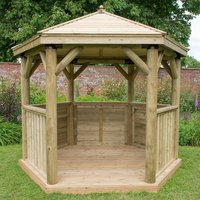
19% discount: 10’x9′ (3×2.7m) Luxury Wooden Garden Gazebo with Timber Roof – Seats up to 10 people £5,259.9919%
-
20% discount: 12’x10′ (3.6×3.1m) Luxury Wooden Garden Gazebo with Traditional Timber Roof – Seats up to 10 people £5,949.9920%

-
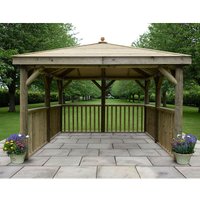
22% discount: 11’x11′ (3.5×3.5m) Square Wooden Garden Gazebo with Timber Roof £6,159.9922%
-
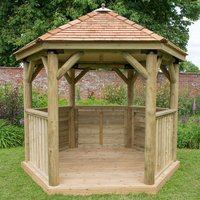
25% discount: 10’x9′ (3×2.7m) Luxury Wooden Garden Gazebo with New England Cedar Roof – Seats up to 10 people £6,279.9925%
-
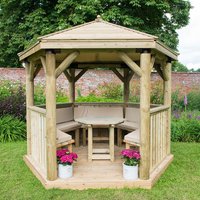
19% discount: 10×9 Luxury Furnished Wooden Gazebo with Roof & Seats up to 10 people (3×2.7m) – Timber Roof £6,349.9919%
-
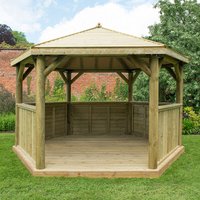
19% discount: 13’x12′ (4×3.5m) Luxury Wooden Garden Gazebo with Timber Roof – Seats up to 15 people £6,479.9919%
-
26% discount: 12’x10′ (3.6×3.1m) Luxury Wooden Garden Gazebo with New England Cedar Roof – Seats up to 10 people £7,049.9926%
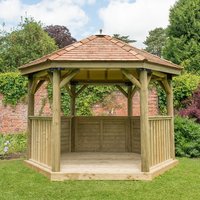
-
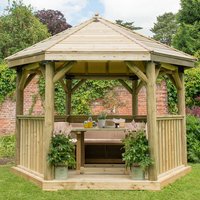
19% discount: 12’x10′ (3.6×3.1m) Luxury Wooden Furnished Garden Gazebo with Traditional Timber Roof – Seats up to 10 people £7,289.9919%
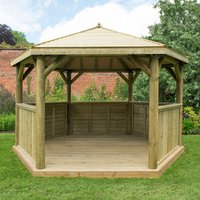
Wooden gazebos special offers for garden seating, shade and outdoor gatherings, with hexagonal, square and open-sided designs, pressure-treated timber, and styles that suit lawns, patios and corners.


Timber Frames with Character
There is something quietly striking about a wooden gazebo. It has weight, grain and a lived-in look that metal structures rarely match. In wooden gazebos special offers, the appeal often lies in the timber itself: warm-toned softwood, denser hardwood, or engineered sections that hold shape neatly while still keeping the natural feel. These shelters sit well in gardens that want a little structure without losing softness.
Short sentences matter here. The shape speaks first. The wood does the rest.
Unlike flat-roof garden shelters, a gazebo often carries a pitched, domed or pagoda-style top, which changes the whole outline. That roofline gives the structure presence, and it also shapes how the space beneath feels. Some versions lean open and airy; others feel more enclosed, with balustrades, rail panels or partial walls. These differences are small at first glance, but they alter how the gazebo sits in the garden and how people use it.
Shapes That Change the Mood
Wooden gazebos come in several forms, and each one gives a different atmosphere. A hexagonal wooden gazebo creates a classic centrepiece look, with even sides that suit a lawn or a circular seating plan. A square wooden gazebo feels more direct and structured, often fitting neatly against a wall, decking area or patio edge. Then there are octagonal timber gazebos, which bring a fuller silhouette and a more ornamental line.
Open-sided models are lighter in expression, with posts and roof doing most of the visual work. Partially enclosed versions add more sheltering edges and can make the interior feel calmer. Pergola-style gazebos sit somewhere between open framework and full shelter, with a slatted top or beam pattern that gives a different kind of shade. The choice is not only about size; it is about how much boundary you want around the seating space.
- Hexagonal gazebos for a centred garden feature.
- Square gazebos for straight edges and easier placement.
- Octagonal gazebos for a broader, more traditional outline.
- Open-sided timber shelters for a lighter visual frame.
- Part-enclosed designs for a more settled seating feel.
Offers with Different Timber Stories
Special offers often appear across varied timber types, and those differences are worth noticing. Softwood models tend to be lighter in appearance and often come with pressure treatment, which gives the wood a practical outdoor finish while keeping the look natural. Hardwood gazebos usually have a denser grain and a stronger visual depth, with a richer tone that can make the structure feel more grounded.
There are also differences in surface finish. Some gazebos arrive with a smooth, planed look that keeps the lines clean. Others show a more rustic texture, with the grain standing out and small natural marks still visible. For buyers comparing wooden gazebos special offers, this is where value can shift. A lower price may reflect simpler timber, a smaller footprint or fewer decorative details, while a higher offer might include thicker posts, more refined joinery or a roof shape with more presence.
Do not assume that every reduced-price gazebo is the same. One could be a compact 2.5 m square form with basic posts, while another might be a larger octagonal kit with stronger roof detailing. The discount only tells part of the story; the timber section, roof build and side structure explain the rest.
Rooflines, Posts and the Quiet Differences
The roof is where wooden gazebos become distinctive. A shallow pitched roof gives a tidy profile and works well in gardens that prefer neat geometry. A steeper pitch creates a more traditional shelter shape and draws the eye upward. Pagoda roofs have layered points and decorative lift, which makes them stand apart without needing extra ornament. Some models use shingle-covered tops, while others use timber boarding or pre-formed roof panels.
Posts matter too. Thick corner posts create a firmer outline and can make the gazebo feel planted. Slimmer posts reduce the visual bulk and suit smaller gardens. Then there are the side details: cross-bracing, rail panels, half-height balustrades, or fully open frames. These are not just decorative. They change how much the structure blocks sightlines, how sheltered the interior feels, and whether it reads as a garden room or a freestanding shelter.
One small note: a gazebo with taller posts and a higher roof often gives more head space, while a lower version can feel more intimate. Neither is right for every plot. It depend on how the surrounding garden is laid out.
Why Buyers Look at Special Offers
Special offers attract attention because timber structures can vary widely in scale and finish. A gazebo on offer may open the door to a more substantial frame, a more sculpted roof, or a shape that would otherwise sit outside the budget. Some buyers want a statement feature; others are after a practical covered seat for a corner or lawn edge. The reduced price can make those choices easier to balance.
There is also the matter of style range. In a sale section, you may see compact square gazebos, broad hexagonal forms and more decorative octagonal models side by side. That makes comparison easier. You can weigh the footprint, the number of sides, the openness of the frame and the overall timber character without moving through unrelated products. The range is useful because the differences are visible at a glance.
- More structure for a smaller outlay.
- Access to shapes not always chosen first.
- Chance to compare timber grades and roof profiles.
- Better value when looking for a garden focal point.
Placement, Scale and Garden Geometry
Wooden gazebos work differently depending on where they sit. A centre-lawn placement turns the structure into a destination. A corner position can make better use of a compact plot and still give the garden a defined gathering point. Along a terrace or patio edge, a square or rectangular footprint usually feels less forced, while a hexagonal or octagonal shape softens straight paving with a more rounded outline.
Scale matters as much as form. A large gazebo in a narrow garden can dominate the view, while a small one on a wide lawn may feel lost. Special offers are helpful here because they let you consider sizes that might otherwise be set aside. Think about the shape of the surrounding hard landscaping, the line of the fence, and the existing planting. A gazebo with a six-sided outline can echo curving borders more easily, while a square design settles into a more formal space.
Some gazebos gives a strong frame for tables and chairs; others are better read as a shelter for a bench or two armchairs. This difference is worth reading before making a choice, because the internal footprint is not always obvious from the outside shape alone.
Useful Details That Separate One Offer from Another
When comparing wooden gazebos special offers, small details can change how the structure feels in use. The number of sides alters circulation inside the frame. The roof pitch affects the visual height. The width of each opening changes whether the gazebo feels breezy or enclosed. Decorative brackets can soften a plain frame, while simple straight joinery keeps the look clean and unfussy.
Look closely at the proportions. A gazebo with wide openings may suit social seating, while one with narrower gaps can create a calmer, more sheltered corner. If the design includes half-height panels, that can give the base more weight and make the shelter feel more settled. If the sides are completely open, the view stays wide and the structure reads as a light architectural outline rather than a room-like feature.
Also note whether the timber finish is rustic, smooth or more finely detailed. These are not simply cosmetic points. They shape how the gazebo fits with existing fencing, decking, pergolas or raised planters. The wrong finish can look separate from the rest of the garden, while the right one ties the whole space together.
Choosing by Feeling, Not Just Price
A special offer is not only about saving money. It is also a chance to choose a shape that would otherwise stay in the background. Perhaps a hexagonal gazebo suits the rhythm of the planting. Perhaps a square one works better beside a straight path. Perhaps a pagoda roof brings the line you want against the sky. These choices are visual, but they also are practical.
Before settling, think about the way the gazebo should sit in the garden. Should it read as a focal point, a retreat, or a frame around seating? Should it feel open, or a little tucked in? Wooden gazebos give room for those decisions because timber has a softer presence than many other materials. It lets the structure stand out without becoming harsh.
And if a model looks understated, that can be part of the attraction. A simple frame can leave the planting in charge. A fuller roof can draw the eye upward. A darker timber tone can anchor the space. The offer matters, yes, but the shape and the grain carry the character.
Quick Glance Notes
- Hexagonal forms bring balance and a classic outline.
- Square forms suit edges, corners and regular layouts.
- Octagonal forms feel broader and more decorative.
- Open-sided frames keep the look lighter.
- Enclosed sides add a more settled sheltering effect.
Wooden gazebos special offers can open up more than a lower price. They can lead to a different shape, a different timber mood, and a different way of using the garden. The best choice is often the one that fits the space quietly, then stays there with a bit of presence.