
Wooden Planters - special offers - Best offers in UK
Showing all 3 resultsSorted by price: low to high
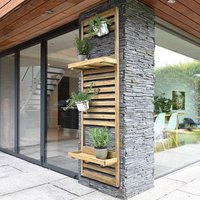

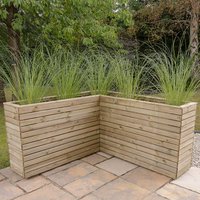
Wooden planters special offers bring timber texture, neat planting space, and a varied choice of shapes for patios, balconies, and borders. From raised boxes to slim troughs, this category pairs wooden garden planters with timber planter bargains and discount planter boxes.
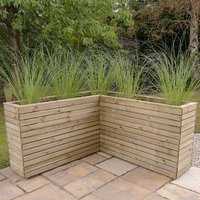
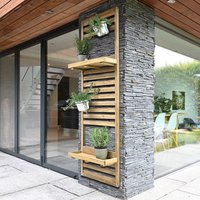

Grain, edge, and the small shift in mood
Wood changes the feel of a planting area without shouting for attention. A square planter reads as structured and steady, while a round or oval form feels softer and less rigid. Rectangular troughs suit a run of herbs or grasses, and deeper cube planters can hold shrubs or layered planting with more root space. The surface matters too: smooth planed timber looks clean and crisp, whereas a more rustic finish keeps the grain visible and brings a rougher, honest look.
Wood warms the view. It softens stone. It suits shade.
Shapes that do different work
Not every planter shape does the same job, and that is where the choice gets interesting. Tall planters help raise plants above the ground line, which can sharpen sightlines around entrances or seating. Low, wide planters spread planting horizontally and work well for edging, screening, or grouping several small varieties together. Corner planters make use of awkward angles, while long troughs can guide the eye along a terrace or fence. If space is tight, narrow balcony planters keep the footprint slim without losing the timber look.
- square timber planters for strong lines and balanced planting
- rectangular wooden troughs for repetition and neat rows
- round wooden planters for a gentler outline
- tall wood boxes for height and layered display
- corner planter styles for tricky spaces
Different woods, different voices
The wood itself changes both appearance and feel. Pale timber has a fresh, light look and can sit quietly beside brick or rendered walls. Darker wood gives more contrast and often reads as more grounded. Some planters show tighter, finer grain; others have a more open pattern that feels fuller and more rustic. In special offers, it is worth looking closely at the finish and the visible join lines, because the same shape can look quite different depending on the timber tone and construction.
One tone is calm. Another is bold. Grain tells its own story.
Useful contrasts: what sets them apart
Wooden planters are often chosen for the balance between appearance and practicality. Compared with metal, wood tends to sit more naturally in a planting setting and does not feel as hard-edged. Compared with plain plastic, it usually has more visual depth and a more crafted look. Even within wood planters, the difference between slatted sides and solid panels changes the effect: slatted designs can look lighter and more open, while solid-sided boxes give a fuller, more enclosed presence. A planter with visible feet or a raised base feels a little more lifted off the ground than one that sits flush, which can matter in wetter corners or on patios with uneven paving.
Some are broad. Some are slim. Some stand high.
Special offer pieces with distinct uses
In a category of special offers, the appeal is often in finding varied forms rather than one single style repeated. A set of matching planters can bring order to a courtyard, while a mixed group of sizes can create a looser, collected feel. Small boxes are useful for compact herbs, seasonal colour, or a pair of accent plants. Larger containers suit structural planting, such as dwarf evergreens, bamboo, or architectural foliage. Medium planters sit between these roles and can act as the steady middle ground for mixed displays.
- compact wooden tubs for small spots and grouped colour
- deep planter boxes for stronger root runs
- long narrow planters for boundary lines and rail-edge use
- multi-size sets for staggered visual rhythm
- raised timber containers for a lifted planting line
Why wood keeps drawing the eye
There is a quiet appeal in timber that does not rely on fuss. The material brings texture, warmth, and a sense of structure without making the planting look overworked. On a terrace, a wooden planter can bridge the gap between hard landscaping and soft growth. In a garden corner, it can steady a loose mix of pots into one clearer cluster. Wooden planters also tend to sit well beside seating, trellis, decking, and paving because the material relates easily to other natural surfaces.
Warm edges. Soft grain. Firm shape.
Things to notice before choosing
Look at the internal volume, not only the external size. Two planters may seem similar from the outside but offer very different planting depth. That matters when the choice is between shallow-rooting display plants and taller specimens that need room below the surface. Check whether the planter is more open at the top than the base, because some designs taper slightly and change the usable space. Also note the profile of the rim: a wide top edge gives a heavier look, while a slimmer edge makes the planter feel cleaner and less bulky.
Joinery can alter the whole impression. A neat corner line feels tidy. A thicker frame feels sturdier.
Where each form tends to sit best
Rectangular wooden planters work well along walls, paths, and boundaries because they draw a straight line and help organise the space. Square forms often suit central positions where the planter is seen from several sides. Round and oval planters can ease hard corners or soften a run of paving. Tall boxes make a stronger statement near an entrance or at the edge of a seating area, while low troughs are better for wide views and for planting that should read as one long sweep rather than separate clusters.
- wall-side planters for linear spaces
- central display boxes for all-round visibility
- low border troughs for calm, horizontal lines
- entryway timber containers for a defined approach
Small buying tips with a clear purpose
For mixed planting, choose a shape that gives room both across and down. For a single feature plant, a clean square or round form can keep the focus on the plant rather than the container. If several planters will sit together, keep one element consistent — size, finish, or shape — so the group feels intentional rather than random. When comparing special offers, the useful question is not only which planter looks good alone, but which one works with the other timber pieces already in the space.
Match the line. Repeat the tone. Let the shape speak.
Texture that suits the season
Wooden planters shift with the light in a way that glossy surfaces do not. In bright weather, the grain can appear stronger and more pronounced; in softer light, the same planter may look calmer and more muted. That makes timber a good choice for spaces that change from sun to shade through the day. It also helps the planter sit naturally among foliage, where bark, stems, and leaves share the same tactile language. The effect is subtle, but it holds the eye.
Not loud. Not flat. Just layered.
Special offers worth reading closely
Because this category focuses on offers, the range can bring together several different wooden planter types at once. Some pieces will lean towards compact display use, others towards more generous planting depth, and some towards a stronger decorative presence. The differences are often in the outline, the timber tone, the wall thickness, and the overall height. That is why a quick scan can be useful: it helps separate the planters that suit one narrow spot from those that can anchor a larger scheme. Look at the form first, then the finish, then the scale.
A slim planter is not the same as a deep one. A light frame is not the same as a heavy box.
The quiet strength of timber in planting areas
Wooden planters make it easy to build contrast without harshness. They can separate planting areas, frame an entrance, or break up a long paved stretch. Their variety is part of the draw: square, round, trough, tall, low, narrow, broad, rustic, crisp. Each version creates a slightly different rhythm. In a well-chosen offer, that range gives enough room to match the container to the plants, and the plants to the space, with no need to force the fit.
There is no need for fuss. The grain does the talking. The shape follows.
wooden planters clearance can help when you want a timber look across several sizes, garden planter offers may include deep and shallow forms, and outdoor timber containers bring a more defined edge to terraces, paths, and porch areas.