
wooden Summerhouses 10x6 - Best offers in UK
Showing all 3 resultsSorted by price: low to high
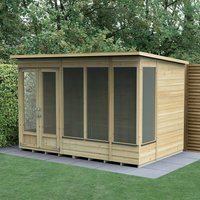
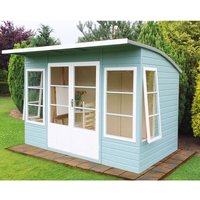
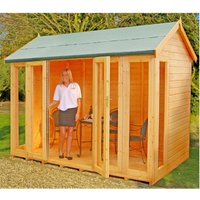
Wooden summerhouses 10×6 bring a neat footprint, side-by-side seating space, and a timber look that sits easily beside lawns, borders, and patios.


Why 10×6 feels so well balanced
A 10×6 summerhouse has a shape that reads clearly in the garden: long enough for a proper interior layout, yet slim enough to slip into tighter spots without taking over the whole plot. That proportion gives you room to separate uses inside the same cabin-style building, whether you want a quiet reading corner, a spot for drinks, or a tucked-away place for plants and garden bits.
The length works well for a side arrangement, so furniture can sit along one wall while the other side stays open for movement. The depth is modest, which helps the structure feel lighter in smaller gardens and keeps the view past it less blocked than a larger summerhouse would.
timber garden retreat frames a space that feels more rooted than plastic or metal alternatives, with the grain, colour, and panel lines giving the building a softer edge in the landscape. The result is practical without looking hard or industrial.
Shapes that change the feel of the same size
Within the 10×6 format, the shape of the roof and front opening can change the whole character of the building. A style with a central apex roof gives a classic outline and a bit more head height in the middle, while a pent roof leans one way and brings a cleaner, lower profile that can sit closer to boundary lines or under a tree canopy.
Front glazing matters too. Full-width windows lift the inside with daylight and make the room feel connected to the garden. A more enclosed front gives stronger privacy and a calmer, cocoon-like atmosphere. Some designs place the doors centrally, others offset them to one side so the wall area can be used more freely for seating or storage.
- apex roofline – recognisable profile, stronger presence, extra central height
- pent roof profile – lower visual impact, neat against fences, less bulky in narrow gardens
- glazed front elevation – brighter interior, open garden view, airy feel
- half-glazed entrance – more shelter and privacy, still lets light in
- corner glazing – wider outlook and a more open seating angle
These small differences can change how the summerhouse sits in the garden and how it is used day to day. It’s a detail that often gets overlooed, yet it changes the mood instantly.
Timber forms that carry more than one purpose
Wooden summerhouses in this size are often chosen for spaces that need a bit of flexibility. The same building may work as a quiet hideaway in the morning, a social nook in the afternoon, and a sheltered spot for evening tea later on. Because the 10×6 footprint is long rather than square, it lends itself to a clear division of use.
One end can hold a small table and chairs, while the other end can carry a bench, a low cupboard, or a pair of armchairs. This side-to-side layout gives the building a gentle flow. It also stops the room from feeling boxed in, which can happen in deeper, more compact garden rooms.
garden room timber can be trimmed with different window layouts, door positions, and roof lines, making the same nominal size behave in different ways. A double-door front creates a broader entry and a more social look. A single door with side windows feels quieter and more tucked in.
Subtypes that bring different moods
There are a few common subtypes within the wooden summerhouse family, and the differences are not only visual. They alter light, privacy, and the way the structure sits in the garden. A traditional cabin form often leans toward sturdy wall panels and a homely feel. A glazed summerhouse leans lighter, with more glass and a brighter interior. A corner-style version can make use of an awkward space, though the 10×6 format itself tends to favour a linear run rather than a tucked corner.
Then there are the finer distinctions: tongue-and-groove cladding, overlap boarding, and framed construction. Tongue-and-groove gives a tighter, more fitted finish with cleaner lines. Overlap boarding has a looser, more rustic look. Framed builds usually feel more structured and can carry larger glazed sections more confidently.
- cabin style – sturdier look, solid garden presence, more enclosed feel
- glazed style – brighter interior, lighter appearance, stronger visual link with planting
- traditional profile – familiar roof shape, cosy proportions, classic timber character
- modern linear form – slimmer lines, sharper outline, cleaner fit in contemporary gardens
- side window layout – spreads daylight deeper into the room
What 10×6 changes compared with smaller and larger sizes
Compared with a smaller 8×6, the 10×6 gives a more generous length for arranging furniture in a line. That extra two feet can be enough to avoid the cramped shuffle of chairs and tables. Compared with a 12×8, the footprint remains more restrained, which makes planning the position easier where the lawn is narrow or the garden path needs to stay clear.
This middle-ground scale often suits people who want a proper summerhouse feel without committing to a large garden building. It can hold a pair of chairs, a small sofa, a bistro set, or a combination of seats and shelves without swallowing the surrounding planting. The proportions also work well when the building is meant to act as a visual anchor rather than the main event.
compact footprint keeps the structure usable in smaller outdoor layouts, while still giving enough interior room for a clear arrangement. That balance is what many buyers end up looking for, even if they start by thinking only about size.
Light, glass, and the way the room breathes
Windows are one of the most telling features in a wooden summerhouse. In a 10×6 model, the placement of glazing can change the feel from snug to open in a surprisingly direct way. Front-facing panes draw the eye outward, side windows pull light along the length of the room, and wrap-around glazing adds a more pavilion-like atmosphere.
Smaller panes can make the structure feel more enclosed and intimate. Larger glazed sections give a brighter interior and let the summerhouse borrow colour from nearby shrubs, fences, and flower beds. If the garden is especially busy or overlooked, narrower panes can be the better fit, as they soften the view in and out.
Frosted or patterned glass is another subtle variation where privacy is needed without turning the room into a dark box. The effect is gentle rather than severe, and it can suit a building that sits near a boundary or a neighbour’s upper windows.
garden glazing layout changes both the interior atmosphere and the exterior appearance, so it is one of the most useful details to compare before choosing a design. A glass-heavy front feels more open; a timber-focussed face feels steadier and more private.
Materials and finish that shape the look
Wooden summerhouses are valued for the way timber takes on colour and surface treatment. A natural finish keeps the grain visible and gives the building a calm, earthy tone. Painted finishes can sharpen the outline and help the summerhouse coordinate with fences, pergolas, or sash-style windows in nearby buildings. Stained finishes fall somewhere between the two, letting the wood remain visible while shifting the tone toward warmer or cooler shades.
The texture of the cladding matters as much as the colour. Smooth boards create a neat, almost furniture-like appearance. More pronounced cladding lines give shadow and depth, which can make the building look more architectural. These subtle visual shifts are usefull when matching the summerhouse to the rest of the garden scheme.
Some people prefer a softer country-garden look. Others want crisp edges and a more tailored outline. A 10×6 format can handle both, because the shape is simple enough to accept different finishes without losing its identity.
Useful layout ideas inside the long frame
The internal shape of a 10×6 summerhouse encourages a few clear layout strategies. One common approach is to place seating at the far end and keep the entry side open. Another is to run a bench or sofa along the long wall and keep the opposite wall for narrow storage or decorative items. A third arrangement uses the front zone for a table and the rear zone as a quieter nook.
This kind of room works especially well when each section has a purpose. For example, one side may carry a reading chair and small lamp, while the other side holds a compact table for drinks or crafts. The length helps the room feel zoned without needing partitions.
- Use the long wall for low furniture
- Keep the centre line clear for movement
- Let windows face the best part of the garden
- Choose a door position that doesnt break the seating plan
- Match the roof style to the surrounding height of hedges or sheds
How the garden around it changes the result
A wooden summerhouse does not stand alone; the space around it changes how it is read. In a wide lawn, a 10×6 building can feel like a graceful object set into the grass. In a tighter plot, it may act as a boundary feature, a place to end a path, or a soft screen between different parts of the garden.
Planting also shifts the impression. Tall grasses make the building look lighter. Clipped hedges give it a tidy frame. Climbers nearby can soften the edges, while low flowering borders keep the base visually grounded. The 10×6 shape is long enough to sit well against planting bands, so the building can echo a border rather than compete with it.
landscape focal point is the role many of these summerhouses take on, even when they are chosen first for practical reasons. They give the garden a destination without needing a large scale.
Small choices that make the whole piece feel joined up
When comparing wooden summerhouses 10×6, it helps to look beyond the headline size and read the building as a set of joined details. Roof line, door placement, glazing pattern, cladding direction, and finish all affect how the structure behaves in its surroundings. A design with more glass will read lighter, a design with more timber will read steadier, and a lower roof will usually feel more tucked in.
Think about how the eye moves across the garden. If the summerhouse sits at the end of a path, a stronger front elevation can give it presence. If it sits beside a busy flower border, a quieter face may work better so the planting keeps its voice. That balance is often more important than size alone.
timber feature building is a phrase that suits this category because the structure is both useful and visual. It is not just a box in the garden; it is a shaped object that changes the route, the light, and the way the space feels.
Quick points worth weighing up
The 10×6 format suits a garden where every foot counts but the room should still feel generous. Its long shape helps with furniture placement. Its timber shell gives warmth. Its glazing pattern changes the tone. Its roof style changes the silhouette. And its finish ties it to the rest of the plot.
- longer interior run for seating and table placement
- narrower depth for smaller garden routes
- classic timber appearance that sits gently among planting
- flexible glazing options for light or privacy
- clear shape differences between apex and pent versions
For anyone comparing wooden summerhouses in this size, the real variation lies in the details rather than the measurement itself. The same 10×6 outline can feel airy, snug, formal, or rustic depending on how those details are put together.
Closing the picture in wood and light
A wooden summerhouse 10×6 carries a certain rhythm: straight lines, timber grain, glass breaks, and a shape that settles neatly into the garden without asking for too much ground. It can be understated or expressive, enclosed or bright, simple or layered. The difference comes from the form, not only the size.
If you are comparing styles, look at how the roof sits, where the windows fall, and how the doors open into the room. That is where the character lives. A well-chosen 10×6 timber summerhouse does not shout for attention; it holds its place with quiet confidence, and the garden often looks more finished because of it.