The Best Eco-friendly Plants to Grow in Your Garden

Across the United Kingdom, millions of personal outdoor spaces offer a powerful opportunity. With over 20 million gardens nationwide, collective action can make a significant contribution to a healthier environment. Small, thoughtful changes can yield substantial benefits.
Adopting a professional approach to gardening means working with nature, not against it. This method fosters a resilient garden ecosystem. It also protects the broader environment.
Thoughtful plant selection has a direct impact on local wildlife, soil health, and water conservation. These choices support biodiversity and help address contemporary climate concerns. Such sustainable practices are often cost-effective, making them a sensible choice for homeowners.
By viewing a garden as part of a larger ecological network, individuals can contribute to collective resilience. Every plant chosen with care becomes a vital part of this positive change.
Inhaltsverzeichnis
Key Takeaways
- Collective efforts across millions of British gardens can create significant environmental benefits.
- Working in harmony with nature builds a healthier, more resilient garden.
- Plant choices directly influence local wildlife, soil quality, and water usage.
- Sustainable gardening practices are a practical response to modern climate challenges.
- Eco-conscious gardening is often an economical choice for homeowners.
- Personal outdoor spaces are crucial contributors to national biodiversity and ecological health.
Understanding Eco-friendly Gardening and Its Impact
Gardening with ecological principles transforms personal plots into vital habitats. This approach considers the broader environment when making cultivation choices. It creates spaces where nature can thrive naturally.
Benefits for Wildlife and Ecosystems
A balanced garden provides essential support for local wildlife. Different species perform specific roles that maintain garden health. Ladybirds, for example, consume thousands of aphids during their life cycle.
This natural pest control reduces chemical dependence. Birds, amphibians, and hedgehogs also contribute to this self-regulating system. Their presence indicates a healthy, functioning ecosystem.
Long-term Environmental Advantages
Ecological gardening delivers sustained benefits over time. It enhances local biodiversity by creating wildlife corridors. These connections help species navigate urban landscapes.
The cumulative impact of many gardens adopting these practices is significant. It supports regional conservation efforts and climate resilience. Each garden becomes part of a larger environmental solution.
The Best Eco-friendly Plants to Grow in Your Garden
Selecting appropriate vegetation for British outdoor spaces can significantly enhance local ecosystems. Native species like crab apple, silver birch, and blackthorn offer excellent starting points. These options require minimal upkeep once established.
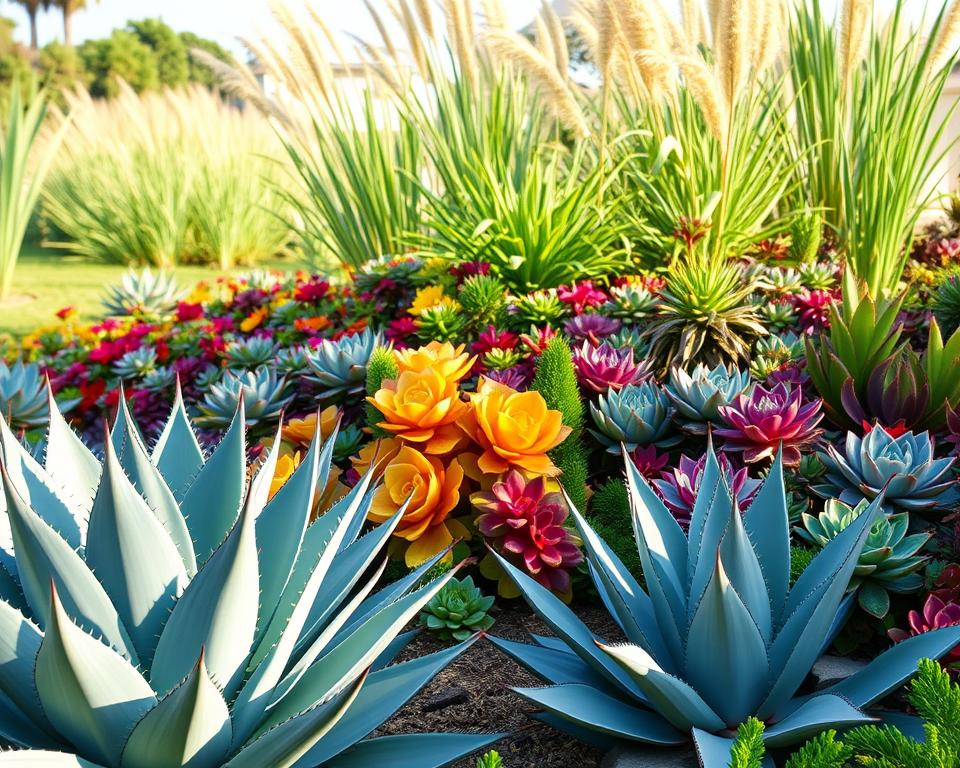
Drought-tolerant flowers thrive in unpredictable weather conditions. Echinacea, nepeta, and verbena provide vibrant colour while supporting pollinators. They conserve water resources during dry spells.
Lavender brings fragrant blooms that attract bees throughout summer. This compact plant prefers sunny spots with well-draining soil. Its silvery leaves add textural interest to any garden design.
Architectural choices like eryngium feature striking grey-bluish bracts. These structural plants withstand dry conditions beautifully. They create focal points in borders or containers.
Agapanthus produces stunning flower clusters in white and blue shades. Though originally from South Africa, it adapts well to UK climates. Mature specimens become remarkably drought-resistant.
Each selection contributes to a healthier environment. They support local wildlife while reducing maintenance needs. Thoughtful planting creates beautiful, resilient spaces that flourish year after year.
Selecting Climate-Resilient and Drought-Tolerant Species
Climate-resilient species offer gardeners a practical solution to weather extremes. These plants possess remarkable adaptations that help them thrive despite climate change challenges. Their unique features make them ideal for sustainable gardening.

Features of Climate-Resilient Plants
Resilient species develop deep root systems that access water from lower soil layers. This adaptation ensures survival during dry periods. Many feature specialised leaves with waxy or hairy surfaces.
These leaf characteristics minimise water evaporation in hot conditions. Some plants produce heat-shock proteins for cellular protection. Others adjust flowering time based on environmental cues.
| Adaptation Type | Function | Example Species |
|---|---|---|
| Deep Root Systems | Access deep water sources | Lavender, Rosemary |
| Leaf Surface Modifications | Reduce water loss | Lamb’s Ear, Sea Holly |
| Physiological Adjustments | Maintain water balance | Sedum, Euphorbia |
Adapting to Unpredictable UK Weather
Phenotypic plasticity allows these plants to modify their growth patterns. They respond dynamically to changing climate conditions. This flexibility is crucial for UK gardens.
Flood-tolerant species develop roots that handle waterlogged soil. Incorporating these plants into gravel gardens creates low-maintenance spaces. Each selection becomes an essential part of climate adaptation.
Enhancing Soil Health and Using Organic Practices
A garden’s vitality begins beneath the surface, with the quality of its soil. Robust soil health is the cornerstone of a flourishing garden, supporting vigorous plant growth and contributing to broader environmental goals. Organic methods enrich this living foundation.
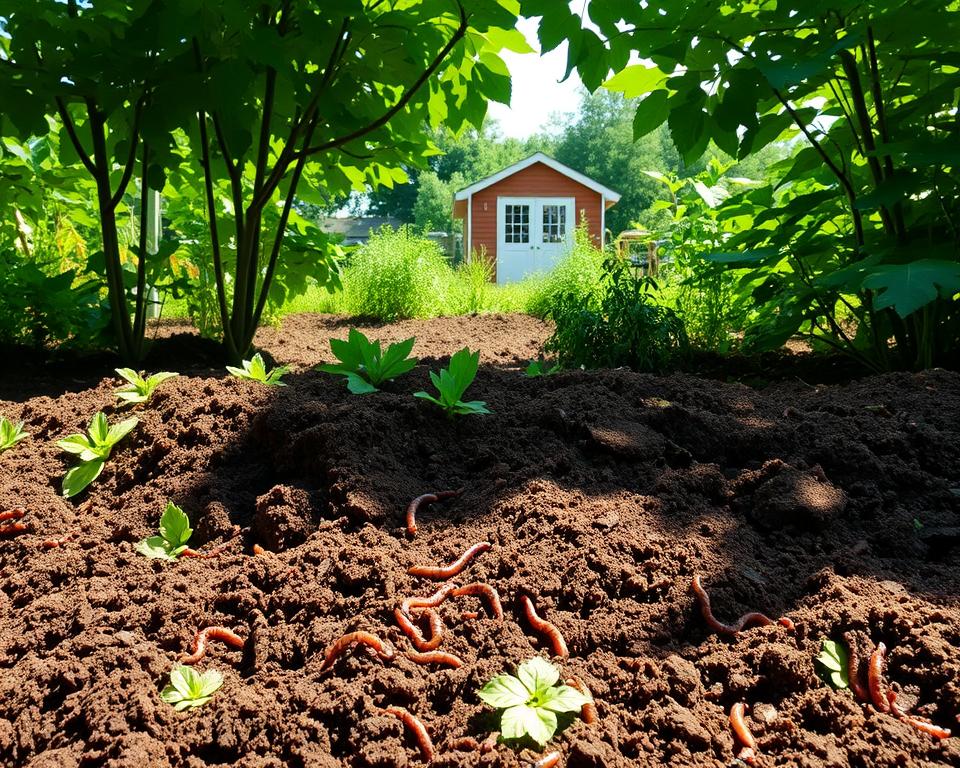
Natural Fertilisers and Composting Methods
Creating nutrient-rich feeds at home is simple. Nettles or comfrey make excellent DIY fertiliser. Gardeners should chop the leaves, submerge them in water, and leave the mixture to rot for a few weeks.
The resulting liquid is potent. Dilute one part of this plant food to nine parts water before applying it to the soil. This provides essential nutrients without synthetic chemicals.
Composting is another key practice. It involves layering soft ‘green’ material like grass clippings and kitchen peelings with drier ‘brown’ material like small sticks and cardboard. This process creates balanced compost that feeds the soil.
Minimising Chemical Use for Better Soil Health
Synthetic weedkillers, fertilisers, and pest controls can harm a garden’s ecosystem. They damage soil structure, pollute water sources, and pose risks to wildlife and pets.
Opting for organic alternatives protects the garden’s long-term health. It fosters a safe environment for families while building a resilient, self-sustaining system.
| Practice | Impact on Soil | Environmental Effect |
|---|---|---|
| Organic Methods (Compost, plant feeds) | Improves structure, increases nutrients, boosts microbial life | Protects wildlife, saves energy, reduces waste |
| Chemical Products | Can degrade structure, harm beneficial organisms | Risk of water pollution, potential harm to animals |
By adopting these organic gardening practices, individuals create a virtuous cycle. Healthy soil supports strong plants, which in turn produce material for composting, minimising external inputs.
Watering Wisely: Rainwater Harvesting and Efficient Irrigation
Rainwater harvesting provides an excellent method for reducing water consumption outdoors. This approach benefits garden health while conserving valuable resources. It represents a smart strategy for sustainable maintenance.
Benefits of Rain Gardens and Water Butts
Installing a water butt collects rainfall from roofs effectively. This captured water is ideal for garden use. It reduces reliance on treated supplies.
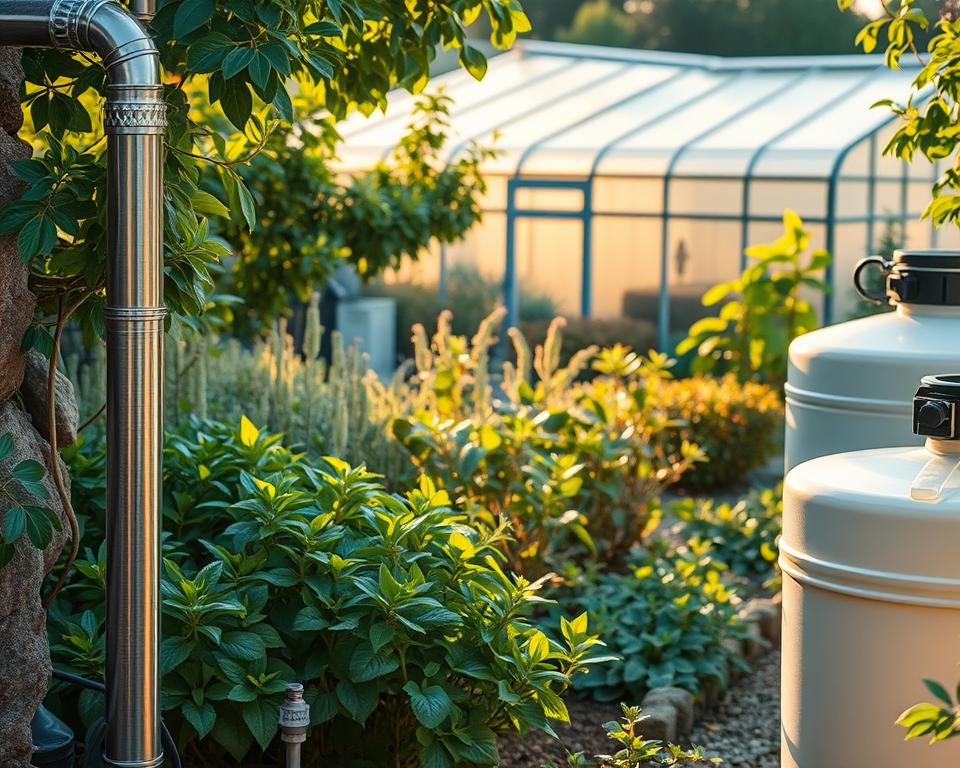
Rain gardens are shallow basins that manage stormwater runoff. They can absorb 30% more water than conventional lawns. These features help prevent soil erosion during heavy rain.
Suitable plants for these conditions include Iris pseudacorus and Carex pendula. Hydrangea arborescens ‘Annabelle’ also thrives well. These selections stabilise soil and prevent erosion effectively.
Techniques for Reducing Water Waste
Grey water from baths can be reused for ornamental plants. This practice conserves clean water supplies. It should be avoided for edible crops.
Watering during cooler parts of the day minimises evaporation. Mulching helps retain soil moisture between watering sessions. These simple adjustments make a significant difference.
Establishing routines based on plant needs saves water over time. This approach ensures adequate moisture during critical growth periods. Every effort contributes to broader conservation goals.
Sustainable Garden Maintenance and Waste Reduction
Thoughtful waste management practices elevate ordinary gardening into eco-conscious stewardship. These approaches transform routine maintenance into environmental contributions. They demonstrate how simple adjustments create meaningful impact.
Creative Recycling and Upcycling Ideas
Household items find new purpose in sustainable gardens. Broken terracotta pots become drainage crocks for containers. Old washing-up bowls transform into miniature ponds.
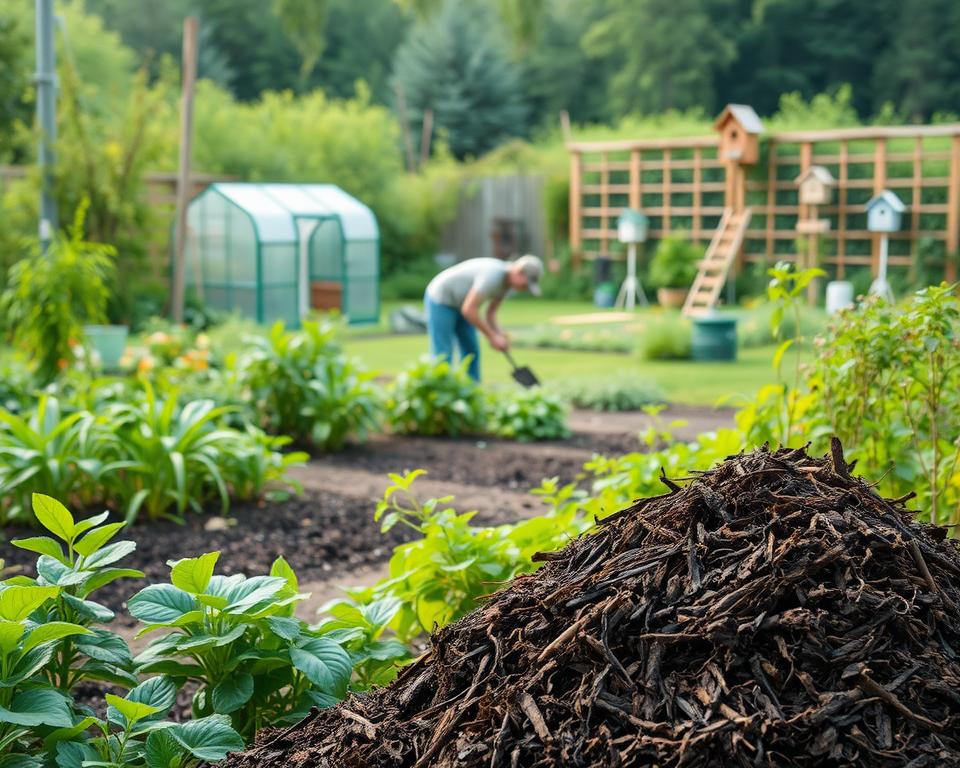
Cardboard boxes effectively suppress weeds when laid on soil. Plastic milk bottles cut in half serve as protective cloches. Toilet roll tubes make excellent seed starters for young plants.
Garden waste becomes valuable resource material. Autumn leaves create nutrient-rich leaf mould for mulching. Grass clippings contribute to productive compost heaps.
Pruning branches left in quiet corners provide habitat for beneficial insects. This supports local wildlife while reducing waste. It creates sheltered spaces within garden boundaries.
Reducing lawn mowing frequency offers multiple benefits. Longer grass allows wildflowers to bloom naturally. This provides essential food sources for pollinators throughout seasons.
Sharing excess seedlings with neighbours fosters community connections. It reduces resource consumption while spreading gardening enthusiasm. These practical tips make sustainability an integral part of garden culture.
Integrating Perennials, Trees and Shrubs for Year-Round Interest
Combining different plant forms establishes layered ecosystems that function throughout the calendar. This approach creates gardens with continuous seasonal appeal while delivering substantial environmental benefits.
Choosing Hardy Perennials for Low Maintenance
Hardy perennials develop extensive root systems that improve soil structure over time. Actaea simplex offers striking dark leaves and scented white flowers in late summer.
Anemone x hybrida provides pure-white blooms followed by decorative seedheads. Aster x frikartii flowers from August through November. These plants require minimal care once established.

Eco-friendly Tree and Shrub Selections for Carbon Capture
Trees act as natural carbon sinks through photosynthesis. Each mature tree can sequester approximately 25 kg of CO₂ annually. Recommended species include English Oak and Silver Birch.
Shrubs like Viburnum offer perfumed flowers in early summer. Their glossy leaves develop red edges in autumn. This provides shelter and food for birds during winter.
| Plant Type | Carbon Sequestration | Seasonal Benefits |
|---|---|---|
| Mature Trees | 25 kg CO₂/year | Year-round structure |
| Perennials | Continuous soil enrichment | Seasonal flowers |
| Shrubs | Long-term storage | Multi-season interest |
Creative Reuse and Upcycling in Eco-friendly Gardens
Upcycling household items offers innovative solutions for sustainable garden management and waste reduction. This approach transforms ordinary discards into valuable resources for outdoor spaces.
DIY Projects for Repurposing Garden Waste
Common household items find new purpose in creative garden projects. Washing-up bowls become miniature ponds, while broken terracotta pots serve as drainage crocks. These transformations reduce landfill contributions.
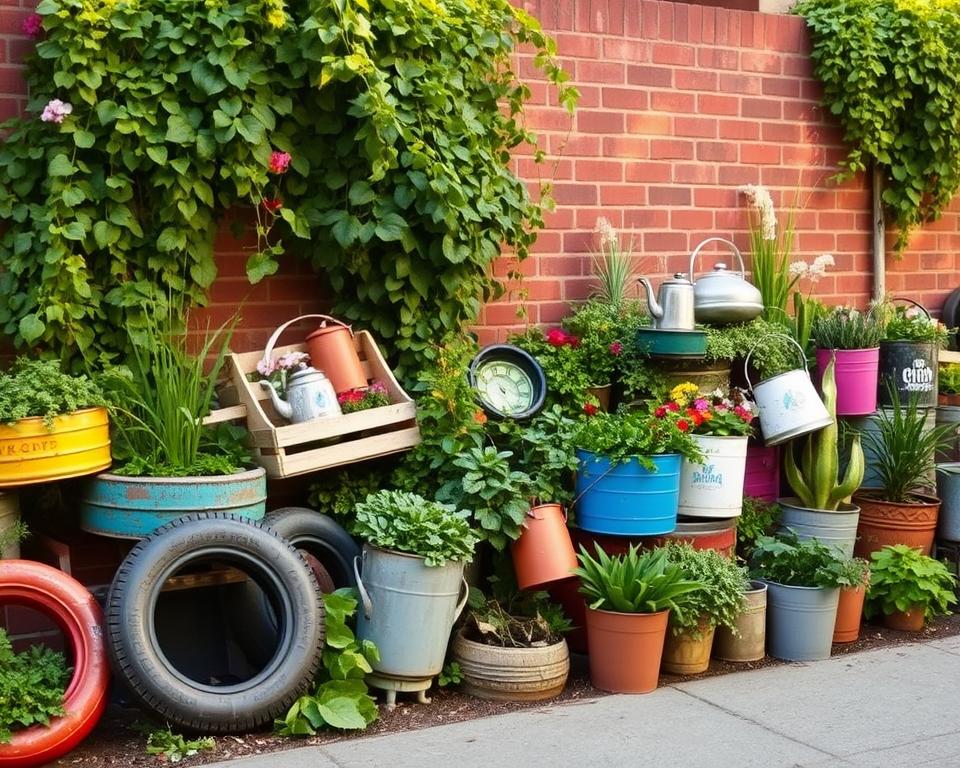
Cardboard boxes effectively suppress weeds when laid on soil surfaces. Plastic milk bottles cut in half create protective cloches for young plants. Toilet roll tubes work perfectly for starting seeds.
Pruning waste becomes habitat for beneficial insects. Bundled branches in quiet corners support garden health throughout the year. This natural approach encourages pollinator activity.
Gravel gardens provide excellent opportunities for creative reuse. They support drought-tolerant flowers while preventing soil erosion. Strategic planting enhances these sustainable spaces.
| Household Item | Garden Transformation | Environmental Benefit |
|---|---|---|
| Washing-up bowls | Miniature ponds | Water conservation |
| Broken pots/bricks | Drainage material | Waste reduction |
| Cardboard boxes | Weed suppression | Chemical-free maintenance |
| Plastic bottles | Plant protection | Resource extension |
These practical tips demonstrate how creative reuse supports plant growth. Each project becomes part of a larger environmental solution. They create unique garden features while conserving resources.
Conclusion
Adopting nature-conscious gardening approaches transforms outdoor spaces into vital contributors to environmental resilience. These methods create positive impact on local ecosystems through thoughtful cultivation.
Every selection of appropriate vegetation matters significantly. Choices influence soil health, water conservation, and biodiversity support. These individual actions collectively address climate change challenges.
Following sustainable gardening top tips creates beautiful, functional spaces. Each garden becomes an essential part of broader environmental solutions. This approach supports wildlife throughout the year.
Working harmoniously with natural processes yields lasting benefits. It demonstrates how personal efforts create meaningful change. Every cultivated space contributes to a healthier environment for future generations.
FAQ
What are the key benefits of choosing native plants for my garden?
Native species are perfectly adapted to local soil and climate conditions. They require less water and fewer nutrients, supporting local wildlife like bees and birds. This promotes robust biodiversity and strengthens the ecosystem.
How can I improve my garden’s soil health without chemicals?
Incorporating homemade compost is highly effective. It recycles kitchen and garden waste, enriching the soil with organic matter. This natural approach boosts nutrients, improves soil structure, and fosters healthy plant growth.
Which plants are best for attracting pollinators throughout the year?
Selecting a variety of flowering perennials and shrubs that bloom in different seasons is ideal. Lavender, foxgloves, and heather provide nectar and pollen from spring through autumn, offering vital food for pollinators.
What are some simple ways to conserve water in the garden?
Installing a water butt to collect rain is a great start. Using mulch around plants helps retain soil moisture. Choosing drought-tolerant species also significantly reduces the need for watering, especially during dry summer months.
How can trees and shrubs contribute to an eco-friendly garden?
Trees and larger shrubs offer excellent carbon capture, helping mitigate climate change. They provide essential shelter for wildlife and create structure in garden spaces, offering interest across all seasons with minimal maintenance.
Can an eco-friendly garden still be visually appealing?
Absolutely. By thoughtfully combining plants with varied textures, colours, and forms, you can create a beautiful, naturalistic design. Using gravel paths and ornamental grasses adds visual interest while supporting the environment.