Waterfall in the garden – Tips for building it yourself & instructions
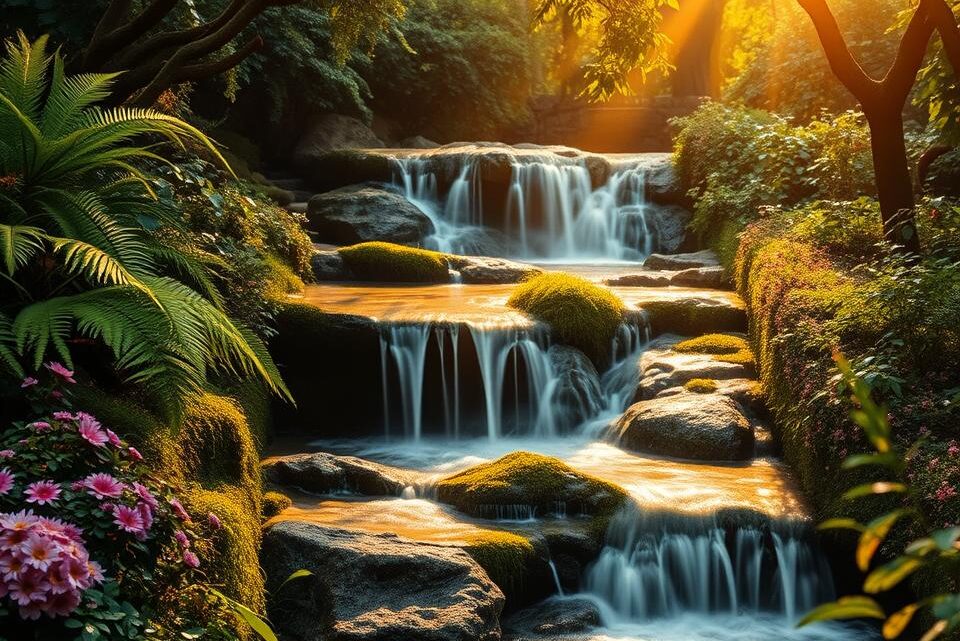
Creating a stunning waterfall in your garden can be a rewarding project, enhancing the aesthetic appeal and tranquility of your outdoor space. A waterfall not only adds visual beauty but also supports your pond by aerating the water, thus promoting a healthy environment for your fish.
The constant flow of water creates a soothing atmosphere, while also providing oxygen. By following a step-by-step construction process and selecting appropriate materials, you can achieve a professional-looking water feature that transforms your garden into a serene retreat.
Inhaltsverzeichnis
Key Takeaways
- Learn how to build a beautiful waterfall in your garden from initial planning to final touches.
- Discover the benefits of adding a waterfall to your outdoor space, including improved water quality and enhanced aesthetic appeal.
- Explore different waterfall styles to suit your garden design and preferences.
- Follow practical, step-by-step instructions for constructing a water feature.
- Understand essential considerations for location selection, material choices, and maintenance requirements.
The Benefits of Adding a Waterfall to Your Garden
Incorporating a waterfall into your garden can significantly enhance its beauty and ecological balance. A well-designed waterfall not only adds visual appeal but also creates a soothing atmosphere with the sound of flowing water.
Aesthetic and Sensory Benefits
A garden waterfall offers numerous aesthetic and sensory benefits. The sight and sound of flowing water create a tranquil ambiance, making your garden a more enjoyable space. The constant flow of water also helps to mask unwanted background noises, contributing to a more peaceful environment.
- The visual appeal of a waterfall can be enhanced by incorporating surrounding plants and landscaping, creating a natural and harmonious look.
- The sound of the waterfall adds a sensory dimension, making your garden more inviting and relaxing.
Environmental and Ecological Advantages
In addition to its aesthetic benefits, a waterfall also offers several environmental and ecological advantages. By integrating a waterfall into your pond, you can improve water quality and create a healthier ecosystem.
- A waterfall increases oxygen levels in your pond, supporting healthier plants and aquatic life.
- The constant circulation of water helps to prevent stagnation, reducing the risk of algae growth and maintaining clearer water over time.
By incorporating a waterfall into your garden, you can create a more balanced and sustainable ecosystem, enhancing both the beauty and the biodiversity of your outdoor space.
Types of Garden Waterfalls to Consider
When designing your garden, you have several types of waterfalls to choose from, each offering unique aesthetic and functional benefits. The right choice depends on your garden’s layout, your personal style, and the level of maintenance you’re willing to undertake.
Natural Rock Waterfalls

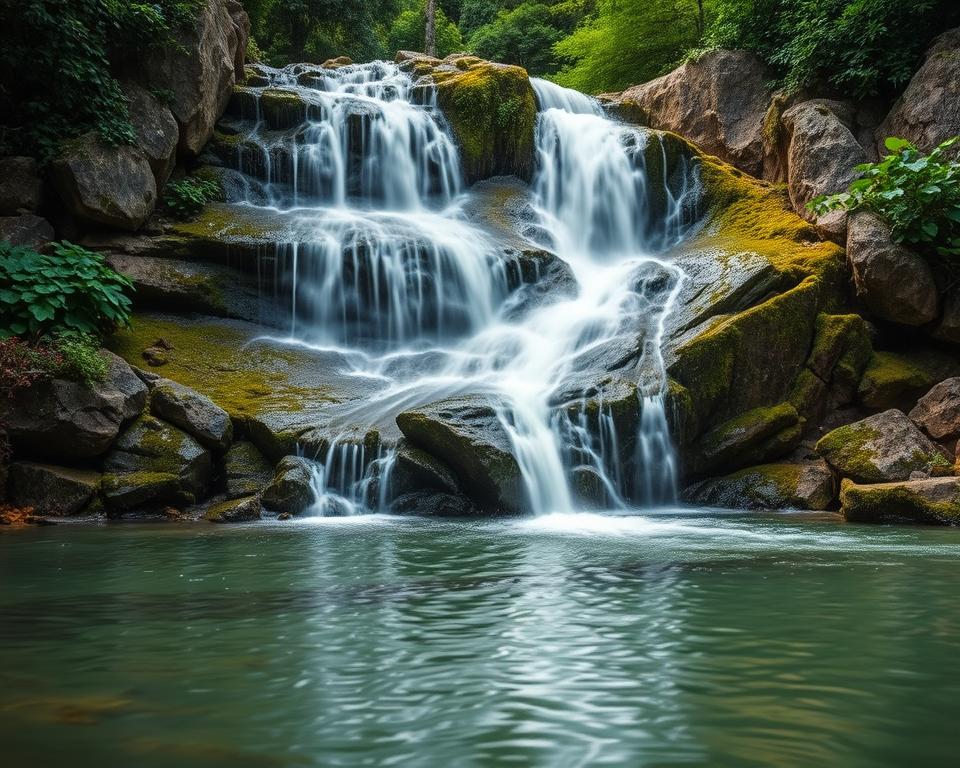
Natural rock waterfalls blend seamlessly into garden landscapes, creating a serene and natural ambiance. These waterfalls are designed to mimic the appearance of natural rock formations, often featuring rocks and boulders arranged to create a visually appealing water flow.
Modern Water Blade Features
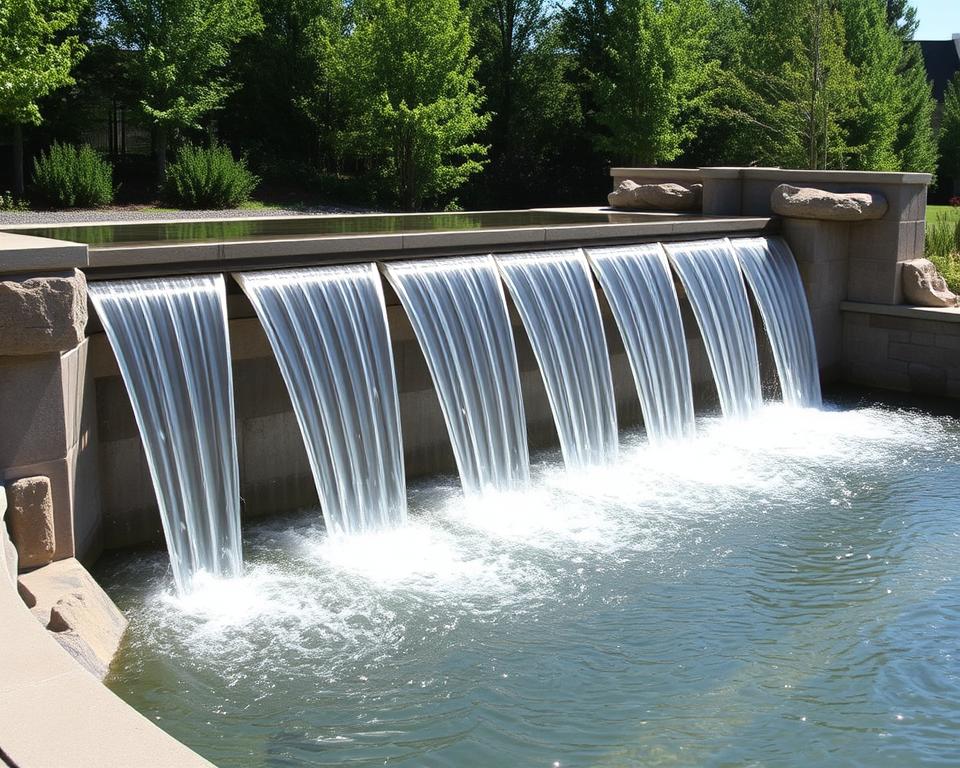
For a more contemporary look, modern water blade features offer a sleek and sophisticated alternative. These waterfalls feature a smooth, flat surface that creates a blade-like effect as the water flows over it, adding a touch of elegance to your garden.
Pond-less Waterfalls

Pond-less waterfalls are an excellent choice for smaller gardens or areas where safety is a concern. They utilise a hidden underground reservoir instead of an open pond, circulating water through a system that is both visually appealing and low maintenance. The rocks and gravel used in these systems help to conceal the reservoir, creating a natural look that complements your garden’s landscape.
Planning Your Waterfall in the Garden – Tips for Building it Yourself
A well-designed waterfall can be a stunning addition to your garden, but it requires thoughtful planning. Before you start building, you need to consider several factors to ensure your waterfall complements your outdoor space and meets your expectations.
Choosing the Perfect Location
Selecting the right location for your waterfall is crucial. You should consider the overall aesthetic you want to achieve, as well as practical aspects such as accessibility for maintenance and the existing landscape features. Think about how the waterfall will interact with other elements in your garden, such as ponds, plants, and pathways.
Determining the Size and Scale
The size and scale of your waterfall will depend on the available space in your garden and the overall design you have in mind. Consider the size of your pond or water feature, as well as the height and width of the waterfall. A larger waterfall can be a dramatic focal point, while a smaller one can create a more subtle, soothing effect.
Creating a Design Sketch
Creating a detailed design sketch is an essential step in planning your waterfall. This should include measurements, materials, and the planned water flow pattern. You should also consider technical elements such as the pump location, tubing routes, and filtration components. Key elements to include in your sketch are:
- Measurements and scale
- Materials and rocks arrangement
- Water flow pattern and pump location
- Filtration components and electrical connections
- Existing garden features to incorporate
By carefully planning your waterfall design, you can create a beautiful and functional feature that enhances your garden. Consider multiple design options and consult reference materials to gather inspiration and practical ideas for your project.
Essential Materials and Equipment Needed
To construct a stunning waterfall, you’ll need to gather the necessary materials and equipment. A well-planned waterfall not only enhances the aesthetic appeal of your garden but also creates a soothing, natural ambiance.
Waterfall Pumps and Filtration Systems
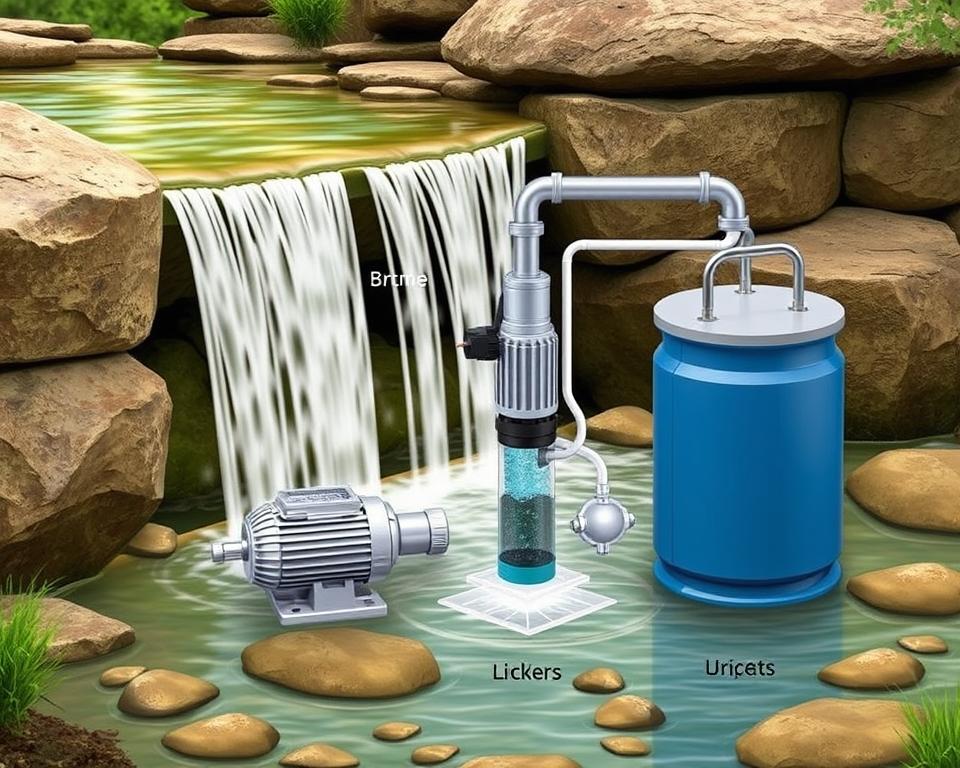
Selecting the right pump and filtration system is crucial for a smooth-operating waterfall. When choosing a pump, consider the size of your waterfall and the distance the water needs to travel. A reliable pump ensures efficient water circulation, while a good filtration system keeps the water clean and clear.
Liners, Tubing and Connectors
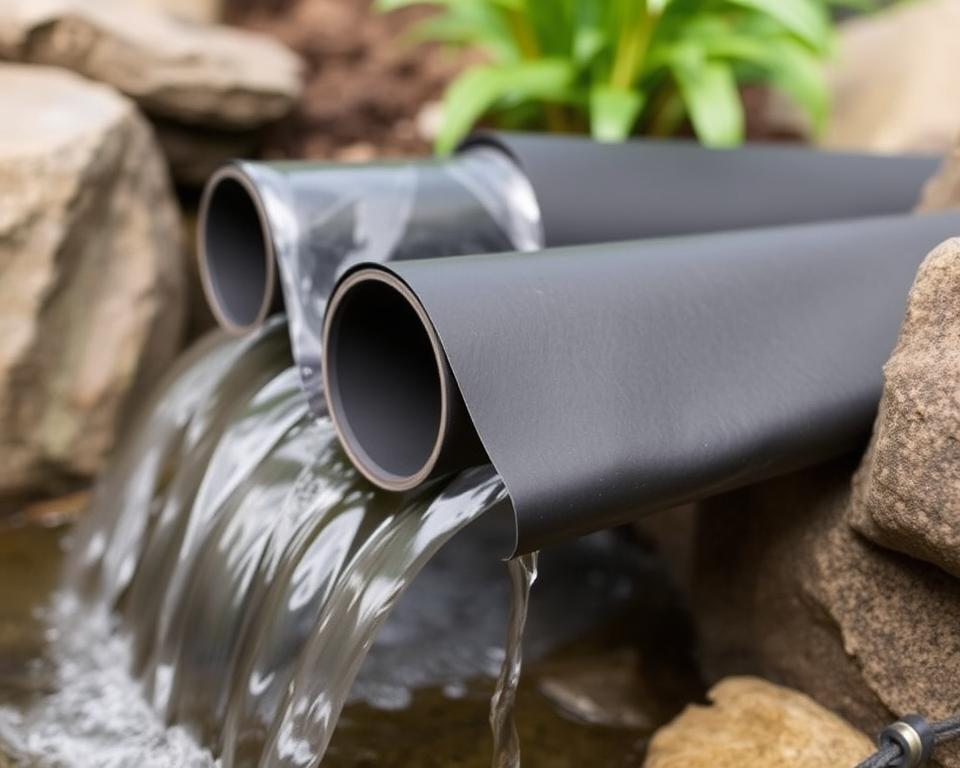
A durable liner is essential for preventing leaks and ensuring the longevity of your waterfall. Choose a high-quality liner that fits your waterfall’s dimensions. Additionally, select suitable tubing and connectors to facilitate water flow between the pump and the waterfall.
Rocks, Stones and Decorative Elements
The right rocks and stones can make or break the natural look of your waterfall. Select a variety of rock sizes and shapes, including large boulders for structural support and smaller stones for creating natural-looking edges. Consider using flat, ledge-type rocks at cascade points to create attractive water patterns.
- Choose rocks with complementary colours and textures that match your garden’s existing landscape.
- Purchase approximately 1.5 to 2 times the weight of rocks as you initially estimate you’ll need.
- Incorporate rounded river rocks or pebbles for areas where water will flow to create interesting rippling effects.
- Consider adding decorative elements such as driftwood or ceramic features to complement your garden style.
Tools Required for Building Your Waterfall
A well-planned waterfall project starts with gathering the necessary tools for the job. To build a waterfall that is both functional and aesthetically pleasing, you’ll need to have the right equipment on hand.
Essential Hand Tools
When it comes to constructing your waterfall, having the right hand tools is crucial. A cordless drill with various bit sizes is essential for tasks such as installing pump housings and creating drainage holes. You may also need a screw gun for assembling any wooden structures that will frame your waterfall. Other useful hand tools include a level to ensure that your waterfall is properly aligned, and a rubber mallet for gently tapping rocks into place.
Optional Power Tools and Specialised Equipment
Depending on the complexity and scale of your waterfall project, you may need to use some optional power tools and specialised equipment. For instance, a circular saw or reciprocating saw can be useful for cutting through rocks or wood. A wet/dry vacuum is also handy for removing water and debris during construction and maintenance. Additionally, a pressure washer can help clean rocks before installation, and a submersible pump tester can verify water flow patterns during construction.
| Tool | Purpose |
|---|---|
| Cordless Drill | Installing pump housings, creating drainage holes |
| Wet/Dry Vacuum | Removing water and debris |
| Pressure Washer | Cleaning rocks before installation |
| Submersible Pump Tester | Verifying water flow patterns |
| Laser Level | Ensuring precise gradient measurements |
For larger projects, consider renting a mini-excavator to speed up the digging process. An electrical circuit tester is also recommended to ensure safe power connections for your pump and lighting systems. By having the right tools, you can save time and ensure a successful step in creating your garden waterfall.

Step-by-Step Construction Guide
Constructing a waterfall in your garden involves several key steps that, when followed, ensure a beautiful and functional water feature. This guide will walk you through the process, from preparing the site to setting up the pump and achieving the desired water flow.
Marking and Excavating the Site
The first step in building your waterfall is to mark out the area where it will be located. Use a hose or rope to outline the shape of your waterfall and pond. Once you’re satisfied with the layout, mark the area with stakes and string. Begin excavating the site, starting with the pond area and then moving to the waterfall section. Ensure that the excavation is deep enough to accommodate your liner and reservoir.
Installing the Liner and Reservoir
After excavating the site, it’s time to install the liner and reservoir. Place the liner in the pond and waterfall area, ensuring it is large enough to cover the entire space. Secure the liner with rocks or sandbags to prevent it from shifting. The reservoir will hold the water that is pumped to the top of the waterfall, so make sure it is sufficiently sized.

Building the Waterfall Structure
With the liner in place, you can start building the waterfall structure. Use rocks and stones to create a natural-looking cascade. Begin at the bottom and work your way up, ensuring that each rock is securely positioned. The goal is to create a smooth flow of water from top to bottom.
Setting Up the Pump and Water Flow
To set up the pump, position it in the deepest part of your pond or reservoir, ideally on a pump stand or brick to elevate it slightly above the debris that accumulates at the bottom. Connect appropriately sized tubing to your pump’s outlet, ensuring all connections are secure. Route the tubing discreetly along your waterfall structure, hiding it beneath rocks or along the liner edge.
As “The Spruce” suggests,
“A well-designed waterfall can be a soothing addition to any garden, providing a sense of tranquility and connection to nature.”
To achieve this, follow these steps:
- Position your pump on a stable, flat surface in the deepest part of your pond or reservoir.
- Connect appropriately sized tubing to your pump’s outlet, ensuring all connections are secure.
- Route the tubing discreetly along your waterfall structure.
- Install a valve near the pump to allow for flow adjustment.
- Test your pump before completing rock placement to observe water flow patterns.
By following these steps, you’ll be able to create a beautiful and functional waterfall that enhances your garden’s ambiance. Ensure the pump is submerged and securely in place for optimal performance, and adjust the water flow to achieve your desired effect.
Creating a Natural-Looking Waterfall
Crafting a waterfall that appears to be a natural part of your garden involves careful planning and attention to detail. To achieve a believable and aesthetically pleasing waterfall, you need to focus on both the structural elements and the surrounding landscape.
Rock Placement Techniques
When it comes to rock placement, the goal is to create a natural appearance. You can achieve this by varying the size and type of rocks used and placing them in a way that looks organic. Consider using a mix of large boulders and smaller stones to create a layered effect.
Incorporating Plants and Landscaping
To further enhance the natural look of your waterfall, incorporate moisture-loving plants such as ferns, hostas, and astilbes around the area. These plants thrive in the humid microclimate created by the splashing water. You can also use marginal aquatic plants like marsh marigold and iris along the edges of your waterfall pools or pond to create a seamless transition between water and land.
- Select plants that provide visual interest throughout the year.
- Use small groupings of the same plant species for a natural look.
- Incorporate small pockets of soil between rocks for plants to establish.
- Balance your planting scheme with the scale of your waterfall.
Troubleshooting Common Waterfall Issues
Troubleshooting your garden waterfall is essential to maintaining its beauty and functionality. Regular checks can help identify potential issues before they become major problems.
Water Flow Problems
Water flow issues can significantly impact the aesthetic appeal of your waterfall. To address these problems, start by checking the pump and filtration system to ensure they are functioning correctly. Inspect the tubing and connectors for any blockages or damage.
- Check for kinks or blockages in the tubing.
- Ensure the pump is adequately sized for your waterfall.
Leaks and Structural Concerns
Leaks can lead to significant water loss and structural damage over time. To identify liner leaks, observe the water level when the pump is turned off, then inspect the liner for punctures, particularly around sharp rocks or at folded edges.
| Issue | Solution |
|---|---|
| Liner Leaks | Use a pond liner patch kit to repair punctures. |
| Structural Damage | Inspect wooden elements regularly for signs of rot or deterioration. |
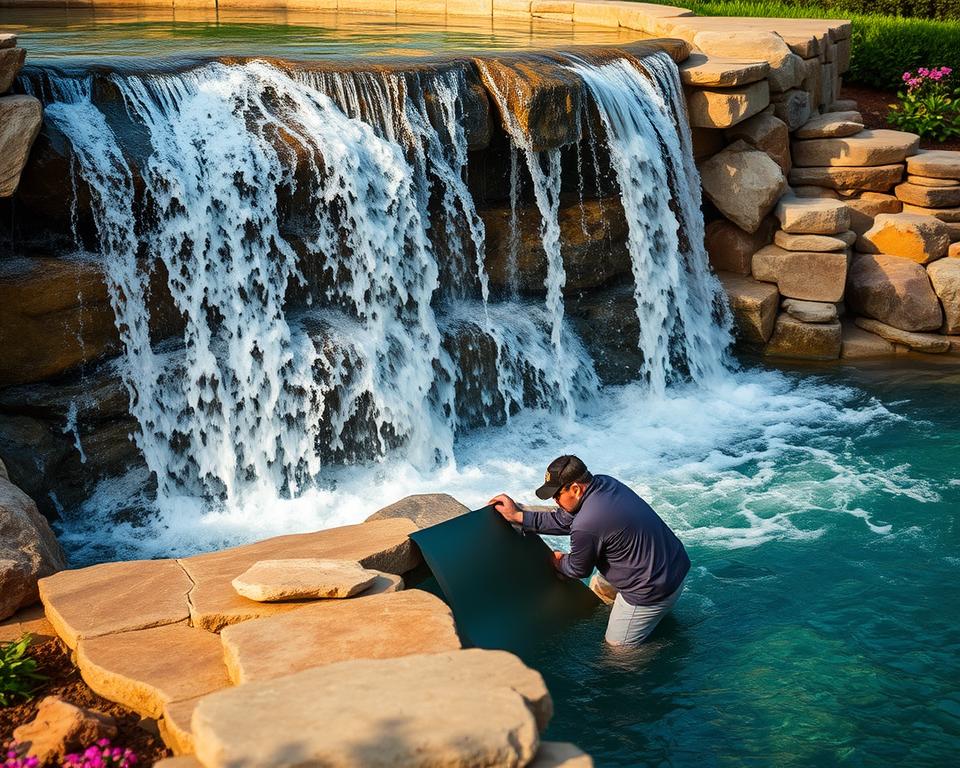
By addressing these common issues promptly, you can maintain the integrity and beauty of your garden waterfall. Regularly check the edges where the liner meets the surrounding landscape to prevent leakage.
Conclusion: Maintaining Your Garden Waterfall
Maintaining your garden waterfall is essential for its longevity and aesthetic appeal. Regular maintenance is vital to preserving its beauty and functionality.
To keep your waterfall in optimal condition, establish a regular maintenance schedule that includes weekly debris removal, monthly pump checks, and seasonal deep cleaning. Monitoring water quality and adjusting treatments as needed will prevent algae growth and maintain clarity.
Regular inspections and timely interventions will address minor issues before they become significant problems, ensuring your waterfall remains a serene focal point in your garden for years to come.
FAQ
What is the best location for a waterfall feature?
The ideal location for a waterfall is near a pond or reservoir, with a natural slope or gradient to create a cascading effect. Ensure the area is level and stable to prevent structural issues.
How do I choose the right pump for my waterfall?
Select a pump that is suitable for the size of your waterfall and pond. Consider factors such as flow rate, head height, and energy efficiency. A submersible pump is often a good option for smaller waterfalls.
What type of liner is best for a pond waterfall?
A durable, puncture-resistant liner such as EPDM or PVC is recommended for a pond waterfall. Ensure the liner is properly sized and installed to prevent leaks and damage.
How can I create a natural-looking waterfall?
To create a natural appearance, use rocks and stones to build the waterfall structure, and incorporate plants and landscaping around the feature. Varying the size and shape of the rocks can also help to achieve a more natural look.
What maintenance is required for a garden waterfall?
Regularly inspect and clean the pump, filter, and pipes to ensure proper function. Check the water level and top up as necessary. Also, inspect the liner and structure for signs of damage or wear.
Can I build a waterfall without a pond?
Yes, a pond-less waterfall is a viable option. This type of feature uses a reservoir and pump to create a flowing water effect, without the need for a large pond.
How long does it take to build a waterfall feature?
The construction time will depend on the complexity and size of the project. A simple waterfall can be built in a few days, while a larger, more complex feature may take several weeks or even months to complete.