What Happens to Wooden Sheds When It’s Hot?
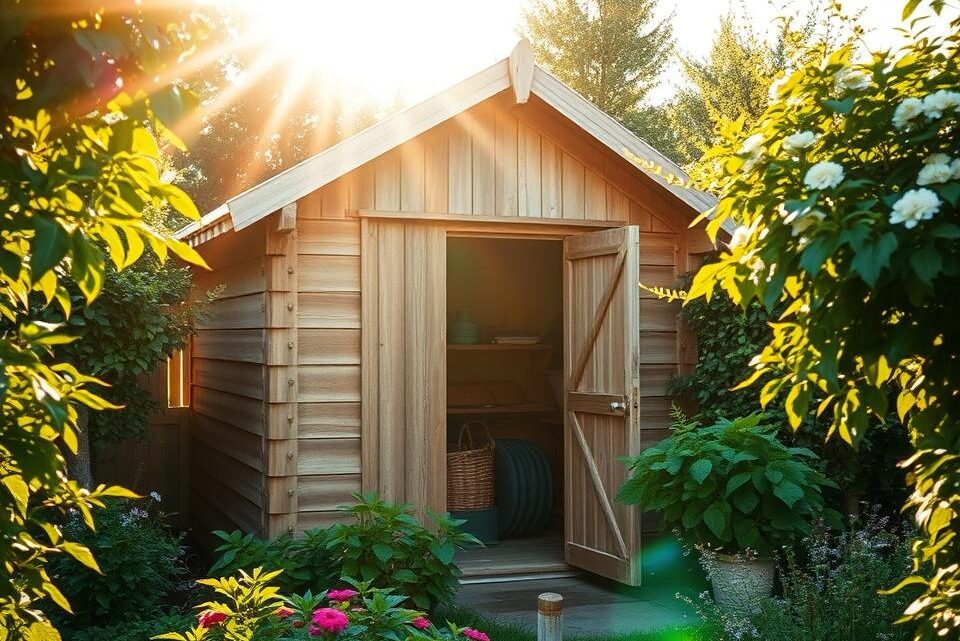
Many garden owners across the United Kingdom experience a common problem during the summer months. Their outdoor storage sheds can become unbearably hot. This intense heat is not just an inconvenience; it can also lead to potential damage over time.
The materials used in a garden shed‘s construction play a crucial role. Dark-coloured surfaces and certain materials absorb the sun‘s rays efficiently. Without adequate ventilation or insulation, this captured warmth has nowhere to escape.
Compared to metal or plastic alternatives, wooden sheds often demonstrate superior temperature regulation. However, they are not immune to the challenges posed by prolonged exposure to hot weather. Understanding these reactions is the first step towards effective protection.
Inhaltsverzeichnis
Key Takeaways
- Garden sheds can heat up considerably during hot summer days.
- The building material significantly influences internal temperature.
- Inadequate ventilation traps warm air inside the structure.
- Darker colours absorb more heat from the sun than lighter ones.
- Wooden sheds generally offer better natural temperature control.
- Prolonged heat exposure can cause damage to the shed’s materials.
Understanding Heat Impact on Wooden Sheds
Garden storage structures constructed from timber respond in specific ways to thermal stress. The natural properties of wood make it particularly sensitive to environmental conditions.
This sensitivity creates a complex relationship between the building materials and external temperature fluctuations. Understanding this dynamic is essential for proper maintenance.
Overview of Heat Effects on Wood
Wood behaves as a hygroscopic material, meaning it naturally absorbs and releases moisture from the air. During hot periods, timber expands as it heats up.
This expansion can cause subtle shifts in the structure over time. Prolonged exposure to high heat dries out wood fibres, leading to brittleness and potential cracking.
Untreated timber suffers most significantly from these effects. The protective coatings that shield the wood can deteriorate faster under thermal stress.
Common Structural and Material Issues
Visible signs of damage often appear on walls and floor surfaces. Warped boards indicate excessive moisture absorption followed by drying.
Temperature variations create condensation cycles that trap water within the shed‘s interior. This trapped moisture accelerates rot and mould development.
Proper ventilation becomes crucial to prevent these issues. Without adequate airflow, the building‘s integrity gradually weakens.
What Happens to Wooden Sheds When It’s Hot?
Heat accumulation within garden structures creates observable effects that shed owners should recognise for proper maintenance. The transformation occurs gradually but becomes evident during prolonged warm periods.
Observed Physical Changes in Shed Materials
Timber components demonstrate clear responses to sustained thermal exposure. Boards may expand, creating small gaps between panels as they adjust to the warmth.
Doors and window frames often experience warping, making opening and closing difficult. Roof sections bear the brunt of temperature variations throughout the day.
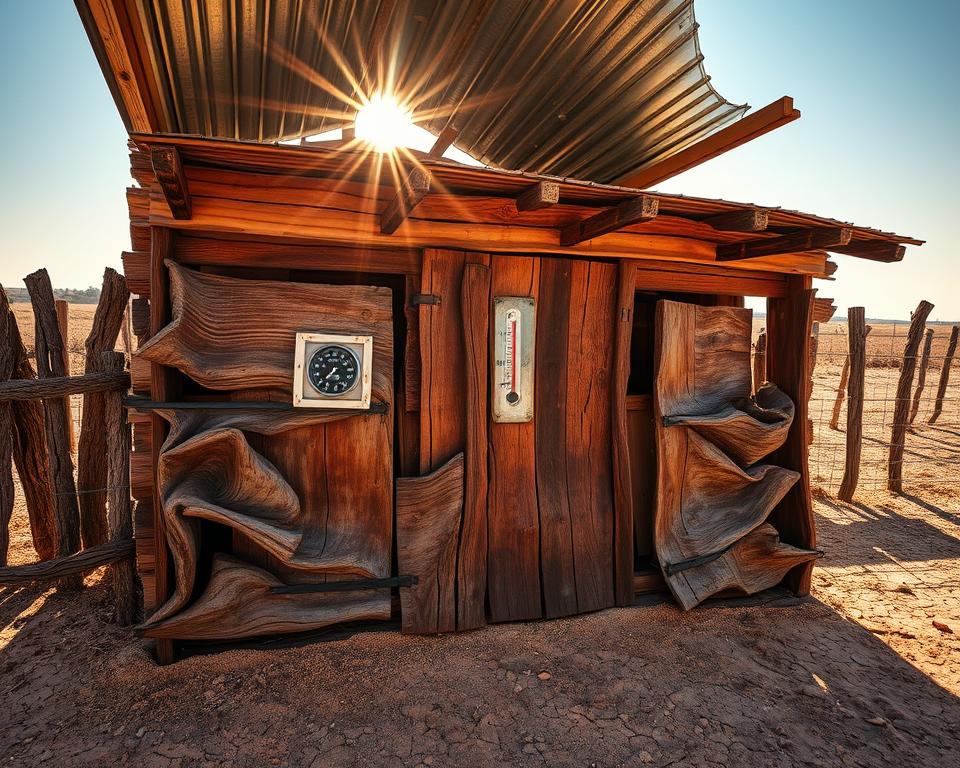
The interior space transforms into an uncomfortably warm environment. Stored items can become hot to touch, affecting tools and other contents.
Influence of Direct Sunlight and Ambient Temperature
South-facing walls and roof surfaces develop hot spots from prolonged sun exposure. These areas absorb significant radiation, raising internal temperatures considerably.
Ambient conditions play a crucial role in thermal stress. Geographical location and seasonal patterns determine the overall heat impact on the garden building.
Repeated heating and cooling cycles gradually weaken structural integrity. This cumulative effect accelerates natural ageing processes over multiple seasons.
Effective Ventilation Techniques for Wooden Sheds
Strategic ventilation solutions offer the most direct approach to combating excessive heat in outdoor structures. Proper air movement prevents heat accumulation and maintains a healthier environment for both the building and its contents.
Implementing the right ventilation system can transform an uncomfortably warm space into a functional, temperate area.
Importance of Airflow in Shed Cooling
Effective ventilation relies on the natural principle that hot air rises. Without proper airflow, warm air becomes trapped in the upper areas of the structure.
This creates temperature stratification that makes the interior space uncomfortable. Continuous air exchange helps regulate conditions throughout the building.
Passive versus Active Ventilation Options
Passive systems use natural forces like wind and thermal convection. These include strategically placed vents that require no power.
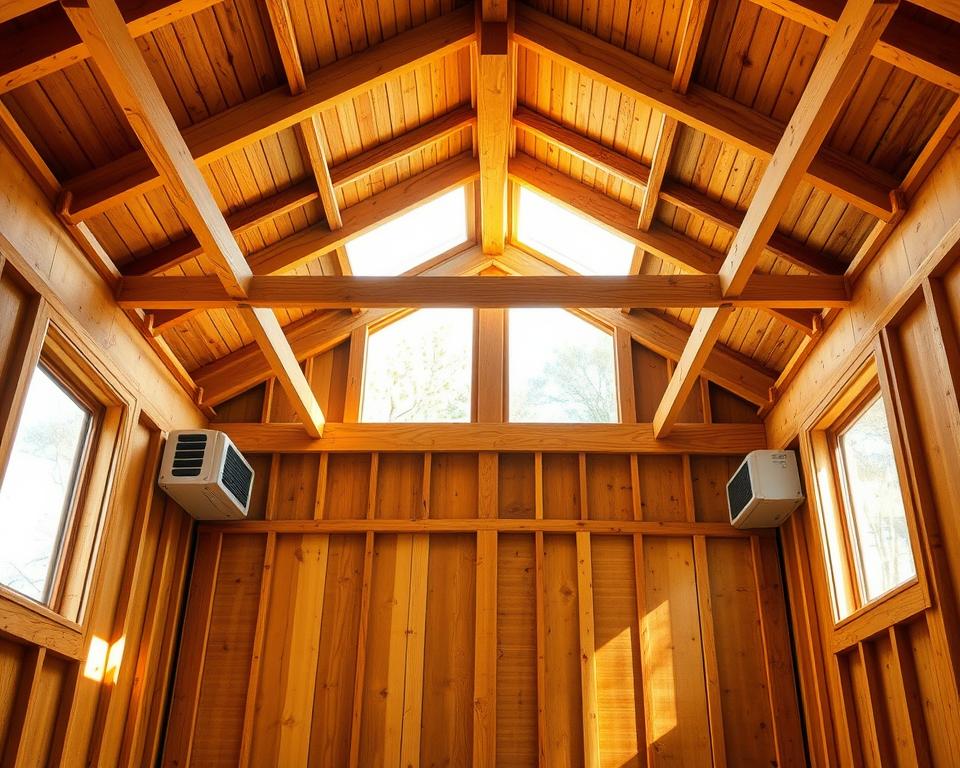
Active options involve mechanical assistance like electric or solar-powered fans. They provide reliable air movement regardless of external conditions.
Implementing Roof and Wall Vents
Roof vents installed near the apex allow hot air to escape efficiently. Wall vents positioned on opposite sides create beneficial cross-ventilation.
Combining both approaches ensures comprehensive air circulation throughout the entire shed space.
Insulation and Other Cooling Solutions
Beyond ventilation, insulation represents a powerful method for regulating internal shed conditions. This approach creates a thermal barrier that significantly reduces heat transfer into the building.

Installing Insulation to Stabilise Temperature
Proper insulation in walls, roof, and floor areas creates a comprehensive thermal envelope. This barrier slows heat penetration during warm periods. It helps maintain more stable interior conditions.
Various insulation materials work effectively for garden buildings. Foam boards and reflective foil products are popular choices. Proper installation ensures complete coverage without thermal bridges.
Utilising Reflective Paint and Premium Roof Felt
Reflective paint applied to exterior surfaces offers immediate cooling benefits. Light-coloured paints deflect sunlight rather than absorbing heat. This simple upgrade protects the structure from sun damage.
Premium roof felt provides additional insulation and weather protection. Mineral-based felts offer superior performance in regulating temperature. Combined with other methods, these solutions create a comprehensively cooled garden shed space.
Selecting Materials and Design Strategies
The selection of construction materials plays a pivotal role in determining a garden shed‘s internal climate. This choice directly impacts thermal performance and comfort. A well-considered design further enhances this effect, creating a more resilient structure.
Wood versus Metal: Pros and Cons for Heat Regulation
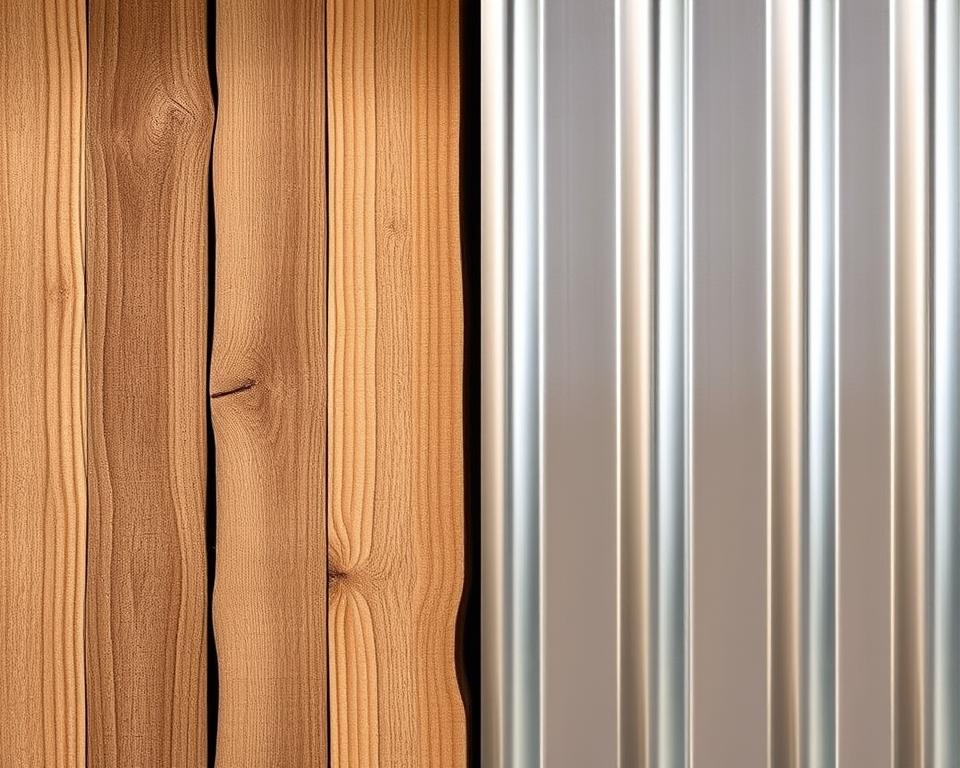
Wood is renowned for its natural insulating properties. It absorbs and releases heat gradually, which helps maintain a more stable internal temperature. This thermal mass characteristic prevents the sharp spikes and drops often experienced with other materials.
In contrast, metal buildings possess high thermal conductivity. They heat up rapidly during sunny days and cool down just as quickly in the evening. This can lead to significant temperature fluctuations inside the shed.
The table below provides a clear comparison:
| Feature | Wooden Garden Sheds | Metal Sheds |
|---|---|---|
| Thermal Conductivity | Low | High |
| Temperature Stability | Excellent – gradual heat exchange | Poor – rapid heating and cooling |
| Heat Absorption | Moderate and slow | High and fast |
| Maintenance Needs | Higher to protect against weathering | Lower, but prone to condensation |
Beyond material choice, design strategies are vital. Proper orientation, generous roof overhangs, and strategic window placement can significantly reduce solar heat gain. These considerations help create a more comfortable garden building regardless of the primary construction material.
Innovative Cooling Methods: Air Conditioning and Fans
For those seeking the ultimate cooling solution, mechanical systems offer precise control over the interior climate. These technologies move beyond passive methods to provide active temperature management.
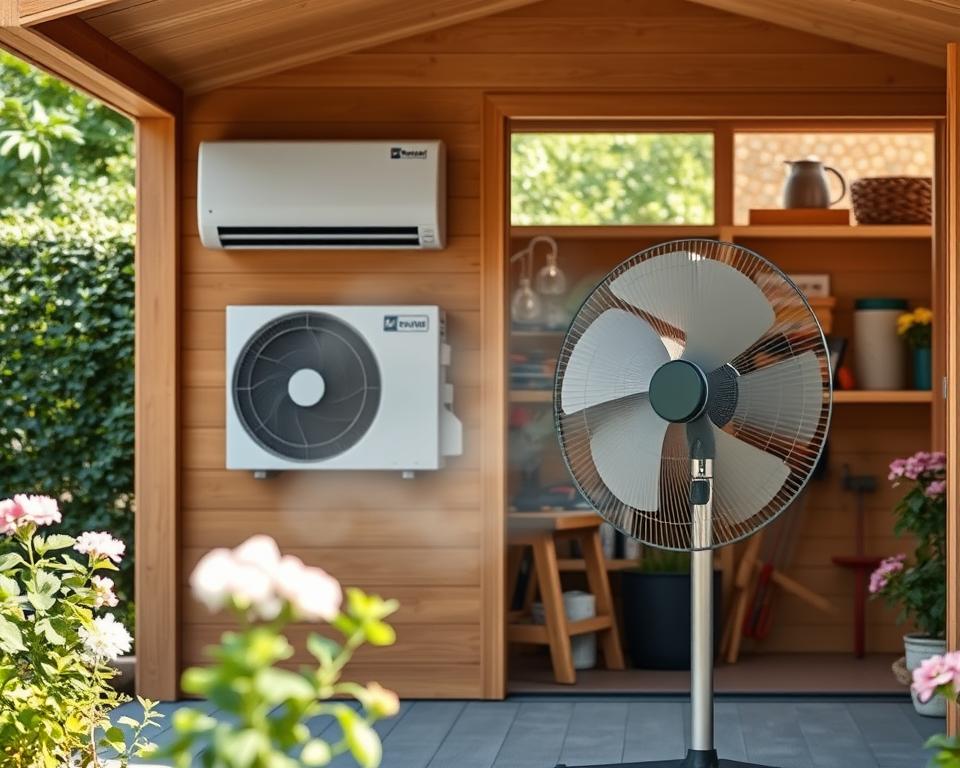
They are particularly beneficial for structures used as workshops or studios. This approach ensures comfort during extended use.
Benefits of Integrating Air Conditioning
Installing a compact air conditioning unit transforms a garden building into a comfortable retreat. These systems deliver consistent cooling regardless of external conditions.
Modern portable or split-system units allow for precise temperature regulation. They also help control humidity levels within the space.
Proper installation requires consideration of power supply and unit sizing. Placement affects air distribution and efficiency.
Efficiency of Portable Fans and Energy Considerations
Portable fans offer a more accessible cooling alternative. A strategically placed fan creates air movement that enhances comfort.
Different types suit various needs. Window-mounted extraction fans, pedestal models, and ceiling units provide flexible options.
Solar-powered versions help reduce electricity costs. Energy-efficient models maximise cooling while minimising power consumption.
These solutions effectively keep shed cool during warm periods. They complement existing ventilation strategies for comprehensive climate control.
Expert Tips: Preventing Damage and Dampness
Expert guidance focuses on preventing the dual challenges of thermal stress and moisture accumulation. A systematic approach combines regular inspections with targeted preventative measures. This ensures long-term protection for your outdoor storage building.
Regular Maintenance and Ventilation Checks
Scheduled inspections identify early warning signs before serious damage occurs. Check roofs for rusting nails and dark spots indicating water ingress. Verify that all ventilation pathways remain unobstructed by stored items.
The table below outlines essential maintenance tasks:
| Maintenance Task | Frequency | Key Benefits |
|---|---|---|
| Ventilation system check | Monthly | Prevents moisture buildup and mould growth |
| Roof and gutter inspection | Seasonally | Identifies leaks before water damage spreads |
| Door and window seal check | Quarterly | Maintains air tightness against weather elements |
| Interior moisture assessment | Bi-annually | Early detection of condensation issues |
Moisture Control and Weatherproofing Techniques
Temperature variations create condensation cycles that threaten garden shed integrity. Proper weatherproofing prevents water ingress while allowing the structure to breathe. Install protective treatments and barrier systems for comprehensive damp prevention.
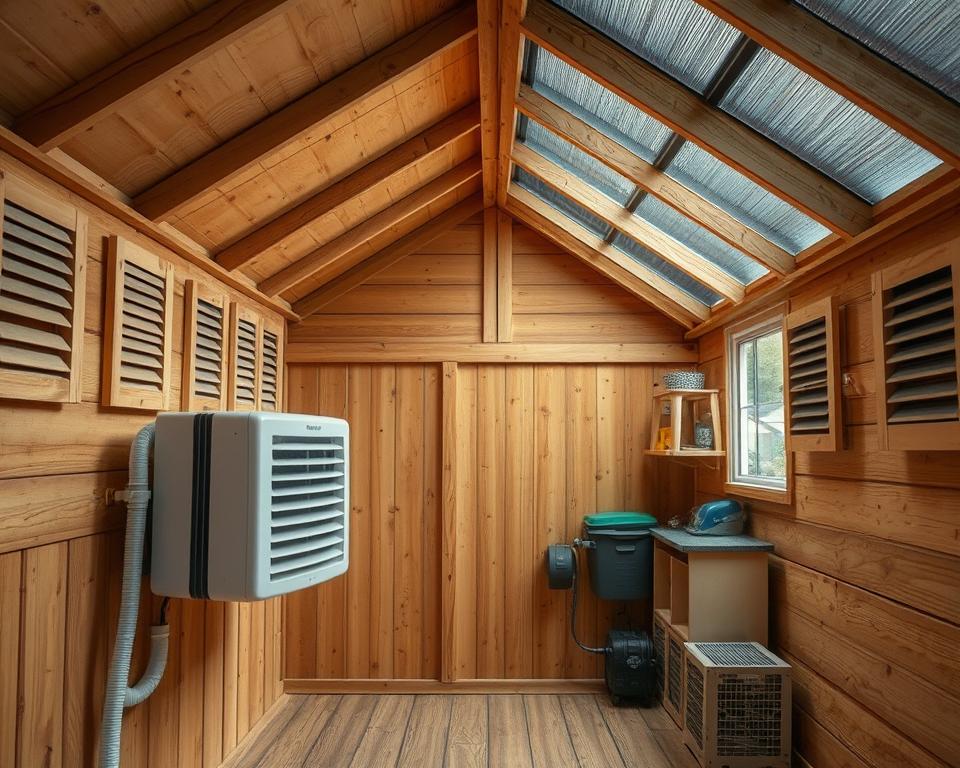
Avoid storing damp tools or items inside the shed. Leave 2-4 inches of space between walls and stored contents. Use moisture-absorbing products during humid weather.
Sealing Gaps to Prevent Condensation
Identify common problem areas around doors, windows, and floor joints. Use appropriate sealants and expanding foam for different gap types. Install weather stripping to prevent air and moisture penetration.
Regularly maintain these seals as they deteriorate over time. This proactive way of addressing gaps significantly reduces damp-related issues inside the shed.
Conclusion
Maintaining a pleasant environment in a garden shed during warm periods is an achievable goal. A thoughtful combination of strategies proves most effective.
From enhancing ventilation and adding insulation to using reflective paint and portable fans, numerous options exist. Each method helps keep shed cool and protects the building.
Simple tips, like strategic placement in the garden for shade, make a significant difference. This approach improves comfort and extends the space‘s usability all year.
By taking action, owners can safeguard their shed and its contents from heat damage. A comfortable garden building becomes a more valuable asset.
FAQ
How does hot weather affect a wooden shed’s structure?
Intense summer heat causes wood to expand and contract. This movement can lead to warping, cracking, or splitting of the timber. Prolonged sun exposure can also degrade the finish, causing paint to peel and the wood to fade, potentially weakening the building over time.
What are the best ways to improve ventilation in a garden shed?
A> Effective ventilation relies on creating a clear airflow path. Installing roof vents paired with lower wall vents encourages hot air to escape from the ceiling while drawing in cooler air from below. Ensuring gaps around doors and windows are not fully sealed also aids natural air circulation.
Can insulation help keep a shed cool in summer?
Yes, installing insulation in the walls and ceiling helps stabilise the interior temperature. It acts as a barrier, reducing heat transfer from the hot roof and walls. This makes the space more comfortable and protects stored items from extreme temperature fluctuations.
Is it worth using a fan or air conditioning unit inside a shed?
For sheds used as workshops or offices, active cooling is very effective. A portable fan provides affordable airflow, while a small, energy-efficient air conditioning unit offers precise temperature control. Both require a safe power supply and proper ventilation to function optimally.
How can I prevent moisture and dampness in a hot shed?
Good ventilation is key to controlling moisture. Combined with weatherproofing techniques like applying a quality wood preservative and sealing any major gaps, it prevents humid air from condensing on cooler interior surfaces, which leads to dampness and mould.
Are some shed materials better than wood for hot climates?
Metal sheds, for instance, reflect more sunlight but can become extremely hot inside without insulation. Wood offers better natural insulation but requires more maintenance. The best choice depends on the specific use, with design strategies like overhanging roofs being crucial for any material.