Ideal Base for Your Summerhouse – Expert Tips

Choosing the right foundation is the single biggest factor in how long a garden building lasts. This guide answers the core question: what is the best base to put a summerhouse on? It compares concrete slabs, paving systems, timber and composite frames, and plastic grids used across the summerhouse base UK market.
We explain how soil, drainage, and load shape garden building foundations, and how moisture control prevents movement and rot. You will see where BS EN 206 for concrete and BS 7533 for paving apply, and how base preparation differs for a shed base vs summerhouse base. We also flag planning permission foundations, frost depth, clay heave, and damp-proofing that matter in the United Kingdom.
Expect clear, brand-agnostic advice for timber and composite models from Dunster House, Tiger Sheds, and Garden Buildings Direct. We set out costs, timelines, and when to DIY or call a professional. By the end, you can choose from the main summerhouse base types with confidence and secure a stable base for summerhouse use all year.
Inhaltsverzeichnis
Key Takeaways
- Match the base to soil, drainage, and expected load to avoid movement and damp.
- Use standards: BS EN 206 for concrete and BS 7533 for paving where relevant.
- Plan base preparation early, allowing for access, services, and ventilation gaps.
- Concrete slabs suit heavy, insulated builds; modular options speed up installs.
- Consider frost depth and clay heave in the UK before choosing foundations.
- Check planning permission foundations and Building Regulations for electrics.
- Balance cost, time, and skills to decide between DIY and professional installation.
Understanding the Role of a Solid Summerhouse Base
A well-built base sets the tone for summerhouse foundation performance. When the platform is flat, rigid, and drained, the frames stay square, doors latch smoothly, and windows seal as intended. This stable start preserves structural integrity and supports base longevity across seasons.
Precision matters. Keep levels within a few millimetres over the footprint and match the tolerances given by brands such as Forest Garden, Keter, and Nova Outdoor Living. Allow for service penetrations without breaking the damp-proofing, and use neat edging to prevent gravel or soil creep.
Why base quality determines longevity
Quality underfoot spreads weight evenly, resisting settlement that leads to racking and misaligned openings. A dense, well-compacted sub-base, reinforced where needed, holds shape under changing weather and traffic. This protects fixings and cladding from stress and keeps timber floor support reliable.
Base longevity improves when loads pass uniformly into the ground. Use a damp-proofing layer to block capillary rise and pair it with fall gradients to shed water. The result is consistent performance with fewer call-backs and a longer service life for the superstructure.
Load-bearing considerations for timber and composite structures
Every design carries dead loads from the shell and finishes, plus live loads from people, furniture, and point loads such as internal partitions or gym kit. Calculate load-bearing capacity with a margin for future upgrades, like insulation or a heavier roof covering.
Light timber builds often exert modest pressure, but a composite garden room substructure, especially when insulated and clad, can be much heavier. In those cases, choose higher-capacity bases and verify bearing strength across corners and mid-spans to maintain structural integrity.
Moisture, movement, and rot prevention
Moisture is the silent threat. Capillary rise and trapped humidity undermine timber and corrode metal fixings. Combine damp-proofing with ventilation gaps beneath floors for steady airflow and effective rot prevention. Keep ground clear of debris so water drains away from the perimeter.
Differential movement from clay shrink–swell or soft fill can warp frames. Counter this with proper sub-base depth, geotextiles, and, where required, reinforcement. These steps protect timber floor support and sustain summerhouse foundation performance through wet winters and hot summers.
| Performance Factor | Best-Practice Detail | Benefit to Structure | Typical Materials/Features |
|---|---|---|---|
| Level Accuracy | Within a few mm across full footprint | Prevents racking and door/window misalignment | Laser level, shims, adjustable pedestals |
| Load-Bearing Capacity | Designed for dead, live, and point loads | Maintains structural integrity under use | Type 1 sub-base, reinforced slab, joist hangers |
| Moisture Control | Damp-proofing and cross-ventilation below floor | Rot prevention and reduced mould risk | DPM, DPC, vents, breathable membranes |
| Movement Mitigation | Compaction, geotextiles, and reinforcement | Limits settlement and twisting | Wacker plate, geotextile fabric, steel mesh |
| Timber Floor Support | Even bearing along joists and bearers | Stops bounce and deflection | C24 treated joists, composite pads, spacers |
| Compatibility with Composite Rooms | Higher-capacity base for heavier shells | Stable composite garden room substructure | Concrete pads, reinforced slabs, pedestals |
Site Assessment and Ground Preparation
Start with a practical check of the ground before you order materials. A quick soil survey summerhouse review helps you choose a base that will last and sit true. Dig a small test pit to confirm topsoil depth and the subgrade beneath. Note any made ground, as it often hides rubble and needs deeper replacement to reach sound strata.
Soil type identification and suitability
A clay soil base swells and shrinks with wet and dry cycles, which raises the risk of heave. In the South East and the Midlands this is common, so record moisture and firmness after rain and in dry spells. A chalk and sand subgrade usually offers good bearing and steady drainage, while sandy soils can drain fast but may lack cohesion and need careful support.
If ground has been filled, expect variable strength. Remove soft pockets until you reach firm subgrade, then rebuild. Where trees are close, consider root zones and shrinkable clay behaviour, noting NHBC guidance as a prudent reference for depth and positioning.
Drainage requirements and fall gradients
Plan a simple drainage design garden buildings layout that moves water away from the edges. Aim for a gentle fall gradient 1:60 to 1:80 from the perimeter so no surface water ponds under the footprint. Confirm falls with a laser level or a tight string-line and check again after compaction.
On heavy clay, add perimeter French drains discharging to a compliant soakaway where suitable. Keep outlets clear and avoid directing runoff towards boundaries or paths. Good drainage reduces frost action, protects fixings, and keeps the base cleaner year-round.
Clearing vegetation, levelling, and compaction best practices
Strip turf and organic topsoil to the firm formation, removing roots and stumps fully. Lay a non-woven geotextile membrane over the subgrade to separate it from the imported stone and to curb pumping under load. Build an MOT Type 1 sub-base (or Type 3 for better permeability) to 75–150 mm, depending on soil and chosen base system.
Compact in 50 mm layers using wacker plate compaction; for larger areas use a plate with a minimum 85 kN rating to reach refusal. Check levels as you go and maintain the designed fall. Avoid placing the base over freshly backfilled trenches until settlement occurs, and treat any regrowth risk areas to prevent movement under the slab or frame.
what is the best base to put a summerhouse on?
The best base for summerhouse UK projects depends on size, weight, soil, and drainage. For heavy cabins, composite cladding, or year-round use, a reinforced slab with a damp-proof membrane often acts as a low maintenance base. It resists movement on mixed ground and offers a smooth platform for precise door and window alignment.
Where budgets are tighter, consider concrete vs paving base decisions by footprint and load. A paving slab build over MOT Type 1 with sharp sand can be the cheapest summerhouse base for mid-weight timber models. Keep 50–150 mm clearance above finished ground and add ventilation gaps to protect cladding and floors.
On sloping gardens or tree root zones, a timber frame base using pressure-treated joists on adjustable pedestals reduces ground disturbance. It lifts the deck for airflow, helps control moisture, and allows fast levelling. Composite subframes from brands like Trex or Millboard can boost durability in damp zones.
For fast installs, a plastic grid base filled with angular gravel creates a permeable surface that sheds rain and limits puddling. Add geotextile and firm edge restraint, then compact evenly to stop creep. This route works well for sheds and small to medium summerhouses on competent sub-bases.
If you plan a quiet office or media room, an insulated base for garden room layouts pairs best with a slab and rigid insulation, or a raised timber frame with PIR between joists. Either way, aim for robust drainage, clear falls away from walls, and consistent airflow beneath the floor.
Rule of thumb: choose concrete for heavy structures and longevity, paving for moderate loads and DIY speed, frames for ventilation and slopes, and grids for quick, permeable setups. Balance cost, time, and maintenance to match use and site conditions.
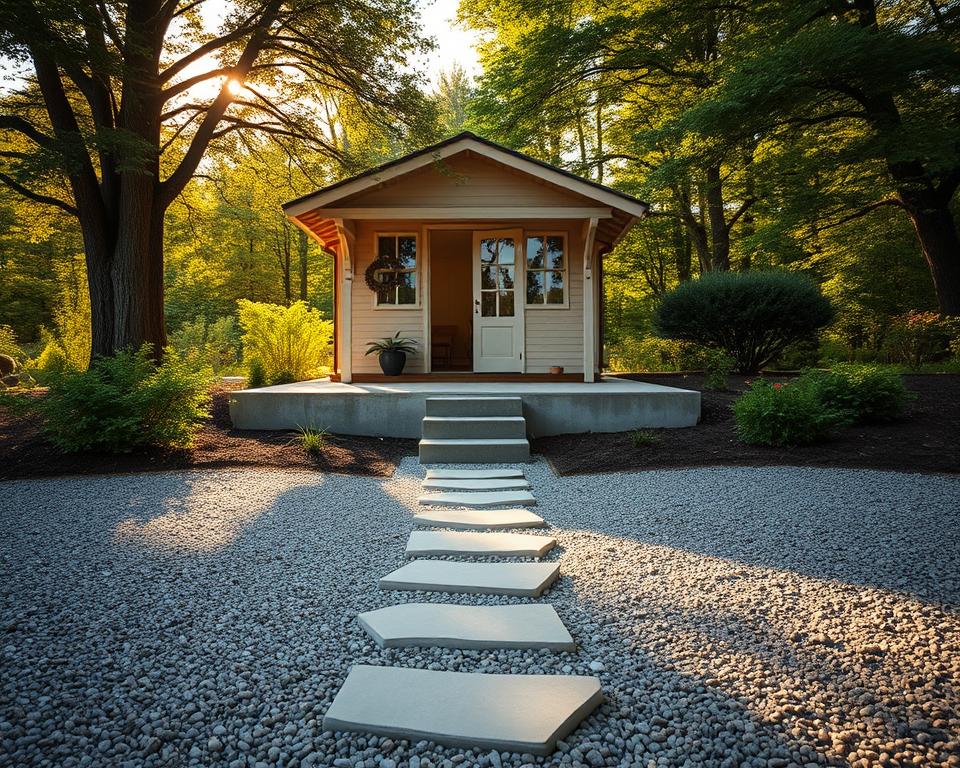
Concrete Slab Bases for Maximum Stability
A well-detailed reinforced concrete slab gives a summerhouse a firm, flat footing that stays true. It suits larger footprints and heavier finishes, while keeping upkeep to a minimum. Specify materials to British Standards and set the finished level above the surrounding ground.
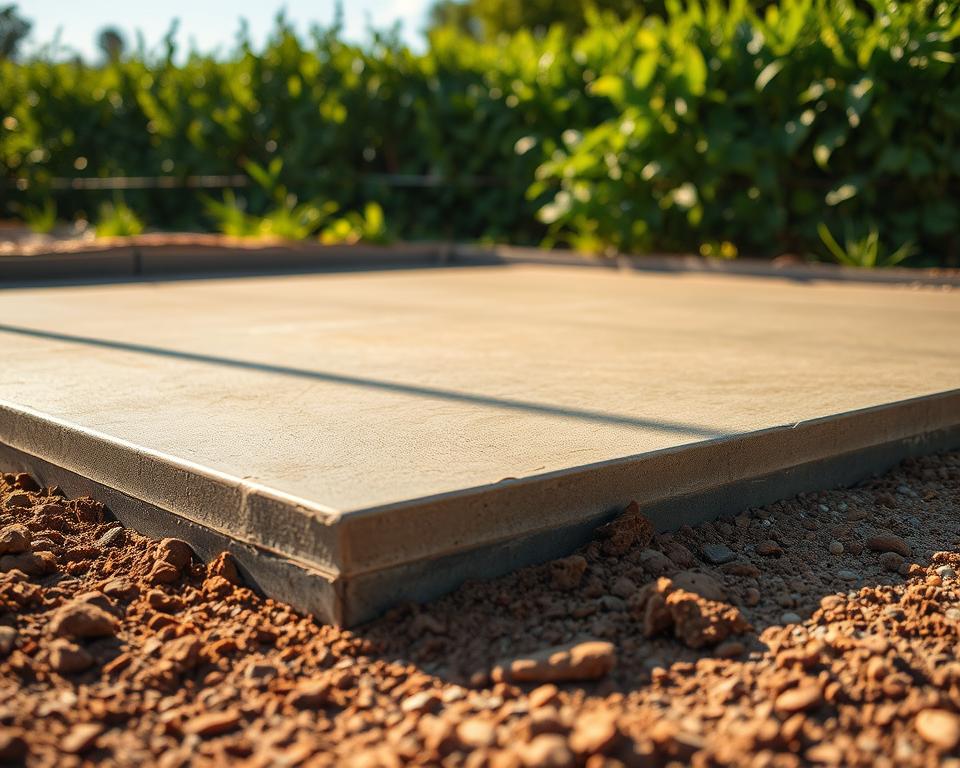
When a concrete slab is recommended
Choose a slab for buildings over 10–12 m², for studios with heavy composite cladding, or where a perfectly level platform is vital for doors and glazing. A floating slab also works when you need integrated services and a clean, low-maintenance base.
Where access is tight, a single pour in C25/30 concrete UK offers speed and consistency. It is ideal for garden rooms that need stable support for fitted furniture, bifolds, and precision joinery.
Depth, reinforcement, and expansion joints
A typical build-up uses concrete thickness 100 mm to 150 mm over compacted MOT Type 1. Use mesh reinforcement A142/A193 on spacers to control shrinkage and distribute loads. On poor ground, deepen the section or add ground beams with pier pads.
Plan expansion joints and saw-cut contraction joints at 20–30 times the slab depth and around penetrations. Cut within the first 24 hours, subject to weather and cure, to limit random cracking and guide movement.
Damp-proof membranes and insulation options
Install a DPM 1200 gauge above the sub-base with taped laps and upstands to the wall line. Sleeve all ducts to keep the membrane intact and protect it from puncture before the pour. Keep the slab 25–50 mm larger than the footprint and shed water away from exposed edges.
For year-round comfort, place 50–100 mm PIR insulation above the DPM with a separating layer, then a power-floated finish or bonded screed. Add thermal breaks at the perimeter to cut cold bridging while retaining the benefits of a floating slab.
- Concrete class: C25/30 concrete UK to BS EN 206
- Nominal depth: concrete thickness 100 mm to 150 mm
- Rebar: mesh reinforcement A142/A193 on chairs
- Movement control: expansion joints and early saw-cuts
- Moisture control: DPM 1200 gauge with taped laps
- Thermal layer: PIR insulation with edge breaks
| Specification Element | Recommended Detail | Purpose | Notes |
|---|---|---|---|
| Sub-base | 100–150 mm MOT Type 1, compacted | Even support and drainage | Compact in layers to refusal |
| Concrete | C25/30 concrete UK | Strength and durability | Place, level, and cure correctly |
| Slab Depth | Concrete thickness 100 mm–150 mm | Load-bearing capacity | Increase on weak or variable ground |
| Reinforcement | Mesh reinforcement A142/A193 on spacers | Crack control and load distribution | Maintain cover all round |
| Movement Joints | Expansion joints and saw-cuts | Manage shrinkage and thermal movement | Spacing at 20–30 × slab depth |
| Damp Control | DPM 1200 gauge with upstands | Moisture barrier | Tape laps; protect from damage |
| Insulation | 50–100 mm PIR insulation | Thermal performance | Include separating layer and edge breaks |
| Finish | Power-floated or screed | Flat, durable surface | Dead level for internal rooms; slight fall if exposed |
| Services | Sleeved ducts pre-pour | Future-proofing | Electric, data, and water routes |
| Curing | Polythene cover or curing compound | Reduce early-age cracking | Allow 7 days before light load; 28 days to full strength |
Paving Slabs and Modular Systems
Well-laid paving gives a neat, durable base for a summerhouse and keeps maintenance low. Choose materials and methods that meet BS 7533 paving guidance, and size the build so the finished platform is square, level, and slightly larger than the footprint. Aim for a flatness tolerance within 5 mm and flush joints to spread load evenly.
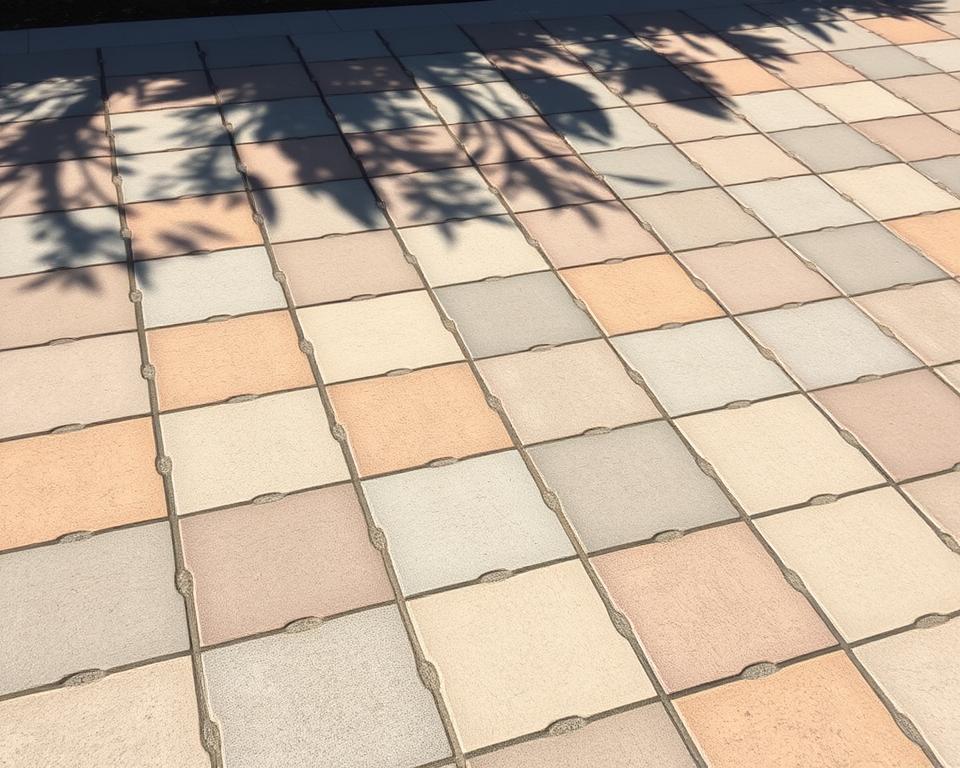
Choosing the right paving slabs and sub-base
For most mid-sized builds, select robust 450×450 or 600×600 mm concrete paving flags or porcelain slabs outdoor with suitable thickness. Avoid thin patio stones that rock under point loads. Verify the Type 1 sub-base depth at 75–150 mm, compacted in layers; over weak soils, add a geotextile. Where you want infiltration, specify open-graded Type 3 to form a permeable patio base.
Keep the base square by checking diagonals. Mark a clean datum, and maintain uniform joint widths to support the structure and align doors and windows.
Sand, mortar, or pedestal supports?
A full-bed mortar (cement:sand 1:4 to 1:6) creates a rigid platform and helps achieve precise levels; avoid spot bedding. For modest movement tolerance, choose flexible bedding with sharp sand screed and jointing sand, noting the slight risk of settlement under concentrated loads.
Where services run beneath, or to correct complex falls, a pedestal paving system suits porcelain or concrete units. Set pedestals on stable pads, use perimeter restraints to prevent creep, and lock edges so the field remains tight.
Achieving level, stable, and permeable surfaces
Establish falls of 1:60–1:80 away from the building. For infiltration, pair Type 3 with permeable bedding aggregates and porous jointing to keep the permeable patio base free-draining. In frost-prone areas, ensure the Type 1 sub-base depth or open-graded layer sits below frost-susceptible soils, and avoid water-trapping beds.
Finish to BS 7533 paving tolerances, check with a straightedge, and tap down high points. Whether using porcelain slabs outdoor or concrete paving flags, a consistent full-bed mortar, well-compacted sub-base, or carefully set pedestal paving system will deliver a level platform ready for accurate installation.
Timber and Composite Frame Bases
A well-built timber bearer base suits sloped or uneven plots and keeps the floor dry and stable. Set out the frame so loads transfer cleanly, protect it from damp, and preserve airflow beneath the structure for long-term reliability.

Pressure-treated joists and bearers
Choose C16/C24 treated joists from trusted UK suppliers and match the treatment to exposure. Use UC4 ground contact timber for posts or any element touching soil, with UC3 for raised members. Lay perimeter bearers with intermediate joists at 400–600 mm centres, then add noggins to stop twist.
Seat the frame on concrete pads or adjustable pedestal supports for precise levelling. Isolate wood from pads with a damp-proof course strip or rubber shims. Keep a 100 mm minimum ventilation void under the floor, and raise cladding at least 50 mm above the finished base.
Composite subframes and adjustable pedestals
A composite frame system, whether recycled plastic or wood–plastic composite, resists rot and offers predictable spans. Check manufacturer load tables and compatible fixings, and pair with adjustable pedestal supports to fine-tune height and fall. Pre-plan service routes and protect electrical runs in line with BS 7671.
Lay a weed membrane over the subgrade and add a gravel layer to improve drainage and suppress regrowth. Where frames meet hard points, add a damp-proof course strip to prevent moisture wicking into bearers and fixings.
Airflow, ventilation gaps, and moisture control
Maintain cross-ventilation with mesh-protected openings on opposing sides and avoid sealing the base with solid skirting; choose ventilated skirting if needed. Keep the ventilation void clear of debris and ensure paths or decking do not block airflow.
Integrate a suitable vapour control layer within the floor build-up as specified by the building manufacturer. On wetter plots, increase the void depth and confirm all UC4 ground contact timber and fixings are maintained to avoid trapped moisture.
| Component | Recommended Specification | Purpose | Notes |
|---|---|---|---|
| Bearers and Joists | C16/C24 treated joists; UC4 ground contact timber where touching soil | Primary structure | Centres at 400–600 mm; add noggins for stiffness |
| Supports | Concrete pads or adjustable pedestal supports | Level and load transfer | Allow height tuning on sloped ground |
| Moisture Break | Damp-proof course strip or rubber shims | Capillary barrier | Place between timber and concrete |
| Subgrade Control | Weed membrane with gravel cover | Drainage and vegetation control | Prevents growth and improves runoff |
| Ventilation | Minimum 100 mm ventilation void; mesh vents | Airflow and drying | Use ventilated skirting if enclosure is required |
| Composite Option | Composite frame system with rated fixings | Low-maintenance subframe | Verify span and load tables from manufacturer |
Plastic Grids and Eco-Friendly Base Solutions
Modern garden builds favour light, fast systems that stay firm underfoot and drain well. Plastic shed base grids deliver a permeable foundation that supports uniform loads while letting rain soak away. As an eco base for summerhouse projects, they suit small to medium footprints and reduce mess on site.

Grid systems with gravel infill
Interlocking cells form cellular ground reinforcement that locks with angular stone. When paired with gravel stabilisation grids, 10–20 mm clean gravel knits into the matrix for a rigid, flat plane. The result is a tidy surface that stays level and functions as a SUDS compliant base.
Most premium panels use a recycled polypropylene base that is tough yet light to handle. Clip the panels in a brick-bond pattern, then infill to the top of the cell to avoid rucking. This method keeps the permeable foundation open and supports bearers where line loads are needed.
Load rating, geotextiles, and edge restraints
Check the filled load rating and UV stability, and seek UK test data from brands such as Nidagravel or CORE Landscape Products. Typical figures sit in the 200–400 t/m² range when correctly compacted, giving ample support beneath standard summerhouse frames.
Lay a non-woven geotextile over the prepared sub-base to stop fines migration. Add robust edge restraints—plastic, aluminium, or concrete—to prevent lateral creep. This keeps plastic shed base grids aligned and preserves the performance of the gravel stabilisation grids.
Sustainability, recyclability, and installation speed
A recycled polypropylene base cuts embodied impact and can be reclaimed at end of life. The open structure provides a SUDS compliant base, easing runoff and helping gardens breathe after heavy rain. As an eco base for summerhouse builds, it balances strength with water sensitivity.
Installation is swift: a compacted Type 1 or Type 3 layer, geotextile, clipped panels, and stone infill. Minimal excavation and clean materials mean less waste and fewer deliveries, while the cellular ground reinforcement keeps the permeable foundation stable for years.
Cost, Time, and DIY vs Professional Installation
The summerhouse base cost UK depends on design, access, and soil. Prices vary by base type and the mix of labour vs materials. Set a clear project timeline so you can plan deliveries and protect the ground from bad weather.
Concrete suits heavy structures and long-term value. The cost per m² concrete slab typically ranges from £80–£150, rising with reinforcement, insulation, or pumps. Factor in excavation, waste removal, and reinstatement. Allow for installation time over several days and curing before full load.
Paving is quicker and flexible on smaller plots. A paving base budget usually sits at £60–£120 per m², plus sub-base and edge restraint. Check access for bulk bags and a wacker plate to keep the project timeline tight.
Timber or composite frames offer speed and adjustability. Expect £50–£120 per m² depending on pedestals and posts. They can bridge minor level changes and reduce wet trades, which can shorten installation time on busy sites.
Plastic grids are light and fast for modest loads. Typical spend is £40–£80 per m², plus gravel infill. This route helps where access is tight and a DIY foundation is preferred.
A DIY foundation can work for confident owners with a laser level and compaction gear. Professional groundwork adds specification, guarantees, and compliance, which matters on clay or sloping plots. Compare labour vs materials in itemised quotes, confirm insurance, and request photos of similar bases.
Plan for delivery logistics such as ready-mix or volumetric concrete, possible pump hire, and weather windows. Build float into the project timeline for inspections and the initial cure on slabs.
| Base Type | Indicative Cost (per m²) | Typical Installation Time | Strengths | Watch-outs |
|---|---|---|---|---|
| Concrete Slab | £80–£150 | 2–3 days install; 7–28 days before full load | High stability, long life, clean finish | Higher upfront cost per m² concrete slab, weather and access sensitivity |
| Paving Flags | £60–£120 | 1–2 days | Fast, modular repairs, permeable options | Paving base budget rises with deep sub-base; needs precise levelling |
| Timber/Composite Frame | £50–£120 | 1–2 days once pads set | Quick to install, adjustable, good airflow | Requires durable bearers; periodic checks on fixings |
| Plastic Grids with Gravel | £40–£80 + gravel | Up to 1 day for small footprints | Lightweight, minimal excavation, rapid installation time | Load limits; relies on well-compacted sub-base |
| Procurement & Access | Varies | Add 0.5–1 day | Volumetric or ready-mix flexibility | Pump hire and tight access can extend project timeline |
| Delivery & Waste | ££ for skips/haulage | Half day–1 day | Clean site, safer workflow | Extra cost where spoil volumes are high |
| DIY vs Professional | DIY can cut labour; pros reduce risk | DIY time longer; professional groundwork faster | DIY foundation saves on labour vs materials | Incorrect spec risks movement and extra maintenance |
Balance the summerhouse base cost UK with expected use, site risk, and maintenance. A well-built slab may cost more now but can save on future fixes and boost resale appeal.
Common Mistakes to Avoid with Summerhouse Bases
Small errors at ground level can ripple through the whole build. Many base failures start with rushed prep, poor materials, or ignoring nearby site risks. A little care here prevents doors sticking, floors rocking, and costly call-backs.
Insufficient sub-base depth and poor compaction
Thin layers and hasty whacker passes invite sub-base errors and settlement cracks. Excavate to a consistent depth, then compact MOT Type 1 in lifts, checking density as you go. Avoid scalpings overloaded with fines that trap moisture and pump under load.
Keep timber off the ground with DPC strips, and never “spot bed” paving. Full-bed support removes voids that lead to rocking. Where utilities were recently trenched, allow consolidation time or use deeper, reinforced pads to reduce future movement.
Ignoring drainage and ground heave risks
Poor falls and blocked paths for water are classic drainage mistakes. Create gentle perimeter falls, add a gravel skirt, and use French drains on heavy soils. Do not bridge damp-proof membranes with soil or fixings; protect membranes during works.
In shrinkable clay, a clay heave summerhouse risk rises near large trees. Assess existing root influence, avoid new thirsty species close by, and consider suspended frames or deeper pads. Maintain a clear maintenance gap for airflow and gutter discharge.
Miscalculating access, tolerances, and clearances
Out-of-square bases and uneven levels cause misfit panels and tight door clearance. Check diagonals, levels, and setting out tolerances at each stage. Plan service conduits before a pour to avoid cutting later.
Allow 300–500 mm all round for assembly access and ongoing care. Keep bases clear of fences for ventilation, and ensure steps, paths, and thresholds align to prevent trip edges and premature wear.
Conclusion
A reliable base decides how well your summerhouse will perform through UK seasons. The best summerhouse base recommendation depends on structure weight, soil type, and how well you plan for drainage and services. For a durable garden room foundation that carries heavy loads, a reinforced concrete slab with a 1200-gauge damp-proof membrane offers the most stable, moisture-managed base. On firm, level ground, well-laid paving slabs give strong value and clean levels for a long-lasting summerhouse.
Not every plot is flat. Where access is tight or the site slopes, timber or composite frames on pads or adjustable pedestals keep floors aired and dry. If speed, permeability, and lower impact matter, plastic grid systems perform well when set on a compacted sub-base with geotextile and edge restraint. Each route works when you choose the right base for your soil and follow UK base guidance.
Success still rests on basics: a measured site survey, the correct sub-base depth, firm compaction, and accurate levels. Plan for rainwater run-off, ground movement, and space for power, water, and future checks. Align these details with local ground conditions and the load of your building, and you will secure a durable garden room foundation with a moisture-managed base that supports a long-lasting summerhouse.
In short, choose the right base with care and build it well. Whether concrete, slabs, framed supports, or plastic grids, the winning approach blends sound preparation with clear UK base guidance to deliver a stable, dry platform that stands the test of time.
FAQ
What is the best base to put a summerhouse on?
The best base depends on size, weight, soil, and drainage. For heavy or insulated garden rooms, a reinforced concrete slab to BS EN 206 with a 1200-gauge DPM is the most stable. For mid-sized timber models, a paving slab base built to BS 7533 guidance is cost-effective. On sloping or sensitive sites, timber or composite frames on adjustable pedestals work well. For quick, permeable installs, plastic cellular grids with gravel infill are suitable when edge-restrained and laid on a compacted sub-base.
How does base quality affect longevity and performance?
A flat, rigid, well-drained base prevents racking, sticking doors, and leaks. It spreads loads evenly, limits settlement, and manages moisture to avoid rot and corrosion. Keep levels within supplier tolerances, provide ventilation gaps, and protect against capillary rise with a DPM. Good base quality directly extends service life.
Which British Standards should I follow?
Use BS 7533 for paving design and construction, BS EN 206 for concrete specification, and follow BS 7671 when planning electrical ducts and runs. Where drainage connects to the ground, check Part H of the Building Regulations. For clay near trees, consult NHBC depth guidance as a cautionary reference.
When is a concrete slab the right choice?
Choose concrete for large footprints (typically over 10–12 m²), heavy composite cladding, or when you need a perfectly level, low-maintenance platform. A 100–150 mm C25/30 slab over 100–150 mm compacted MOT Type 1 with reinforcement such as A142 or A193 mesh provides excellent stability. Include contraction joints and a taped 1200-gauge DPM.
What thickness and reinforcement should a slab have?
Most summerhouses perform well on a 100–150 mm slab, reinforced with A142 or A193 mesh on chairs. Poor ground may need thicker sections or ground beams with pier pads. Saw-cut contraction joints at 20–30 times slab thickness, and allow proper curing before load.
Do I need insulation under a summerhouse?
If you are creating an insulated garden room for year-round use, add 50–100 mm PIR above the DPM with a separating layer and detail thermal breaks at edges. For hobby use without heating, insulation is optional but improves comfort and reduces condensation.
Are paving slabs a good base?
Yes, when laid on 75–150 mm compacted MOT Type 1 or Type 3 with a full-bed mortar or sharp sand screed. Choose robust 450×450 or 600×600 mm flags or outdoor-rated porcelain. Keep joints flush, verify diagonals for squareness, and avoid spot bedding.
Should I use sand, mortar, or pedestals under paving?
A full-bed mortar gives the most rigid, level finish. Sharp sand on a compacted sub-base is quicker but slightly more flexible. Adjustable pedestals are ideal for porcelain or concrete flags when you need to correct falls, run services beneath, or avoid ground disturbance.
When are timber or composite frame bases best?
Use them on sloping ground, uneven sites, or where airflow under the floor is vital. Pressure-treated UC4 posts and UC3 joists on pads or pedestals create an adjustable, ventilated platform. Composite or recycled plastic subframes offer rot resistance and consistent spans.
How much ventilation clearance do I need?
Maintain at least 100 mm of clear airflow beneath the floor and 50–150 mm cladding clearance above finished ground level. Provide cross-ventilation with mesh-protected openings and avoid sealing the perimeter with non-ventilated skirting.
Are plastic grid bases strong enough?
Yes, quality polypropylene or HDPE grids with angular gravel infill distribute loads efficiently. Many are rated 200–400 t/m² when filled. Install over a compacted Type 1 or Type 3 sub-base with a geotextile separator and edge restraints to prevent lateral spread.
How do soil type and drainage affect the base?
Clay soils can shrink and swell, increasing heave risk and movement; sandy soils drain quickly but need good compaction; chalk and gravel provide strong bearing. Aim for a fall of 1:60 to 1:80 away from the building. On heavy clay, consider French drains to a compliant soakaway.
What sub-base depth and compaction are recommended?
Typically 75–150 mm of MOT Type 1 or Type 3, compacted in 50 mm layers with a vibrating plate. Use a non-woven geotextile over weaker subgrades to separate fines. Laser-level to achieve tight tolerances across the footprint.
How do I manage moisture and prevent rot?
Use a 1200-gauge DPM for slabs, keep timber off the ground with DPC or rubber shims, provide ventilation voids, and add perimeter gravel to control splashback. Ensure service penetrations are sleeved to maintain damp-proofing continuity.
Do I need to worry about frost and ground heave?
Yes. Keep sub-bases below frost-susceptible depths where relevant and avoid water-trapping bedding. In shrinkable clays, consider deeper pads, suspended frames, and careful tree management to reduce heave and desiccation effects.
What clearances and tolerances should I allow?
Keep the base square and level within a few millimetres across the footprint, with 25–50 mm overhang beyond the walls. Allow a 300–500 mm working gap around the building for assembly, gutters, and maintenance access.
How much will each base type cost?
Typical UK ranges excluding VAT: concrete slabs £80–£150 per m² (more with reinforcement and insulation), paving £60–£120 per m², timber or composite frames £50–£120 per m², and plastic grids £40–£80 per m² plus gravel. Site access, excavation, and services will affect totals.
How long do bases take to install?
Plastic grids can be installed in a day for small footprints. Paving bases take 1–2 days. Concrete slabs usually take 2–3 days including pour and initial cure, with 7–28 days before full load. Timber frames are often 1–2 days after pads set.
Can I DIY, or should I hire professionals?
Competent DIYers with a wacker plate and laser level can manage plastic grids, paving, or simple frames. For concrete slabs on clay or sloping sites, professional installers offer correct specification, guarantees, and compliance with standards.
Which UK brands supply compatible summerhouses?
Popular suppliers include Dunster House, Tiger Sheds, and Garden Buildings Direct. Check each manufacturer’s base tolerance and floor detail so your chosen foundation meets their guidance on levels, ventilation, and damp-proofing.
What common mistakes should I avoid?
Skimping on sub-base depth, poor compaction, spot bedding paving, ignoring drainage, bridging DPMs, and building out of square. Do not place bases on freshly backfilled trenches, and plan ducts for electric and data before pouring concrete.