Creative Wheelie Bin Storage Ideas for a Neat Outdoor Space
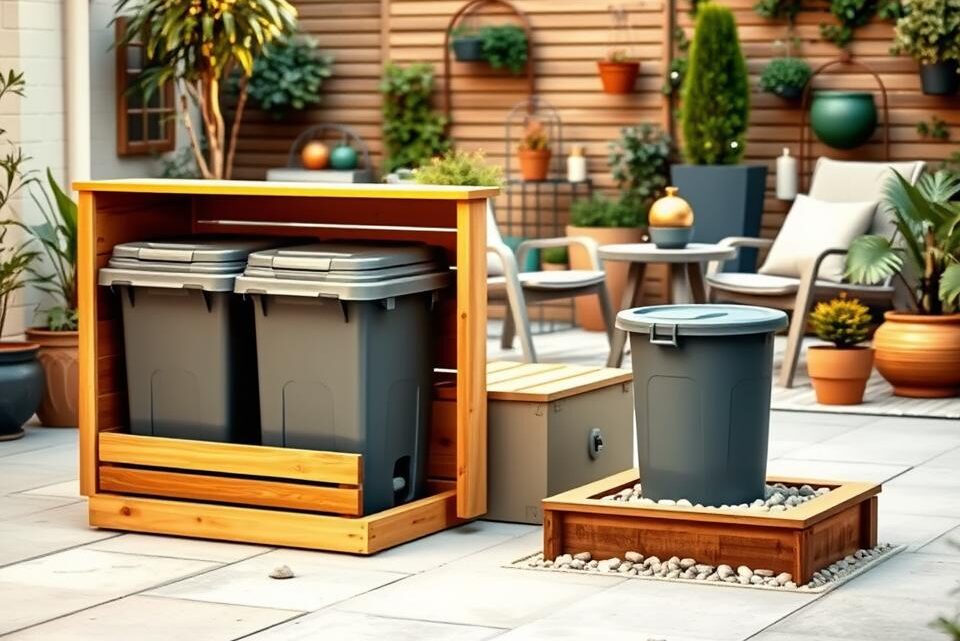
Many UK homeowners face a common dilemma. The introduction of multiple containers for recycling and general waste by local councils has created a practical challenge. These essential items, while crucial for modern waste management, can often detract from a property’s visual appeal.
This guide offers a comprehensive look at transforming this necessary clutter into an organised and attractive feature. It explores how to effectively conceal these units without compromising on accessibility for collection days. The focus is on achieving a harmonious balance between function and aesthetics.
Readers will discover a diverse range of options to suit various property sizes and styles. The article covers solutions from simple, budget-friendly projects to more permanent, custom-built structures. Each option is evaluated for its durability, materials, and ability to complement an existing garden design.
Practical considerations are thoroughly addressed. This includes assessing available space, understanding local regulations, and planning for ventilation. The goal is to empower homeowners to make informed decisions that enhance their living environment and property value.
Inhaltsverzeichnis
Key Takeaways
- Discover innovative ways to conceal essential waste containers and improve your property’s kerb appeal.
- Learn about a variety of materials and designs suitable for different homes and budgets.
- Understand the importance of balancing easy access for collections with effective screening.
- Gain insights into practical factors like council rules, space measurement, and weather resistance.
- Explore dual-purpose units that offer additional functionality, such as incorporating planters.
- Find inspiration from real-world examples and product information relevant to the UK market.
Introduction to Creative Wheelie Bin Storage Concepts
Across British neighbourhoods, a practical necessity has become an aesthetic concern for property owners. The proliferation of containers for refuse and recycling presents a unique design challenge. These essential items serve crucial functions but often detract from property presentation.
Understanding the Wheelie Bin Predicament
Modern households typically manage multiple containers for different waste streams. This multiplication of wheelie bins creates significant storage challenges. The visual impact on driveways and gardens can be substantial.
Beyond appearance, practical issues arise. Odour control and pest attraction are genuine concerns. Wind can topple exposed containers, creating additional mess. These factors combine to make effective screening a priority.
| Challenge | Impact | Solution Focus |
|---|---|---|
| Visual clutter | Reduces kerb appeal | Aesthetic integration |
| Space constraints | Limits functionality | Efficient design |
| Odour issues | Affects enjoyment | Ventilation systems |
| Weather exposure | Damages containers | Protective housing |
The Importance of Aesthetic and Functional Storage
Well-designed storage solutions address multiple concerns simultaneously. They transform necessary items into integrated design features. The right approach balances accessibility with concealment.
Effective design considers daily use and collection requirements. Materials should withstand British weather conditions. Proper ventilation prevents odour buildup while maintaining appearance.
Thoughtful storage can enhance property value. It demonstrates care for the living environment. The investment pays dividends in improved presentation and functionality.
Assessing Your Outdoor Space and Practical Considerations
A methodical approach to planning prevents common pitfalls in container concealment. Homeowners should conduct thorough assessments before committing to any particular solution. This process ensures the final choice meets both practical and aesthetic requirements.
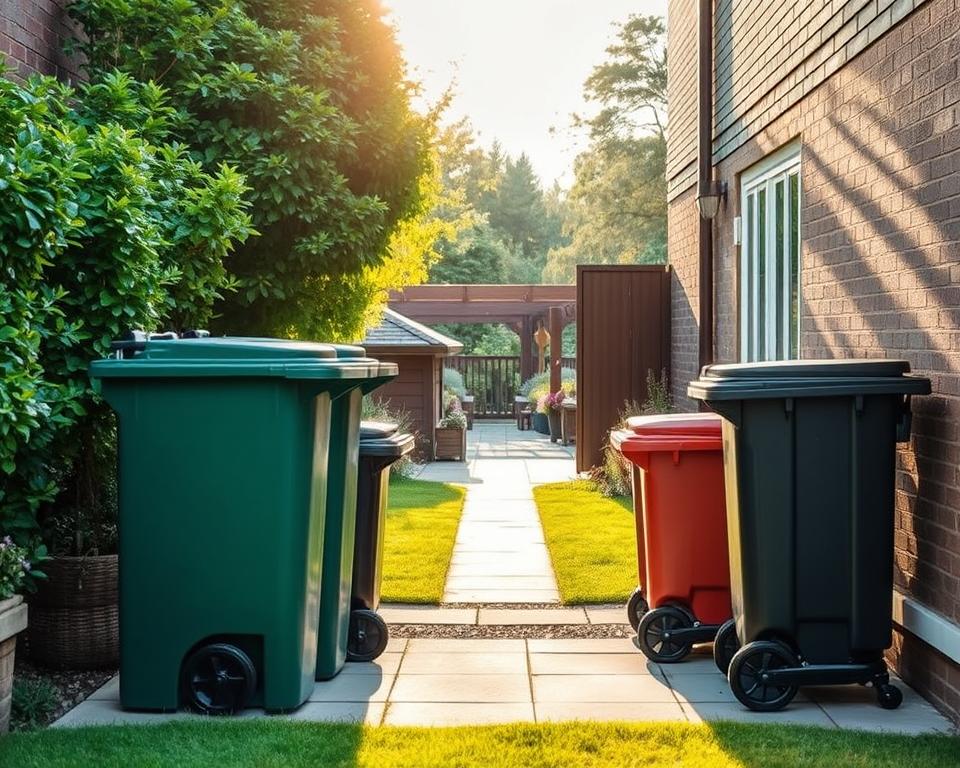
Evaluating Space, Regulations and Budget
Accurate measurements form the foundation of effective planning. Property owners must consider the footprint needed for their containers plus clearance space for lid operation and movement. The available area dictates what type of solution will work best.
Local council regulations often influence the placement and design of housing structures. Some authorities specify visibility requirements or maximum distances from collection points. Researching these rules early prevents costly mistakes and ensures compliance.
Budget considerations extend beyond initial costs. Durable materials may require higher investment but offer better long-term value. They withstand weather exposure and reduce replacement expenses over time.
Ensuring Easy Access and Ventilation
Strategic positioning balances concealment with daily functionality. Locations near kitchen doors simplify waste disposal while maintaining straightforward routes to the kerbside. This ensures collection day proceeds smoothly without obstacles.
Proper ventilation is crucial for preventing odour accumulation and moisture buildup. Designs should incorporate air gaps or ventilation panels to maintain airflow. This protects both the containers and the housing structure from premature deterioration.
The assessment should also account for potential future changes in household needs or council requirements. Flexible solutions that can adapt prevent the need for frequent replacements.
Innovative Wooden Bin Stores for a Rustic Appeal
The appeal of timber constructions lies in their ability to blend practical functionality with rustic charm. These wooden solutions offer a natural aesthetic that complements traditional and contemporary garden settings.
Design Options and Construction Tips
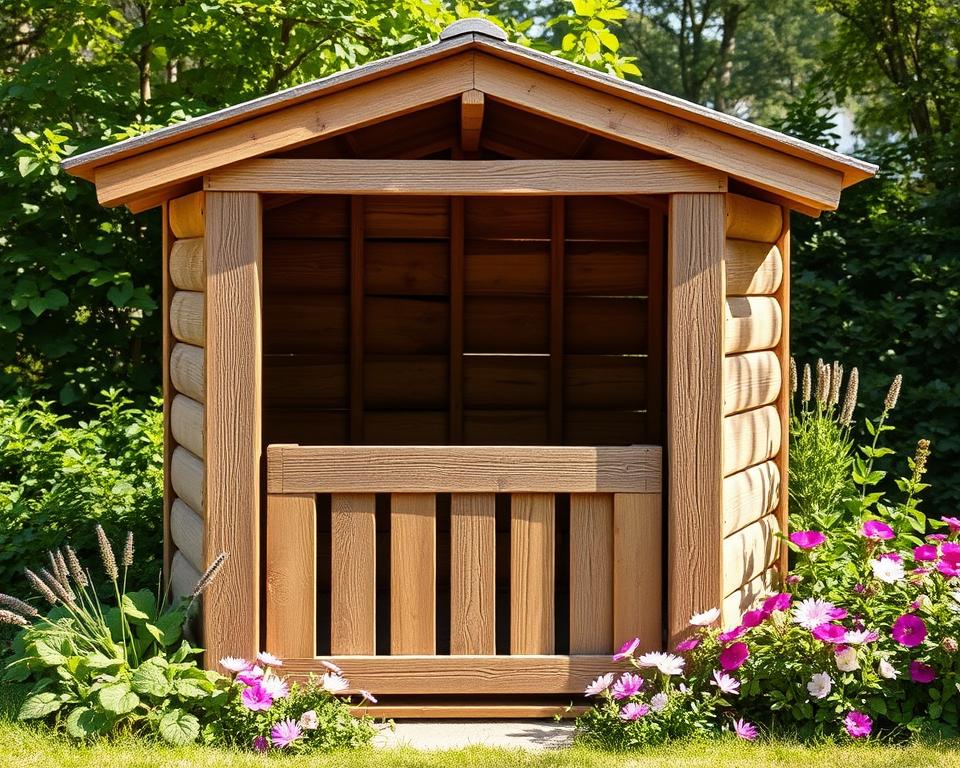
Homeowners can select from various timber treatments and configurations. Pressure-treated wood provides excellent weather resistance, extending the structure’s lifespan significantly.
Construction considerations include proper ventilation gaps and sturdy hinges for lids. A raised base prevents ground contact and water damage. DIY enthusiasts should use exterior-grade screws and multiple coats of protective stain.
Enhancing the Structure with Climbing Plants
Integrating climbing plants transforms functional storage into attractive garden features. Clematis, jasmine, and climbing roses thrive on trellis panels attached to the sides.
This living camouflage evolves seasonally with flowers and foliage. The combination creates a charming focal point that effectively conceals the contents while adding natural beauty to the outdoor space.
Screening Solutions: Plants and Green Walls
Living screens provide a sustainable method for integrating waste management systems into garden landscapes. This approach transforms functional requirements into attractive features.

Using Tall Potted Plants and Bushes
Tall container plants offer flexible screening options for rental properties. Species like bamboo and ornamental grasses create effective barriers. These movable solutions adapt to changing needs.
Evergreen shrubs provide year-round coverage. Photinia and viburnum work well in UK climates. Strategic placement ensures optimal concealment while maintaining access.
Incorporating Vertical Gardens for Seamless Blending
Vertical gardens transform screening into living art. Modular systems support climbing plants and trailing species. This creates lush, biodiverse screens.
These living walls improve air quality while concealing containers. They integrate naturally with existing garden designs. The result is an attractive, multi-functional solution.
Custom-Built Sheds and Modern Storage Units
For homeowners seeking a definitive solution, bespoke sheds and contemporary units offer a significant upgrade. These structures provide an elegant and highly functional answer to the challenge of concealing refuse containers.
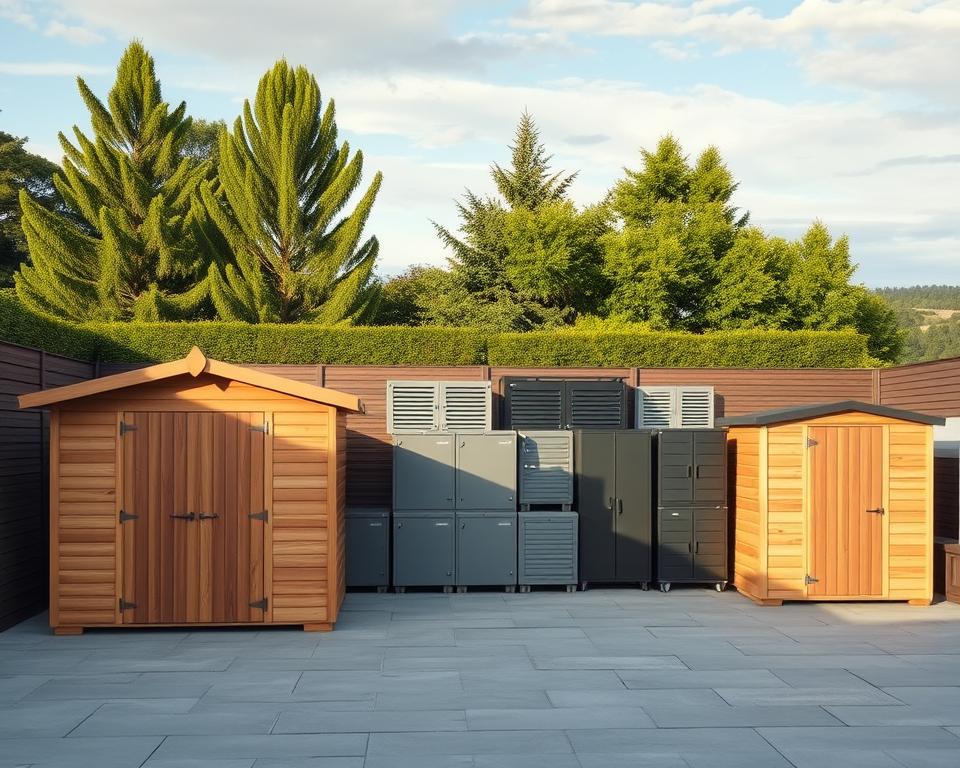
They represent a substantial investment but deliver unparalleled benefits. The result is a seamless integration into the garden landscape.
Tailoring the Shed to Match Your Home’s Design
A key advantage of custom sheds is the ability to harmonise with your property’s architecture. This involves careful selection of materials and design details.
Roof pitch, cladding, and paint colours can be matched to the main house. This creates a cohesive look that enhances the entire property’s visual appeal.
Maximising Storage Capacity and Multi-functionality
These units excel by offering more than just a place to hide bins. They can consolidate various storage needs into one efficient space.
Shelving, hooks, and compartments allow for organised storage of tools and outdoor equipment. This multi-purpose approach adds considerable value.
| Feature | Custom Wooden Shed | Modern Resin Unit | Premium Metal Store |
|---|---|---|---|
| Typical Price Range | £500 – £3000+ | £125 – £440 | £279 – £907 |
| Maintenance | Regular treatment needed | Virtually none | Zero |
| Key Advantage | Fully bespoke design | Lightweight & durable | Maximum security |
| Best Suited To | Traditional properties | Low-maintenance gardens | Modern architectural styles |
Wheelie Bin Storage Ideas for a Neat Outdoor Space
Innovative thinking can transform a mundane household requirement into a distinctive feature of garden design. This involves moving beyond simple concealment to create solutions that add genuine value and character.
The most successful concepts seamlessly integrate with their surroundings. They consider the entire property’s aesthetic while fulfilling practical needs efficiently.

Exploring Creative Approaches and Custom Features
Unconventional materials offer unique possibilities. Repurposed pallets create rustic charm, while gabion walls provide a modern, industrial appeal.
Custom features elevate basic functionality. Integrated planters, lockable mechanisms, and recycling shelves add significant utility. These elements tailor the solution to specific household requirements.
Effective integration connects the storage unit to existing structures. It might extend a fence line or nestle within a planting bed. This creates a cohesive look.
Balancing Aesthetic Appeal with Practicality
A beautiful design must not hinder daily use. Easy access for collections remains paramount. Ventilation and weather protection are non-negotiable for longevity.
Seasonal changes influence material choices. Deciduous plants offer summer screening but winter exposure. Durable finishes withstand the UK’s variable climate.
The ideal way forward balances all factors. It considers budget, space, and long-term maintenance for a truly successful outcome.
| Approach | Aesthetic Focus | Practical Consideration |
|---|---|---|
| Living Willow Structures | Organic, sculptural forms | Requires pruning and maintenance |
| Upcycled Furniture | Vintage character and individuality | Needs weatherproofing adaptation |
| Integrated Planter Tops | Adds greenery and softens appearance | Ensures adequate drainage for plants |
| Gabion Wall Enclosure | Contemporary, textured finish | Permanent structure requiring foundation |
Artistic Camouflage and Decorative Designs
An imaginative alternative to hiding refuse containers is to celebrate them through creative expression. This approach turns a functional necessity into a vibrant feature. It embraces visibility with artistic flair.
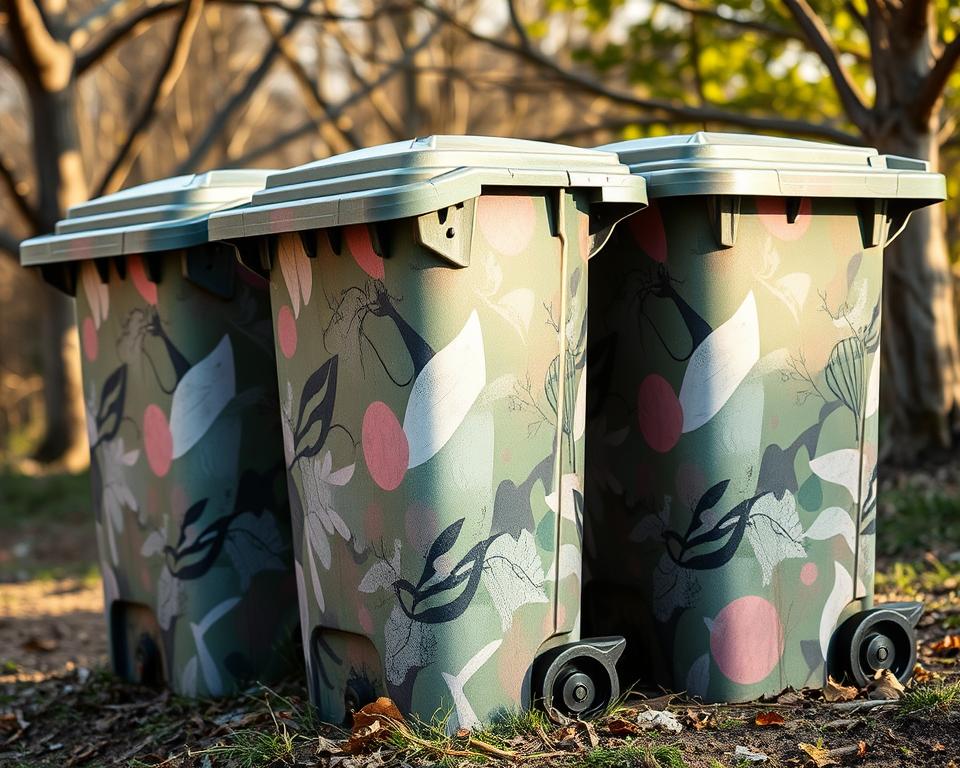
This method adds personality and character to a property. It can be a cost-effective solution for many households. The result is a unique and eye-catching element.
Using Colours, Patterns and Murals
Colour schemes can range from simple coordination to bold statements. They can match existing garden themes or create striking contrasts. This decorative surface distracts from the object’s mundane purpose.
Patterns offer another layer of creativity. Geometric shapes, stencilled motifs, or freeform designs are all possible. Vinyl decals provide professional results without artistic skill.
Murals transform surfaces into miniature canvases. Popular themes include nature scenes, abstract art, or humorous concepts. These detailed illustrations create intrigue and conversation.
Practical steps ensure a lasting finish. Surface preparation is crucial for good paint adhesion. Using exterior-grade products and protective topcoats extends the design’s life.
| Design Element | Skill Level Required | Longevity | Visual Impact |
|---|---|---|---|
| Solid Colour Coating | Beginner | Medium | Moderate |
| Stencilled Patterns | Intermediate | Medium | High |
| Hand-Painted Murals | Advanced | Requires Maintenance | Very High |
| Vinyl Decals | Beginner | High | High |
Community projects sometimes adopt this concept. Coordinated schemes can create a distinctive local character. It fosters engagement and transforms collection days.
This solution is particularly effective in urban settings. It maintains accessibility while addressing aesthetic concerns. It offers a creative outlet for residents.
Durable Metal and Stone Clad Storage Solutions
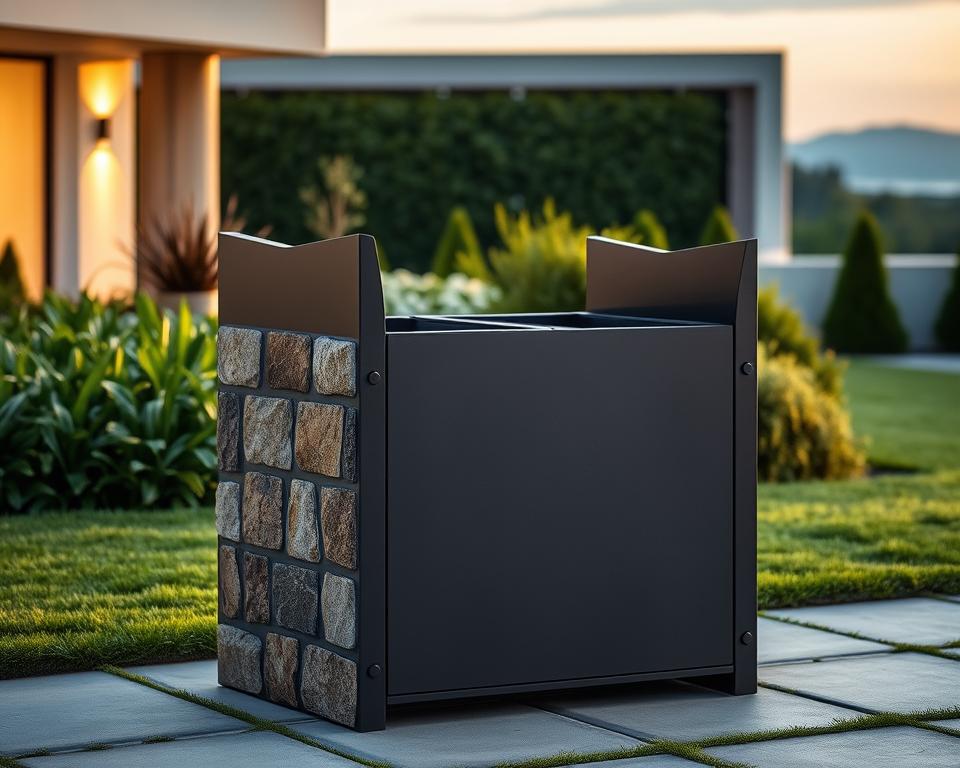
When longevity and prestige are primary considerations, metal and stone-clad solutions emerge as superior options for refuse container housing. These materials offer distinct advantages that appeal to homeowners seeking permanent, high-quality installations.
Benefits of Metal for Weather Resistance
Metal constructions provide exceptional durability against harsh conditions. Powder-coated steel or aluminium units withstand moisture, UV exposure, and temperature fluctuations without deterioration.
These structures require minimal maintenance beyond occasional cleaning. Their robust nature ensures they handle container weight securely while offering fire-resistant properties.
Stone Cladding for a Prestigious Look
Stone veneers transform functional units into architectural features. Natural or manufactured stone cladding complements property exteriors while providing enduring charm.
This approach seamlessly integrates containers into garden design. The result enhances visual appeal rather than merely concealing functional items.
| Feature | Metal Construction | Stone Clad Solution |
|---|---|---|
| Weather Resistance | Excellent – impervious to moisture | Good – requires proper sealing |
| Maintenance Level | Very low – occasional cleaning | Low – periodic inspection |
| Installation Complexity | Moderate – may require assembly | High – often needs professionals |
| Aesthetic Impact | Functional and modern | Prestigious and integrated |
| Cost Range | £200 – £900 | £800 – £3000+ |
Both options represent sound investments for different property types and budgets. The choice depends on individual priorities regarding appearance, durability, and long-term value.
Dual-Purpose Storage: Combining Function with Garden Enhancements
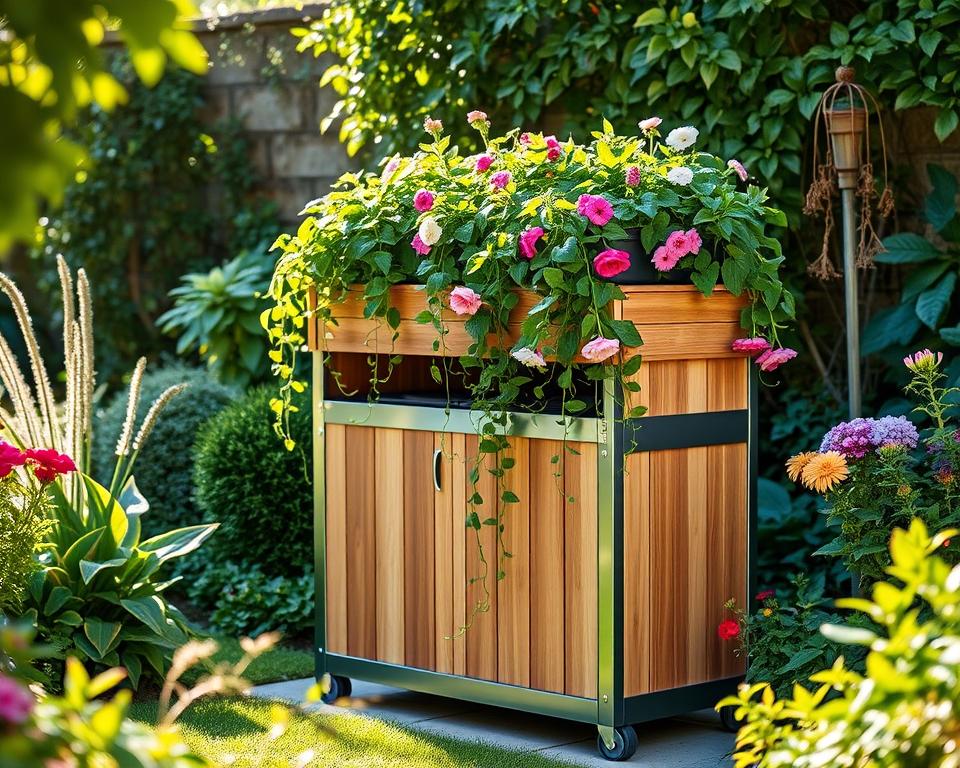
Dual-purpose designs offer homeowners the opportunity to consolidate various outdoor needs into unified structures. These multi-functional approaches deliver enhanced value by serving more than one purpose.
Integrating Planter Tops and Recycling Solutions
Planter tops transform storage roofs into productive growing spaces. They allow for herbs, flowers, or ornamental plants while concealing containers effectively.
Proper drainage prevents water ingress into the unit below. Adequate soil depth supports plant growth without compromising access.
Integrated recycling solutions organise separated waste streams. Shelves and compartments create centralised waste management stations.
Additional Uses for Outdoor Storage Units
These versatile structures accommodate garden tools and equipment beyond their primary function. They provide protection for cushions and accessories during off-season periods.
Consolidated storage reduces the need for multiple separate structures. This approach maintains a coordinated aesthetic throughout the garden space.
Multi-functional designs justify investment through enhanced utility. They transform practical necessities into valuable garden features.
Conclusion
Finding the right solution for managing refuse containers represents a significant design opportunity for any property. The challenge lies in achieving a harmonious balance between practical functionality and visual appeal.
Homeowners can select from various types of concealment methods to restore order to their outdoor areas. Whether dealing with limited space or seeking to eliminate visual clutter, there are options to suit every situation.
Effective planning considers multiple factors including budget, maintenance requirements, and local regulations. The investment in quality storage yields returns through enhanced home presentation and daily convenience.
Beyond mere concealment, these solutions can actively contribute to garden enjoyment. They transform necessary waste management into integrated design features that add value.
Ultimately, the search for the perfect bin storage arrangement demonstrates how thoughtful design can turn functional requirements into opportunities for enhancement.
FAQ
What are the key factors to consider before choosing a storage solution?
It is essential to evaluate the available area, local authority regulations, and budget. One must also ensure the chosen design allows for straightforward access for collection services and provides adequate ventilation.
How can a wooden bin store be enhanced aesthetically?
A wooden structure can be improved by adding climbing plants or a coat of stain that complements the garden’s style. This approach helps the unit blend naturally into its surroundings.
Are there storage options that serve a dual purpose?
A> Yes, many designs incorporate additional functions. Some feature integrated planter tops for horticulture, while others offer extra room for recycling containers or general garden tools.
What are the benefits of metal or stone-clad storage units?
Metal units typically offer excellent durability and require minimal upkeep. Stone cladding provides a robust, high-quality appearance that can elevate the overall look of a property.
Can plants be used to screen wheelie bins effectively?
Certainly. Using tall potted plants, bushes, or even a vertical garden are excellent methods to conceal the bins. These green solutions merge functionality with natural beauty.
Is it possible to have a custom-built storage shed?
Absolutely. A bespoke shed can be tailored to match a home’s architectural style precisely. This option maximises capacity and can be designed for multiple uses beyond just waste management.
How can one ensure easy access to the bins?
Designs should incorporate features such as outward-opening doors or sliding mechanisms. It is crucial to maintain clear pathways to facilitate hassle-free rubbish and recycling collection.