Installing a Wood Burner in a Shed: Essential Tips
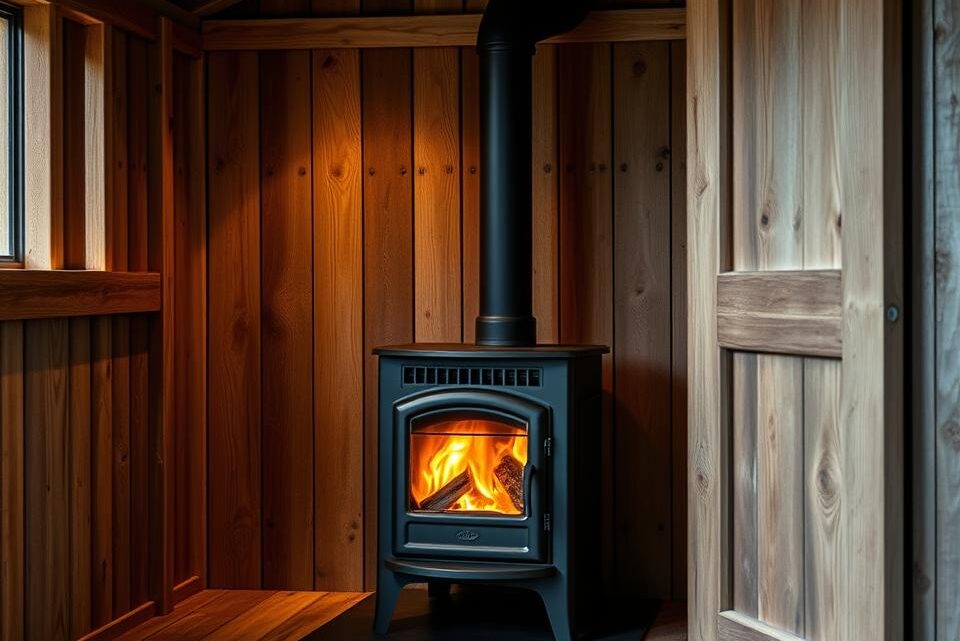
A garden shed is no longer just for storing tools. It has become a versatile sanctuary. Homeowners now use these spaces as offices, creative studios, or quiet retreats.
To enjoy these spaces year-round, effective heating is essential. A wood burning stove offers a brilliant solution. It provides efficient warmth during colder months.
This transformation requires careful planning. Adherence to safety regulations is non-negotiable. The result, however, is a cosy and inviting extension to any property.
Compact stoves are specifically designed for smaller structures. Models like The Hobbit Stove fit perfectly into a garden shed. They create a charming focal point.
This guide covers the vital steps for a successful project. It explores regulatory compliance, installation procedures, and ongoing maintenance. Proper planning ensures a safe and comfortable environment.
Inhaltsverzeichnis
Key Takeaways
- A garden shed can be transformed into a versatile, year-round space.
- Wood burning stoves provide efficient and cost-effective heating.
- Careful planning and adherence to safety standards are crucial.
- Compact stoves are specifically designed for smaller outbuildings.
- Proper installation creates a warm and inviting atmosphere.
- This addition significantly increases the usable area of a property.
Planning and Preparing Your Shed
Successful integration of heating into an outdoor structure begins with thorough space assessment. Homeowners must evaluate their garden building’s suitability before proceeding. This involves checking overall dimensions, construction materials, and structural integrity.
Assessing Suitability and Space Requirements
The garden building must offer adequate room for the heating appliance and required safety clearances. Calculating the cubic volume is essential for determining appropriate equipment size. Multiply length, width, and height in metres to establish heating needs.
As a rough guide, approximately 1kW of heat output warms 14 cubic metres of space. This achieves a comfortable temperature of around 21°C when outside temperatures drop to 0°C. Limiting the appliance to 7kW maximum prevents operational issues.
Measuring and Selecting the Installation Site
Choosing the right location within the garden building requires careful consideration. The position affects heat distribution and safety compliance. Maintain proper distances from combustible surfaces like walls.
Room layout planning should account for furniture placement and traffic flow. Those with uninsulated structures may need higher output to maintain warmth. Different construction materials present unique challenges.
| Shed Volume (cubic metres) | Recommended Stove Output | Clearance from Walls |
|---|---|---|
| Up to 28 m³ | 2 kW | 150 mm |
| 29-42 m³ | 3 kW | 200 mm |
| 43-56 m³ | 4 kW | |
| 57-70 m³ | 5 kW |
Wooden sheds often require additional non-combustible shielding around the installation area. Consider door locations and workflow patterns when selecting the spot. Proper planning ensures both safety and comfort in the finished space.
Understanding Building Regulations and Safety Standards
Before any physical work begins, thorough understanding of regulatory frameworks ensures both legal conformity and occupant protection. These standards exist to prevent fire hazards and ensure proper ventilation.
Approved Document J and BS8303:2018
The UK’s building regulations provide essential guidance through Approved Document J. This document covers combustion appliances and fuel storage systems. It specifies ventilation needs and flue installation standards.
BS8303:2018 serves as the complementary British Standard for solid fuel appliances. Professional installers reference this documentation throughout projects. Compliance with both documents is mandatory for safe operation.

Heat Shielding and Clearance Requirements
Specific clearance distances protect combustible surfaces from intense heat. Typical measurements require 600mm from stove sides and 800mm from the front. Manufacturer instructions may specify different measurements.
Non-combustible shielding materials reduce these distance requirements significantly. Proper installation creates a safe thermal barrier. This enables more flexible positioning within limited spaces.
| Shielding Material | Minimum Thickness | Required Air Gap | Reduction Achieved |
|---|---|---|---|
| Vermiculite Board | 25mm | 12mm | Up to 66% |
| Steel Sheeting | 1.5mm | 25mm | Up to 50% |
| Corrugated Tin | 1.0mm | 20mm | Up to 45% |
Heat shields must extend at least 200mm above the appliance height. This protects walls from rising heat currents. Qualified professionals should handle all installations for compliance assurance.
Installing a Wood Burner in a Shed
Selecting the correct heating appliance forms the foundation of a safe and effective project. This choice directly impacts performance, safety, and the overall enjoyment of the space.
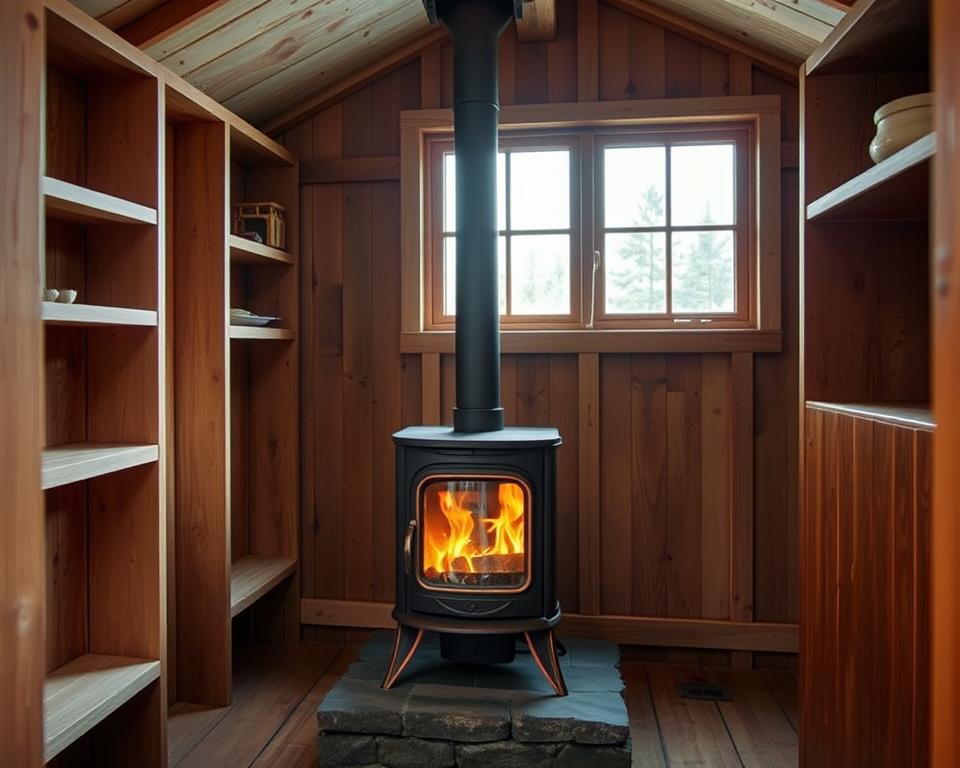
Choosing the Right Stove and Materials
For compact spaces, small stoves are the best choice. An oversized appliance will not run correctly and causes excessive soot.
Models like The Hobbit Stove offer a perfect solution. Their small footprint maximises valuable floor area while providing ample warmth.
Consider additional features like a back boiler. This product can supply hot water or power a radiator in a partitioned space.
Non-combustible materials are essential for the hearth and shielding. Vermiculite board and Hardie-Backer board are excellent product options.
Complying with Manufacturer’s Instructions
Meticulously following the manufacturer’s guide is non-negotiable. These instructions contain vital details for a safe installation.
They specify critical clearances to combustibles and flue requirements. Ignoring these guidelines compromises the entire system’s safety.
Always use well-seasoned logs with low moisture content. This ensures efficient combustion and reduces smoke.
Planning must make sure all components work together seamlessly. A cohesive system from hearth to flue guarantees optimal performance.
Flue, Shielding and Roof Sealing Considerations
Properly routing the chimney and protecting the structure are vital final steps. These elements ensure safe operation and long-term durability.

Selecting the Appropriate Flue Kit
Choosing the right flue system is critical. A twin wall pre-insulated kit, like the Stovax Professional XQ, is highly recommended.
This type requires only 50mm clearance to combustibles. Single wall pipe needs three times its diameter. This makes twin wall ideal for compact spaces.
Specific shed kit options are available. They include all necessary pipe lengths, brackets, and seals.
Techniques for Effective Wall Shielding and Roof Flashing
When cutting a hole through a combustible roof, the opening must be 100mm larger than the pipe. This creates an 11-inch hole.
The trim plate then covers this gap neatly. For non-combustible materials, the hole can match the pipe diameter.
Proper flashing is essential for roof penetrations. Silicone flashing boots provide excellent weatherproofing.
Wall shielding must extend at least 200mm above the stove top. This protects from rising heat.
The chimney height should be at least 4.5 metres from the stove top. Lower sheds might need a powered flue fan for draft.
Each flue length must be sealed with fire cement. This ensures the chimney system remains gastight and safe.
Tools, Materials and Step-by-Step Installation Process
With planning complete, the focus shifts to the hands-on phase of assembling the heating system. Having the right equipment ready streamlines the entire procedure.
This stage transforms theoretical plans into a safe, functional reality. Careful execution of each step is paramount for a successful outcome.
Essential Tools and Installation Equipment
A well-prepared toolkit is essential for this project. Key items include measuring and cutting implements.
The spirit level ensures everything remains perfectly horizontal and vertical. A drill with specific bits and a jigsaw are needed for creating openings.
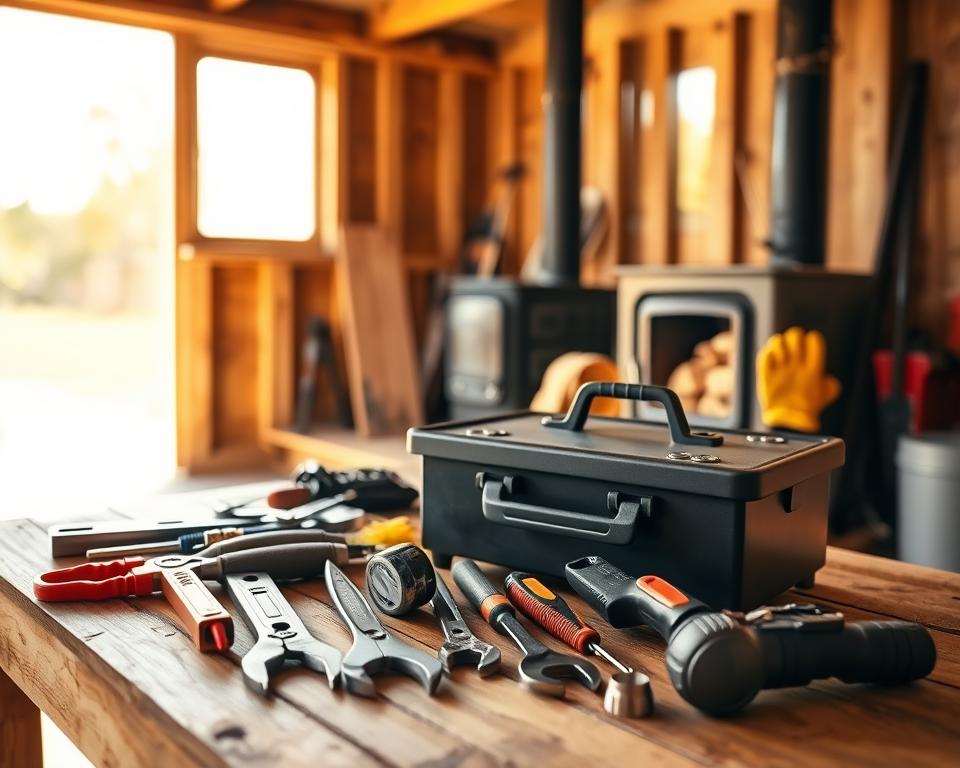
Basic hand tools like a screwdriver and knife are also crucial. An extension lead provides power, and a step ladder offers safe access.
| Tool Category | Essential Items | Primary Use |
|---|---|---|
| Measuring & Marking | Spirit Level, Marker Pen | Ensuring level surfaces and accurate cuts |
| Cutting & Drilling | Drill (10mm & 4mm bits), Jigsaw | Creating holes for the flue pipe |
| Fastening & Sealing | Screwdriver, Cartridge Gun | Securing components and applying sealant |
Detailed Installation Sequence
The installation begins by securing the hearth. Use pads of carpet or adhesive for a stable, level base.
Position the stove and find the flue’s centre point from the stove top. A plumb line guarantees accuracy.
Next, attach wall shielding with heat-proof adhesive. Temporary screws hold it in place while the adhesive cures.
Mark and cut the hole for the pipe. Drill a pilot hole with a 10mm bit before using the jigsaw.
Fit the wall band bracket. Then, work on the roof penetration. Cut the silicone flashing and seal it with heat-proof silicone.
Assemble the chimney parts from the kit. Join each section with fire cement and a joint clip.
The first fire is a critical time. Start with small fires to cure the paint. Allow the stove to cool between each one.
This way, the installation is completed safely and effectively.
Cost, Efficiency and Maintenance Considerations
Long-term value depends on proper cost assessment and maintenance planning. These factors determine the success of any heating addition to a garden building.
Estimating Overall Installation Costs
The stove itself represents the primary expense, ranging from basic models to premium wood burning units. Flue systems and heat shield materials add significant costs. Professional installation ensures safety and compliance.
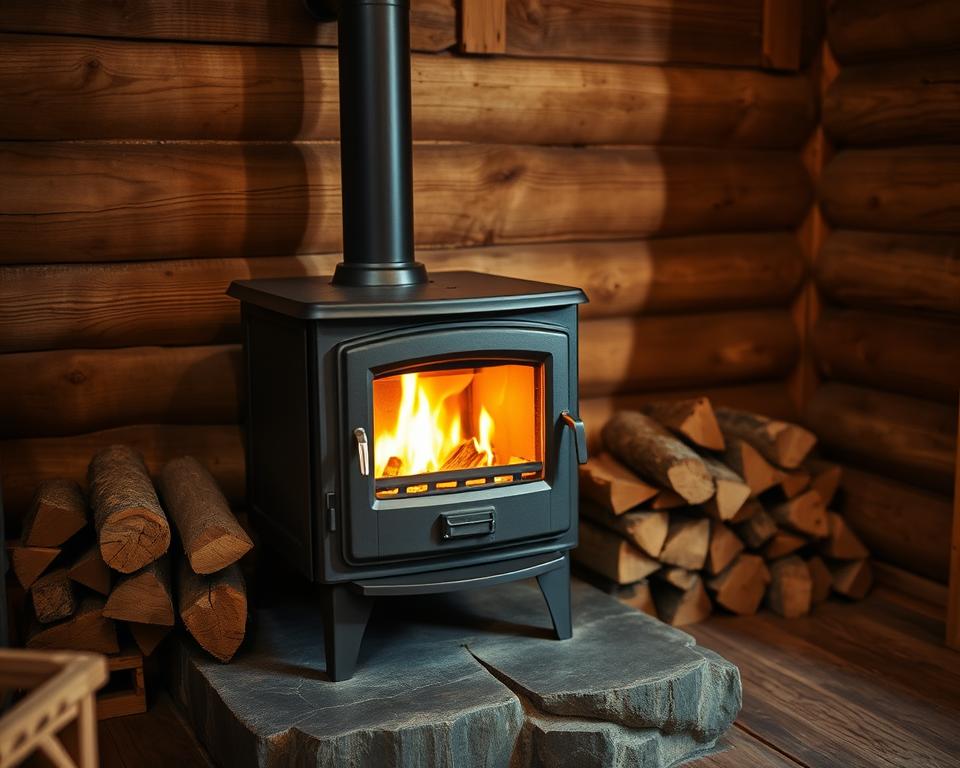
A proper hearth installation protects the floor from intense heat. Carbon monoxide detectors provide essential protection. The total size of the stove shed affects all cost components.
Maintaining Efficiency and Preventing Damp-Related Issues
Proper air circulation prevents moisture problems. Using well-seasoned wood with low moisture content ensures efficient burning. This way, burning stoves operate at peak performance.
Regular cleaning maintains heat output and prevents creosote buildup. The chimney height affects draft quality. Proper stove size matching the room volume optimises efficiency.
Ventilation is crucial for safety and performance. An air vent supplies combustion air. This product addition prevents negative pressure issues.
Annual inspections of the heat shield and flue length ensure long-term reliability. Proper maintenance extends the life of all stoves and accessories.
Conclusion
The addition of efficient heating can revolutionise how homeowners utilise their outdoor spaces. A properly installed wood burning stove transforms a simple garden shed into a year-round retreat.
This comprehensive guide has outlined the essential steps for creating a safe and functional stove shed. Careful planning ensures the right stove size and proper clearances.
Quality log selection with appropriate moisture content maintains efficient burning. Adequate ventilation provides essential combustion air.
The resulting warmth creates an inviting atmosphere that encourages regular use. This investment significantly enhances property value and usable space.
Following these principles ensures a successful transformation of any garden building into a comfortable, multi-purpose environment.
FAQ
Is it safe to install a wood burner in a garden shed?
Yes, it can be safe provided all building regulations and safety standards are strictly followed. Key considerations include proper flue installation, adequate heat shielding, and ensuring sufficient clearance between the stove and any combustible materials. Professional advice is strongly recommended.
What are the main building regulations for fitting a wood burner in a shed?
The installation must comply with Approved Document J for combustion appliances and BS 8303:2018. These documents specify requirements for flue systems, ventilation, hearth dimensions, and the necessary clearances to combustible materials. Compliance ensures the safety and legality of the installation.
How much space is needed around a wood burner in a shed?
The required space depends on the stove’s specifications and the shed’s construction. Typically, a non-combustible hearth must extend a certain distance around the appliance. Heat shields can reduce these clearance distances, but one must always adhere to the manufacturer’s instructions and building regulations.
What type of flue system is required for a shed installation?
A twin-wall insulated flue system is highly recommended for sheds. This system minimises heat transfer to combustible shed structures, such as walls and the roof. It must be installed with the correct roof flashing kit to ensure a weatherproof seal.
Why is a carbon monoxide alarm essential?
A carbon monoxide alarm is a critical safety device. It provides an early warning of the build-up of this odourless, poisonous gas, which can be produced by incomplete combustion. It should be installed and tested regularly as part of the safety measures.
Can any wood burning stove be used in a shed?
Not all stoves are suitable. The appliance must be appropriate for the shed’s size to avoid excessive heat output. Smaller, dedicated shed stoves are available. It is vital to choose a product that complies with current emissions standards and is suitable for the specific installation environment.
What are the key steps for sealing the flue where it exits the roof?
A weatherproof flashing kit, specific to the flue diameter, is used. The kit creates a tight seal against the roof, preventing water ingress. Proper installation is crucial to avoid leaks and maintain the integrity of the shed’s roof structure.
How can one prevent dampness when installing a wood burner in a shed?
Proper ventilation is key to preventing damp. The stove requires a source of air for combustion, which helps maintain airflow. Additionally, ensuring the shed itself is well-ventilated will reduce moisture build-up, protecting the building’s fabric and contents.