How to Choose the Best Summer House Base
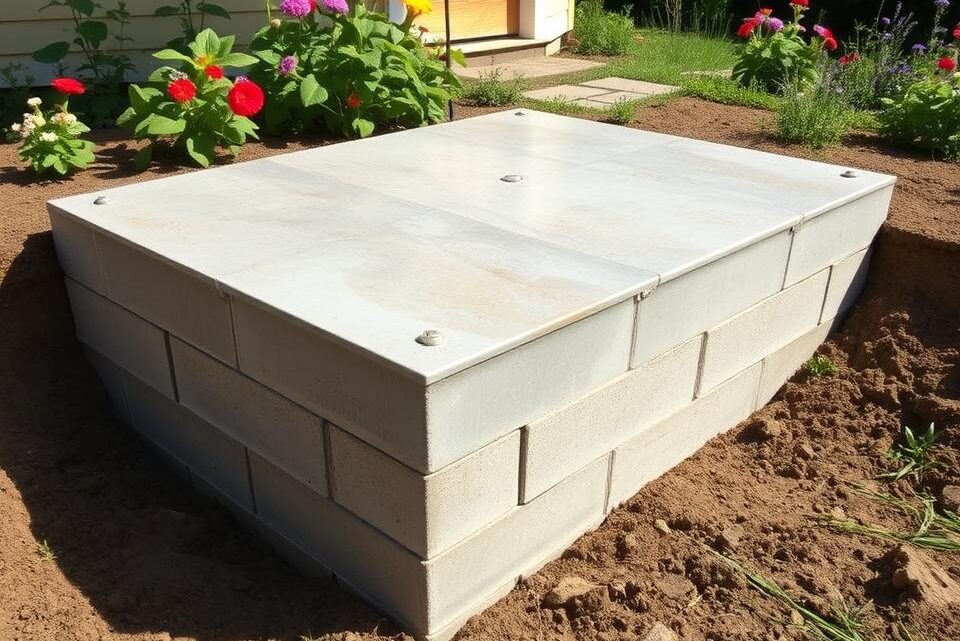
Embarking on a project to add a summer house to your garden is an exciting prospect. Many homeowners naturally focus on the aesthetic details first. However, the most critical decision lies beneath the surface.
The selection of a proper base or foundation is the essential first step for any garden building. A well-constructed foundation guarantees stability, prevents future issues like sinking, and ensures the structure’s longevity. It is the unseen hero that supports the entire project.
This comprehensive guide is designed to help you navigate this crucial choice. It will explore the various base options suitable for UK gardens. Factors such as the size of your summer house, ground conditions, and budget will all influence the final decision.
Understanding these elements before purchasing your garden building is paramount. It saves time, money, and ensures your beautiful new structure stands the test of time. This guide provides the expert advice needed to make an informed choice for your specific project.
Inhaltsverzeichnis
Key Takeaways
- The foundation is the most critical element for a garden building’s stability and longevity.
- Base selection must be the primary consideration, preceding any aesthetic decisions.
- A proper base prevents long-term issues such as sinking, shifting, or damage.
- The ideal choice depends on the building’s size, garden soil conditions, and budget.
- This guide covers a range of base types, from traditional concrete to modern ground screw systems.
- Prioritising a solid foundation from the outset is essential for a successful project.
Importance of a Solid Foundation for Your Summer House
The structural integrity of any garden building begins with what lies beneath the surface. A well-constructed base provides essential stability and promotes longevity for outdoor structures. Without proper foundations, even the most attractive summer house can develop significant issues over time.
Understanding the Role of a Stable Base
When the ground beneath a garden room is uneven, serious problems can occur. Walls may distort and timber components can bow outwards. Screw holes might not align correctly during assembly. These issues stem directly from inadequate foundation work.
Subsidence represents another concern with unstable bases. Timber walls can warp, causing doors and windows to fall out of square. Moisture penetration becomes more likely, leading to damp problems that compromise the entire structure.
Benefits of a Proper Foundation
Different types of garden buildings require specific foundation solutions. A compact summer house has different needs than a larger garden office. Matching the base to the building’s size and weight is crucial.
A solid foundation offers long-term advantages beyond basic stability. It reduces maintenance requirements and enhances the building’s appearance. Proper foundations also improve functional usability while preventing costly future repairs.
Investing in quality foundations from the outset ensures the garden building performs well for years. It protects against structural damage and maintains the structure’s aesthetic appeal.
How to Choose the Best Summer House Base
Selecting the correct foundation for a garden building involves a detailed evaluation of several interconnected factors. This systematic approach ensures the chosen base provides optimal support for the specific structure and site conditions.
Key Factors to Consider
The size and weight of the planned garden room directly influence base requirements. Larger buildings with substantial roof systems demand more robust foundation solutions to maintain stability.
Garden conditions play an equally important role. Soil composition, drainage patterns, and existing ground levels determine which options are practical. A thorough site assessment prevents future complications.
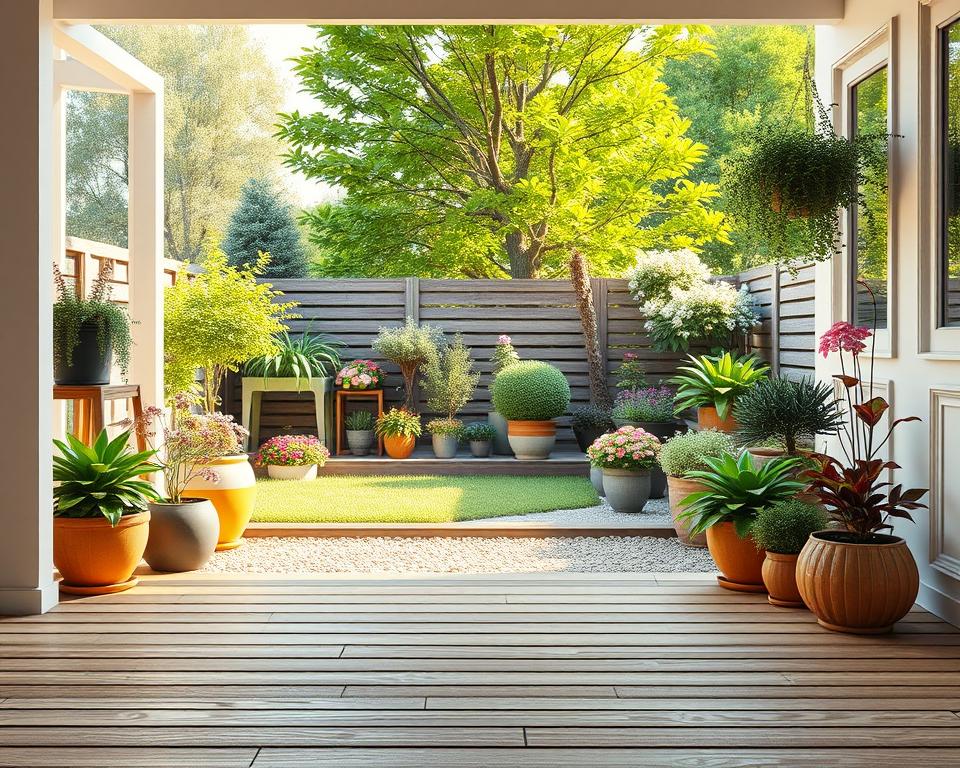
Assessing Your Building and Garden Requirements
Intended use significantly affects specifications. A garden office used year-round may need different foundations compared to seasonal structures. Budget considerations should balance initial investment against long-term maintenance costs.
Local building regulations may stipulate specific standards for garden buildings. Obtaining detailed base plans from the manufacturer before construction ensures precise dimensions and adequate support.
This evaluation framework helps homeowners make informed decisions about their garden building’s foundation, matching the type to their unique circumstances.
Exploring Concrete Base Options
For those seeking maximum stability and longevity, concrete offers an unparalleled foundation option. This permanent solution creates an artificial rock surface that can support structures for decades.
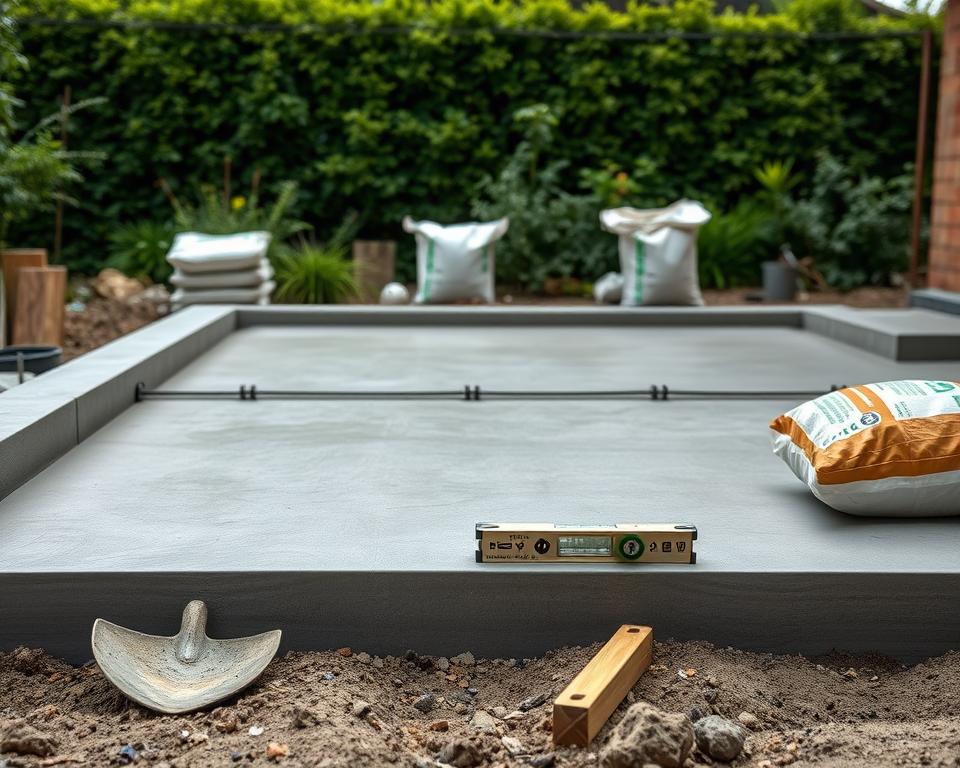
Installation Process and Preparation
The process begins with excavating 15-20cm of soil. A precisely level timber frame establishes the correct dimensions.
Next, a weed-proof membrane and granular sub-base provide drainage. The concrete layer should be 7-10cm thick and extend beyond the building footprint.
Proper elevation above ground level prevents water accumulation. Allow adequate curing time before construction begins.
Pros and Cons of a Concrete Base
The exceptional durability of concrete makes it ideal for heavy garden offices. It requires minimal maintenance once installed.
However, this permanence comes with higher costs. The installation is labour-intensive and unsuitable for smaller structures.
This foundation type offers superior protection against moisture and ground movement. It represents a long-term investment in your garden building’s stability.
Paving Slab Base: An Attractive and Practical Option
A paving slab foundation offers a popular and practical solution for garden buildings. This option combines ease of installation with an attractive appearance. When laid correctly, these slabs provide a durable and stable surface.
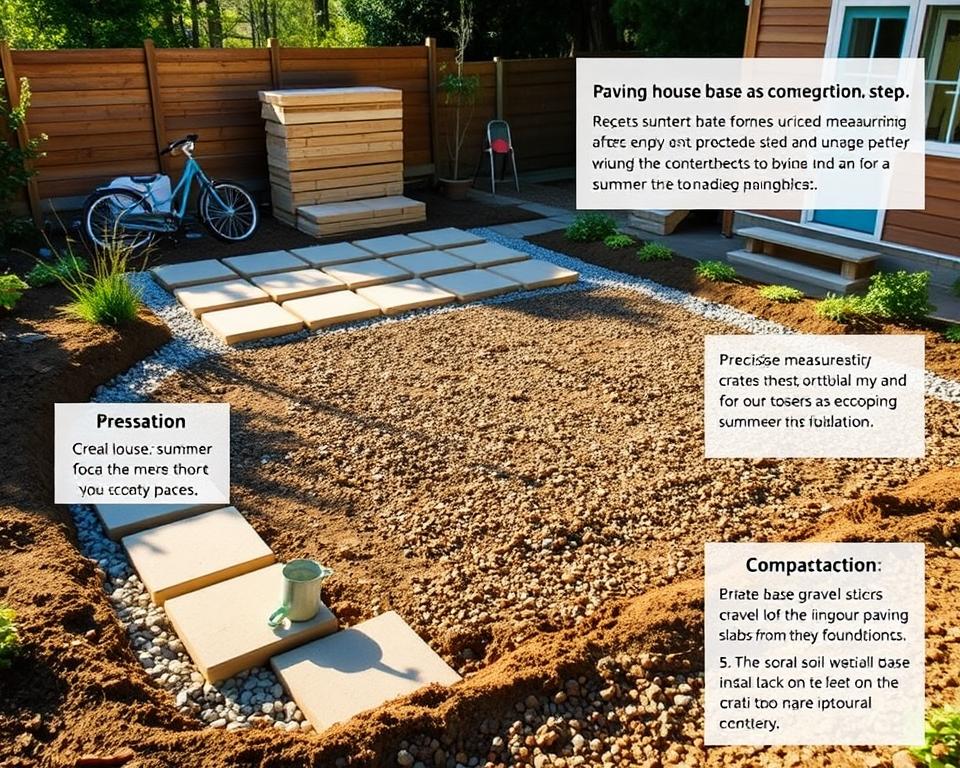
It represents one of the more straightforward foundations for a homeowner to undertake. The result is a long-lasting base that integrates seamlessly into the garden landscape.
Step-by-Step Installation Guide
Begin by excavating the area to a depth of 15-18cm. The ground must be stable and level to prevent future movement.
Lay down a porous weed-proof membrane. This prevents vegetation growth and moisture problems.
Add a 15cm sub-base of gravel or MOT Type 1 aggregate. Level it with a garden rake and compact thoroughly with a roller.
Apply a 3cm layer of sand. Level it but avoid compaction. This bedding layer allows for precise slab adjustment.
Place the paving slabs, leaving a 3mm gap between each. Tap them into position with a rubber mallet to achieve a level surface.
Finally, fill the gaps with sand. Compact it well to lock the slabs together and ensure stability.
Advantages and Limitations of Paving Slabs
This foundation type offers several benefits. The installation process is relatively simple compared to concrete. It creates an attractive finish that can be extended to form a patio area.
Cost is often lower than a full concrete base. The finished surface is immediately ready for construction.
However, limitations exist. Each slab is heavy, requiring careful handling. Achieving a perfectly level surface demands precision.
Poor installation can lead to movement, allowing water to pool. Avoid riven or textured slabs as they reduce stability.
| Aspect | Advantage | Consideration |
|---|---|---|
| Installation | Straightforward for DIY | Requires precision levelling |
| Aesthetics | Attractive, customisable finish | Patio extension possible |
| Durability | Long-lasting if installed correctly | Risk of movement if base unstable |
| Cost | Generally lower cost | Heavy slabs may need two people |
Timber Decking Base: A Natural Look for Your Garden Building>
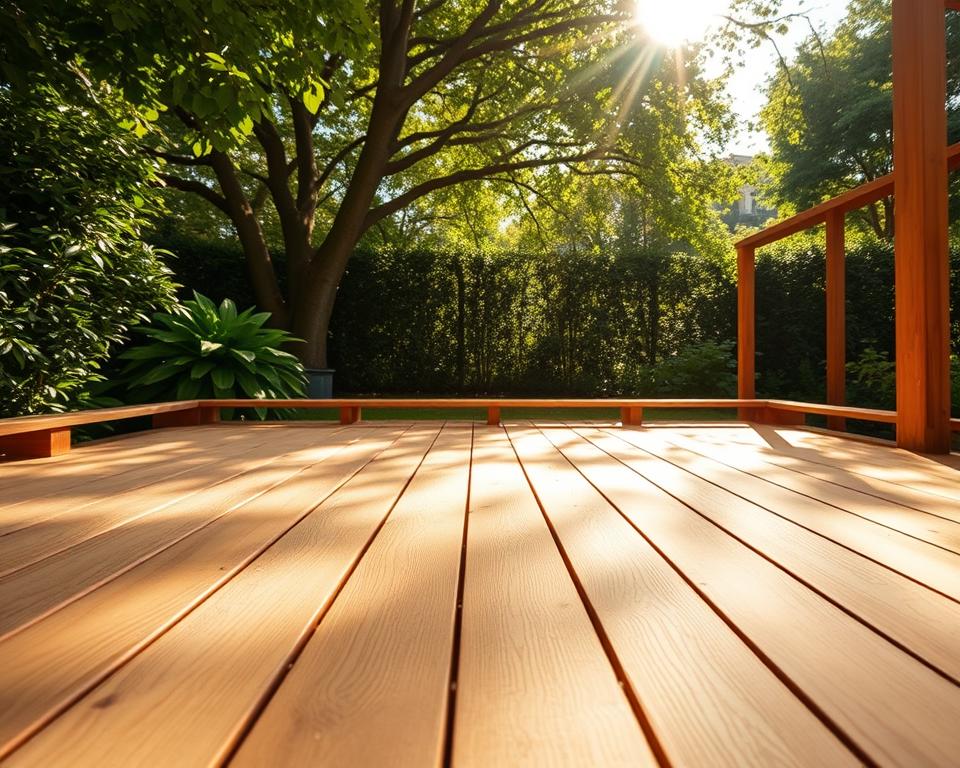
The rising popularity of timber decking foundations reflects their dual benefits of visual appeal and practical functionality. This option creates a seamless extension of the garden landscape while providing essential support for outdoor structures.
Preparing a Timber Frame and Raised Platform
Constructing a durable decking base begins with a robust timber frame. Use pressure-treated wood for enhanced resistance to moisture and decay. The frame requires sufficient cross-pieces to prevent flexing under the building’s weight.
Elevate the structure from ground level using concrete blocks or timber legs. This creates vital air space beneath the platform. Proper elevation allows water drainage and reduces dampness risks.
Install a porous membrane before laying deck panels. This prevents weed growth while maintaining airflow. Affix panels perpendicular to the frame, leaving small gaps for expansion.
Maintenance Tips to Prevent Damp and Decay
Regular maintenance ensures a 15-20 year lifespan for timber decking. Annual pressure-washing removes debris and prevents slippery surfaces. Sanding and resealing protect against water penetration.
The ridged surface naturally channels moisture away from the building. This feature significantly reduces mould and mildew formation. However, timber becomes slippery when wet, requiring careful use.
This foundation type works best for smaller garden buildings. It can be extended to create an attractive veranda area. The natural aesthetic complements most garden designs beautifully.
Composite Decking Base: Combining Durability with Aesthetics>
Composite decking emerges as a modern solution for a garden building base, blending durability with design flexibility. Crafted from recycled plastic and wood fibres, this option appeals to the eco-conscious homeowner.

It offers a distinct advantage over traditional timber with a lifespan of 25-30 years. This enhanced longevity makes it a solid investment for your outdoor space.
The Benefits of Recycled Materials
The use of recycled materials gives composite decking strong environmental credentials. This garden base choice supports sustainable practices.
Homeowners benefit from significantly reduced maintenance. There is no need for annual sanding, staining, or sealing. The material is splinter-proof and resistant to warping.
A wide palette of colours allows the decking to complement any summer house finish. This helps create a cohesive look across the entire garden area.
Installation and Long-Term Care Considerations
The installation process for a composite base is similar to timber decking. A critical first step is to allow panels to acclimatise for 72 hours.
Specialised composite screws and hidden fastener clips are required. These create a clean, seamless finish for your summer house foundation.
While initial costs are higher, long-term upkeep is minimal. Occasional cleaning maintains its appearance. It is crucial to ensure the base is perfectly level during installation.
A potential drawback is that the surface can become slippery when wet. Colour may fade slightly over time despite UV resistance.
The Innovative Approach of Ground Screw Bases
Ground screw foundations offer a revolutionary approach to supporting outdoor buildings with minimal environmental impact. This modern system uses galvanised steel screws that penetrate the earth to create a stable foundation for garden structures.

How Ground Screws Secure Your Summer House
Each screw resembles a giant wood fastener, typically measuring 1.5 metres in height. The installation process involves drilling approximately 300-400mm into the ground until reaching stable clay substrates.
Adjustable brackets attached to the flat tops enable precise levelling of the timber frame. This system accommodates both flat and sloping sites with exceptional flexibility.
Installation Speed and Flexibility
The installation time for a ground screw base is remarkably short compared to traditional methods. Construction can begin immediately without waiting for materials to set.
This approach works in all weather conditions throughout the year. It creates minimal disruption to the surrounding landscape while providing excellent stability.
Environmental benefits include enhanced airflow beneath the structure and complete removability if relocating the building. Always conduct a ground scan before installation to identify underground services.
Additional Considerations for Setting Up Your Summer House Foundation>
A successful garden building project extends beyond selecting the right base materials. Several preparatory steps and regulatory checks are essential for long-term stability and compliance.
Local Building Regulations and Soil Conditions
Homeowners must consult local planning rules before starting work. For instance, decking foundations must not exceed 0.3 metres in height to qualify as permitted development.
Understanding your garden’s soil type is equally critical. Clay, sand, and gravel have different load-bearing capacities. This analysis determines which foundations are suitable for the structure.
Always conduct a ground scan to locate underground services. This prevents damaging cables or pipes during installation.
Site Preparation and Drainage Essentials
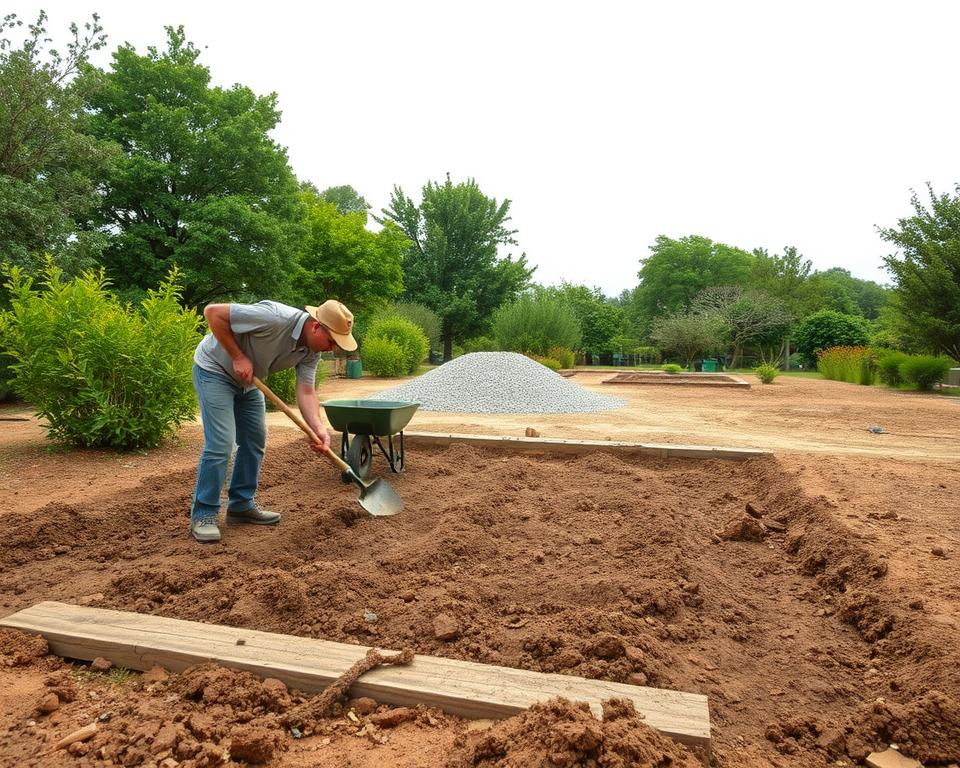
Proper site preparation begins with clearing the area and excavating to the correct depth. The first step is to ensure the ground below is completely stable.
Laying a porous weed-proof membrane is a vital step. It prevents vegetation growth that could compromise the base over time.
Drainage is paramount for preventing moisture issues. The foundations should be raised 4-5cm above the surrounding ground level. This encourages water runoff.
A sub-base of gravel, like MOT Type 1, provides excellent drainage. It must be thoroughly compacted to create a solid, level surface.
Leave at least one metre of space around the building. This accommodates the roof overhang and allows access for maintenance. A well-prepared site ensures the frame sits on a secure and durable base.
Comparing the Cost and Longevity of Foundation Options>
Financial planning for a garden building involves a clear understanding of both initial costs and future upkeep. The most suitable foundation balances upfront investment with long-term durability and maintenance needs.
An informed decision requires evaluating these factors across different base types.
Evaluating Investment Versus Maintenance Costs
Initial expenditure varies significantly. Concrete bases often represent the highest cost, especially with professional installation. Paving slabs and timber decking offer more budget-friendly options.
Ground screws present a unique case. Their per-unit cost is higher than some conventional bases. However, they eliminate expenses for concrete and heavy machinery.
Installation speed further offsets this initial outlay. Building work can commence immediately.
Long-term costs are equally important. A quote from a construction expert highlights this:
“The cheapest foundation upfront can become the most expensive over its lifetime if maintenance is neglected.”
Concrete and paving slabs require virtually no upkeep once installed. Their lifespan extends for decades.
Timber decking demands regular care. Annual pressure-washing, sanding, and sealing are essential to achieve a 15-20 year lifespan.
Composite decking offers a middle ground. It boasts a 25-30 year life expectancy with minimal maintenance, making it cost-effective over time.
| Foundation Type | Typical Lifespan | Maintenance Requirement |
|---|---|---|
| Concrete | Up to 100 years | None |
| Paving Slabs | Decades | None |
| Timber Decking | 15-20 years | High |
| Composite Decking | 25-30 years | Low |
| Ground Screws | Decades | None |
The ideal choice depends on individual priorities. For a permanent, durable solution, concrete or paving slabs are excellent. If budget is directed towards the garden room itself, timber or composite decking works well. Ground screws suit those seeking flexibility and a lighter environmental footprint.
Conclusion
A successful garden room project rests entirely on its foundation. This guide has explored the primary base options available. The ideal choice is unique to each garden and the specific building.
No single solution is superior for all garden buildings. Factors like soil type, budget, and intended use determine the best fit. It is a decision that requires careful thought.
Before purchasing a summer house, always obtain the manufacturer’s detailed base plan. This ensures the foundation is built to the correct size and specification. Proper support is non-negotiable.
Seek advice from knowledgeable suppliers. They can provide tailored guidance for your specific garden space. Investing time in this choice secures the longevity of your summer house.
A well-constructed base is an investment. It guarantees stability and enjoyment for many years. With the right preparation, your new garden room will be a valuable addition.
FAQ
Why is a solid foundation essential for a summer house?
A solid foundation provides crucial stability and prevents structural damage. It ensures the building remains level, protects the timber frame from ground moisture, and significantly enhances the structure’s longevity.
What factors should influence the choice of a summer house base?
The choice depends on several factors, including the size and weight of the garden building, local soil conditions, drainage requirements, and the project’s budget. Assessing these garden requirements ensures the selected base offers adequate support.
What are the benefits of a concrete base?
A concrete base offers exceptional durability and a permanent, level surface. It provides superior stability for larger garden buildings and requires minimal long-term maintenance, making it a robust option.
Are paving slabs a suitable foundation for a summer house?
Yes, paving slabs are an attractive and practical option for many garden rooms. They create a solid, level platform and allow for good water drainage when installed correctly on a compacted sub-base.
How does a timber decking base perform over time?
A timber decking base offers a natural aesthetic but requires regular maintenance to prevent damp and decay. Applying a protective sealant annually helps preserve the wood and extend its lifespan.
What are the advantages of using composite decking for a base?
Composite decking combines durability with aesthetics, often made from recycled materials. It resists rot and splintering, requires less maintenance than timber, and provides a long-lasting, stable surface.
What are ground screw foundations?
Ground screw foundations are an innovative system where steel screws are drilled into the ground to support the structure. They offer quick installation, minimal site disruption, and excellent stability on various terrains.
Do I need to check building regulations for a summer house base?
It is always advisable to check local building regulations. Requirements can vary depending on the size of the summer house and its intended use, particularly if it includes utilities or serves as an office.
How does site preparation affect the foundation?
Proper site preparation, including levelling the ground and ensuring good drainage, is critical. It prevents water accumulation under the structure, which can lead to moisture damage and compromise the foundation’s integrity.
Which foundation option offers the best value for money?
The best value depends on the specific project. While a concrete slab may have a higher initial cost, its longevity and low maintenance can make it cost-effective. Ground screws offer speed, and timber options provide a lower upfront cost but may require more upkeep.