How to Paint a Wooden Greenhouse: A Step-by-Step Guide
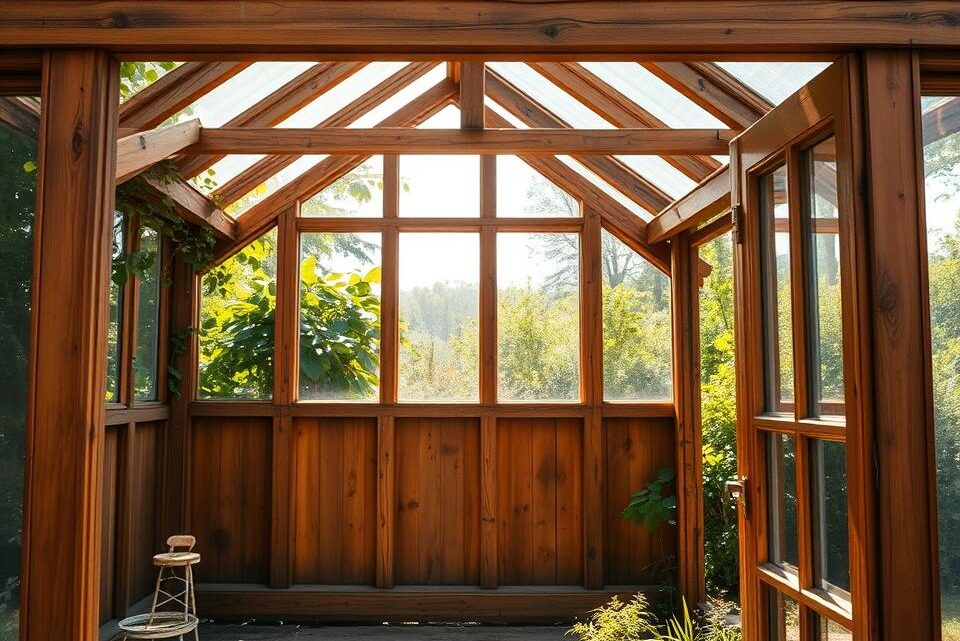
A beautifully maintained wooden greenhouse is a cherished feature in any British garden. Over time, exposure to sun, rain, and frost can take its toll on the wood, causing it to fade and lose its protective qualities. Applying a fresh coat of paint is not merely about aesthetics; it is a vital process for long-term protection.
This comprehensive guide provides a clear, methodical approach to revitalising your structure. It covers everything from initial surface preparation to applying the final coat. Each step is crucial for achieving a professional finish that will last for many years.
Proper preparation is the most critical phase. Skipping this can lead to peeling paint and a poor outcome. The project requires attention to detail, especially when working around glass panels and accessing the roof safely. Choosing a dry, calm day in late summer is ideal for the best results.
Inhaltsverzeichnis
Key Takeaways
- Applying paint is essential for protecting a wooden greenhouse from weather damage and rot.
- Thorough surface preparation is the most important step for a long-lasting finish.
- Late summer offers optimal weather conditions for painting.
- The process enhances both the appearance and structural longevity of the greenhouse.
- This guide offers a clear, step-by-step approach to achieving professional results.
- Working safely around glass and on roof sections requires careful planning.
Preparing Your Wooden Greenhouse for Painting
The foundation of any successful painting project lies in meticulous preparation. This phase determines how well the new finish will adhere and how long it will protect the structure. Investing time here prevents future issues like peeling or flaking.
Cleaning and Removing Old Paint
Begin by clearing the greenhouse of all plants and equipment. This creates safe working space and prevents damage to valuable items. Thorough cleaning removes dirt, debris, and biological growth like mould.
Use a soft brush with mild detergent solution for initial cleaning. A pressure washer or garden hose provides more thorough results for stubborn areas. Allow the structure to dry completely before proceeding to the next steps.
Inspect all surfaces for loose, flaking paint. Carefully remove compromised sections using a paint scraper or wire brush. Take care not to damage the underlying material during this process.
Sanding and Repairing Damaged Areas
Sanding creates the ideal texture for paint adhesion. Use medium-grit sandpaper (approximately 120-grit) on all wooden surfaces. Focus particularly on rough spots and areas where old paint was removed.
Wipe down the greenhouse with a damp cloth to remove sanding dust. Inspect the structure for any damage like rotting wood, cracks, or holes. Small imperfections can be filled with wood filler according to manufacturer instructions.
Allow repairs to dry completely before sanding them smooth. This ensures a uniform surface ready for painting. Proper repair work extends the lifespan of the entire structure.
Masking and Protecting Non-Painted Surfaces
Protect glass panels, benches, and vents from accidental paint application. Use painter’s tape to create clean edges around windows and other non-painted areas. Plastic sheeting provides additional protection for larger surfaces.
Lay down drop cloths or plastic sheets around the greenhouse base. This prevents paint splatters from reaching surrounding garden areas. Proper masking saves time on cleanup and ensures professional-looking results.
These preparation steps create the ideal foundation for the painting process. They ensure the new finish will provide durable protection for years to come.
How to Paint a Wooden Greenhouse: Step-by-Step Application
Selecting the correct materials is the cornerstone of achieving a durable and visually pleasing finish for your structure. The process involves careful preparation and a systematic approach to applying the coatings.
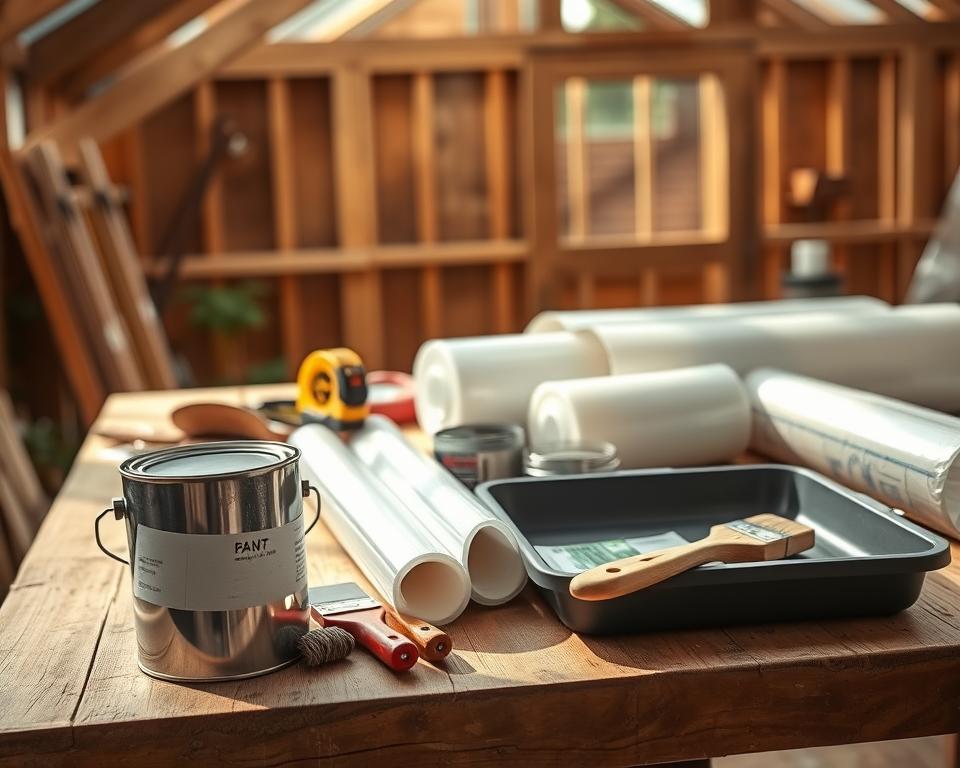
Choosing the Right Materials, Tools and Paints
It is essential to choose an exterior-grade product specifically formulated for timber. Some wood paints include preservatives against rot and mould, which offers significant benefits. If not, a separate preservative treatment should be applied first.
For tools, a selection of brushes is vital. A smaller brush is perfect for corners and window frames, while a roller works well for larger, flat panels. This ensures thorough coverage in all areas.
Applying Primer and Multiple Coats
Applying a primer is a critical step. A universal primer enhances adhesion and ensures an even base for the top coat. Always follow the manufacturer’s instructions for drying time.
When applying the paint, work on the side walls before the roof. Use steady strokes along the wood grain. Avoid overloading the brush to prevent drips.
- Systematic approach: Start with edges and small details before moving to larger panels.
- Check coverage: Look for thin spots as you work to ensure consistent protection.
- Multiple layers: Apply at least two coats for optimal results, allowing each one to dry completely.
The second coat solidifies the protective barrier, leaving the timber ready to face the elements for years to come.
Expert Advice and Tips for a Long-Lasting Finish
Applying the final layers is just the beginning. The true key to durability lies in the expert techniques employed during the process. These professional tips elevate a simple task into a long-term preservation project.
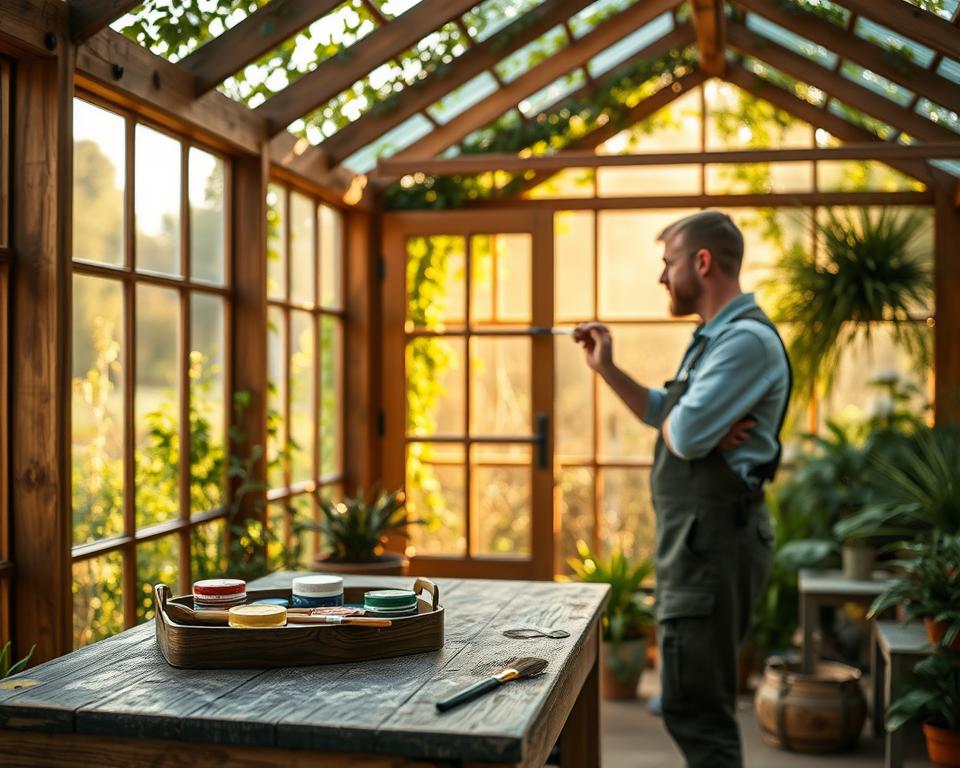
Mastering these details ensures the structure receives optimal protection from the elements.
Optimising Weather and Timing Conditions
Choosing the right weather is non-negotiable. A dry, calm day with moderate temperatures is essential. Extreme heat or cold drastically alters drying time and compromises adhesion.
Windy conditions are particularly problematic. Airborne dust and debris can easily spoil a wet finish. Late summer often provides the ideal window, allowing the greenhouse to cure before autumn rains.
Avoiding Common Pitfalls
Safety is paramount when working at height. Always use a platform ladder, keeping weight off the glass roof. For ridges on wider structures, a telescoping pole with a pivoting brush head is invaluable.
Work meticulously around glass panes. Keep the brush tight to the wood to avoid streaks. Immediately wipe away any slips with a damp cloth before they dry.
Ensuring Even Coverage and Durable Protection
Conduct a final, thorough inspection once the main work is complete. Look for thin spots or bare patches that compromise protection. Use a small brush for precise touch-ups.
Selecting high-quality, exterior-grade products specifically designed for timber is crucial. The right colour and formulation not only enhance appearance but also provide a robust shield against weather damage for years.
FAQ
What is the best paint for a wooden greenhouse?
A high-quality, microporous wood paint or a dedicated garden wood stain is ideal. These products allow the timber to breathe, preventing trapped moisture that can lead to rot and mould. They offer excellent protection against UV rays and harsh weather conditions.
How long should I wait for the paint to dry between coats?
Drying times vary between products, so always consult the manufacturer’s instructions. Typically, a primer or undercoat requires 4-6 hours to dry. For the top coat, allow at least 8-12 hours before applying a second layer. Proper drying ensures a durable finish.
Is it necessary to use a primer on a wooden greenhouse?
Yes, applying a primer is highly recommended. It provides a stable base for the top coat, improves adhesion, and enhances the final colour. For bare wood or areas where old paint has been removed, a primer is essential for long-lasting protection.
Can I paint my greenhouse in damp or cold weather?
It is not advisable. Painting should be done on a dry, mild day with temperatures above 10°C. Moisture and cold can prevent proper drying, leading to poor adhesion, blistering, and a finish that may peel prematurely.
How often should a wooden greenhouse be repainted?
With proper preparation and high-quality materials, a well-painted greenhouse can last 5-8 years before needing attention. Regular inspection for signs of wear, such as fading or flaking, will indicate when maintenance is required.
How do I protect the glass and metal fittings during painting?
Use low-tack masking tape and protective sheeting to cover all glass panes and any metal hardware, such as hinges and bolts. This prevents accidental paint splashes and makes cleanup much easier after the job is complete.